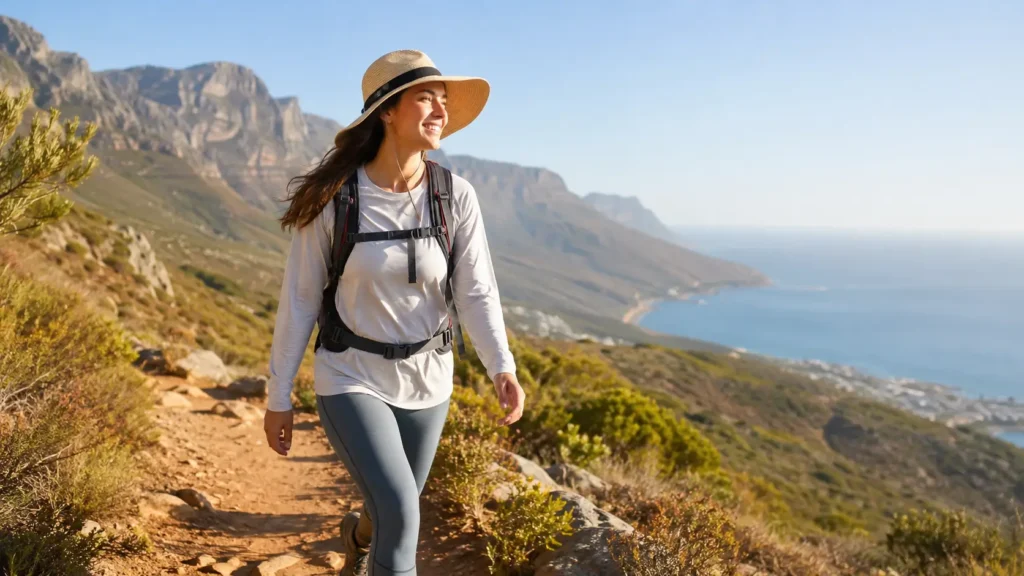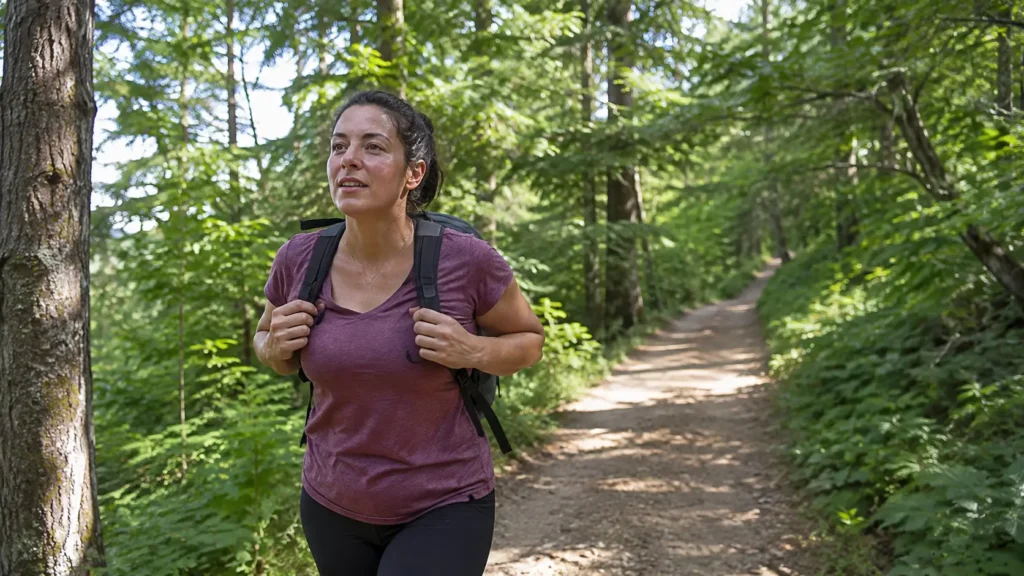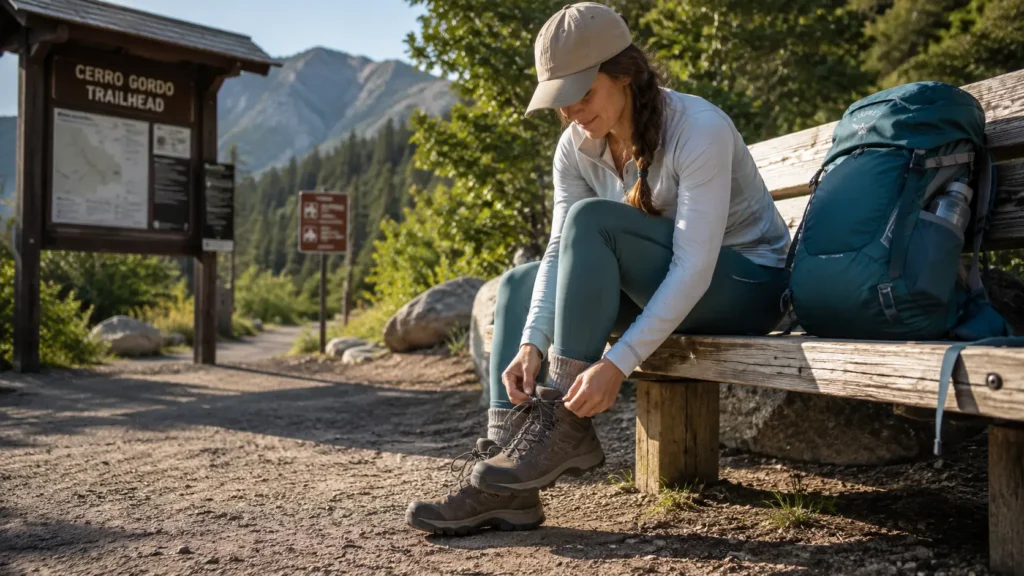
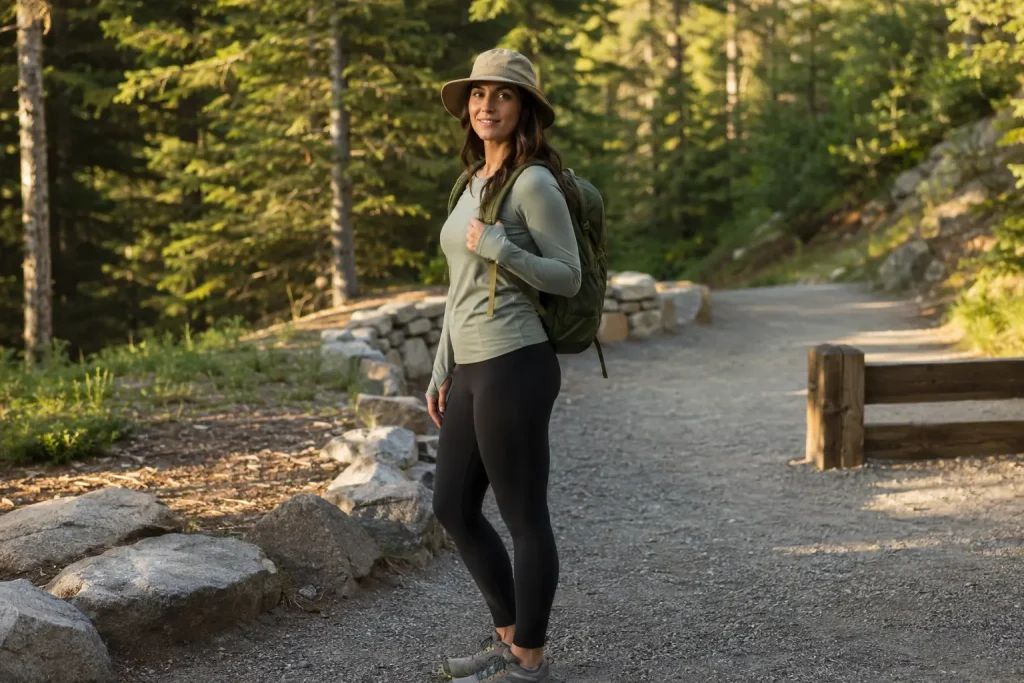
The first time someone told me I needed a “proper hiking setup” before my first trail, I pictured spending a small fortune on equipment I had no idea how to choose. Matching technical gear, specialist poles, a backpack with more pockets than I could count. It was overwhelming before I’d even laced up a boot.
Here’s what I’ve learned since: beginner hiking gear doesn’t need to be complicated or expensive. You need a small number of things done right. Everything else is optional, upgradeable later, or genuinely not necessary when you’re starting out.
This guide covers exactly what a beginner woman needs for day hiking — what’s worth buying, what can wait, and what you can skip entirely.
The Essential Hiking Gear List for Beginner Women
Before we break each one down, here is the complete list.
Must-Have Gear
- Daypack (15–25 litres)
- Hiking boots or trail runners
- Moisture-wicking base layer top
- Waterproof jacket
- Hiking trousers or leggings
- Merino wool or synthetic hiking socks
- Water bottle or hydration bladder (2 litres minimum)
- Snacks and food
- Compact first aid kit
- Headlamp
- Emergency foil blanket
- Emergency whistle
- Downloaded offline trail map
- Sun hat and sunscreen
Nice to Have (Not Essential for Beginners)
- Trekking poles
- Gaiters
- Hydration filter
- Trekking trousers with zip-off legs
Skip for Now
- GPS device (your phone handles this)
- Specialist base layers (regular moisture-wicking works fine)
- Matching gear sets
- Full waterproof trousers for day hikes in mild weather
The Daypack
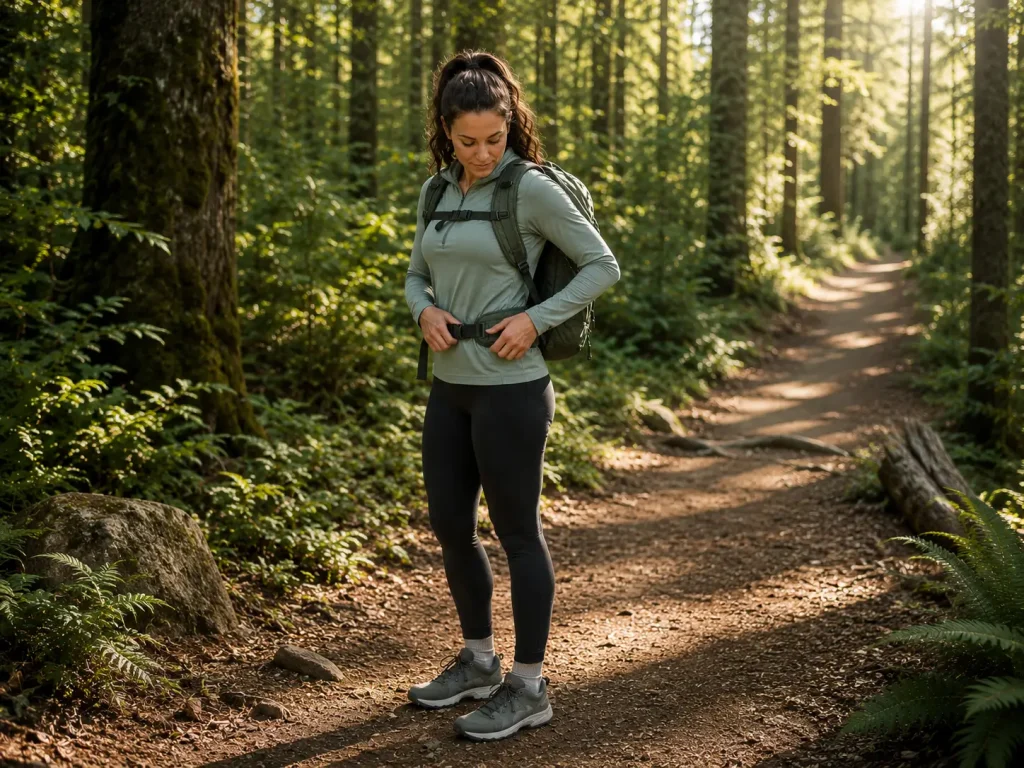
Your backpack is the foundation of your hiking kit. Everything else goes inside it. For day hiking, you want a pack between 15 and 25 litres. Smaller than 15 litres and you’ll struggle to fit everything you need. Bigger than 25 litres and you’ll be tempted to overfill it, which makes hiking harder than it needs to be.
What to Look For
Fit over brand. A pack that fits your back properly is more important than any specific brand or feature list. Women-specific packs are designed for a narrower shoulder span and shorter torso — worth trying if standard packs feel uncomfortable.
Hip belt. Even on a lightweight daypack, a hip belt transfers weight from your shoulders to your hips where your body handles it better. After an hour on the trail, this makes a significant difference.
Rain cover. Some packs include one. If yours doesn’t, buy a separate cover or use a waterproof liner inside. A wet pack is miserable.
Ventilated back panel. Not essential but worth having if you run warm — a mesh panel keeps air circulating between your back and the pack.
How Much to Spend
You don’t need to spend a lot. Entry-level packs from Osprey, Deuter, and REI Co-op start from around £50–80 and are more than adequate for day hiking. The Osprey Daylite Plus (20L) is a commonly recommended beginner option.
Hiking Boots and Trail Runners
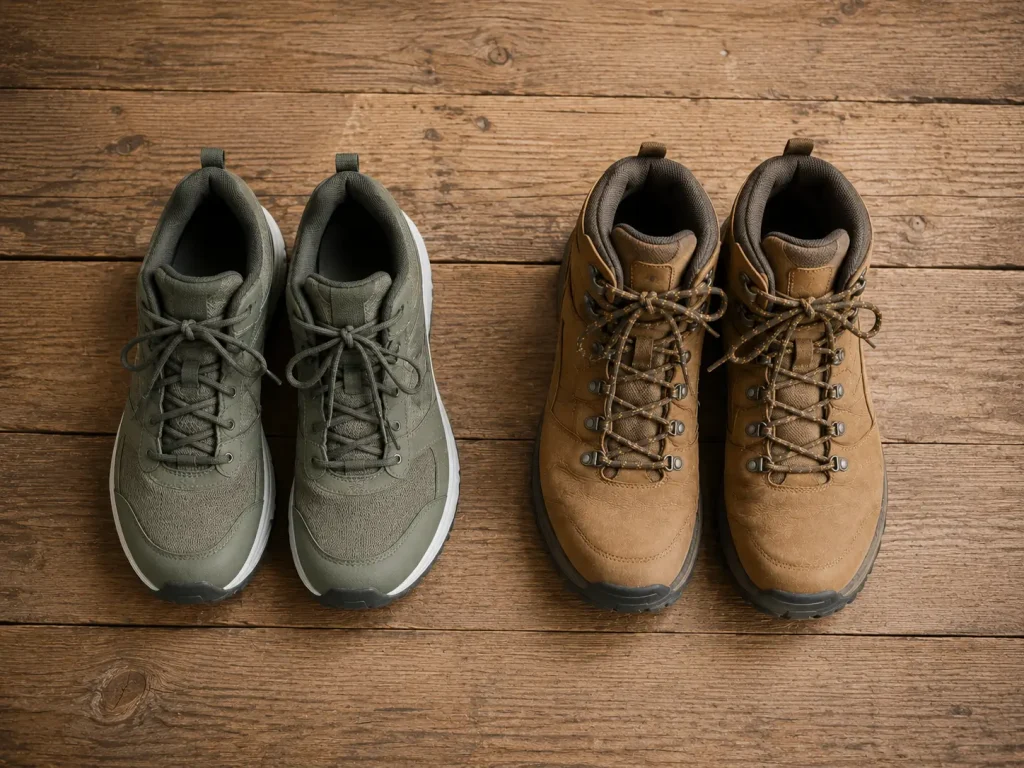
Your footwear is the single most important piece of gear you’ll buy. Bad footwear causes blisters, ankle rolls, and misery. Good footwear makes everything else easier.
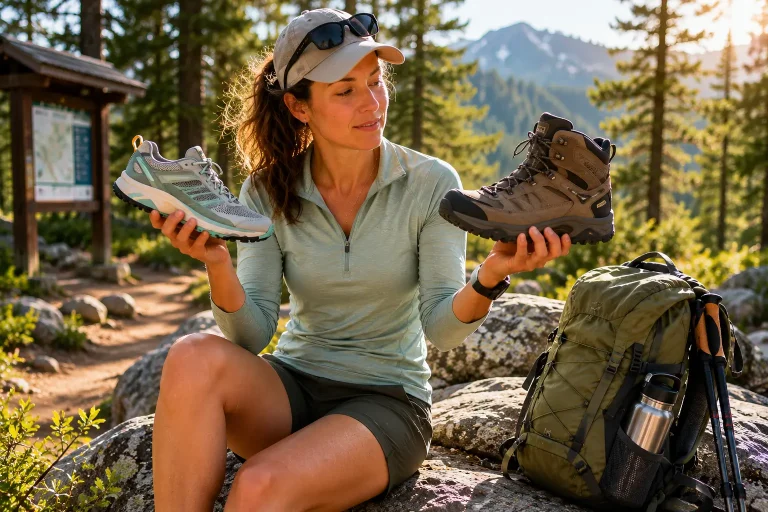
Trail Runners vs Hiking Boots
Trail runners are lightweight, breathable, and comfortable from the first wear. They work well on maintained trails where the terrain is relatively even. Most beginner hikers on well-maintained day hike routes do absolutely fine in a good pair of trail runners.
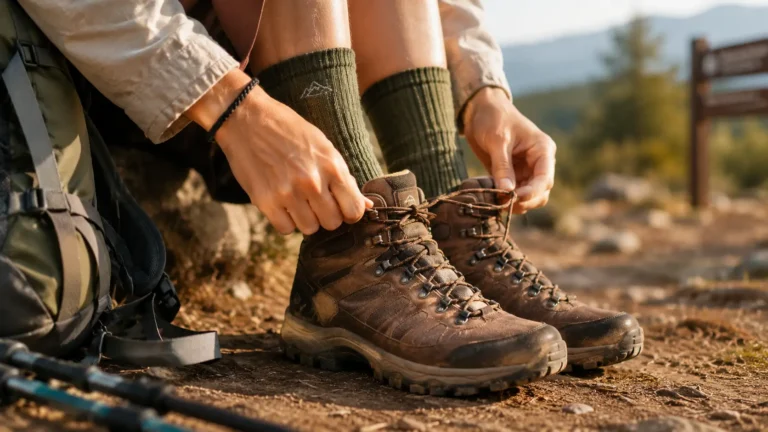
Hiking boots offer more ankle support, If you’ve decided boots are the right choice, the full guide to the best hiking boots for women beginners walks you through exactly what to look for and which ones Sophie recommends. waterproofing, and protection on rocky or uneven terrain. They’re heavier and need breaking in before a long hike but are the better choice if you’re hiking on rough ground or carrying a heavier pack.
For most beginner women on moderate day hikes, trail runners are the better starting point. Not sure which is right for your specific situation? Our full guide to hiking shoes vs boots for women covers every factor — terrain, ankle support, waterproofing and budget. They’re cheaper, lighter, and don’t need breaking in.
The Break-In Rule
If you buy hiking boots, break them in before your first hike. Wear them around the house, on short errands, on easy walks. New boots on a long hike is one of the most avoidable hiking mistakes — the blisters will ruin the experience entirely.
What to Look For
- Lug sole with good grip on wet surfaces
- Waterproof lining (Gore-Tex or equivalent) for wet conditions
- Proper ankle support if hiking on uneven terrain
- Correct fit — try them on in the afternoon when feet are slightly larger
Good options (boots): Merrell Moab 3, Salomon X Ultra, Keen Targhee
Good options (trail runners): Salomon Speedcross, Hoka Speedgoat, Brooks Cascadia
Hiking Socks
Socks deserve more attention than most beginners give them. The wrong pair causes blisters on a trail that should have been easy.
Never wear cotton socks hiking. Cotton absorbs moisture and holds it against your skin. After an hour of walking, wet cotton against your foot is a blister waiting to happen.
Merino wool hiking socks are the standard recommendation for good reason. They regulate temperature, wick moisture, resist odour, and cushion your feet over miles of uneven ground. Darn Tough and Smartwool are the two brands most consistently recommended.
Choose cushion level based on your hike — light cushion for warm weather and easy trails, medium or heavy cushion for longer days and rocky ground. Crew height for hiking boots, ankle height for trail runners.
Clothing Layers
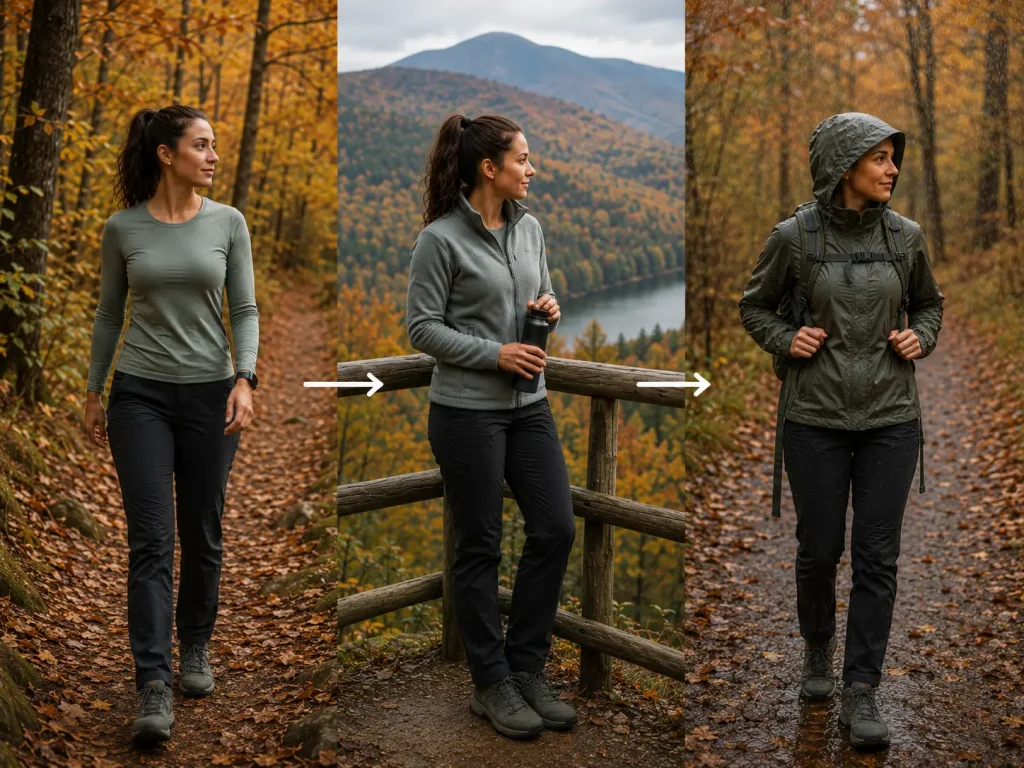
The hiking layering system is simple once you understand it: three layers, each with a specific job. For a full breakdown of what to wear — including seasonal outfits, specific fabric recommendations and the biggest clothing mistakes beginners make — see our complete women’s hiking outfit guide.
Base Layer
The layer against your skin. Its job is to pull moisture away from your body. Should be moisture-wicking synthetic or merino wool — never cotton. A fitted long or short sleeve top in polyester or merino is all you need here.
Mid Layer
Your warmth layer. A lightweight fleece or softshell jacket that you add when you stop moving or when temperatures drop. Goes in your pack when you’re moving hard and generating heat.
Outer Shell
Weather protection — a waterproof or water-resistant jacket that blocks wind and rain. Carry this every hike regardless of the forecast. Mountain weather changes faster than forecast updates.
Bottoms
Hiking trousers or leggings in a synthetic or wool blend. They should move freely, dry quickly, and not chafe. Avoid denim entirely — wet denim is heavy, cold, and causes serious chafing on longer hikes.
Hydration
Dehydration is the most common reason people turn back on trails early. By the time you feel thirsty, you’re already mildly dehydrated. The rule: 500ml per hour of active hiking in moderate conditions. For a four-hour hike, carry at least 2 litres.
Water Bottle vs Hydration Bladder
Water bottles (stainless steel or BPA-free plastic) are easy to use, easy to clean, and you can see exactly how much you’ve drunk. Simple and reliable.
Hydration bladders sit inside your pack with a drinking tube over your shoulder. They carry more volume and let you drink without stopping. Great for longer hikes but harder to clean.
Electrolytes
On hikes over two hours, plain water isn’t always enough. Sweating depletes sodium and electrolytes. Electrolyte tablets or powder added to water help significantly on warmer or longer hikes and weigh almost nothing in your pack.
Navigation
Your phone is your primary navigation tool — with one critical condition: the map must be downloaded offline before you leave. Mobile signal on trails is unreliable. In remote areas there’s often no signal at all.
Download your trail map offline on AllTrails or Komoot before you leave home. Not sure which trail to start with? Our day hiking essentials for beginners covers how to choose your first trail and everything else you need to know before you go. Screenshot the trailhead directions too. Carry a portable power bank — phones drain faster with GPS active and in cold weather.
Safety Gear
First Aid Kit
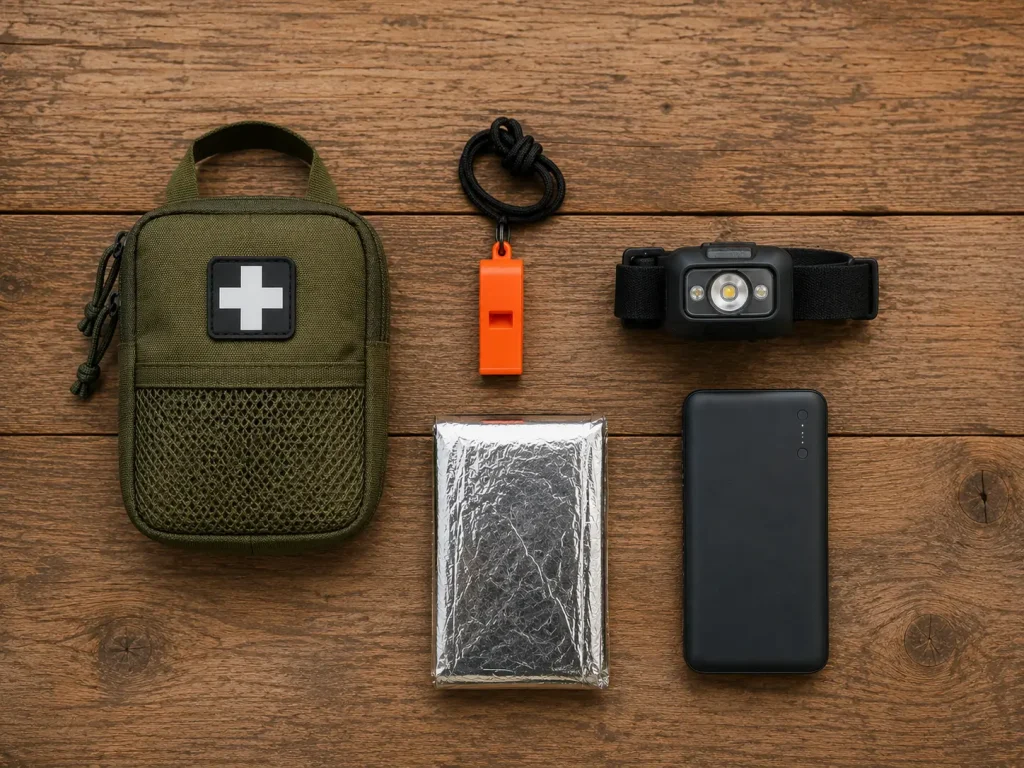
Safety gear matters even more when you’re hiking solo. If you’re planning to hike alone, read our solo hiking safety guide for women before heading out. A compact hiking first aid kit is non-negotiable. Must-haves: blister plasters, adhesive bandages in multiple sizes, antiseptic wipes, pain relief tablets, a small bandage, and any personal medication.
Emergency Whistle
Lightweight, costs almost nothing, and far more effective than shouting if you need to signal for help. Three blasts is the international distress signal. Clip it to your pack where you can reach it without opening anything.
Headlamp
Always pack a headlamp, even on a planned morning hike. Hikes take longer than expected. Being on a trail after dark without a light is genuinely dangerous on rocky terrain.
Emergency Foil Blanket
Folds to the size of a credit card, weighs almost nothing, and retains body heat in an emergency. There is no reason not to carry one.
Do Beginner Women Need Trekking Poles?
Short answer: no — but they’re worth knowing about. Trekking poles reduce impact on your knees on descents, improve stability on uneven terrain, and give you something to lean on when you’re tired. For beginner women on moderate day hikes, they’re not essential. For anyone with knee problems or hiking on steep, rocky terrain, they become genuinely useful.
Gear You Don’t Need as a Beginner
A GPS device. Your phone with offline maps does everything a basic GPS does. Save the money.
Matching technical gear sets. You don’t need everything from the same brand. Mix and match what fits and works.
Full waterproof trousers for every hike. A waterproof jacket is the priority. For most beginner day hikes in mild weather, quick-dry hiking trousers are enough.
Expensive specialist base layers. A decent moisture-wicking top from any sports brand works fine for beginner hiking. Upgrade to merino when you know you’ll use it.
Beginner Women’s Hiking Gear Checklist
Pack
- Daypack 15–25 litres with hip belt
- Rain cover for pack
Footwear
- Hiking boots or trail runners (broken in if boots)
- Merino wool or synthetic hiking socks
Clothing
- Moisture-wicking base layer top
- Lightweight fleece or softshell mid layer
- Waterproof jacket
- Hiking trousers or leggings (no denim)
- Sun hat
Hydration & Food
- Water (2 litres minimum)
- Electrolyte tablets
- Snacks every 60–90 minutes
- Lunch if hiking over 3 hours
Navigation
- Offline trail map downloaded (AllTrails or Komoot)
- Portable power bank
- Phone fully charged
Safety
- Compact first aid kit with blister plasters
- Emergency whistle
- Headlamp with fresh batteries
- Emergency foil blanket
- Sunscreen SPF 30+
FAQs
You don’t need to spend a lot to start. A functional beginner day hiking kit — pack, footwear, basic layers, and safety items — can be put together for £150–250. Focus spending on footwear first (the most important item), then a good pack, then everything else.
Women-specific gear is designed for a different body shape — narrower shoulders, shorter torso, narrower heel. Women-specific packs and boots often fit better, but they’re not essential. The most important thing is that whatever you buy fits your body properly.
Footwear — without question. Bad footwear causes blisters, ankle problems, and genuinely ruins a hike. Every other piece of gear can be approximate when you’re starting out. Your boots or trail runners cannot.
You can for short, easy hikes on dry days. For anything longer, hillier, or wetter, proper hiking leggings in a quick-dry fabric are worth it — they’re more durable, have better range of motion, and dry much faster when wet.
Yes. Even on sunny days. Trail weather changes faster than forecasts, and being caught in rain without a waterproof layer makes a hike miserable and potentially dangerous in cold temperatures. A lightweight packable waterproof takes up almost no space in your pack.
15–25 litres is the sweet spot for day hiking. 20 litres is a good middle ground that fits everything you need without encouraging you to overpack. Go bigger only if you’re carrying specialist equipment or hiking in extreme conditions.
Final Thoughts
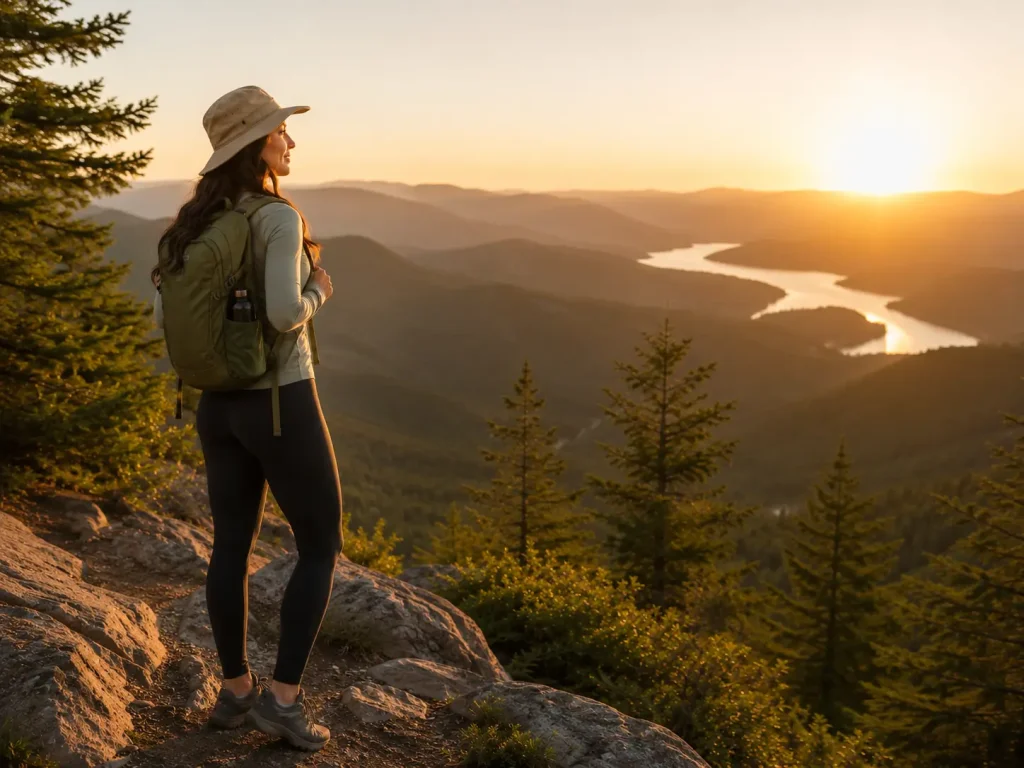
Good hiking gear doesn’t need to be expensive, technical, or overwhelming. It needs to be appropriate, well-fitting, and functional for the trail you’re on.
Start with the essentials: footwear that fits, a pack you can carry, layers for the weather, water, and the safety basics. Everything else can come later as you hike more and figure out what you actually use. The best hiking gear is the gear that gets you out on the trail. Don’t let the kit stop you from going. Once your kit is sorted, our beginner hiking tips for women covers every practical tip you need to make the most of your first hike. Once your kit is sorted, our hiking essentials checklist for women covers everything else you need to bring on a day hike.

Intermediate hiker sharing real trail experience — honest gear picks, beginner-friendly guides, no filler.