The first time I packed for a day hike, I brought a drawstring bag, half a bottle of water, and a bag of crisps. If you’re completely new to hiking, start with our beginner hiking tips for women — it covers everything from trail selection to trail etiquette before your first hike. If you’re not sure what gear you actually need as a woman, our beginner hiking gear guide covers every essential from backpacks to safety items. By mile three I was dehydrated, my feet hurt, and I had no idea where the trail went. I made it back fine — but only because the hike was short and the weather was kind.
Most beginner hiking mistakes aren’t about fitness or experience. They’re about packing. Bring the wrong things (or nothing at all) and a beautiful morning on the trail turns into an uncomfortable slog. Bring the right things and you’ll be amazed how much more you enjoy the whole experience.
This guide covers every day hiking essential you actually need — not an overwhelming gear list designed to sell you expensive kit, but a practical, honest breakdown of what makes a real difference on trail.
Why What You Pack Matters More Than You Think
Day hiking sounds simple — put on some shoes, walk a trail, come back. And on an easy 2-mile loop near a car park, that’s basically true. But even short hikes can go sideways faster than you’d expect.
Weather changes. Trails are longer than they look on paper. You turn an ankle, get lost, or the sun disappears behind clouds and the temperature drops ten degrees. None of these things are disasters if you’re prepared. All of them become problems if you’re not.
The good news is that the core day hiking essentials aren’t expensive, heavy, or complicated. A well-packed 20-litre daypack weighs less than 5kg and covers almost every situation you’ll encounter on a day hike.
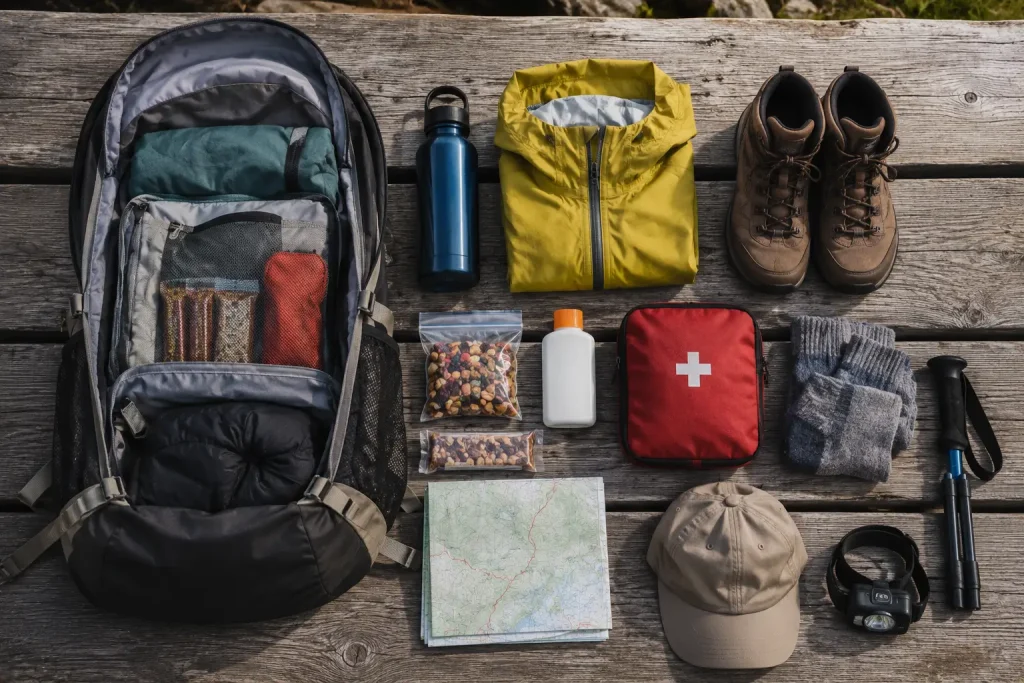
The Day Hiking Essentials — What to Pack
1. Water — Your Most Important Essential
Under-hydration is the most common reason people feel terrible on a hike. The general guideline is 500ml of water per hour of hiking, but this varies with heat, elevation, and how hard you’re working. For most day hikes, bring at least 1.5–2 litres.
A standard reusable water bottle works fine for shorter hikes. For anything over 3 hours, a hydration bladder that fits inside your pack (and lets you sip through a tube without stopping) is genuinely useful — you naturally drink more when it’s easy to access.
If you’re hiking near streams, a water filter or purification tablets means you’re never stranded without water even if you run low. The Sawyer Squeeze is compact, affordable, and filters thousands of litres.
2. Food and Snacks
You don’t need elaborate trail meals for a day hike. You need food that’s easy to carry, doesn’t need refrigeration, and gives you sustained energy — not a sugar spike followed by a crash.
The classics work well for a reason: trail mix, nuts, dried fruit, energy bars, a couple of slices of bread with nut butter, or a simple wrap. For longer hikes, bring more than you think you’ll need. Running out of food is miserable; having leftovers isn’t.
One practical tip: pack snacks you can eat while walking, and something more substantial for a proper break at the halfway point. Knowing there’s a real lunch waiting at the top is great motivation on the uphill sections.
3. Navigation
This is the one most beginners skip and regret. Even on a well-marked trail, it’s surprisingly easy to miss a turn, especially if you’re moving fast or distracted.
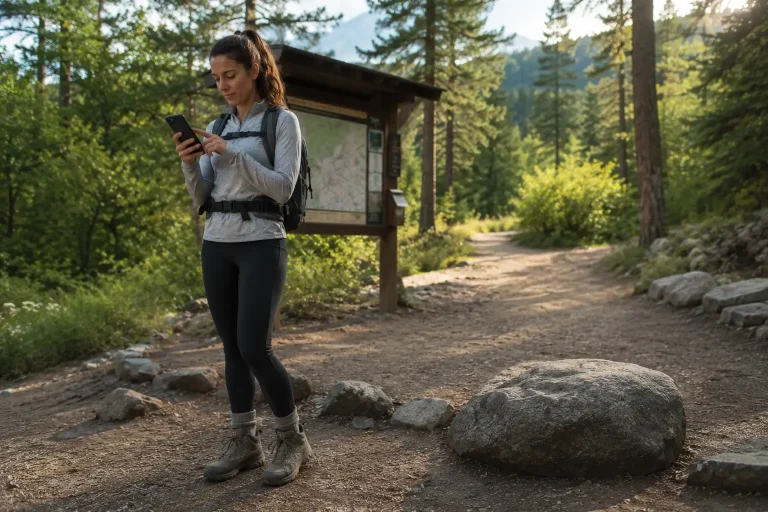
For most day hikes, AllTrails (with an offline map downloaded before you leave) is enough. It shows your real-time position on the trail map even without cell signal — which matters more than people expect, because signal is often poor or nonexistent in the mountains.
A paper map of the area is a good backup. You don’t need to be an expert navigator. Just knowing which direction the trailhead is and roughly how far you’ve come is often enough to get you back on track.
4. Sun Protection
At altitude, UV exposure is significantly higher than at sea level. On a clear summer day above 1,500 metres, you can burn faster than on a beach. Sun protection isn’t optional — it’s a genuine safety essential.
Pack at minimum: SPF 30+ sunscreen (apply before you leave and reapply mid-hike), sunglasses that block UV, and a hat with a brim. On exposed ridges with no shade, these three things make the difference between an enjoyable hike and a painful one.
5. First Aid Kit
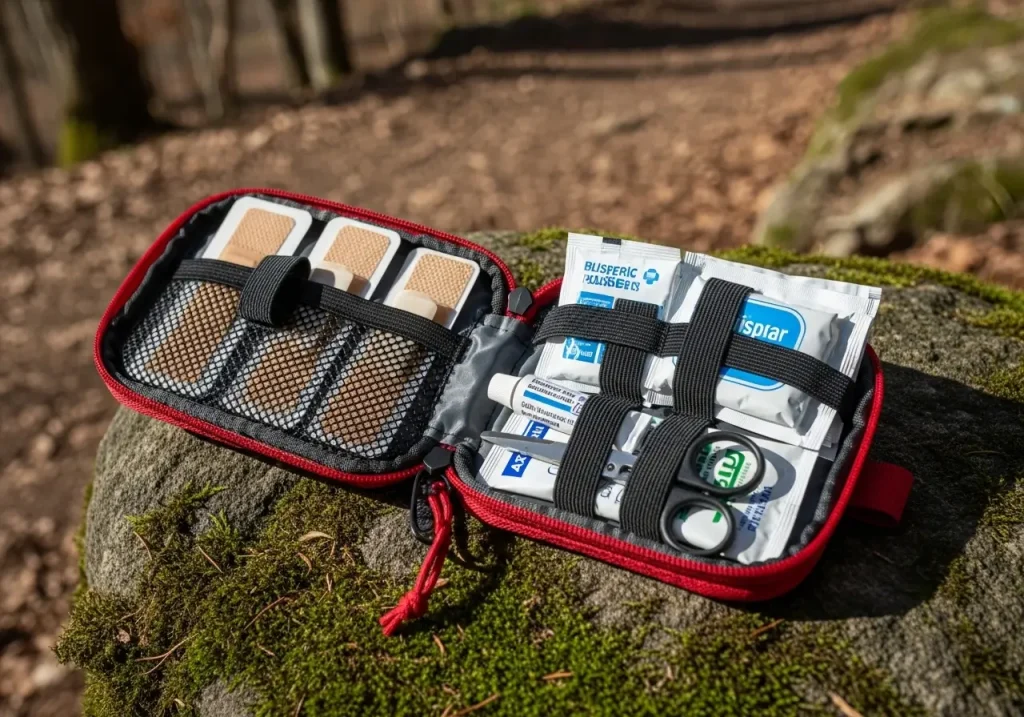
A basic trail first aid kit doesn’t need to be large or heavy — a small ziplock bag or compact pouch is fine. The essentials: adhesive bandages in a few sizes, blister plasters (a non-negotiable — blisters are far more common and debilitating than people expect), antiseptic wipes, pain relief tablets, and any personal medication.
The thing most people forget: tweezers for splinters and ticks. If you’re hiking in areas with ticks, check yourself after every hike — particularly your legs, hairline, and behind your ears.
6. Extra Clothing Layer
Weather in the mountains changes fast. A sunny morning can become a cold, wet afternoon with almost no warning. Always pack one extra layer beyond what you think you’ll need.
A lightweight packable fleece or down jacket takes up almost no space and weighs very little, but it can be the difference between a comfortable hike and a miserable one if the temperature drops. Pair it with a waterproof shell jacket (or at least a packable rain poncho) and you’re covered for the vast majority of day hiking conditions.
7. Headlamp or Torch
This seems unnecessary for a day hike until you find yourself on the trail as it gets dark. Hikes take longer than expected. Injuries happen. Weather slows you down. A small headlamp adds almost no weight and takes up almost no space — there’s no good reason to leave it out.
A basic headlamp with fresh batteries is enough for most day hikers. Make sure it’s in your pack, not just your car.
8. Emergency Essentials
A few lightweight additions can make a significant difference in an emergency: a foil emergency blanket (folds to the size of a playing card, reflects body heat), a whistle (three blasts is the universal distress signal), and a small lighter or waterproof matches. None of these things weigh anything. None of them cost much. But on the rare occasion you need them, you’ll be extremely glad they’re there.
9. Your Phone — Charged
Obvious but worth saying: your phone is your navigation device, your camera, your emergency contact, and your way of calling for help if things go wrong. Leave with it fully charged. If you’re on a longer hike, bring a small power bank.
Turn on airplane mode while hiking to save battery — you can still use GPS and downloaded maps without cell signal.
10. The Right Daypack
You don’t need an expensive pack for day hiking. A 15–25 litre daypack with padded shoulder straps and a hip belt is comfortable for most people and fits everything on this list without feeling bulky.
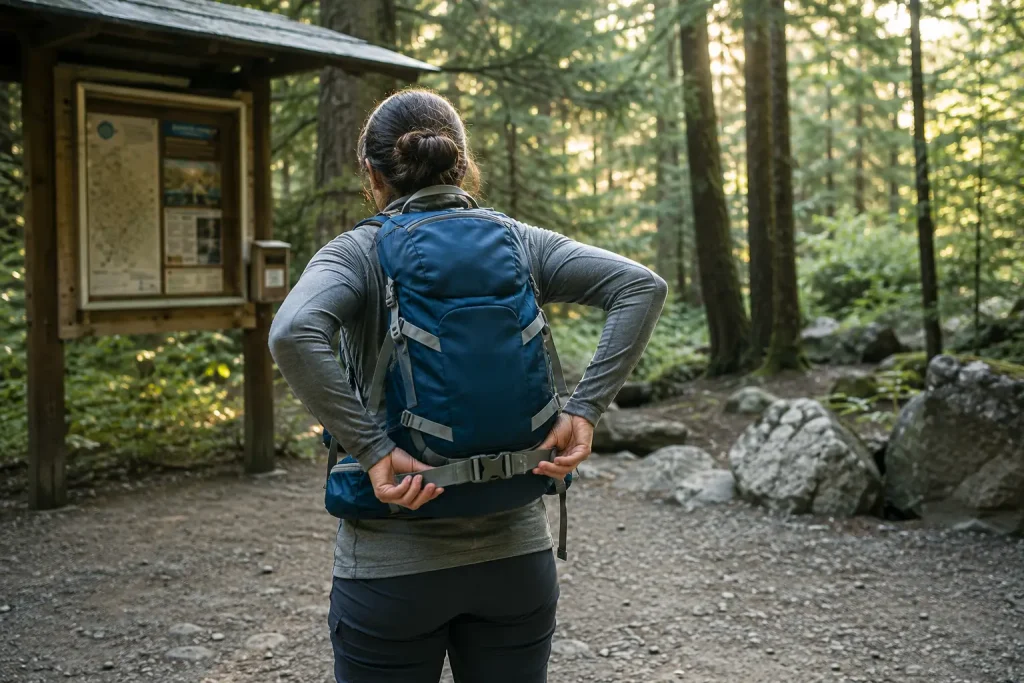
Hip belts matter more than people realize — they transfer the weight from your shoulders to your hips (where your body carries weight much more efficiently) and make a huge difference on longer hikes.
What to Wear on a Day Hike
Your clothing is as important as what’s in your pack. The main principle: layers. Starting cold and warming up is manageable. Getting wet and cold with no dry layer to change into is miserable. For a full breakdown of what women should wear on the trail, see our women’s hiking outfit guide.
- Base layer: moisture-wicking fabric (merino wool or synthetic). Cotton holds sweat against your skin and gets cold — avoid it on trail.
- Mid layer: a fleece or lightweight insulating jacket for rest breaks and cold mornings.
- Outer layer: a waterproof and windproof shell jacket that packs small.
- Hiking trousers or leggings: comfortable, flexible, quick-drying. Avoid jeans.
- Hiking socks: thick, moisture-wicking socks prevent blisters. Merino wool socks are worth every penny.
- Footwear: trail runners or hiking boots with ankle support, depending on terrain.”(Not sure what shoes to choose? Our women’s hiking outfit guide covers this in detail.)
What to Leave at Home
Overpacking is a real beginner mistake. Heavy packs make everything harder and less enjoyable. Here’s what you don’t need for a standard day hike:
- Your entire wardrobe — one extra layer is enough
- Heavy glass water bottles — use plastic or a hydration bladder
- Full-size toiletries — pack minis or nothing
- Your laptop or tablet — leave it in the car
- Complicated cooking gear — you’re out for the day, not camping
- Anything you’re packing “just in case” that weighs more than 200g — ask yourself honestly if you’ll actually use it
Day Hiking Essentials Checklist
Print this or screenshot it before your next hike:
- Water (1.5–2 litres minimum)
- Food and snacks (more than you think you need)
- Navigation — downloaded AllTrails map or paper map
- Sunscreen SPF 30+, sunglasses, sun hat
- First aid kit with blister plasters
- Extra insulating layer
- Waterproof jacket or rain poncho
- Headlamp with fresh batteries
- Emergency foil blanket + whistle
- Fully charged phone + portable charger
- Daypack (15–25 litres)
- Hiking socks + broken-in footwear
FAQs
A good starting point is 500ml per hour of hiking. On a 3-hour hike in moderate temperatures, that’s 1.5 litres. In hot weather or at high altitude, increase this to 750ml per hour. It’s always better to carry slightly too much water than not enough.
Focus on easy-to-carry, non-perishable foods that give sustained energy: trail mix, nuts, energy bars, dried fruit, nut butter sandwiches, wraps, or crackers with cheese. Avoid foods that melt, crush easily, or need refrigeration. Bring more than you think you’ll need.
Not expensive, but yes — a proper daypack makes a real difference. A 15–25 litre pack with padded straps and a hip belt is comfortable for most day hikes. A school rucksack works for short, easy trails, but on anything longer than 2 hours you’ll feel the difference.
For easy trails, a comfortable pair of trail runners is fine. For rougher terrain or longer hikes, hiking boots with ankle support are better. Whatever you choose, make sure they’re broken in before a long hike. New boots on a big hike is a recipe for blisters.
Yes — especially blister plasters, which you’ll use on almost every longer hike. A basic kit weighs almost nothing and the one time you need it, you’ll be very glad it’s there. You don’t need anything elaborate — a small pouch with the basics covers most trail situations.
Absolutely. Download the AllTrails app and download your trail map offline before you leave (this is important — cell signal is often poor on trail). Your phone uses GPS to show your real-time position on the map even without signal. Keep it in airplane mode to preserve battery.
Key Takeaways
- Water is your most important essential — bring more than you think you need
- Pack food that gives sustained energy, not just sugar
- Download your trail map offline before you leave
- Always bring one more layer than the forecast suggests
- Blister plasters are non-negotiable — get them in your kit before your next hike
- A headlamp costs very little and could save your hike
- A 15–25 litre daypack with a hip belt makes a bigger difference than most people expect
Ready to Hit the Trail?
Day hiking doesn’t require expensive gear or extensive preparation. A well-packed daypack, the right footwear, and a downloaded trail map covers the vast majority of everything you’ll encounter on a beginner or intermediate day hike.
Start with the essentials on this list. As you do more hikes, you’ll figure out which things you use every time and which ones you can leave at home. That’s how every experienced hiker finds their ideal system — one trail at a time.
Your first properly-packed hike will feel noticeably better than winging it. That’s a promise.

Intermediate hiker sharing real trail experience — honest gear picks, beginner-friendly guides, no filler.