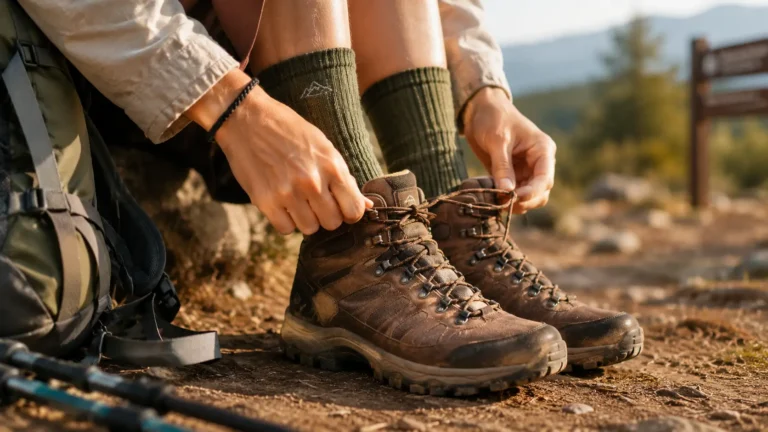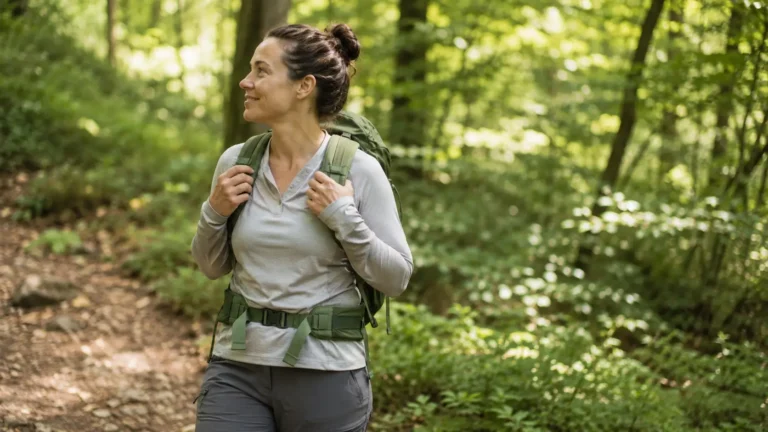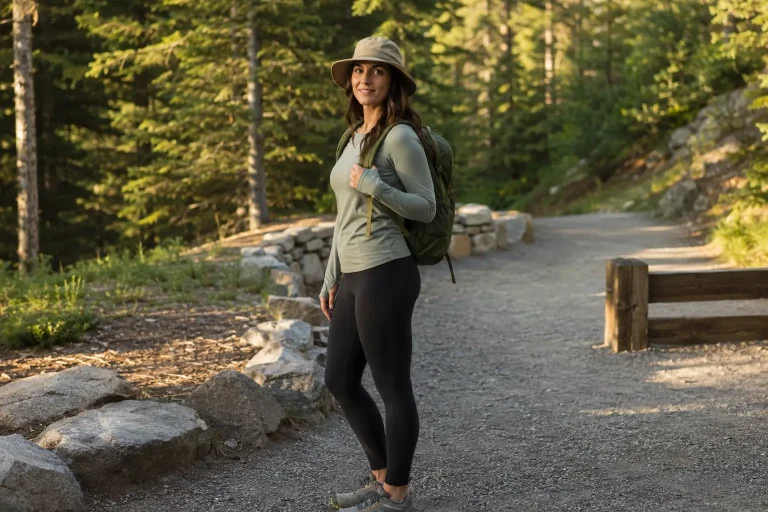
The first hiking boots I bought were expensive, stiff, and took three painful hikes to break in. I didn’t know what I was looking for. I just picked the ones that looked the most outdoorsy.
Here’s what I should have known: as a beginner woman, you don’t need the most technical boot on the shelf. You need something comfortable right out of the box, with decent ankle support, a waterproof membrane for unpredictable weather, and a sole that grips without being overbuilt for trails you’re not hiking yet.
This guide explains what actually matters when choosing your first pair of women’s hiking boots — and gives you four honest picks at different price points so you can stop researching and start hiking.
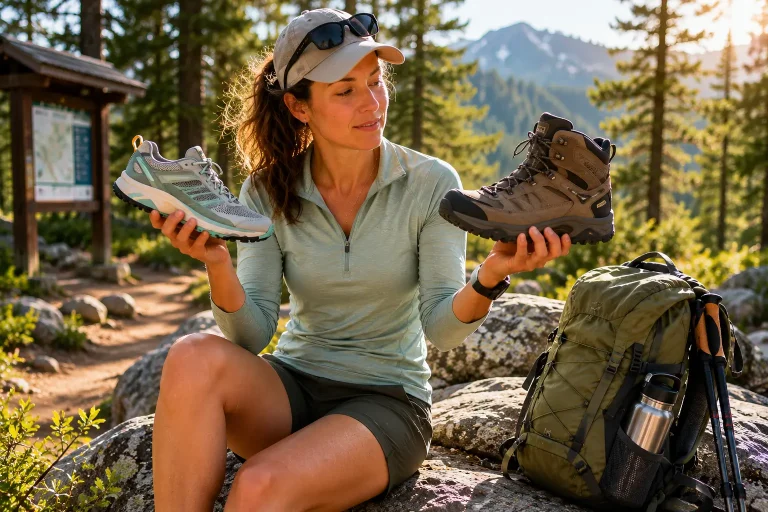
Do you actually need hiking boots, or will shoes do?
This depends on what you’re planning to hike. If you’ve read the shoes vs hiking boots guide already, you know that shoes and boots serve different purposes — and for some beginners, a trail shoe is genuinely the better starting point.
But if you’re planning to hike on uneven terrain, in wet or muddy conditions, or you want the extra ankle support while you’re still building trail confidence — boots are the right call. Most beginner women find boots more reassuring on their first few hikes, and that confidence matters.
What to look for in hiking boots as a beginner woman
Comfort out of the box
This is the most important thing for a beginner, and it’s the one most gear reviews bury at the bottom. A hiking boot that requires a two-week break-in period is not a beginner boot. You want something that feels comfortable — or at least not painful — from the very first hike.
Synthetic uppers (mesh and fabric) tend to be more comfortable immediately than full-grain leather. Leather looks classic and lasts longer, but it takes time to soften. For your first pair, lean toward synthetic or a leather-synthetic mix.
Waterproofing
A GORE-TEX membrane or equivalent waterproofing is worth it for beginner women. Not because you’ll be hiking through streams, but because weather changes, trails are muddy after rain, and wet feet on your third hike is a fast way to decide hiking isn’t for you.
GORE-TEX is the gold standard — it keeps water out while allowing some breathability. Proprietary membranes from Merrell (M Select DRY) or Salomon (Climasalomon) work similarly and are slightly more breathable. All are legitimate choices.
Ankle support — mid vs low cut
Mid-cut boots (ankle height) are the sweet spot for beginner women. They give your ankle some lateral support on uneven ground without the stiffness and weight of a full high-cut boot. Low-cut boots feel more like trail shoes — lighter and more flexible, but less supportive.
If you’re hiking on well-maintained trails with a light daypack, low-cut is fine. If you’re on rockier or more uneven terrain, or carrying more weight, mid-cut will serve you better.
Fit — especially heel and toe box
Women’s-specific hiking boots are built for a narrower heel and higher arch than men’s or unisex boots. That narrower heel fit matters — without it, your heel slides on descents and you get blisters.
In the toe box, you need room to spare. Your feet swell during a hike — usually about half a size. Buy boots with a thumb’s width of space between your longest toe and the end of the boot when you’re standing. Try them on with the hiking socks you plan to wear.
Width also matters. Brands like KEEN offer wider toe boxes than most. Salomon runs narrower. Merrell sits in the middle. If you have wider feet, check the brand’s fit notes before buying.
Traction
Vibram outsoles are the most trusted in hiking footwear — good grip on wet rock, mud and loose terrain. Many boots use proprietary rubber compounds that perform similarly. What to look for: deep lugs (the little rubber teeth on the sole) with moderate spacing. Shallow lugs slip. Overly aggressive lugs are overkill for maintained trails.
Weight
Lighter is generally better for beginners. Heavy boots tire your legs faster, especially if you’re not used to trail hiking. Aim for boots under 2 lbs per pair. Most good beginner boots sit in the 1.5–2 lb range.
What’s overkill for beginner women
- Full-grain leather boots — excellent long-term but stiff and slow to break in
- High-cut backpacking boots — too heavy and rigid for day hikes on maintained trails
- Crampon-compatible boots — built for mountaineering, not beginner hiking
- $250+ technical boots — save that investment once you know what you need
The best women’s hiking boots for beginners: my honest picks
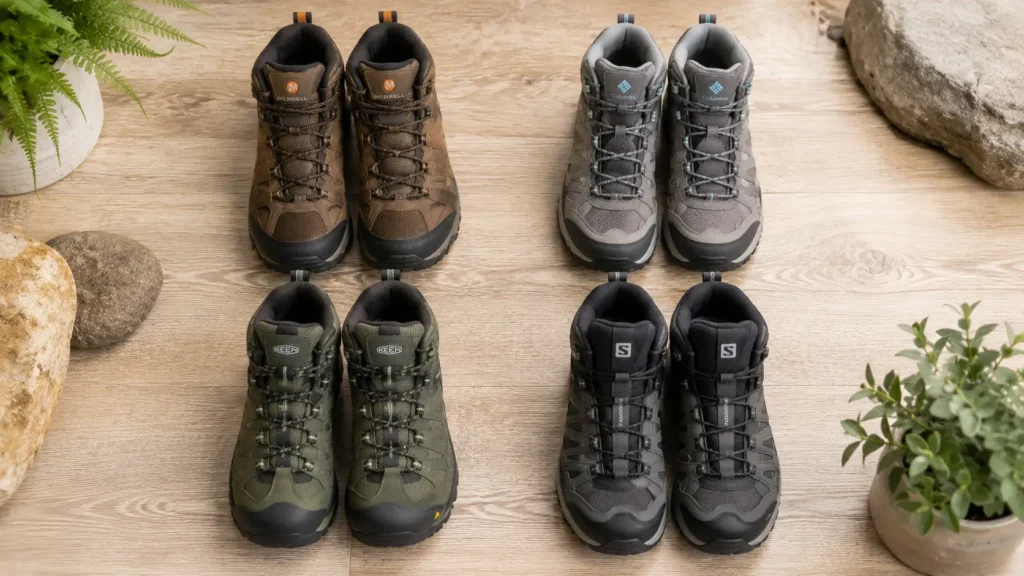
These are boots I’d actually recommend to a beginner woman based on comfort, fit, value and trail performance. All are available in women’s-specific sizing and under $200.
Best overall: Merrell Moab 3 Mid Waterproof (Women’s)
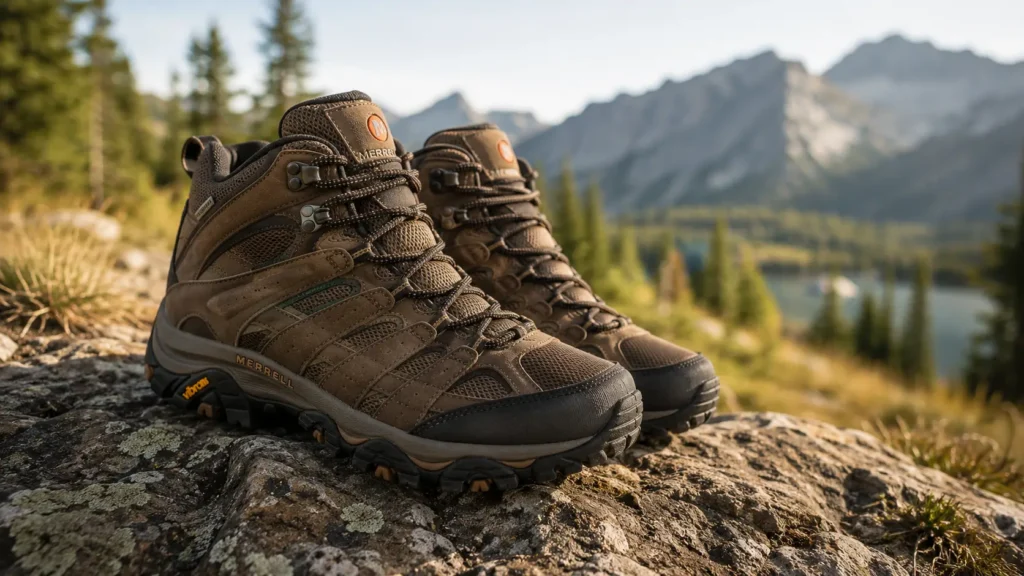
The Merrell Moab is the most consistently recommended hiking boot for beginner women — and it earns it every year. It’s comfortable right out of the box, waterproof, has a genuine Vibram outsole, and won’t bankrupt you. The mid-cut height gives ankle support without feeling rigid. The fit suits most foot shapes and it comes in wide.
Cut: Mid | Weight: approx. 1 lb 14 oz per pair | Price: around $130–150
Best for: Most beginner women doing day hikes on established trails in mixed conditions
Sophie’s note: If you’re only buying one pair of boots to start hiking, this is probably it.
Best budget: Columbia Newton Ridge Plus Waterproof Amped (Women’s)
Under $110, comfortable out of the box, and genuinely waterproof. The Columbia Newton Ridge is the boot that makes hiking accessible for beginners who don’t want to spend $150 before they know if they’ll love hiking. It’s not as technical as the Merrell, and the Omni-Grip outsole doesn’t match Vibram on wet surfaces, but for easy to moderate day hikes on maintained trails it does the job well.
Cut: Mid | Weight: approx. 2 lb per pair | Price: around $85–110
Best for: Beginner women who want to try hiking without a big financial commitment
Sophie’s note: Great starter boot. When you’ve done 20 hikes and know you love it, upgrade.
Best lightweight: Salomon X Ultra 4 Mid GTX (Women’s)
The Salomon X Ultra is what you graduate to when you want something lighter and more agile than a traditional hiking boot. It weighs significantly less than the Merrell, feels more like a trail shoe in how it moves, and still has excellent GORE-TEX waterproofing and solid grip. The Salomon fit runs narrower than Merrell — if you have wider feet, size up or try before buying.
Cut: Mid | Weight: approx. 1 lb 12 oz per pair | Price: around $165–190
Best for: Beginner women who want a lighter, faster-feeling boot for longer or more varied hikes
Sophie’s note: A step up in price but a noticeable step up in feel on trail. Worth it if budget allows.
Best for wide feet: KEEN Targhee III Mid Waterproof (Women’s)
KEEN boots are famous for their wide toe box — if other boots have always felt cramped at the front, this is the one to try. The Targhee III is comfortable, waterproof, durable, and has a lifetime guarantee against sole delamination. It’s slightly heavier than the others but the extra room makes it the most comfortable all-day option for women with wider feet or those who hate cramped toe boxes.
Cut: Mid | Weight: approx. 2 lb 2 oz per pair | Price: around $145–165
Best for: Beginner women with wider feet or anyone who finds most hiking boots too narrow at the toe
Sophie’s note: The toe box is genuinely different. If you’ve struggled with fit before, try KEEN first.
How to make sure your hiking boots fit
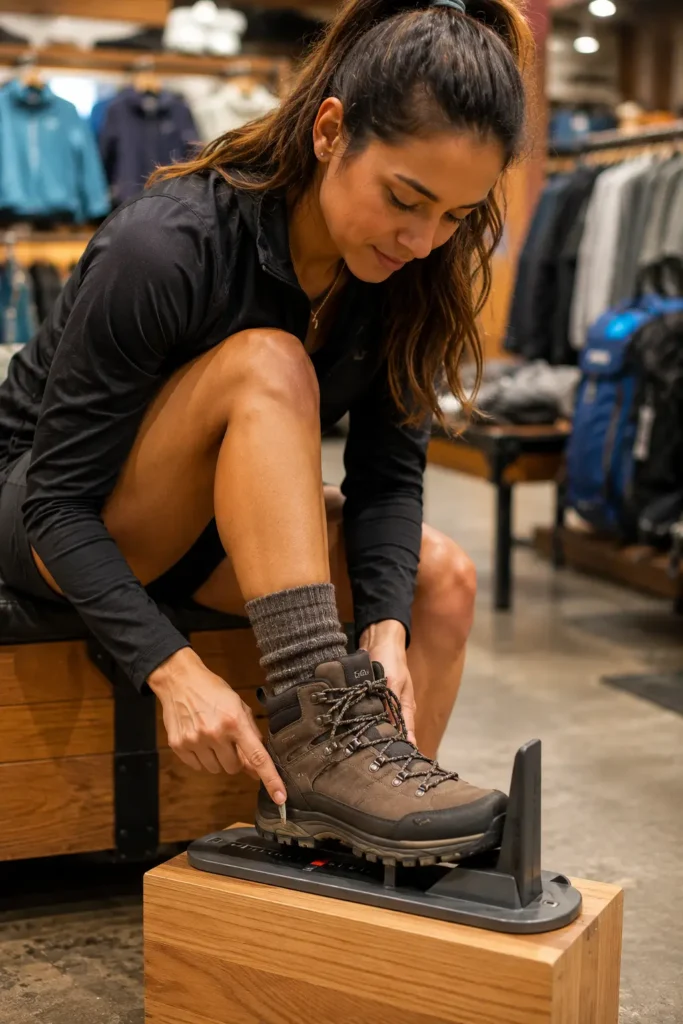
Get this right and you’ll avoid blisters. Get it wrong and no amount of good boot design will save your feet.
- Try boots on in the afternoon — feet swell throughout the day, just like they do on hikes
- Wear the hiking socks you’ll actually hike in — thicker socks change the fit significantly
- Stand up and press your toes forward — you should have a thumb’s width of space at the end
- Lace them up and walk around — your heel should not lift at all on flat ground
- Find a slope or step and walk down — your toes should not touch the front of the boot
- If buying online, check the brand’s torso sizing and read reviews specifically about fit
How to break in new hiking boots
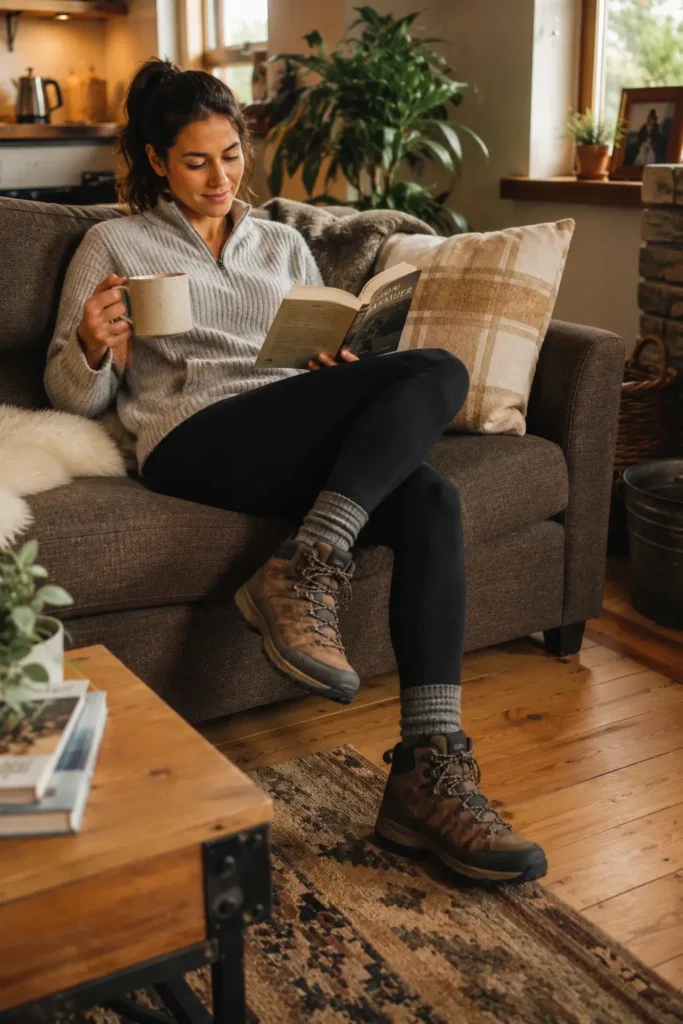
Even the most comfortable out-of-the-box boots need some breaking in before a long hike. Here’s the process:
- Week 1 — wear them around the house for 30–60 minutes a day
- Week 2 — short walks on pavement or easy paths, 30–60 minutes
- Week 3 — your first trail hike, 1–2 hours maximum
- Week 4 — longer hikes as comfort allows
Don’t wear brand new boots on a 6-hour hike. Your feet will not forgive you.
How to care for your hiking boots
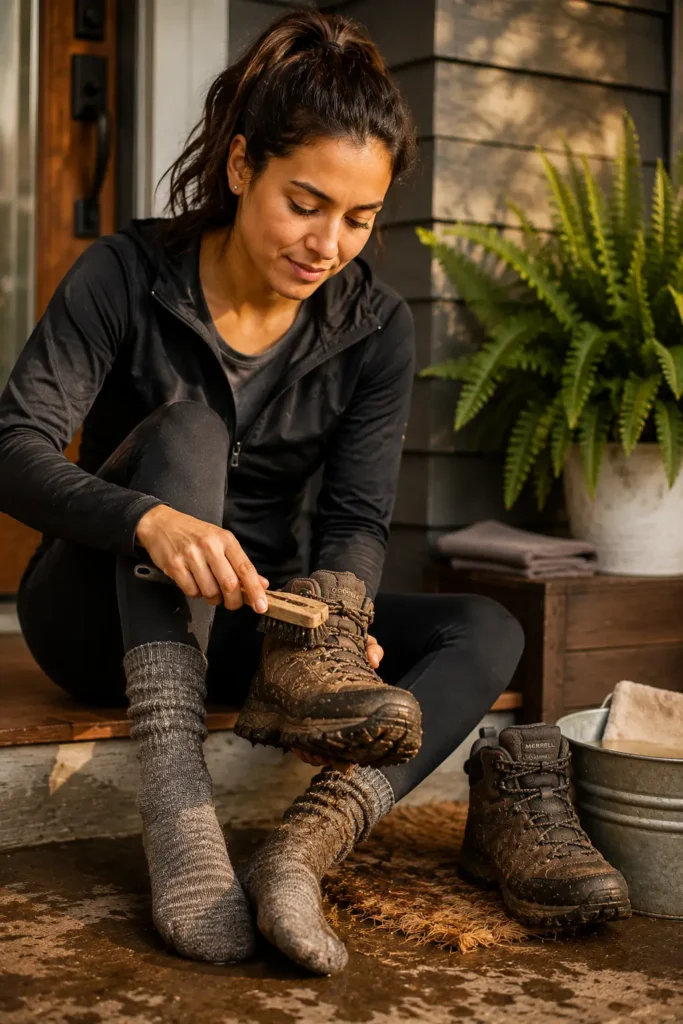
- After every hike — knock off mud and dirt while still damp, easier to remove
- Dry naturally — never near a direct heat source like a radiator or campfire, it degrades the materials
- Clean with a soft brush and warm water, no harsh detergents
- Synthetic boots — apply DWR (Durable Water Repellent) spray every few months to maintain waterproofing
- Leather boots — condition every 3–6 months to prevent cracking
- Store in a cool, dry place away from direct sunlight
Final thoughts
The best women’s hiking boots for beginners are the ones that fit your feet correctly, feel comfortable from the first hike, and don’t cost more than they need to. For most beginner women, that means a mid-cut waterproof boot in the $90–160 range.
The Merrell Moab 3 Mid is where I’d point most beginners. If budget is tight, the Columbia Newton Ridge is a solid starting point. If you have wider feet, try KEEN before anything else. And if you want something lighter and more agile, the Salomon X Ultra is worth the extra investment.
Start with a boot that fits. Wear it in properly. Then go find a trail.
For everything else you need as a beginner woman, the complete beginner hiking gear guide covers it all.
FAQs
The best women’s hiking boots for beginners balance comfort, waterproofing and ankle support without being overbuilt for easy trails. The Merrell Moab 3 Mid Waterproof is the most consistently recommended option for beginner women — comfortable out of the box, genuinely waterproof, and priced fairly at $130–150.
Mid-cut is the better starting point for most beginner women. It offers ankle support on uneven terrain without the stiffness of a full high-cut boot. Low-cut feels more like a trail shoe — great for easy, flat trails but less reassuring on rockier ground when you’re still building trail confidence.
$90–160 is the right range for beginner women’s hiking boots. Below $90, waterproofing and outsole traction tend to drop noticeably. Above $160, you’re paying for technical features most beginners don’t need yet. The Merrell Moab 3 ($130–150) and Columbia Newton Ridge ($85–110) both sit in the right zone.
For most beginner women, yes. A GORE-TEX or equivalent waterproof membrane protects against unexpected rain, muddy trails and wet grass — all the things you’ll encounter on established day hike trails. Wet feet on your early hikes is one of the fastest ways to lose enthusiasm for hiking altogether.
Try them on with hiking socks in the afternoon when your feet are slightly swollen. You should have a thumb’s width of space at the toe, your heel should not lift when walking, and your toes should not touch the front when walking downhill. If buying online, check the brand’s sizing guide and read reviews specifically mentioning fit.
Start slow — wear them around the house, then short walks, then your first trail hike. Give it 3–4 weeks before a long hike. Most beginner-friendly boots with synthetic uppers break in faster than leather. Never wear brand new boots on a hike longer than 2 hours.

Intermediate hiker sharing real trail experience — honest gear picks, beginner-friendly guides, no filler.