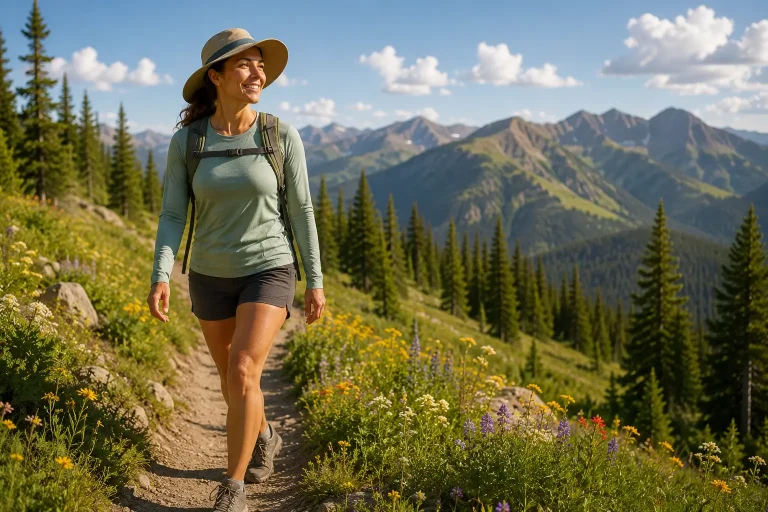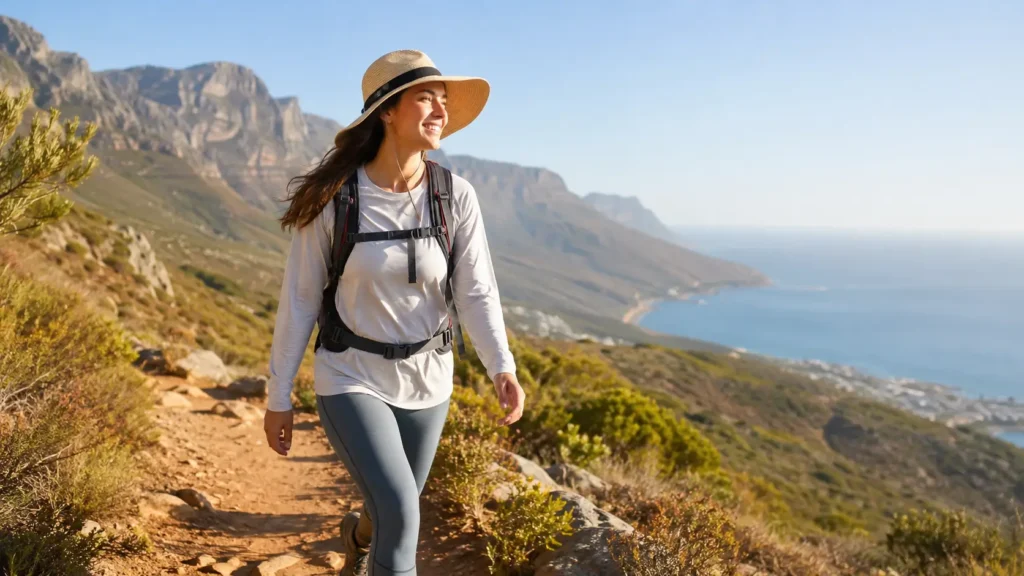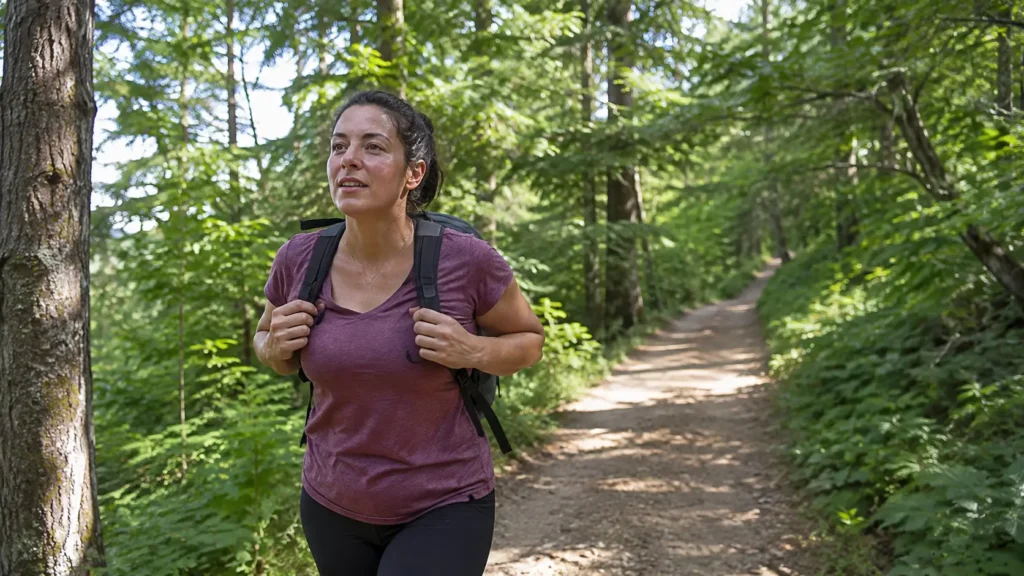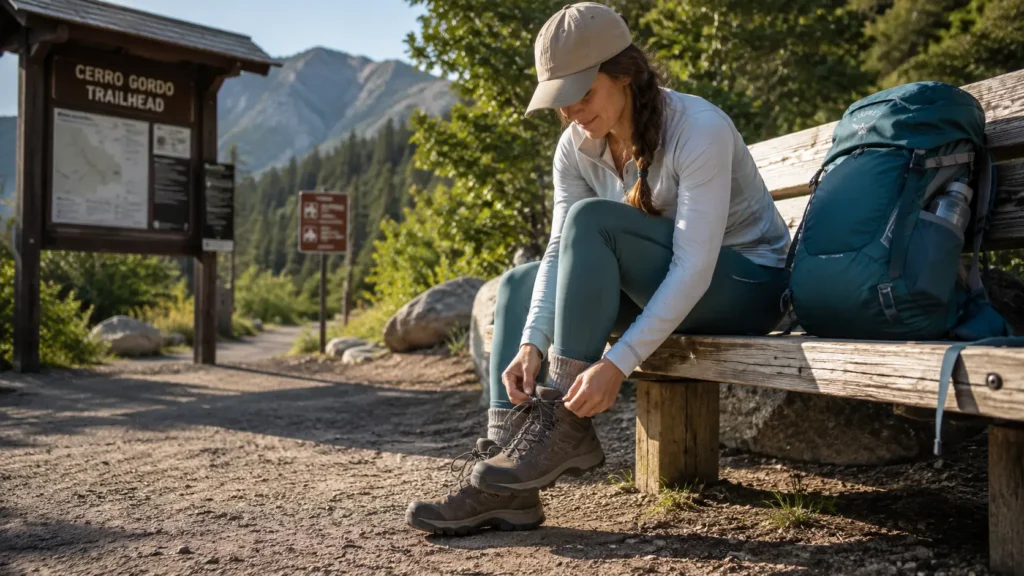
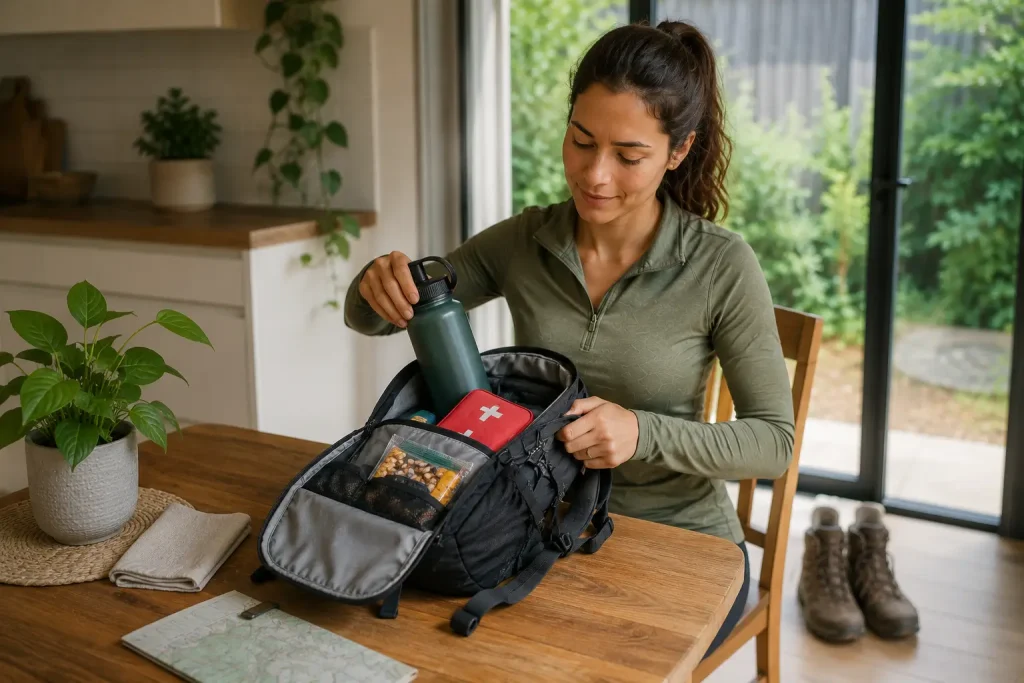
There’s a particular kind of frustration that comes from being two miles into a hike and realising you’ve forgotten something important. I’ve turned back for a forgotten water bottle. I’ve arrived at a trailhead without downloading the map. I’ve reached a summit in freezing wind without a warm layer because the morning looked sunny.
A good packing list fixes all of that. Not an overwhelming list that turns every hike into a military operation — a practical, tested list of everything you actually need and nothing you don’t.
This is the packing list I use before every day hike. I’ve built it up over years of getting things wrong and figuring out what actually matters. It’s written for women, with women-specific items included, and it’s available as a free printable PDF at the end of this article.
📋 FREE PDF DOWNLOAD
| Free Download: Get the printable PackedTrails Day Hiking Checklist PDF |
The Quick Version: Complete Hiking Packing List for Women
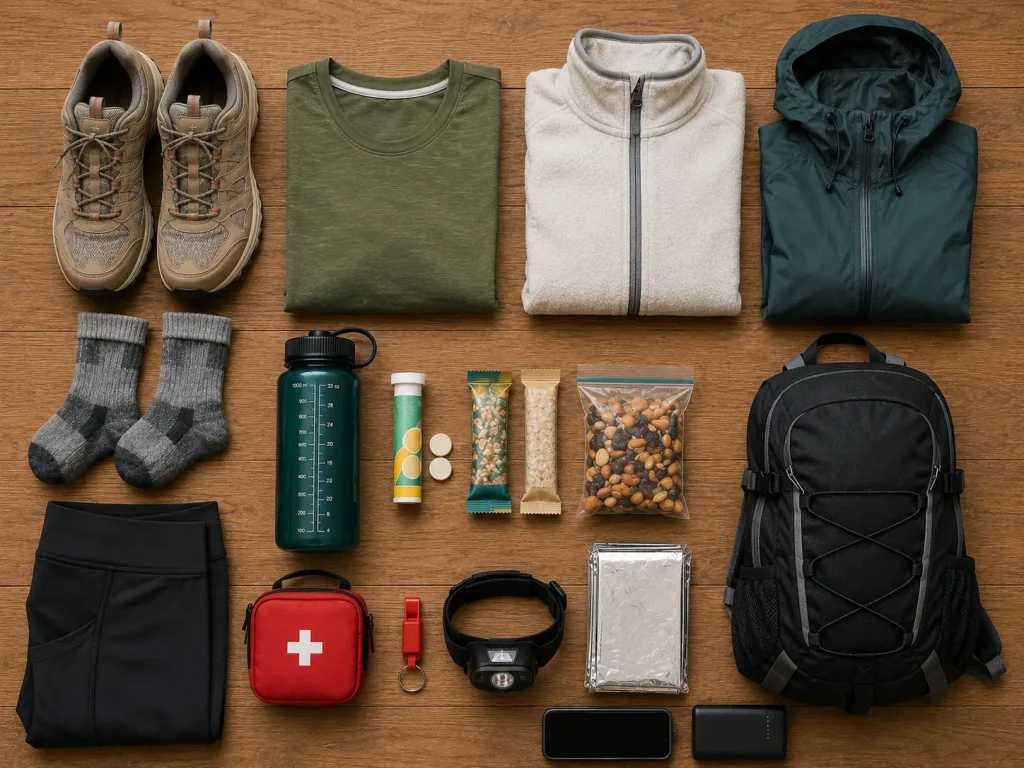
Here is the full list. Everything below explains the why behind each item.
Footwear
- Hiking boots or trail runners (broken in before the hike)
- Merino wool or synthetic hiking socks (no cotton)
- Spare socks for longer hikes
Clothing Layers
- Moisture-wicking base layer top (no cotton)
- Lightweight fleece or softshell mid layer
- Waterproof jacket (outer shell)
- Hiking leggings or trousers (no denim)
- Underwear designed for movement
- Sun hat with a brim
- Warm hat and gloves (pack even in summer)
- Sunglasses with UV protection
Pack
- Daypack 15–25 litres with hip belt
- Rain cover for pack
Hydration
- Water — minimum 2 litres (500ml per hour of hiking)
- Electrolyte tablets or powder
- Water filter for longer or remote hikes
Food & Fuel
- High-energy snacks (trail mix, energy bars, nuts, dried fruit)
- Lunch if hiking over 3 hours
- Extra emergency snack
Navigation
- Offline trail map downloaded (AllTrails or Komoot)
- Phone fully charged
- Portable power bank
- Screenshot of trailhead directions
Safety
- Compact first aid kit with blister plasters
- Emergency whistle
- Headlamp with fresh batteries
- Emergency foil blanket
- Personal alarm (clipped to pack)
- Any personal medication
Sun Protection
- Sunscreen SPF 30+ (reapply every 2 hours on exposed skin)
- SPF lip balm
Women-Specific Items
- Period supplies (even if not expected — altitude and exertion can trigger early)
- Small trowel and waste bags for remote trails with no facilities
- Chafe cream or anti-chafe balm
Footwear — The Most Important Item on the List
Your footwear affects everything on a hike — your energy levels, your confidence on terrain, and whether you finish with happy feet or blisters that ruin the last two miles. For a full guide to choosing between hiking boots and trail runners, our beginner hiking gear guide for women covers exactly what to look for and how much to spend.
Still deciding between hiking boots and trail runners? Our full comparison of hiking shoes vs boots for women covers exactly when each type is the right choice.
Trail runners are lightweight, breathable, and comfortable from the first wear. They work well on most maintained day hike trails and are the better starting point for beginners.
Hiking boots offer more ankle support and waterproofing for rough, rocky or wet terrain. They need breaking in before a long hike — never wear new boots on a proper trail.
Socks matter more than most people realise. Merino wool hiking socks (Darn Tough and Smartwool are the most recommended) prevent blisters, regulate temperature and cushion your feet over miles of uneven ground. Never cotton.
Clothing Layers — The Three-Layer System
The layering system is the most important clothing principle in hiking. For a complete breakdown of every clothing item women should wear hiking — by season and trail type — our women’s hiking outfit guide covers it all. Three layers, each with a specific job:
Base layer: sits against your skin and pulls moisture away. Moisture-wicking synthetic or merino wool. Never cotton.
Mid layer: provides warmth when you stop moving. A lightweight fleece or softshell jacket. Goes in your pack when you’re generating heat on the climb.
Outer shell: weather protection. A waterproof or water-resistant jacket that blocks wind and rain. Carry this every hike regardless of the forecast — conditions change fast.
Always pack a warm hat and gloves even on summer hikes. Summit temperatures can be 10 degrees colder than valley temperatures. Wind chill on an exposed ridge makes this difference feel even larger.
Hydration — More Than You Think You Need
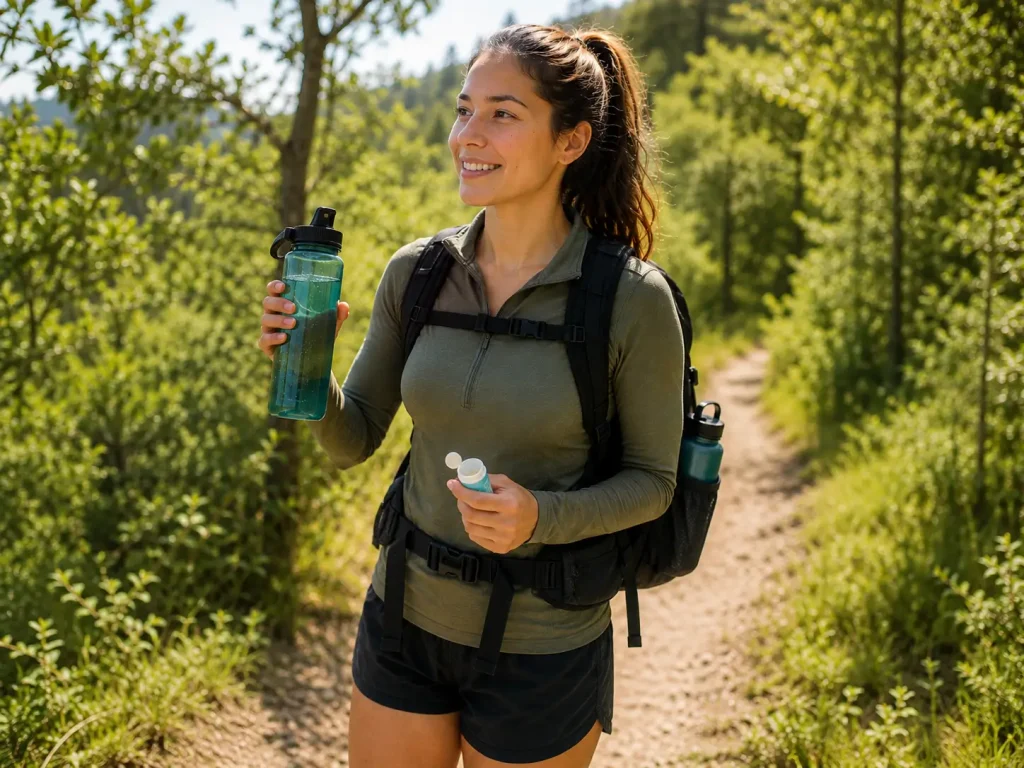
Dehydration is the most common reason people turn back on trails early, and it’s completely preventable.
The rule: 500ml of water per hour of active hiking in moderate conditions. For a 4-hour hike, that’s 2 litres minimum. In heat or at altitude, more.
Electrolyte tablets or powder added to your water help significantly on longer or warmer hikes. Sweating depletes sodium as well as water, and electrolytes prevent the fatigue and headaches that come from water alone.
Water bottles vs hydration bladders: both work. Bottles are easier to clean and let you see how much you’ve drunk. Bladders carry more volume and let you drink without stopping. Many hikers carry both.
Food — Fuel Before You’re Hungry
Your body burns significantly more calories hiking than walking on flat ground. If you wait until you’re hungry to eat, your energy has already dipped.
Eat a snack every 60–90 minutes regardless of how you feel. Good trail snacks are calorie-dense, lightweight, and don’t need refrigeration — trail mix, energy bars, oatcakes, nut butter sachets, fresh fruit, cheese.
On hikes over 3 hours, bring a proper lunch. Snacks alone won’t sustain you through a full day on the trail.
Navigation — Download Before You Leave
Your phone is your primary navigation tool — with one critical condition: the map must be downloaded offline before you leave home. Mobile signal on trails is unreliable. In many areas there is no signal at all.
Download your trail on AllTrails or Komoot before you leave. Screenshot the route and trailhead directions as a backup. Carry a power bank — GPS drains batteries faster than anything else.
Also: tell someone your trail name, start time, expected return time, and what to do if they haven’t heard from you. For a full guide to solo hiking safety — including trail selection, personal safety devices and building confidence hiking alone — read our solo hiking safety guide for women. Leave a note on your dashboard. This costs nothing and creates a safety net that requires no equipment.
Safety Essentials
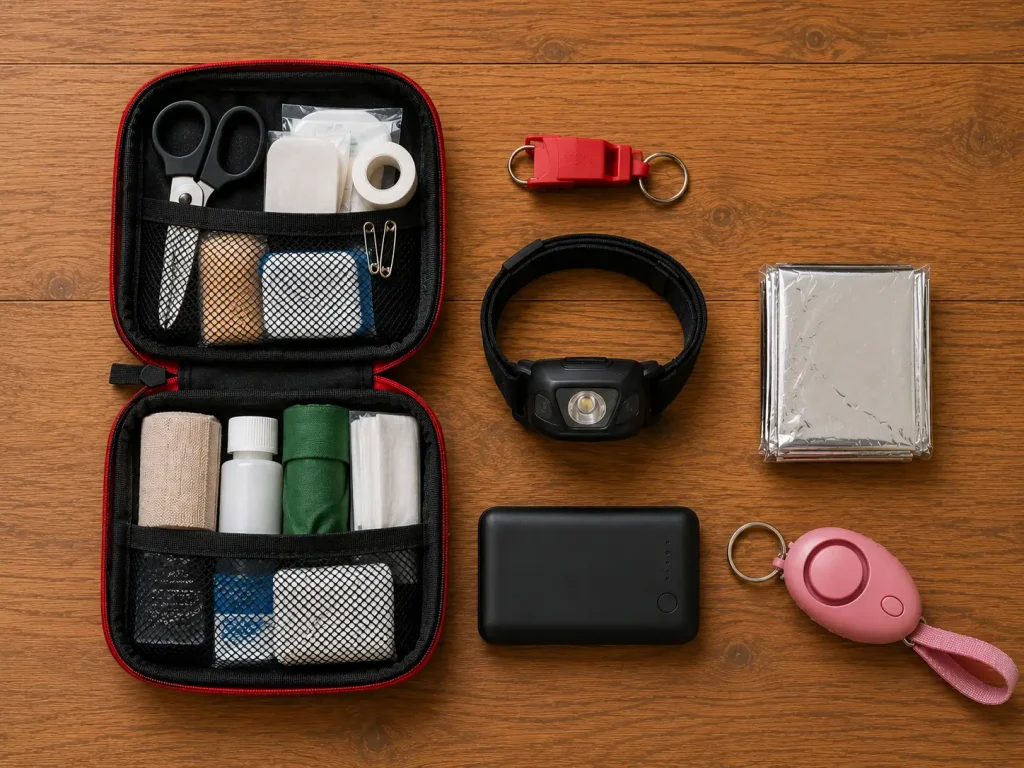
First Aid Kit
A compact trail-specific first aid kit is non-negotiable. Must-haves: blister plasters (you will use these), adhesive bandages in multiple sizes, antiseptic wipes, pain relief, a small bandage, and any personal medication.
Emergency Whistle
Lightweight, costs almost nothing, far more effective than shouting for help. Three blasts is the international distress signal. Clip it to your pack where you can reach it without opening anything.
Headlamp
Even on a planned morning hike. Hikes take longer than expected. Being caught on a rocky trail after dark without a light is genuinely dangerous. A basic headlamp with fresh batteries takes up almost no space.
Emergency Foil Blanket
Folds to the size of a credit card, weighs almost nothing, retains body heat in an emergency. There is no reason not to carry one.
Women-Specific Packing Considerations
Period Supplies
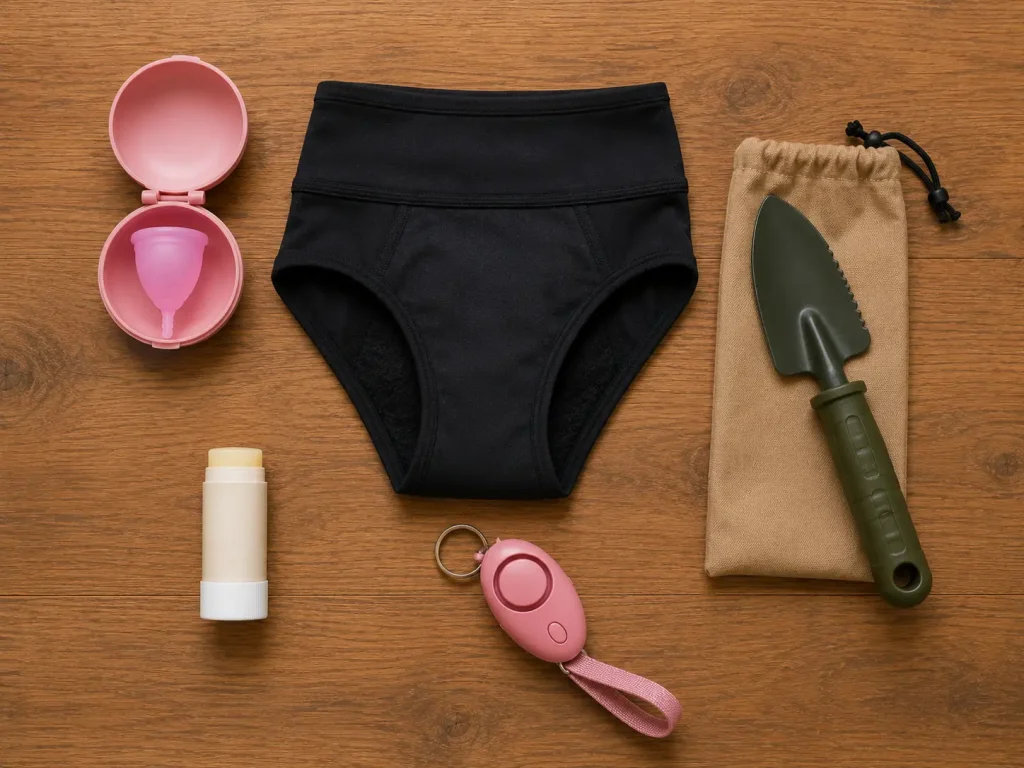
Altitude and physical exertion can trigger early periods. Carry supplies even if you’re not expecting your period. Period underwear, menstrual cups and discs all work well on the trail and are more practical than disposable products when facilities aren’t available. All sanitary waste needs to be carried out.
Toilet Facilities
Many trails have no facilities. Move at least 60 metres from the trail and any water source. A small trowel for a cat hole 15–20cm deep is worth carrying for longer or more remote hikes. Pack out all waste in a sealed bag.
Chafing Prevention
Chafing becomes a real issue on longer hikes, especially in warm weather. Anti-chafe balm or stick applied to inner thighs and any other friction points before you set off prevents a problem that gets progressively worse the longer you walk.
What to Leave at Home
Full-size toiletries. Travel size or nothing.
Books or tablets. The trail is the entertainment.
Multiple outfit changes. Pack functional layers, not options.
Glass containers. Heavy, breakable, unnecessary.
Cotton anything. T-shirt, socks, base layer — none of it. Cotton holds moisture and causes blisters and cold.
Too many snacks. Enough is enough. Every extra gram counts over 8km.
Before You Leave the Car — Final Check
If you’re heading out for your first hike, our beginner hiking tips for women covers everything you need to know before you go — from trail selection to pacing and trail etiquette.
- Phone charged and offline map downloaded
- Someone told your trail name and expected return time
- Note left on dashboard with trail + return time
- Weather checked this morning (not last night)
- Boots laced and already broken in
- Water bottle or bladder filled
- Pack weight feels manageable
📋 FREE PDF DOWNLOAD
| Free Download: Get the printable PackedTrails Day Hiking Checklist PDF |
FAQs
For a day hike, aim for 10% or less of your body weight. Most women do well with a pack between 5–8kg including water and food. Much heavier and fatigue sets in earlier, especially on longer trails or significant elevation gain.
Women-specific daypacks are designed for a shorter torso, narrower shoulders and different hip shape. They often fit more comfortably than unisex packs. It’s worth trying both — the most important thing is that the pack fits your back correctly and the hip belt sits on your hip bones, not your waist.
A general rule: 200–300 calories per hour of hiking, plus a lunch if hiking over 3 hours. Err on the side of too much rather than too little — extra food weighs very little and running out of energy on the trail is genuinely miserable.
Water. Nothing else comes close. Dehydration affects your decision-making, your energy, and your safety. Everything else on this list matters — but if you forget water, the hike ends early.
You can for easy short hikes, but a proper daypack with a hip belt makes a significant difference over longer distances. The hip belt transfers weight from your shoulders to your hips where your body handles it much more efficiently. After a few hours, this matters a lot.
Final Thoughts
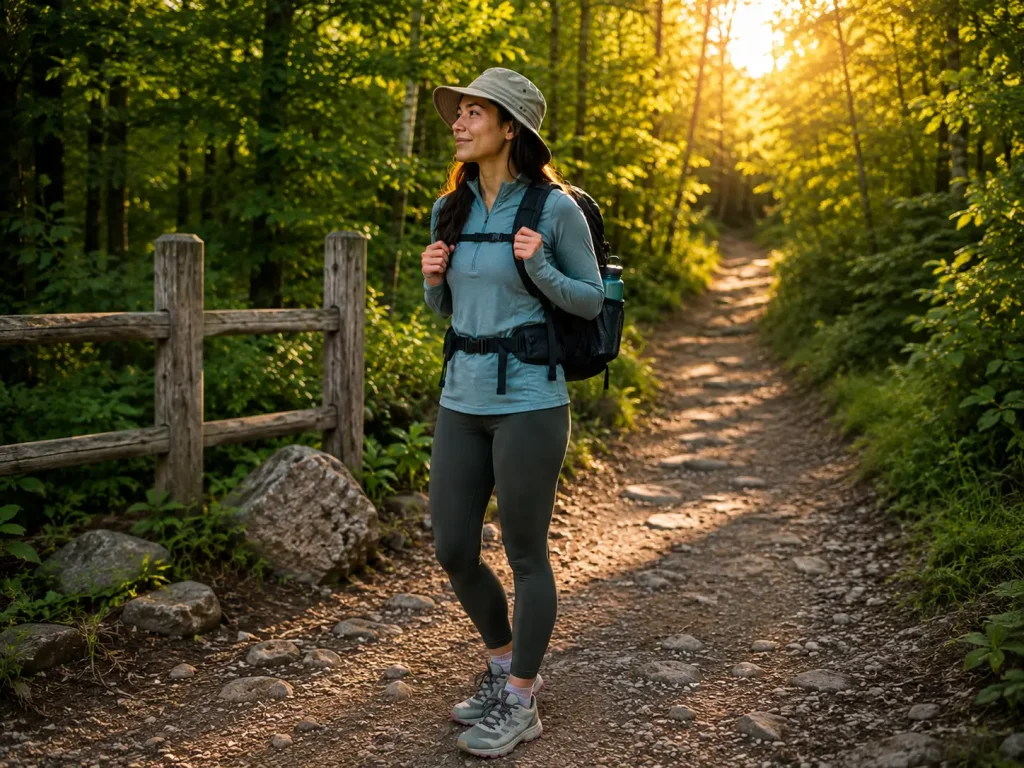
A good packing list isn’t about carrying more — it’s about carrying the right things. Everything on this list earns its weight. Everything I’ve left off either isn’t necessary for a day hike or gets replaced by something lighter and more functional.
Download the free printable PDF, run through it before every hike, and you’ll never arrive at a trailhead wishing you’d packed something different. For a complete list of everything else you need for a day hike beyond your pack, our day hiking essentials guide for beginners covers every item in detail.
The trail is waiting.

Intermediate hiker sharing real trail experience — honest gear picks, beginner-friendly guides, no filler.