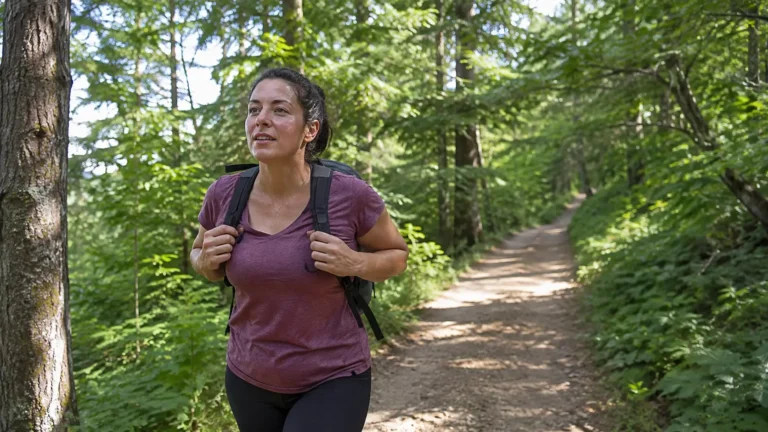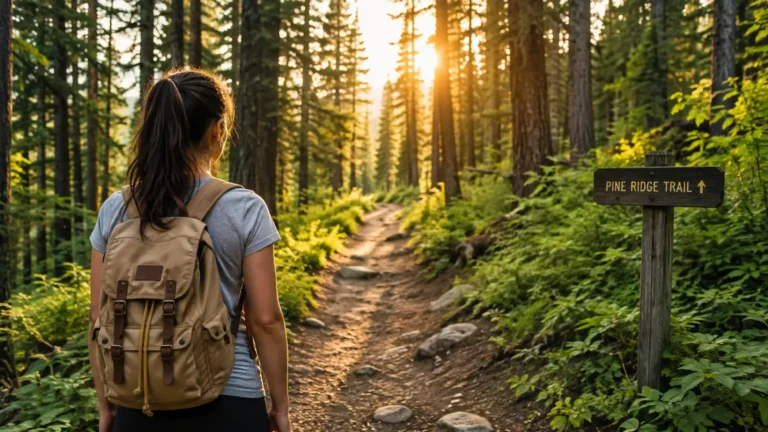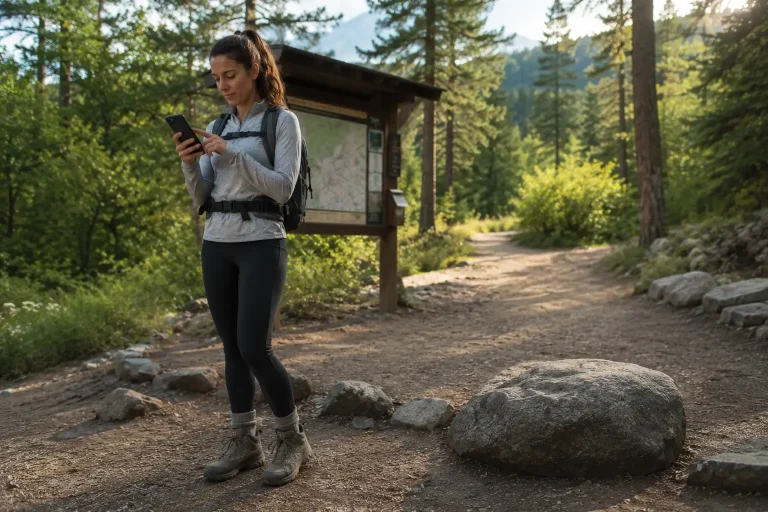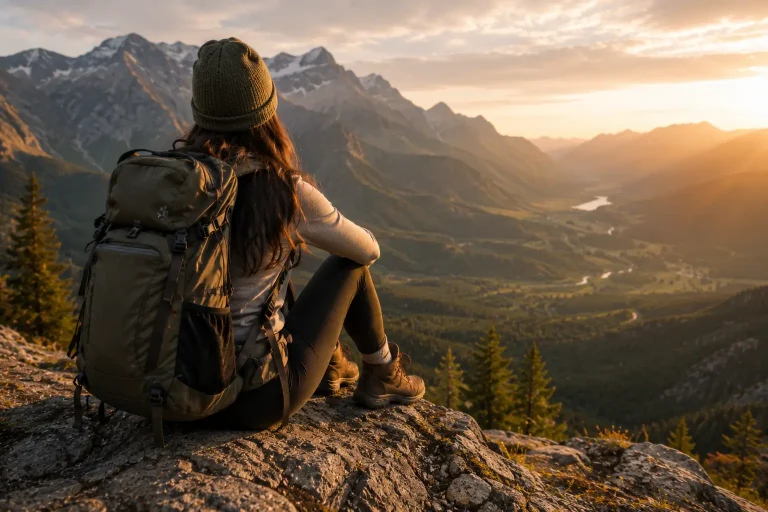
The first time I packed for a hike as a woman, I brought way too much of the wrong things and not nearly enough of the right ones. A full change of clothes, three different snacks that all came in heavy glass jars, a book for the summit, and no proper navigation beyond my phone battery. I made it back fine — but I was exhausted, unprepared for the wind at the top, and my feet were wrecked.
Since then I’ve done a lot of hiking, made a lot of mistakes, and figured out what actually matters in a pack. This guide is the checklist I wish someone had handed me before that first hike.
It covers everything a woman needs for a day hike — the gear, the clothing, the safety basics, and a few things that are specifically worth thinking about as a woman on the trail.
The Women’s Day Hiking Checklist
Before we get into the details, here is the complete list. Everything else in this article explains the why behind each item.
Footwear & Lower Body
- Hiking boots or trail runners (broken in before the hike)
- Wool or synthetic hiking socks (no cotton)
- Gaiters (optional, useful for muddy or rocky terrain)
Clothing
- Moisture-wicking base layer top (no cotton)
- Lightweight mid layer (fleece or softshell)
- Waterproof or windproof outer layer
- Hiking trousers or leggings (no denim)
- Underwear designed for movement (seamless or sports)
- Sun hat or cap
- Warm hat and gloves (even in summer, for summits)
For outfit details, fabric choices and seasonal variations — see the full hiking outfit guide for women.
Pack
- Daypack (15–25 litres) – Not sure what to look for in a daypack? Our hiking gear guide for beginner women explains exactly what size, fit and features matter.
- Rain cover for your pack
Want a printable version of this checklist? Our day hiking packing list for women includes a free PDF you can download and take on every hike
Hydration & Food
- Water (minimum 2 litres, more in heat)
- Electrolyte tablets or powder
- High-energy snacks (nuts, dried fruit, energy bars)
- Lunch or main food if hiking over 3 hours
Navigation
- Printed trail map or downloaded offline map
- Compass (and basic knowledge of how to use it)
- Fully charged phone
Safety
- First aid kit (compact, trail-specific)
- Emergency whistle
- Headtorch with spare batteries
- Emergency foil blanket
- Sun cream (SPF 30 minimum)
- Insect repellent (season-dependent)
Women-Specific
- Period supplies (even if you’re not due — altitude and exertion can trigger early periods)
- Small trowel and waste bags if hiking in areas without facilities
- Personal alarm or safety device (optional but worth considering for solo hiking)
Footwear — The Most Important Decision You’ll Make
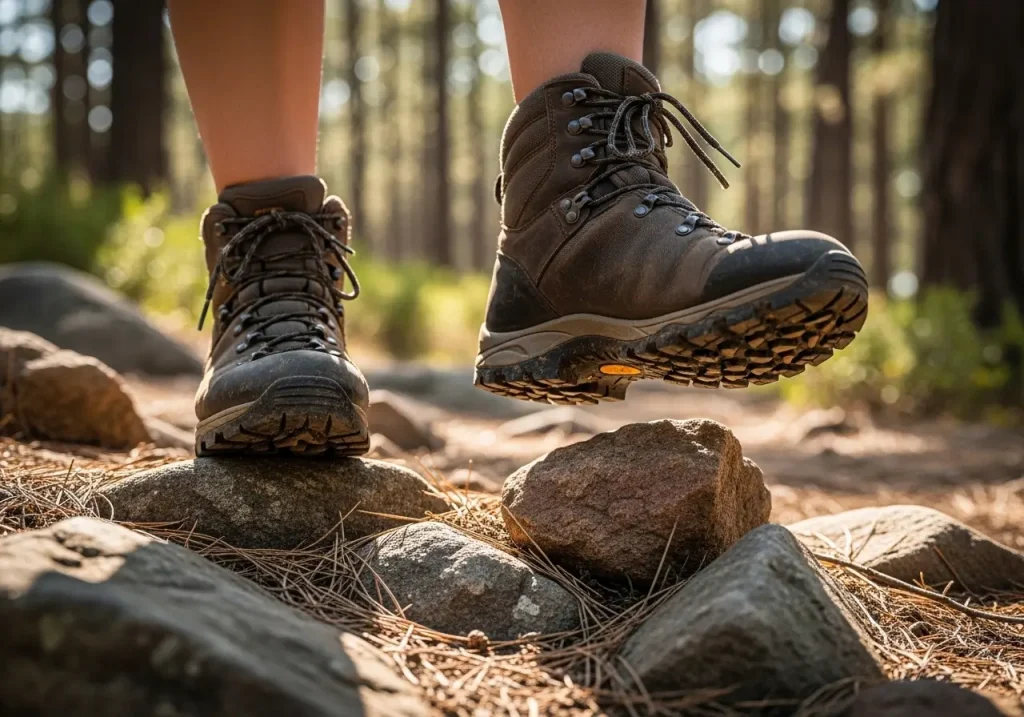
The right footwear — broken in before the hike — is the single most important item in your pack.
If there’s one thing that will make or break your hike, it’s your feet. Bad footwear causes blisters, ankle rolls, knee pain, and misery. Good footwear makes everything easier.
Hiking Boots vs Trail Runners
Hiking boots offer ankle support, waterproofing, and durability. They’re heavier but protective. Good for rocky, uneven, or wet terrain.
Trail runners are lighter, more flexible, and dry faster. They’re excellent for well-maintained trails where ankle support matters less.
For beginners on moderate day hikes, hiking boots are generally the safer choice. Once you know what terrain you prefer, trail runners might suit you better.
The New Boot Rule
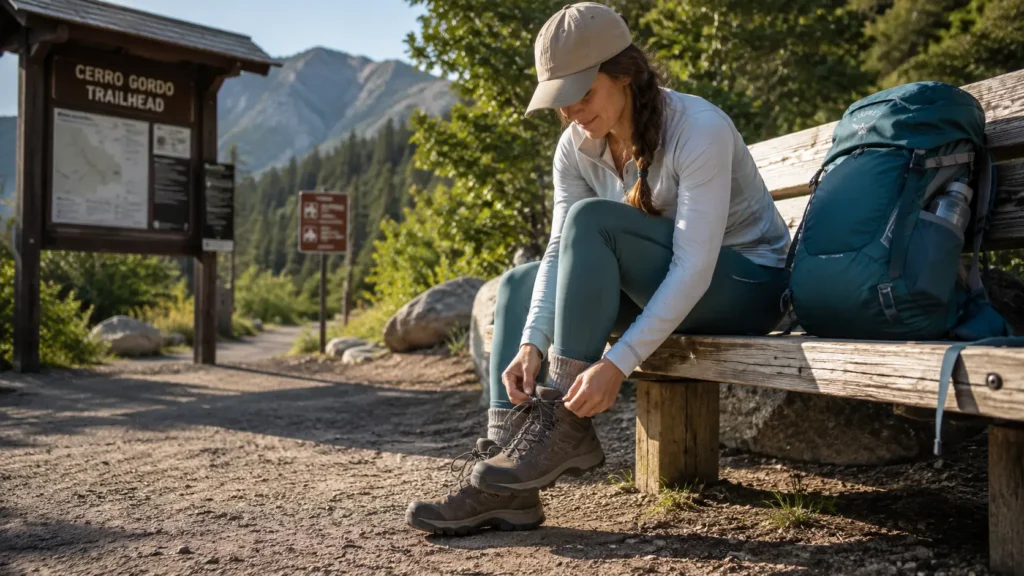
Never wear new boots on a long hike. Always break them in first — wear them around the house, on short walks, on errands. A blister from new boots 5km from the summit is one of hiking’s most avoidable miseries.
What NOT to Wear
- New trainers — not enough grip, no ankle support
- Fashion boots — wrong sole, wrong support
- Flip flops or sandals — on any trail that isn’t a flat beach path, these are genuinely dangerous
- Anything cotton for socks — cotton holds moisture, causes blisters fast
What to Wear Hiking as a Woman
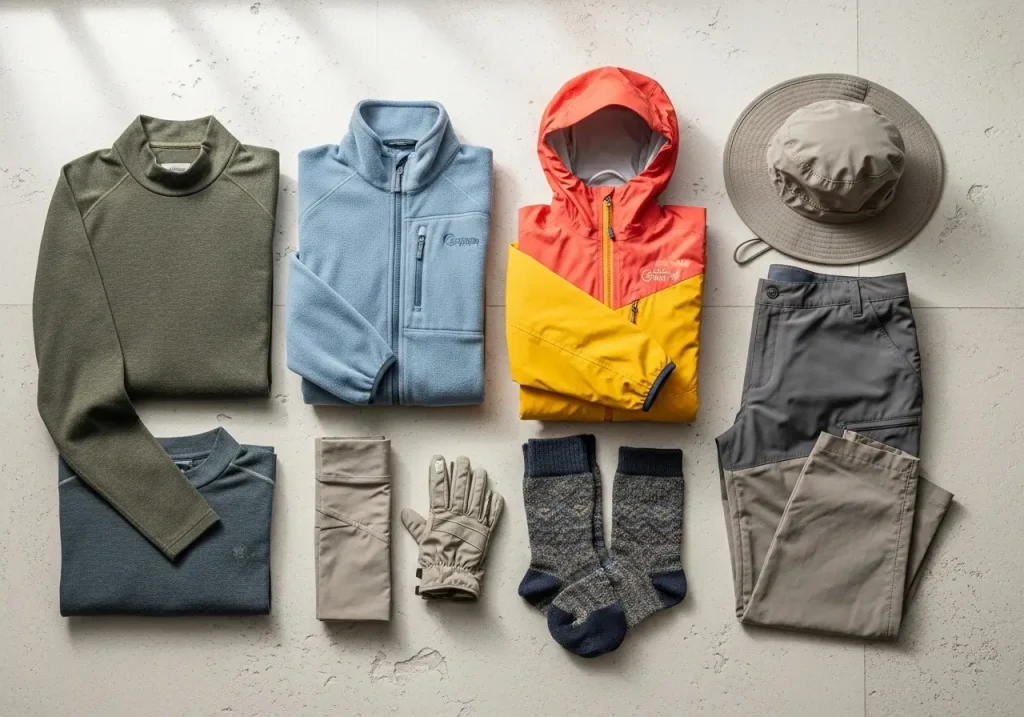
Clothing for hiking comes down to one principle: layers and no cotton. If you want a deep dive into exactly what to wear — from specific tops and leggings to seasonal outfits — we have a full women’s hiking outfit guide dedicated to just this topic.
The Layering System
Base layer — sits against your skin. Should wick moisture away. Wool (merino) or synthetic. Never cotton. This is the most important layer.
Mid layer — provides warmth. A lightweight fleece or softshell jacket. Zips and pockets are useful.
Outer layer — protects from wind and rain. A waterproof or wind-resistant shell. Even on sunny days, bring one. Weather changes fast on trails, especially at altitude.
Bottoms
Hiking trousers or leggings in a synthetic or wool blend. They should move freely, dry quickly, and not chafe. Zip-off trousers (that convert to shorts) are practical for changing conditions. See our guide on what to wear hiking for a full seasonal breakdown.
Avoid denim entirely. Wet denim is heavy, cold, and causes chafing.
Sun Protection
- SPF lip balm
- Sun cream on exposed skin (including the back of your neck and ears)
- Sun hat with a brim
- UV protective clothing if hiking at high altitude or in intense sun
How Much Water to Bring
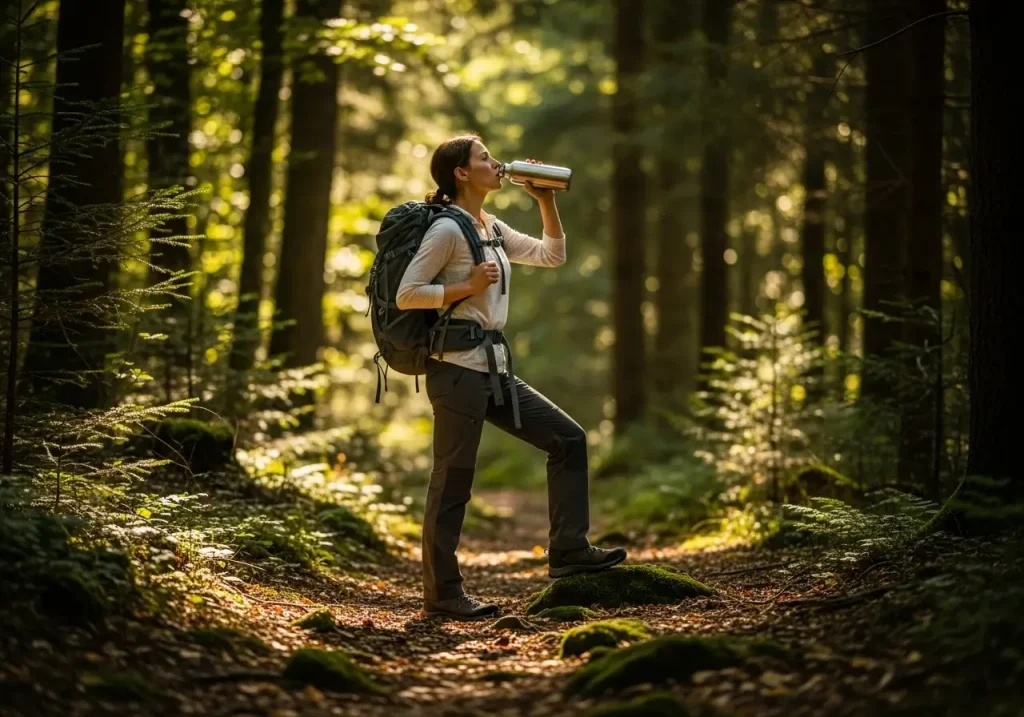
Dehydration is the most common cause of people turning back on trails early. By the time you feel thirsty, you’re already mildly dehydrated.
The general rule: 500ml per hour of active hiking in moderate conditions. For a 4-hour hike, that’s 2 litres minimum.
Water Bottles vs Hydration Bladders
Water bottles (stainless steel or BPA-free plastic) are easy to use, easy to clean, and you can see how much you’ve drunk.
Hydration bladders carry more volume and let you sip as you walk. Both work well. Many hikers carry a combination.
Electrolytes
On hikes over 2 hours, plain water isn’t always enough. Sweating depletes sodium and electrolytes. Electrolyte tablets or powder added to water help significantly on longer or hotter hikes.
Food and Snacks on the Trail
You don’t need elaborate trail meals for a day hike. You do need enough fuel to keep your energy stable.
- Trail mix (nuts, dried fruit, seeds)
- Energy bars
- Oatcakes or crackers with nut butter sachets
- Fresh fruit (apples and bananas are trail-friendly)
- Cheese and crackers
- Homemade flapjack
For hikes over 3–4 hours: bring an actual lunch, not just snacks. Snack every 60–90 minutes to maintain steady energy.
Safety Essentials Every Woman Should Carry
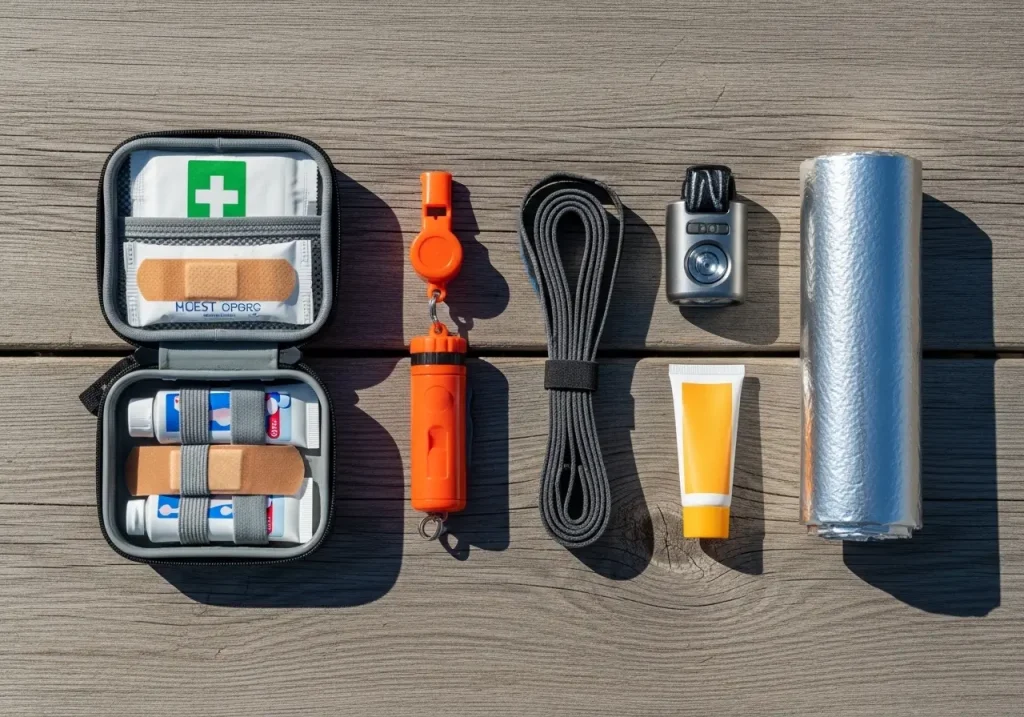
First Aid Kit
- Blister plasters (multiple — blisters happen)
- Adhesive bandages in various sizes
- Antiseptic wipes
- Pain relief tablets
- A small bandage
- Any personal medication
Emergency Whistle
Lightweight, costs almost nothing, and far more effective than shouting if you need to signal for help. Three blasts is the international distress signal.
Headtorch
Even for a day hike. If something goes wrong and you’re on the trail after dark, a headtorch could be the difference between a difficult situation and a dangerous one.
Emergency Foil Blanket
Weighs almost nothing, folds to the size of a credit card, and can prevent hypothermia if you’re stuck on the trail overnight or in unexpected cold.
Navigation — Don’t Rely Only on Your Phone
Phones die. Batteries drain faster in cold weather. Signal disappears in remote areas. Navigation by phone alone is risky.
- Downloaded offline map — apps like OS Maps, Komoot, or AllTrails
- Printed map for anything remotely remote
- Compass — learn the basics
- Tell someone your route, start time, expected finish time, and what to do if they haven’t heard from you
Women-Specific Hiking Considerations
Period Management on the Trail
Altitude and physical exertion can trigger early periods. Carry supplies even if you’re not expecting your period. Period underwear, menstrual cups, or discs all work well on the trail. All sanitary waste needs to be carried out in a waste bag.
Toilet Facilities
Many trails have no facilities. Move at least 60 metres from the trail and any water source. Use a small trowel to dig a cat hole 15–20cm deep. Pack out all waste in a sealed bag in sensitive or high-use areas.
Solo Hiking Safety
For a dedicated guide to hiking alone safely as a woman — including trail selection, what to carry and building confidence — read our complete solo hiking safety article.
New to hiking altogether? Our beginner hiking tips for women covers every practical tip you need before your first hike — from pacing to trail etiquette
- Share your route with someone who will check in on you
- Stick to well-used trails, especially when starting out
- Trust your instincts — if something feels off, turn around
- A personal alarm attached to your pack is lightweight and reassuring
- Keep your phone charged and in airplane mode to conserve battery
What to Leave at Home
- Full-size toiletries
- Books or tablets
- Multiple outfit changes
- Glass containers
- Jewellery
- Cotton anything — shirt, socks, underwear
- Too many snacks
Common Mistakes Women Make Before Their First Hike
- Buying new boots the day before
- Checking the weather and ignoring it
- Not checking trail difficulty before going
- Starting too late
- Not eating or drinking enough on the trail
- Going alone on an unknown trail without telling anyone
- Wearing full makeup without sun protection
FAQs
Women-specific boots are designed for a narrower heel and different foot shape. What matters most is fit — try on multiple pairs before deciding.
For a day hike, 15–25 litres is the sweet spot. Big enough to carry everything you need, small enough to stay manageable.
Yes — millions of women hike solo every week. Stick to well-used trails to start, tell someone your plans, keep your phone charged, and trust your instincts.
Not essential, but genuinely useful for descents and uneven terrain. If your knees give you trouble, they’re worth trying.
Broken-in boots, wool or synthetic socks, and dealing with hot spots early. The moment you feel friction, stop and apply a blister plaster.
Final Thoughts
Hiking as a woman is one of the best things you can do. Trails are accessible, cost almost nothing once you have the basics, and the feeling of reaching a summit under your own effort is hard to match.
Start with the essentials: good boots, enough water, appropriate layers, and someone who knows where you are. Everything else is refinement. For a full day hiking packing list covering every essential beyond clothing, our day hiking guide for beginners has everything you need.
Get out there. The trail is worth it.

Intermediate hiker sharing real trail experience — honest gear picks, beginner-friendly guides, no filler.