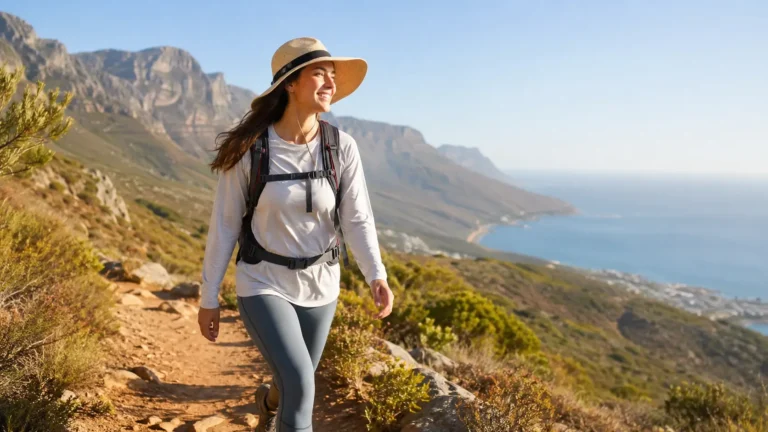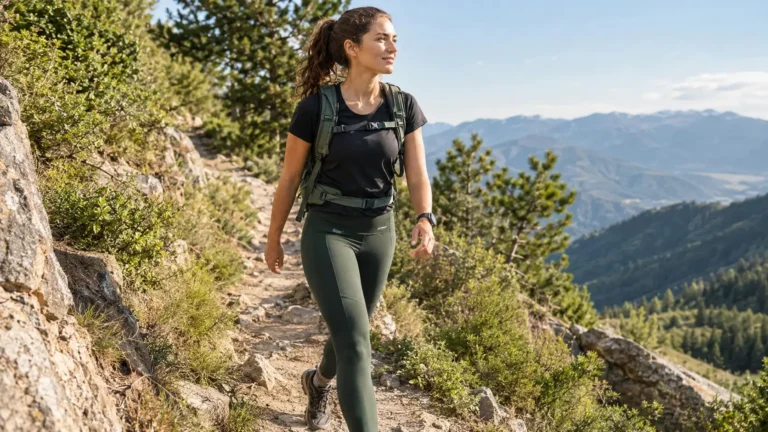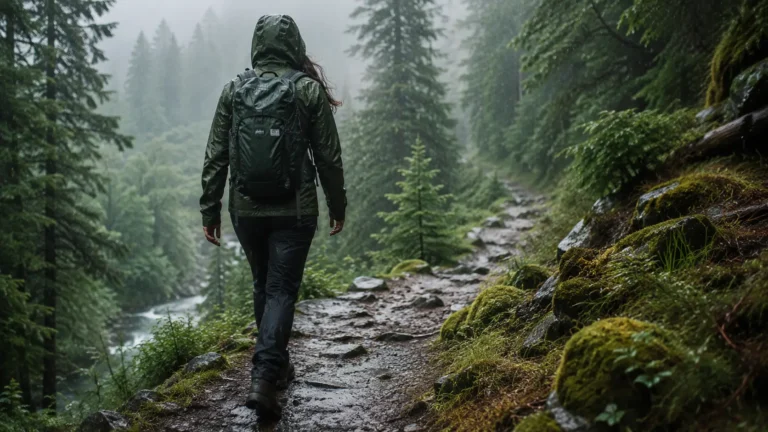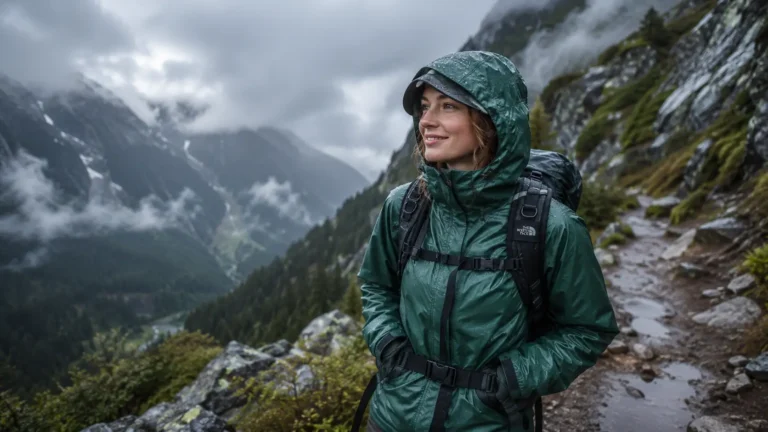
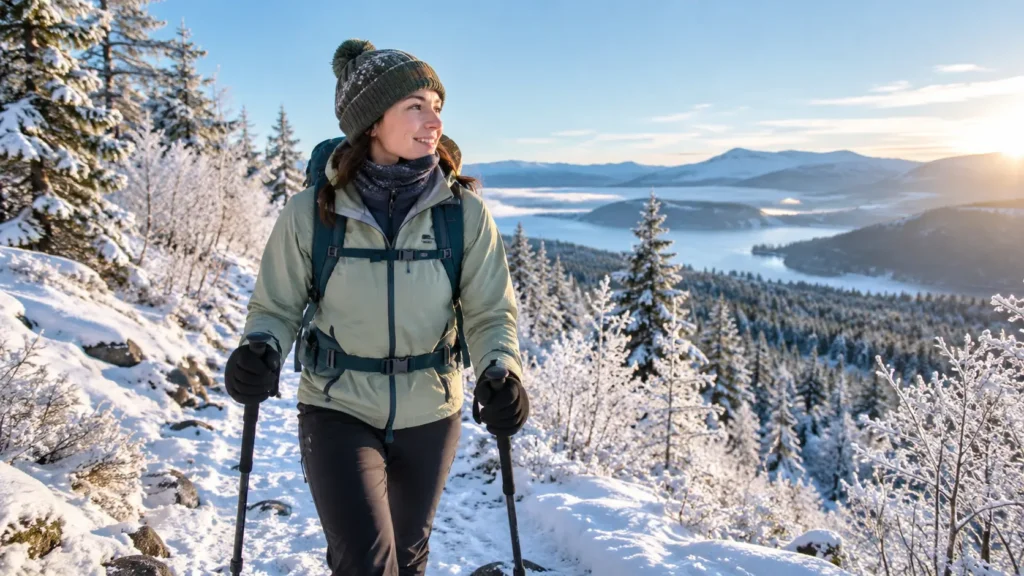
My first winter hike was in November on a trail I’d done several times in summer. I wore my usual hiking leggings, a fleece, and a waterproof jacket — the same combination that had served me well through autumn. By the top of the first climb I was warm enough. At the summit, exposed to the wind with sweat cooling rapidly against my skin, I was genuinely cold in a way I hadn’t experienced on a hike before.
The problem wasn’t that I needed expedition-grade gear. The problem was that I hadn’t understood the specific demands of winter hiking — how much faster you cool when you stop moving, how wind changes everything at exposed sections, and why the base layer directly against your skin matters far more in cold than in warm conditions.
This guide covers what to actually wear hiking in winter as a beginner woman — the three-layer system explained practically rather than theoretically, what’s genuinely necessary for day hiking versus what’s overkill, and the cold-specific extras most winter hiking guides forget to mention.
How winter hiking is different from autumn or rain hiking
Understanding what changes in winter tells you exactly why the outfit changes:
- Cold amplifies the wet problem — being wet in summer is uncomfortable. Being wet in cold winter temperatures is a genuine safety issue. Every fabric choice matters more.
- The stop-start temperature swing is larger — on a climb you generate significant heat. At a summit or rest stop, that heat disappears quickly in cold wind. You need to be able to layer and unlayer faster than in any other season.
- Wind chill changes the real-feel temperature dramatically — a 2°C day with 20mph wind can feel like -5°C on an exposed ridge. This isn’t in most forecasts, you have to account for it yourself.
- Sweat management is more critical — in summer, sweat is inconvenient. In winter, sweat that saturates a base layer and then cools as you stop moving leads to rapid chilling. This is why the base layer is the most important item in a winter outfit.
- Daylight is shortest — shorter than autumn. Factor this into every winter hike plan.
For a full guide to waterproof layers and what to wear hiking in wet conditions, see what to wear hiking in the rain.
The three-layer system — what it actually means for day hiking
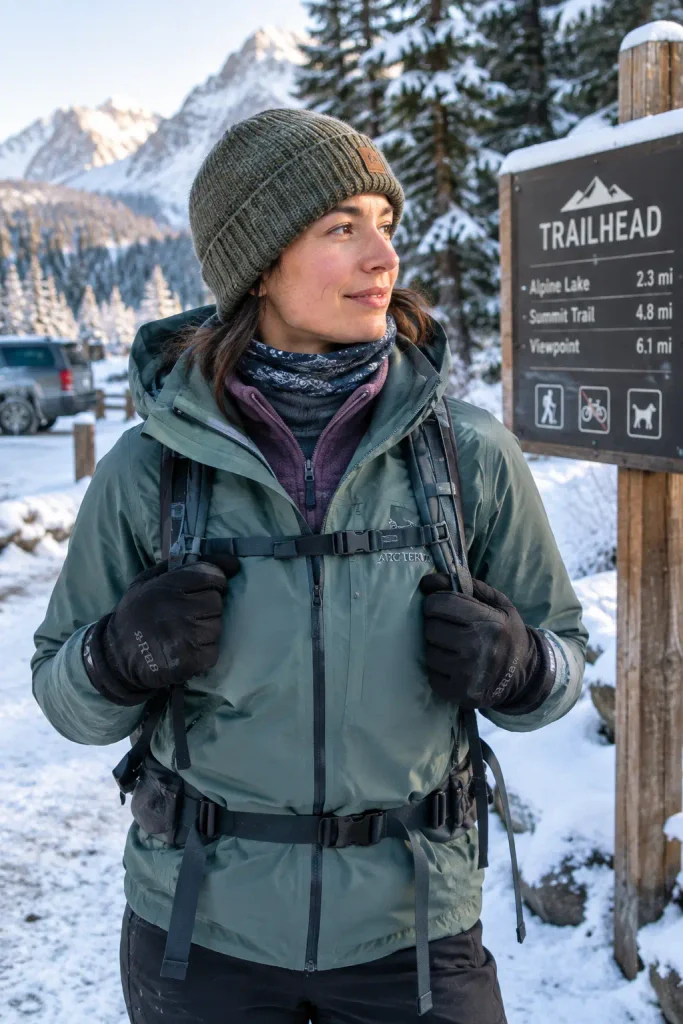
Every winter hiking guide mentions base/mid/outer layers. Most don’t explain what that means in practice for a beginner woman doing a 3-5 hour day hike rather than a multi-day winter expedition. Here’s the practical version:
Layer 1 — Base layer: the most important decision
Your base layer is the item directly against your skin and the single most important clothing choice for winter hiking. Its job is to move moisture (sweat) away from your skin and dry quickly — because wet fabric against skin in cold temperatures is how you get cold fast.
The rule is absolute: no cotton base layers in winter. Cotton absorbs moisture and holds it, becoming a cold wet layer against your skin the moment you stop generating heat on a climb.
Your two options:
- Merino wool — the best winter base layer choice. Naturally moisture-wicking, temperature-regulating in both directions (warm when cold, not stifling on climbs), naturally odour-resistant. More expensive than synthetic but genuinely performs better in cold, wet, variable conditions. A merino base layer is one of the best investments for winter hiking.
- Synthetic moisture-wicking fabric — polyester-based technical fabrics wick moisture well and dry faster than merino. Less warm, less temperature-regulating, but cheaper and perfectly adequate for most winter day hikes in moderate cold.
Weight guidance: for winter day hiking in 0-8°C, a midweight merino (200-250g/m²) is the right starting point. For colder conditions below 0°C, a heavyweight merino (250g/m²+) or two thin synthetic layers.
Layer 2 — Mid layer: your warmth layer
The mid layer traps warm air against your body. In winter, this does significantly more work than in autumn. Two main options:
- Fleece — the most versatile winter mid layer. Breathes well during active hiking, dries quickly if it gets damp, compresses reasonably well. A medium-weight fleece (200g/m²) covers most winter day hiking conditions. Polartec 200 is the gold standard.
- Insulated jacket — down or synthetic insulation for colder conditions. Down is warmer per gram but loses insulation when wet (a real risk on winter hikes). Synthetic insulation maintains warmth when damp. For winter hiking where weather is unpredictable, a synthetic insulated jacket is safer than down. Primaloft and Thinsulate are the main synthetic options.
The key mid-layer rule for winter hiking: it should be easy to take off and pack on a climb and pull back on at a summit or rest stop. Packability matters — a mid layer that takes 10 minutes to remove and repack won’t be used properly.
Layer 3 — Outer shell: wind and waterproofing
Your outer shell does two jobs in winter: blocks wind and keeps rain and snow out. For day hiking, this means a waterproof-breathable shell jacket — the same principle as your rain jacket but ideally with better insulation and a more substantial hood.
A good waterproof shell for winter hiking needs: full seam sealing (not just critical seams), a helmet-compatible adjustable hood, pit zips for ventilation on hard climbs, and waterproofing rated 20,000mm or above. In genuine winter conditions, the cheaper end of the rain jacket market won’t keep up.
Softshell vs hardshell: a softshell is more breathable and more comfortable for active hiking but less waterproof. A hardshell is fully waterproof and windproof but can feel clammy during sustained effort. For winter day hiking in the UK and Europe where rain is likely, a hardshell is the right choice.
What to wear on the bottom half
Winter hiking leggings
For most winter day hiking in 0-8°C: heavyweight merino leggings or thermal hiking leggings worn as a single layer. Look for fleece-lined leggings or merino 250 weight — significantly warmer than the leggings that work for three-season hiking.
For colder conditions or more exposed terrain: thermal base layer leggings underneath hiking pants or softshell trousers. The two-layer approach on the bottom gives you adjustability that a single thick layer doesn’t.
Hiking pants and softshell trousers
Softshell trousers are the winter hiking trouser of choice — stretchy, wind-resistant, water-resistant (not waterproof but handles light snow and brief rain), and warm enough for most winter day hiking conditions. They’re more comfortable than hardshell trousers for sustained active hiking.
For sustained rain or snow conditions: waterproof hiking trousers or overtrousers over your base layer leggings. Heavier and less comfortable but genuinely waterproof.
The winter-specific extras most guides miss
Warm hat — not the same as an autumn beanie
A thin autumn beanie isn’t enough for exposed winter ridge walking. For winter hiking, look for a hat that covers your ears fully and fits under a hood — merino or fleece rather than acrylic. You lose a significant proportion of body heat through your head in cold conditions; a proper warm hat is not optional.
Neck gaiter or buff
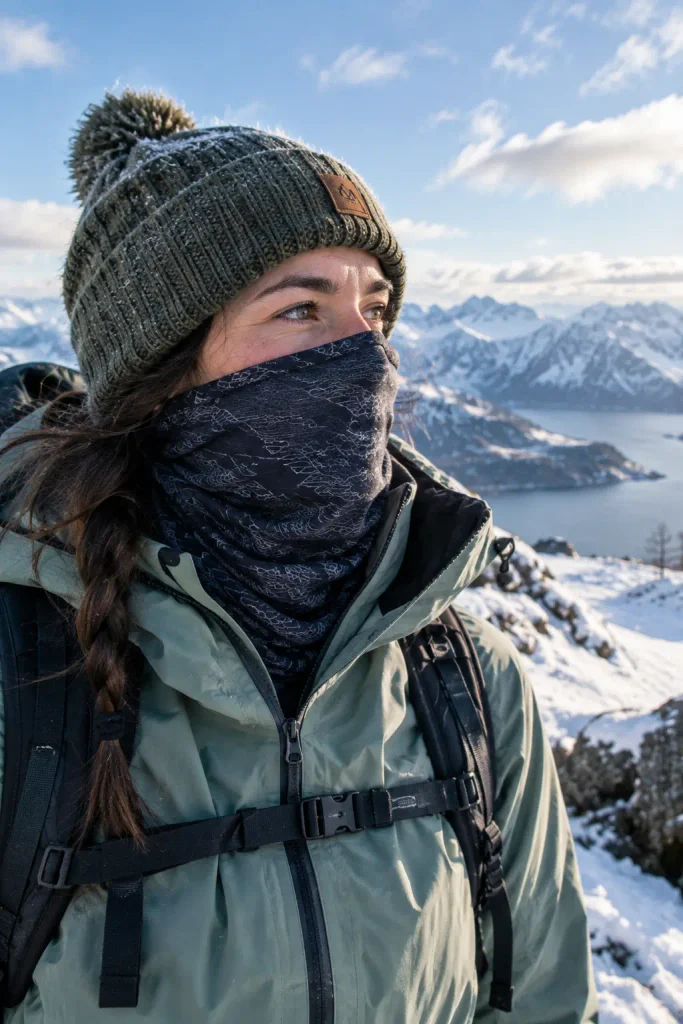
One of the most underrated winter hiking items. A merino or fleece neck gaiter covers the gap between your jacket collar and hat, keeps wind off your neck and chin, and can be pulled up to cover the lower face on particularly exposed or cold sections. Weighs almost nothing, takes up no space, makes a huge difference.
Gloves — and a spare pair
Lightweight liner gloves aren’t enough for proper winter hiking. You need proper insulated gloves or mittens that keep hands warm during rest stops and summit time when you’re not generating heat. Look for waterproof outer shells — cold wet hands become non-functional quickly.
Carry a spare pair. Wet gloves in cold conditions are genuinely miserable and take a long time to dry. A dry spare pair in your pack is cheap insurance.
Hand warmers
Small chemical hand warmers are worth carrying on winter hikes — not as a substitute for good gloves, but as backup for rest stops, summits and any situation where your hands get cold despite good gloves. HotHands or similar cost almost nothing and last 8+ hours.
Thermal socks
Midweight merino hiking socks are good for autumn. In winter, step up to heavyweight merino or add a thin liner sock underneath for extra insulation. Cold feet are one of the most common winter hiking complaints and almost entirely preventable with the right socks. Carry a spare pair.
Gaiters
Low gaiters keep snow, mud and cold water out of the top of your boot on winter trails. Not essential for all conditions but very useful if the trail involves snow coverage, boggy sections or stream crossings. Full gaiters are for mountaineering — low hiking gaiters are the right choice for day hiking.
Footwear for winter hiking
Waterproof boots — non-negotiable in winter
If waterproof boots were optional in summer and important in autumn, they are non-negotiable in winter. Cold wet feet in winter temperatures are a comfort and safety issue. Gore-Tex lined hiking boots or trail shoes with proper insulation are the right choice for most winter day hiking.
Insulation in winter boots: look for 200g of Thinsulate or equivalent for most UK and European winter hiking conditions. More insulation for consistently below-zero temperatures or extended time in snow.
Microspikes and traction devices
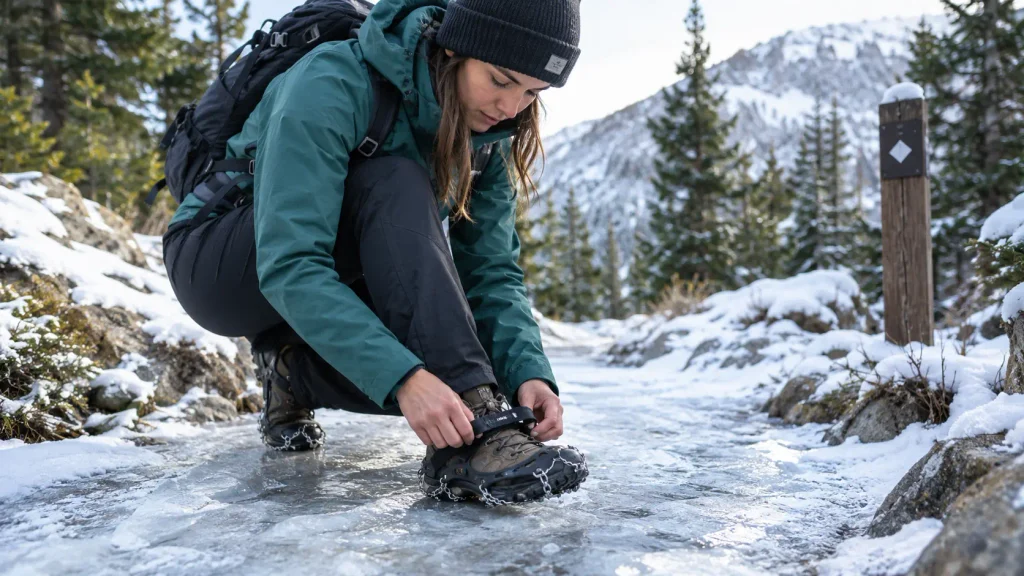
On any winter hike where ice or hard-packed snow is possible, microspikes are essential safety equipment. They slip over your normal hiking boots and provide grip that prevents the falls that are the most common winter hiking injury. Yaktrax are the most accessible entry point; Kahtoola MICROspikes are the upgrade.
Check trail conditions before every winter hike — a trail that was fine last week may be an ice sheet after a freeze-thaw cycle. If in doubt, carry microspikes.
What’s overkill for beginner day hiking
Most winter hiking content is written for mountaineers or multi-day winter campers. Here’s what’s genuinely unnecessary for beginner women doing day hikes in typical UK or European winter conditions:
- Down jacket as a mid layer — synthetic insulation is more practical for hiking in wet UK winters where down loses its insulation when damp
- Hardshell mountaineering trousers — softshell trousers with waterproof overtrousers if needed covers most day hiking conditions
- Four-season mountaineering boots — for day hiking on established trails, well-insulated waterproof hiking boots with microspikes cover all but the most technical conditions
- Balaclava — a neck gaiter pulled up and a proper warm hat achieves the same result for day hiking
- Full crampons — microspikes are appropriate for icy hiking trails. Full crampons are for glaciers and technical mountaineering.
Complete winter hiking outfits by temperature
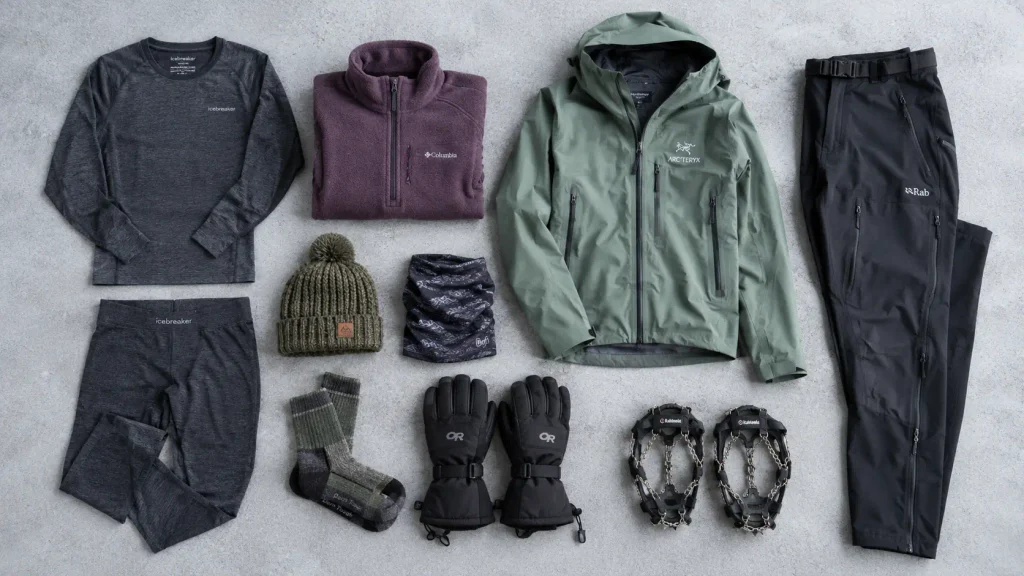
| Temp | Base Layer | Mid Layer | Outer + Bottom |
| 5–10°C Mild winter | Midweight merino long-sleeve | Light fleece | Waterproof shell + thermal leggings or softshell trousers |
| 0–5°C Cold winter | Midweight merino long-sleeve + merino tights | Medium fleece or synthetic insulated jacket | Waterproof hardshell + softshell trousers + gaiters |
| -5–0°C Very cold | Heavyweight merino base (top + bottom) | Insulated synthetic jacket | Hardshell jacket + waterproof trousers + microspikes + full gloves |
| Below -5°C Extreme cold | Heavyweight merino double layer | Insulated jacket + fleece underneath | Hardshell + waterproof trousers + full face coverage + microspikes |
What Sophie actually wears for winter hiking
For a typical winter day hike in 2-6°C with some wind exposure:
- Icebreaker Merino 200 long-sleeve base layer — midweight merino, temperature-regulates well on variable winter days
- Patagonia R2 TechFace fleece jacket — medium weight, packs small, breathes well on climbs
- Patagonia Torrentshell 3L hardshell — 20,000mm rated, fully seam-sealed, reliable hood
- Icebreaker Merino 200 leggings as base — same merino logic as the top
- Montane Terra Stretch trousers over the top — softshell, wind-resistant, comfortable for active hiking
- Heavyweight merino hiking socks (Darn Tough) + spare pair in pack
- Waterproof insulated hiking boots (Salomon X Ultra Winter)
- Merino buff/neck gaiter — always
- Insulated waterproof gloves (Black Diamond Mercury Mitt) + liner gloves for active sections
- Warm merino beanie that covers ears fully
- Microspikes in the pack when conditions are uncertain
Final thoughts
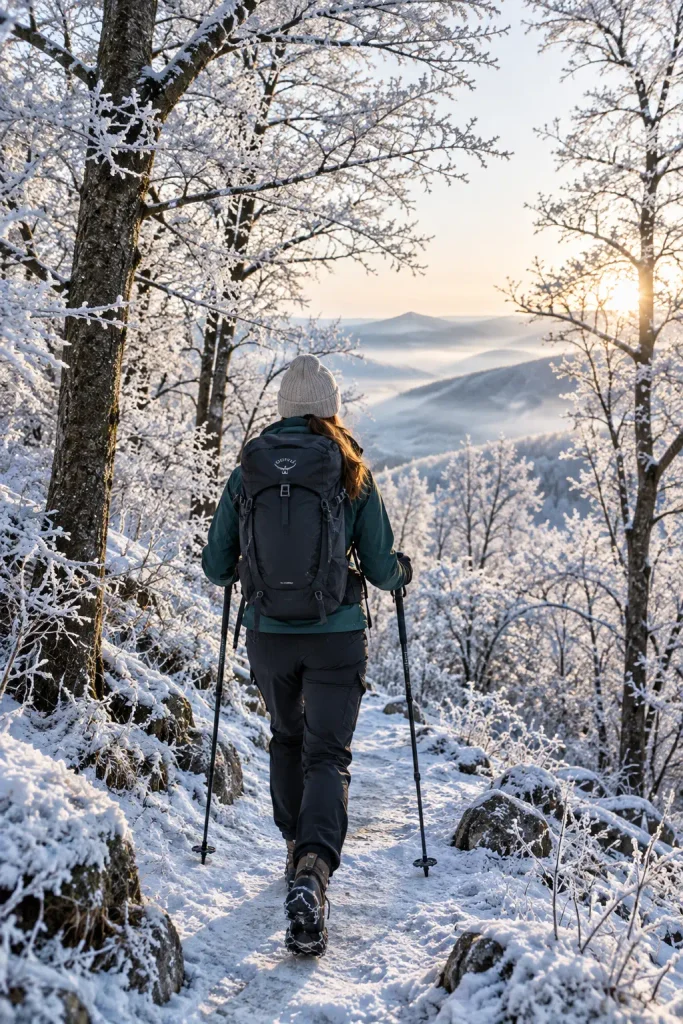
Winter hiking is extraordinary — quiet trails, frost on the ground, clear cold air, views that summer haze obscures. The barrier to entry is almost entirely kit rather than fitness or skill. Dress right and winter day hiking is genuinely accessible to any beginner woman.
The investment priority in order: base layer first (merino, no cotton), waterproof boots second, proper gloves and hat third. Everything else builds from there. You don’t need to buy everything at once — start with those three and add as you go.
The trail in winter is worth the extra preparation. Pack the right layers, check the conditions, tell someone your plans, and go.
For the complete guide to what to wear hiking across all seasons and conditions, see the women’s hiking outfit guide.
FAQs
The foundation is the three-layer system: a moisture-wicking base layer (merino wool or synthetic — never cotton), an insulating mid layer (fleece or synthetic insulated jacket), and a waterproof-breathable shell. Add thermal leggings or softshell trousers for the bottom half, waterproof insulated boots, warm gloves, a hat that covers your ears, and a neck gaiter. The specific weights and items depend on temperature — the outfit table in this article covers the right combination for each temperature range.
The base layer — the item directly against your skin. A poor base layer choice (cotton, or anything that holds moisture) means sweat saturates the fabric and cools rapidly when you stop moving, leaving you cold and potentially dangerously chilled. A good merino wool or synthetic moisture-wicking base layer is the single most impactful clothing decision for winter hiking. Everything else builds on top of it.
Yes — waterproof insulated boots are non-negotiable for most winter hiking. Cold wet feet are a comfort and safety issue in winter temperatures. Look for Gore-Tex lined boots with at least 200g of Thinsulate insulation for UK and European winter conditions. If there’s any possibility of ice or hard-packed snow on the trail, carry microspikes — they fit over your normal hiking boots and prevent the falls that are the most common winter hiking injury.
Three layers as a minimum: base, mid and outer. In practice for variable winter conditions, you’ll often be wearing two of the three and carrying one in your pack — the mid layer comes on at summits and rest stops and comes off on hard climbs. The key is having all three accessible rather than buried in your pack. For very cold conditions below -5°C, you may add an extra base layer or a second mid layer.
Mountaineering clothing is designed for extreme cold, technical terrain, multi-day exposure and conditions that exceed what most day hikers encounter. For beginner women doing winter day hikes on established trails, mountaineering-grade gear is unnecessary and expensive overkill. Waterproof hiking boots (not four-season mountaineering boots), microspikes (not crampons), a good layering system and proper gloves and hat cover virtually all winter day hiking conditions in the UK and Europe.

Intermediate hiker sharing real trail experience — honest gear picks, beginner-friendly guides, no filler.