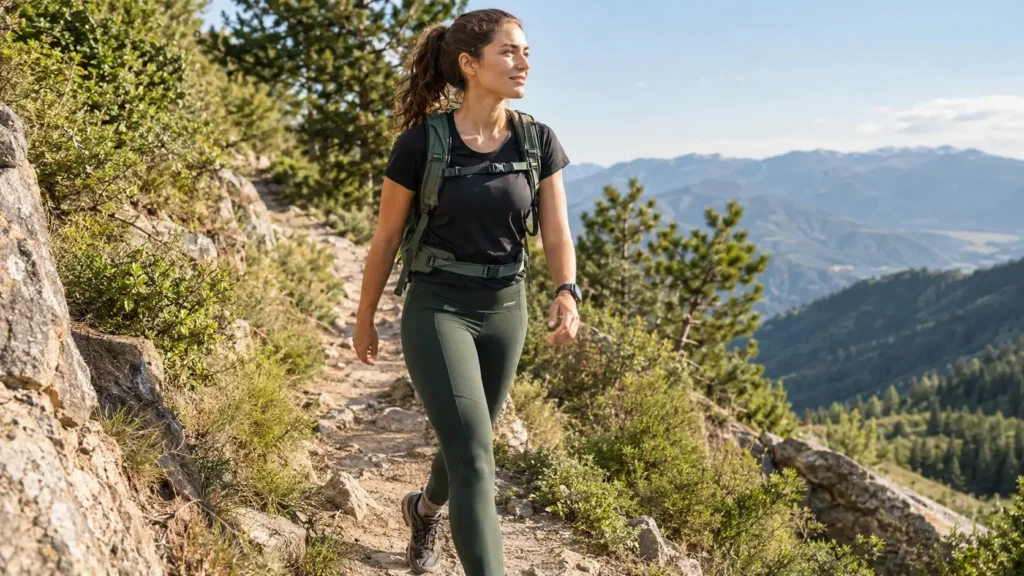
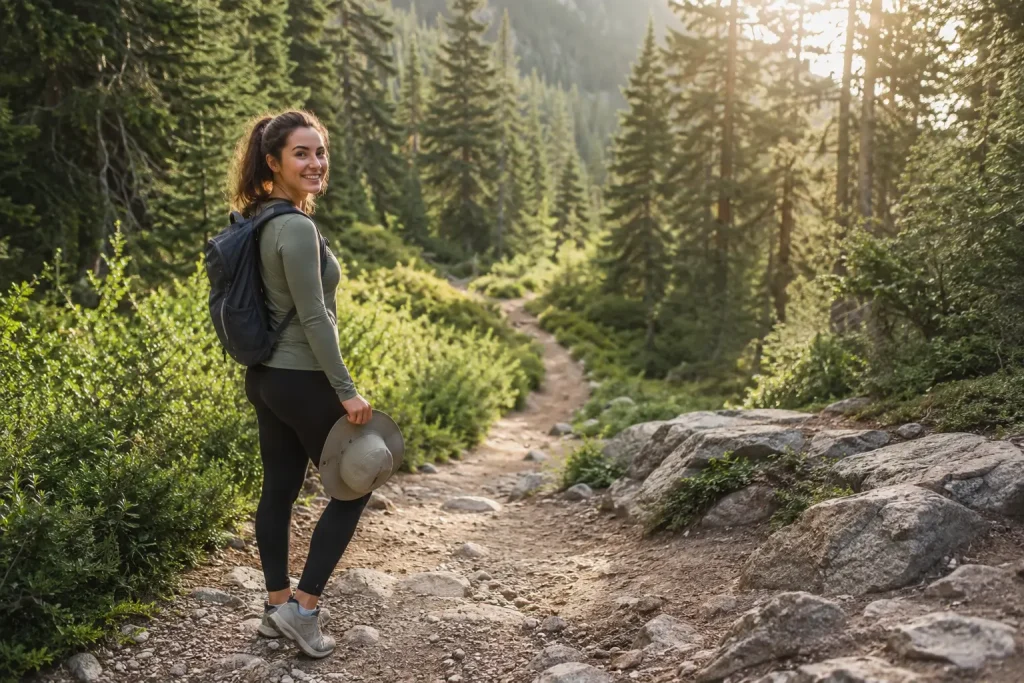
My first hike almost put me off hiking for good. I chose a trail that was too long, started too late in the day, wore the wrong shoes, and ran out of water with two miles still to go. I made it back fine — but barely, and only because a kind couple on the trail shared their water and pointed me back to the right path.
None of those mistakes were inevitable. They were all just things nobody had told me. This guide is everything I wish someone had handed me before I left for that first trail.
If you’re a woman who’s thinking about hiking for the first time — or who’s been a few times and wants to do it properly — these are the tips that actually matter.
Tip 1: Start Easier Than You Think You Should
The most common beginner mistake isn’t going too slow or packing too much. It’s choosing a trail that’s too hard.
Whatever difficulty you think you can handle, go one level easier for your first hike. Not sure how to read trail difficulty ratings or what distance is right for your first hike? Our complete guide to choosing a hiking trail as a beginner woman covers everything. If you’re thinking moderate, do easy. If you’re thinking long, do short. You can always go further — you can’t undo a trail that’s beaten you.
A good first hike is one you finish feeling good, not one you finish feeling wrecked. The goal is to come back wanting to go again.
What to look for: A trail under 8km, under 300m of elevation gain, well-marked, and with recent positive reviews on AllTrails. Popular on weekends means other hikers around, which is reassuring for beginners.
Tip 2: Check the Weather the Morning of Your Hike
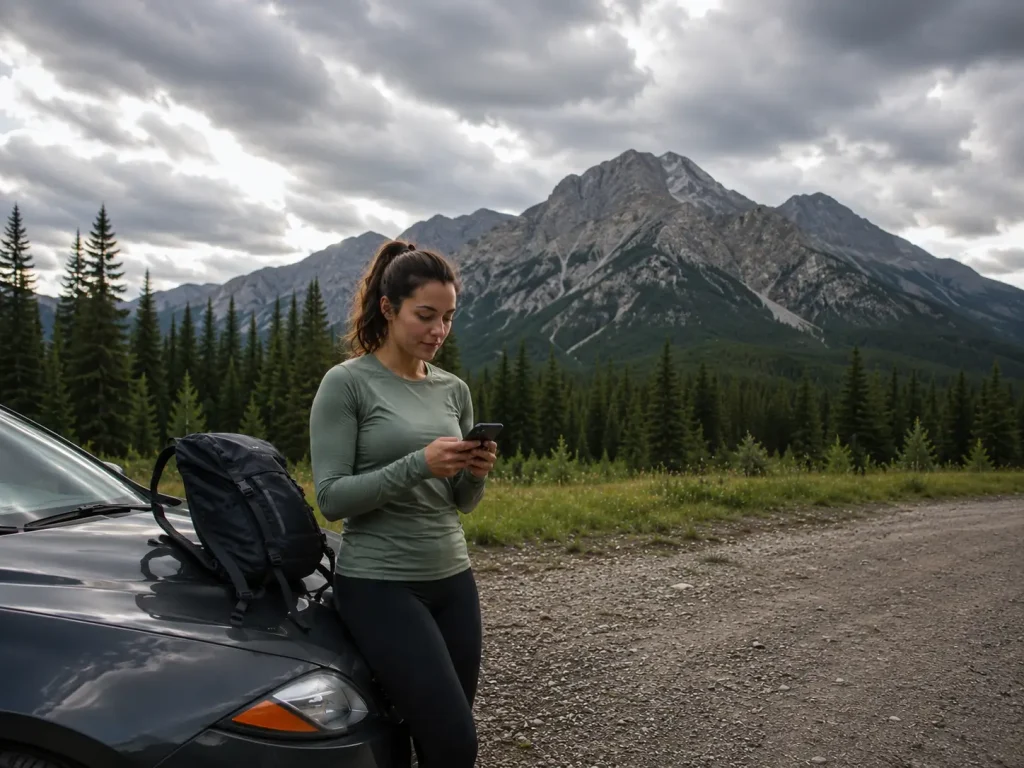
Not the night before. The morning of. Weather — especially in hilly or mountainous areas — can change dramatically overnight. A forecast that looked fine at 9pm can look very different at 7am.
Check both the valley forecast and the summit forecast if your trail goes to elevation. These can differ by 5–10 degrees and by several weather systems. If the afternoon forecast shows thunderstorms, start early or choose a different day. Lightning on an exposed ridge is not a situation you want to manage as a beginner.
Always carry a waterproof jacket regardless of the forecast. It takes up almost no space and turns a weather surprise from a problem into an inconvenience.
Tip 3: Tell Someone Where You’re Going
Before every hike, tell at least one person: the trail name and location, your start time, your expected finish time, and what to do if they haven’t heard from you by a specific time.
This person doesn’t need to do anything except know. If you’re planning to hike alone, our solo hiking safety guide for women covers every safety habit in detail — from trail selection to personal safety devices. It costs you two minutes and creates a safety net that requires zero equipment. It’s the single most important safety habit in hiking and the one most beginners skip.
Also: Leave a note on your dashboard with the trail name and your expected return time. If anything goes wrong, this gives emergency services immediate information.
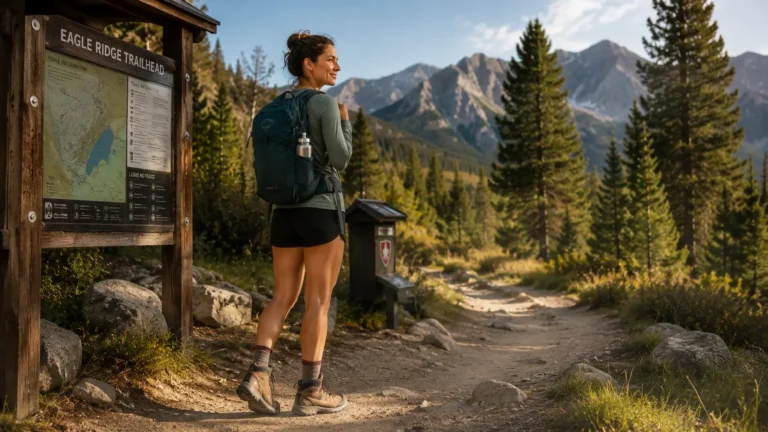
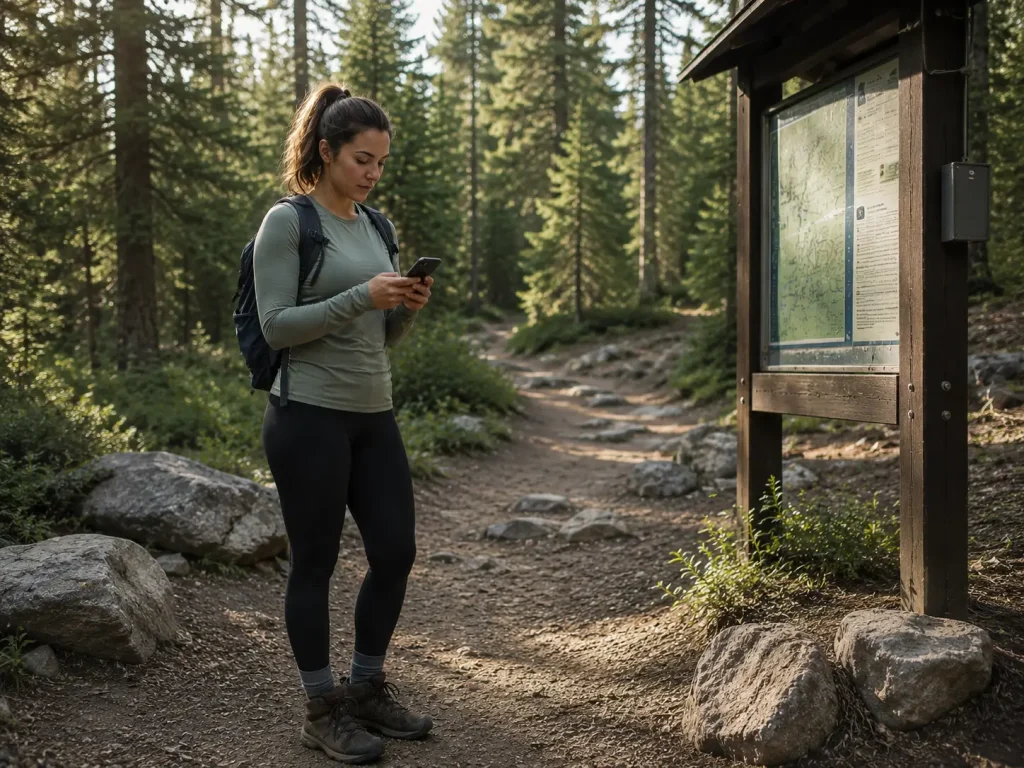
Tip 4: Download Your Trail Map Before You Leave Home
Not in the car park. At home, the night before or the morning of, on a reliable connection. Before you go, make sure you have everything packed too — our day hiking packing list for women has a free printable PDF checklist covering every item.
Mobile signal on trails is unreliable. In many areas — even on popular trails not far from towns — there is no signal at all. A map that requires internet access is useless exactly when you need it most.
Download your trail on AllTrails or Komoot before you leave. Screenshot the route and the trailhead directions as a backup. These cost nothing and could save your hike.
Carry a portable power bank. Phones drain faster with GPS active and in cold weather. A small power bank ensures you’re never stranded with a dead phone.
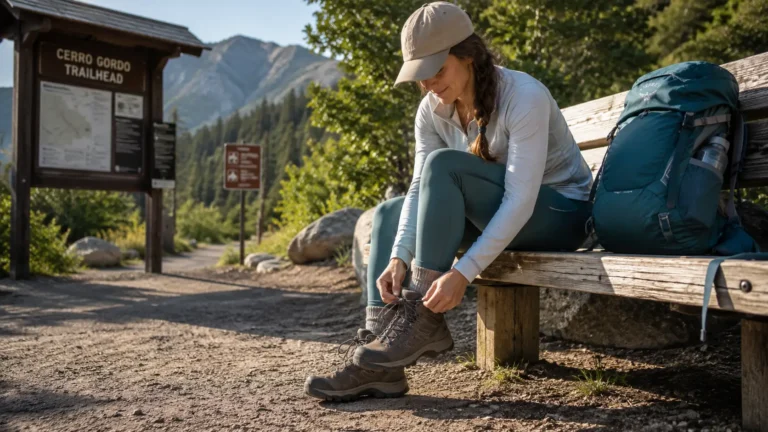
Tip 5: Wear the Right Footwear
This is the tip that would have saved me on my first hike. The wrong footwear causes blisters, ankle rolls, and genuine misery. The right footwear makes everything easier. Our hiking gear guide for women covers exactly what to look for in boots and trail runners, how much to spend and what to skip as a beginner.
Not sure whether to choose hiking boots or trail runners? Our complete women’s guide to hiking footwear covers the full comparison.
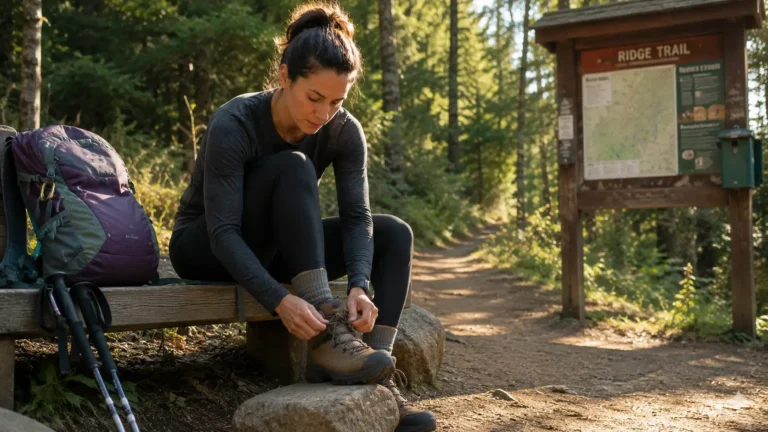
For most beginner day hikes: trail runners or low-cut hiking boots with a lug sole and good grip. Regular trainers have almost no grip on wet roots or loose ground, no ankle support, and minimal cushioning for rocky terrain.
If you buy hiking boots: break them in before your first long hike. Wear them on short walks and errands first. New boots on a long hike is one of the most avoidable mistakes in hiking.
Socks matter too: merino wool or synthetic hiking socks only. Never cotton. Cotton holds moisture against your skin and causes blisters faster than almost anything else.
Tip 6: Start Earlier Than You Think You Need To
Most beginners underestimate how long trails take. The time estimate on AllTrails is based on average fitness moving at a steady pace — no stops, no photos, no snack breaks, no getting slightly turned around at a junction.
Add at least 25–30% to any time estimate. If the trail says 3 hours, plan for 4. Start early enough that you’ll be back at the trailhead well before dark even if everything takes longer than expected.
Morning starts have another advantage: trails are quieter, the light is better, and you avoid afternoon weather that builds in many areas during summer and autumn.
Tip 7: Bring More Water Than You Think You Need
Dehydration is the most common reason beginners turn back early, and it’s completely preventable. By the time you feel thirsty, you’re already mildly dehydrated.
The rule: 500ml per hour of active hiking in moderate conditions. For a 4-hour hike, that’s 2 litres minimum. In hot weather or at altitude, more.
Electrolyte tablets added to your water help significantly on longer or warmer hikes. They weigh almost nothing and prevent the fatigue and headaches that come from sweating out sodium without replacing it.
Tip 8: Eat Before You’re Hungry
Your body burns significantly more calories hiking than walking on flat ground — especially on climbs. If you wait until you’re hungry to eat, your energy has already dipped and it takes time to recover.
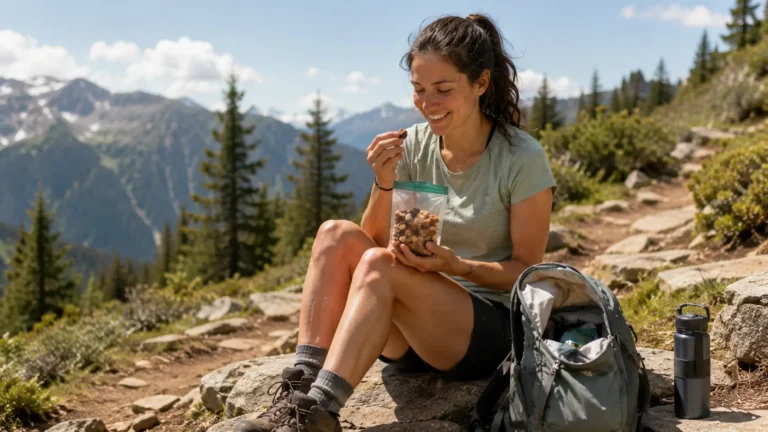
Eat a snack every 60–90 minutes regardless of how you feel. Trail mix, energy bars, oatcakes, fresh fruit — anything that gives you steady energy without needing refrigeration. On hikes over 3 hours, bring an actual lunch rather than just snacks.
Tip 9: Pace Yourself on the Uphill
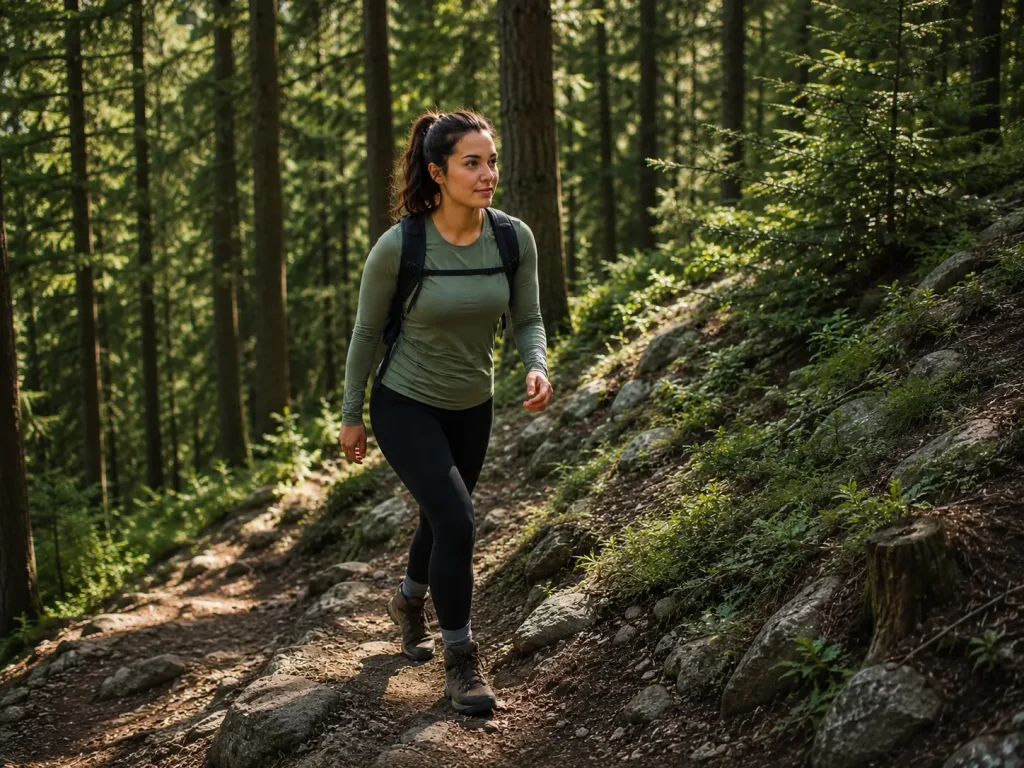
Every beginner goes too fast on the uphill. It feels manageable for the first ten minutes, then suddenly it doesn’t. The right pace on a climb is slower than feels comfortable — slow enough that you could hold a conversation without being out of breath.
This isn’t about fitness. Experienced hikers do the same thing — they just know that sustainable pace on the uphill saves energy for the whole day. If you find yourself stopping every hundred metres to catch your breath, you’re going too fast.
Rest step technique: on steep climbs, briefly lock your back leg straight at each step to let the bone rather than the muscle support your weight for a moment. It makes a significant difference over a long ascent.
Tip 10: Stay on the Marked Trail
Trails exist because they’re the safest, most navigable route through the terrain. Going off-trail to shortcut, explore, or follow what looks like a path is how people get lost — even on trails close to towns.
If you’re unsure whether you’re on the trail, stop and check your downloaded map before continuing. It’s much easier to backtrack 200 metres than to spend an hour figuring out where you went wrong.
At trail junctions, double-check the map rather than guessing. Most junctions are signed but signs get knocked over, faded, or mispointed. Your downloaded map is always more reliable.
Tip 11: Know the 10 Essentials
The 10 essentials is the hiking world’s standard list of items that cover you in an emergency. As a beginner on a day hike you don’t need all of them — but knowing the list helps you pack smart.
- Navigation (downloaded offline map + power bank)
- Sun protection (hat, sunscreen, sunglasses)
- Insulation (extra warm layer in your pack)
- Illumination (headlamp with fresh batteries)
- First aid kit (compact, trail-specific)
- Fire (lighter or matches — for emergencies, not campfires)
- Repair tools and knife (a basic multi-tool covers this)
- Nutrition (extra food beyond what you plan to eat)
- Hydration (water plus a way to purify more if needed)
- Emergency shelter (foil blanket folds to credit-card size)
Tip 12: Learn Basic Trail Etiquette
Trail etiquette makes the trail better for everyone and signals that you know what you’re doing.
Uphill has right of way. If someone is coming uphill toward you, step aside and let them pass. Climbing takes more energy and momentum — stopping and restarting is harder.
Say hello. A brief nod or hello to passing hikers is standard trail behaviour. It’s also a small safety habit — you notice who’s around you.
Leave no trace. Everything you carry in, carry out. Don’t pick plants or flowers. Stay on the trail to avoid damaging vegetation. If you use the toilet outdoors, move at least 60 metres from the trail and any water source.
Headphones. Music is fine on easy, familiar sections. Take headphones out when passing other hikers, approaching blind corners, or on tricky terrain.
Tip 13: Dress in Layers
The basic hiking layering system is three pieces: a moisture-wicking base layer against your skin, a warm mid layer (fleece or softshell), and a waterproof outer shell. Each has a specific job.
For a full breakdown of what to wear hiking as a woman — fabrics, seasonal outfits and common clothing mistakes — read our women’s hiking outfit guide.
The key is that you carry all three even if you don’t start the hike wearing all three. Temperature drops significantly once you stop moving, once you gain elevation, and once the sun goes behind clouds. Having the layers with you means you’re never caught out.
Never wear cotton. Cotton absorbs moisture and holds it against your skin. In warm weather it’s uncomfortable. In cold weather it’s a safety issue. Always choose moisture-wicking synthetics or merino wool.
Tip 14: Trust Your Instincts
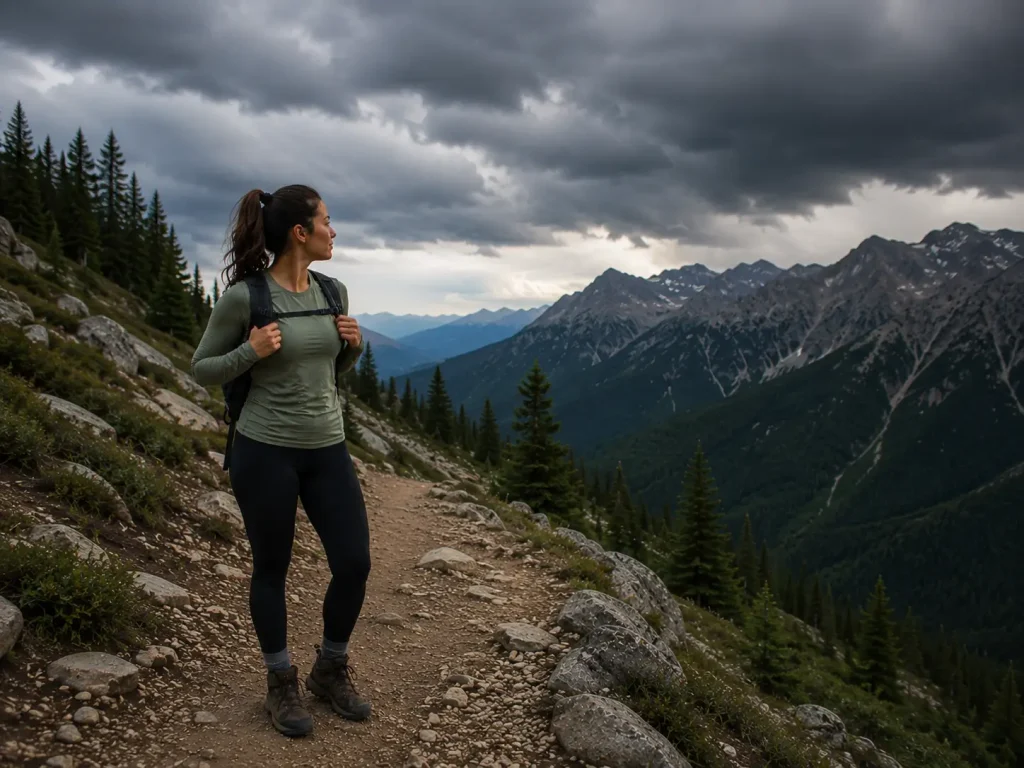
If something feels wrong — a section of trail, weather coming in, a situation with another person, your own energy level — trust that feeling and act on it.
Turning around is not failure. Experienced hikers turn around all the time. The mountain will be there next week. Knowing when to call it is one of the most important skills in hiking and it takes honesty with yourself.
A useful rule: if you’re more than halfway through your available energy at the halfway point of the trail, turn around. The second half is always harder than the first.
Tip 15: Build Up Gradually
Nobody starts hiking fit for it. Hiking uses muscles — especially glutes, quads and calves on descents — in ways that other exercise doesn’t. Your first few hikes will make you aware of muscles you didn’t know you had.
Start with short, easy trails. Add distance and elevation gradually over several hikes. Don’t try to do a 20km mountain trail as your third hike because you feel ready. You might be — but you might not, and the consequences of misjudging on a long trail are much harder to recover from than misjudging on a short one.
A rough progression for beginner women: 5km easy trail → 8km easy trail → 8km moderate trail → 12km moderate trail → 12km with significant elevation. Each step builds the fitness, confidence and navigation skills you need for the next one.
Common Beginner Mistakes Women Make
Choosing a trail that’s too hard. Go easier than you think for your first few hikes.
Starting too late in the day. Morning starts give you buffer time for everything taking longer than expected.
Not telling anyone where they’re going. Takes two minutes, costs nothing, could save your life.
Wearing new boots without breaking them in. The blisters will ruin the hike.
Not downloading the trail map offline. Don’t rely on mobile signal.
Going too fast on the uphill. Slow and steady genuinely wins this race.
Not bringing enough water. Always more than you think you need.
Ignoring weather changes. Check the forecast the morning of, not the night before.
FAQs
You don’t need to be fit to start — hiking is how you get fit for hiking. Start with short, flat trails and build up gradually. If you can walk for an hour on flat ground without stopping, you can do an easy beginner hike.
5–8km on a well-maintained, flat to gently rolling trail is ideal for a first hike. Enough to feel like a proper experience, short enough that fatigue doesn’t become a problem. Save the longer trails for once you know what you’re doing.
Yes — when you’re properly prepared. Choose a well-used, well-marked trail. Tell someone your plan. Download your map offline. Carry basic safety items. Start during daylight hours. These basics make beginner hiking genuinely low-risk on popular trails.
Moisture-wicking top, hiking leggings or trousers, waterproof jacket in your pack, merino wool socks, and hiking boots or trail runners (broken in if boots). No cotton, no denim, no fashion trainers.
AllTrails is the best starting point. Filter by difficulty (easy), distance (under 10km), and sort by highest rating. Read recent reviews for current conditions. Look for trails with lots of reviews and photos — these are popular, well-used trails where you’re unlikely to be completely alone.
Stop where you are. Check your downloaded map. Look for trail markers. If you genuinely can’t figure out where you are, stay put and call for help rather than wandering further. This is why telling someone your plan and downloading your map offline matters so much.
Final Thoughts
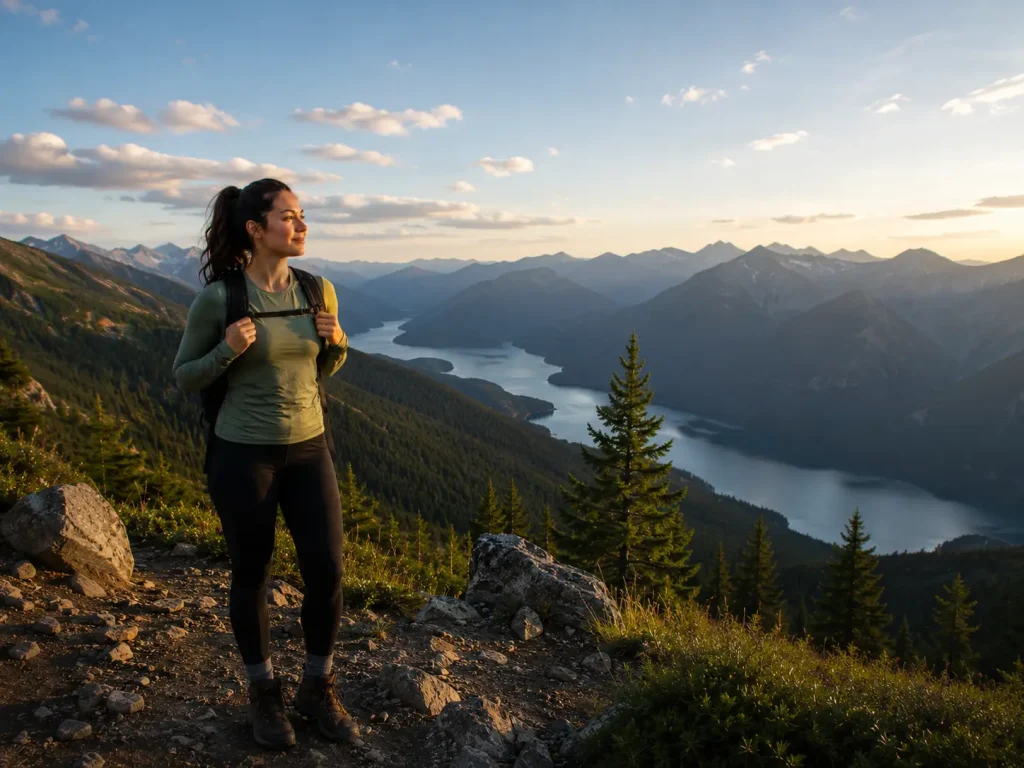
Hiking as a beginner woman is genuinely one of the best decisions you can make. The trails are accessible, the gear doesn’t need to be expensive, and every hike builds confidence you carry with you beyond the trail.
Start easy. Prepare properly. Tell someone where you’re going. Download your map. Drink your water. Trust your instincts. For everything you need to pack before any of these tips can work, our day hiking essentials for beginners covers every item with the why behind it. Everything else — the fitness, the navigation confidence, the ability to read weather and terrain — comes with experience. And experience only comes from going.

Intermediate hiker sharing real trail experience — honest gear picks, beginner-friendly guides, no filler.