Most beginner women spend time researching hiking boots and completely ignore their socks. This is a mistake — and their feet pay for it about two hours into the hike.
The wrong socks — specifically cotton socks — hold moisture against your skin, create friction, and cause blisters faster than almost anything else on the trail. The right socks manage moisture, cushion impact, and keep your feet comfortable for hours. The difference is genuinely significant, and it has almost nothing to do with brand.
This guide explains what actually matters in a hiking sock, why most beginners get it wrong, and which socks Sophie would actually buy at every budget.
Do you really need special hiking socks?
Yes — but not for the reason most gear articles tell you. It’s not about having the fanciest merino wool or the most technical knit construction. It’s about one simple thing: cotton.
Cotton absorbs moisture and holds it against your skin. On a hike, your feet sweat. That moisture softens the skin, increases friction, and within a few miles you have hot spots and blisters. Regular athletic socks and everyday socks are usually mostly cotton. Hiking socks are not.
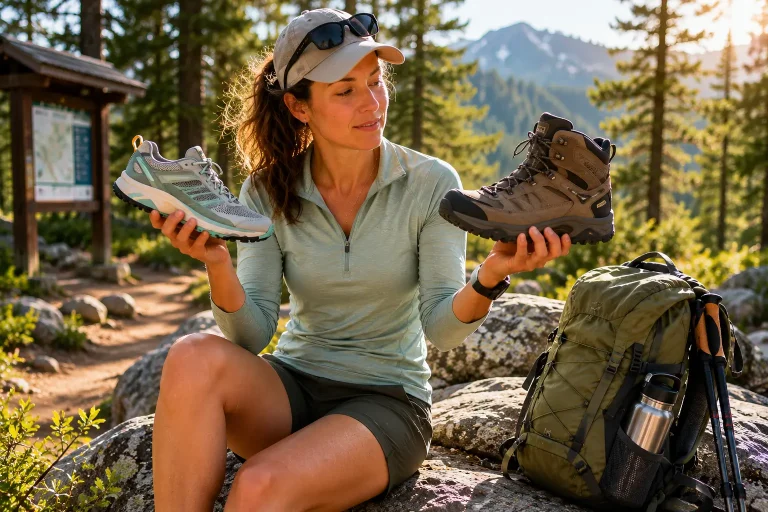
A proper hiking sock — even a budget one — is made from moisture-wicking synthetic or wool fibers that move sweat away from your skin instead of holding it there. If you’re still deciding between hiking boots and trail shoes, the guide to hiking shoes vs boots for women covers exactly which footwear works best for different trail types. That single difference is why hiking socks matter. Everything else is detail.
Materials explained — without the jargon
Cotton — never wear this hiking
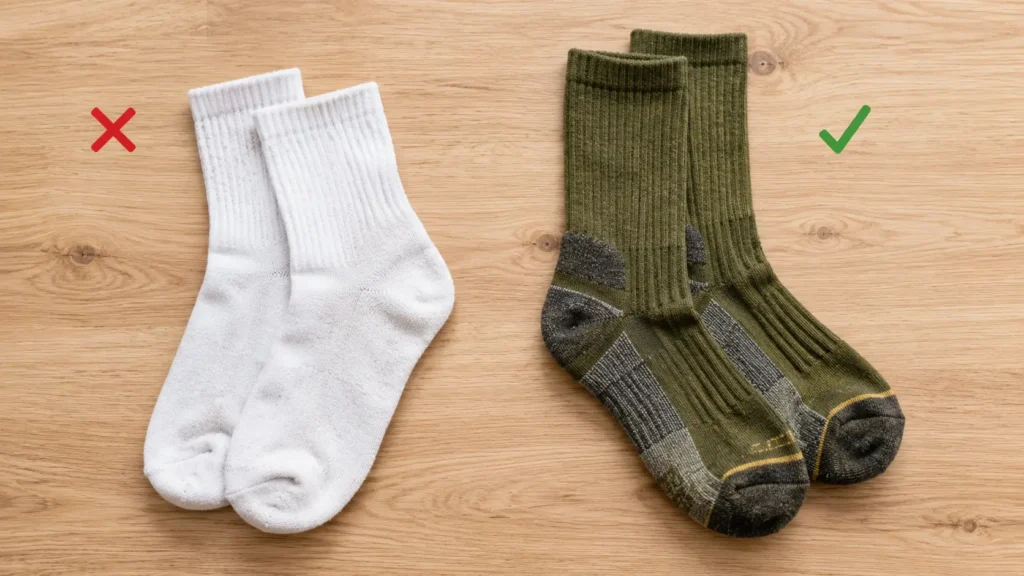
Any sock that’s mostly cotton is the wrong choice for hiking. Cotton retains up to 27 times its weight in water, dries slowly, and provides zero insulation when wet. On a day hike it will give you blisters. On a longer hike it will give you worse problems. Check the label before you hike — if cotton is the main fiber, leave them at home.
Merino wool — the gold standard
Merino wool is what most serious hikers use, and for good reason. It wicks moisture away from skin, regulates temperature in both hot and cold conditions, resists odor naturally, and feels soft rather than scratchy. The downside is price — a good pair of merino hiking socks costs $20–30.
The best hiking socks are never 100% merino — they’re a blend, usually 55–65% merino wool mixed with nylon for durability and a small amount of elastane for shape retention. Pure merino wouldn’t survive a season. Look for at least 50% merino content for real performance.
Synthetic (nylon, polyester) — faster drying, lower cost
Synthetic hiking socks dry faster than merino, cost less, and are more durable on abrasion. The tradeoff is odor — synthetic fibers hold smell more than wool, which matters less on a day hike but becomes noticeable on longer trips.
For beginner women doing day hikes, a quality synthetic hiking sock is perfectly fine and significantly better than cotton. Darn Tough makes a fully synthetic version of their popular merino sock (the Coolmax Hiker) that performs very well at a lower price point.
Merino-synthetic blend — best of both
Most premium hiking socks use a merino-nylon blend — typically 55–65% merino with 30–40% nylon and a small amount of lycra. This combination gives you most of merino’s temperature regulation and odor resistance with nylon’s durability and faster drying. For most beginner women, this is the sweet spot.
Cushion weight — what it means and which to choose
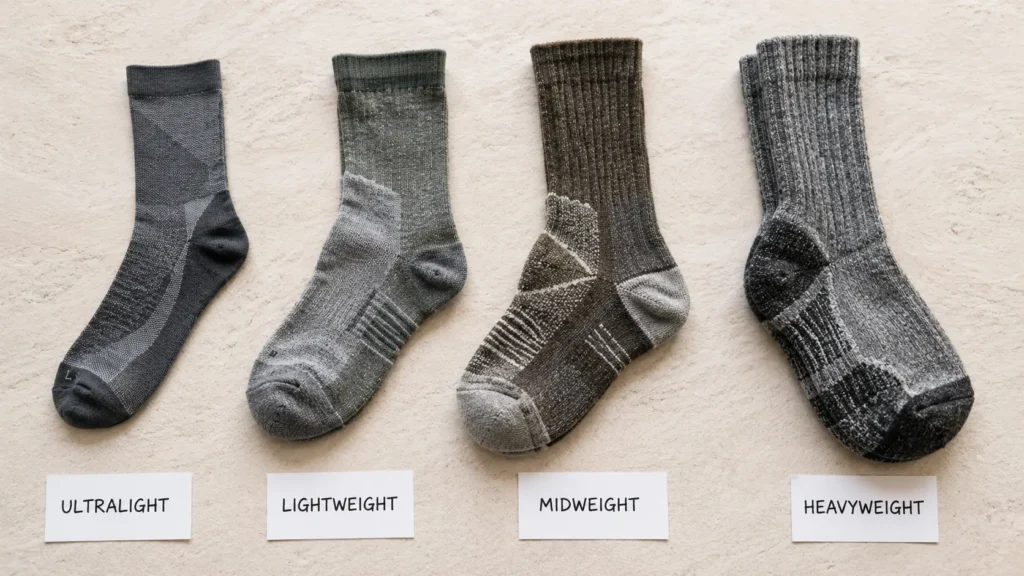
Hiking socks come in different cushion weights — usually described as ultralight, lightweight, midweight and heavyweight. This refers to how much padding is in the sock, which affects comfort, warmth and bulk inside your boot.
| Cushion Weight | Best For | Feel | Price Range |
| Ultralight | Trail runners, hot weather, short hikes | Thin, barely there | $15–20 |
| Lightweight | Day hikes, warm weather, trail shoes | Light padding | $18–25 |
| Midweight | Most day hikes, mixed terrain, boots | Comfortable all-day | $20–30 |
| Heavyweight | Cold weather, long days, heavy boots | Thick, very cushioned | $25–35 |
For most beginner women doing day hikes on maintained trails, midweight is the right starting point. It provides enough cushioning for comfort on uneven terrain without making your boots feel too tight.
Sock height — crew vs ankle vs no-show
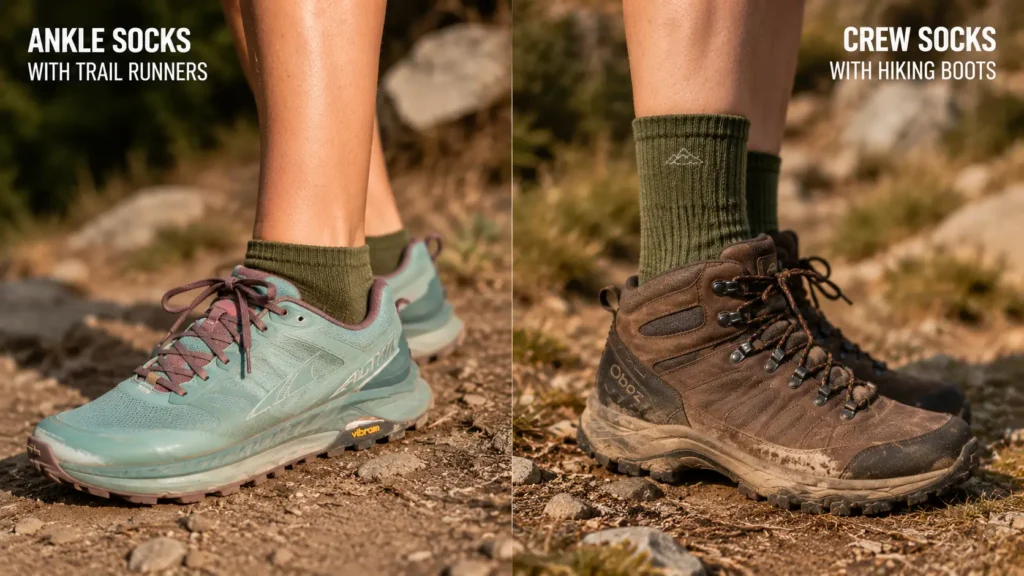
Sock height matters more than most people think — it affects ankle protection, boot fit and debris entry.
- No-show / ankle — for trail runners and low-cut shoes on easy terrain. No ankle protection, can slip into the shoe on longer hikes.
- Quarter crew — sits just above the ankle. Good for low-cut hiking shoes and warm weather. Offers minimal ankle coverage.
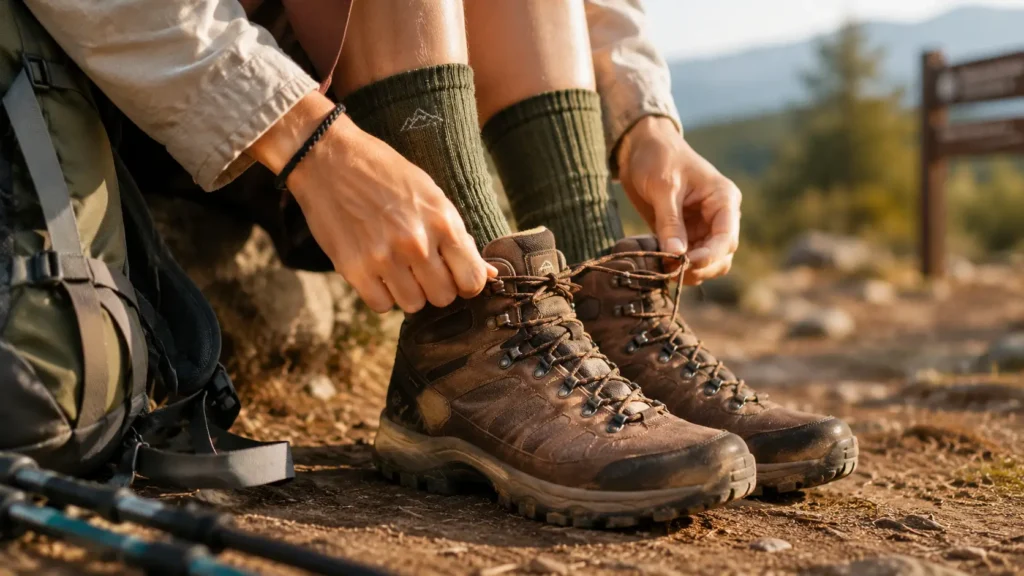
- Crew (mid-calf) — the standard hiking sock height. Works with low, mid and high-cut boots. Protects the ankle from boot rub and debris. Recommended for most beginner women.
- Over-the-calf — for winter hiking, mountaineering or when you need maximum ankle coverage. Overkill for most day hikes.
If you’re wearing mid-cut hiking boots, a crew sock is the right choice — it clears the boot collar without rubbing your ankle bone. If you haven’t chosen your hiking boots yet, the guide to the best hiking boots for women beginners walks through exactly what to look for. For trail shoes, a quarter crew or ankle sock works fine.
My honest picks for beginner women
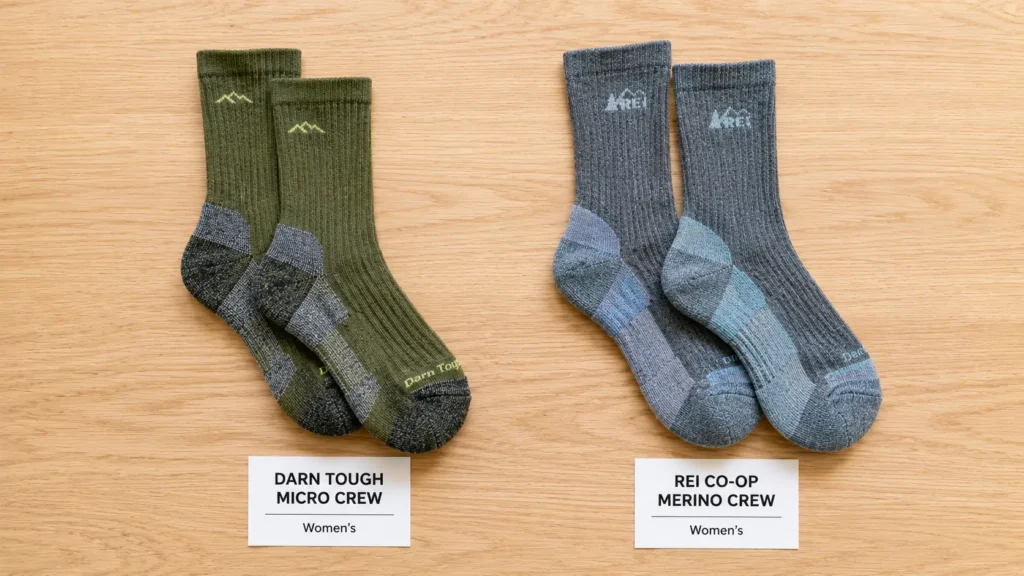
These are the socks Sophie would actually buy — one option at each price point, all tested and recommended by the hiking community consistently.
Best overall: Darn Tough Hiker Micro Crew Midweight (Women’s)
The most consistently recommended hiking sock for a reason. Made in Vermont from a merino-nylon blend, it has a lifetime guarantee — if you wear through them, you mail them back and get a new pair free. The fit is snug without being tight, the cushioning is just right for all-day comfort, and the odor resistance is genuinely impressive. They’re not cheap but they last years.
Material: 61% merino wool, 36% nylon, 3% Lycra | Cushion: Midweight | Price: ~$25–28
Best for: Most beginner women wanting a sock they won’t have to replace for years
Best budget: REI Co-op Merino Wool Hiking Crew (Women’s)
If the Darn Tough price feels steep before you know if you’ll love hiking, the REI Co-op merino crew is the honest budget alternative. 79% merino content at a much lower price — that’s a higher merino percentage than many more expensive socks. The fit isn’t quite as precise as Darn Tough and they’ll wear out faster, but for a beginner starting out they’re excellent value.
Material: 79% merino wool, 19% nylon, 2% Lycra | Cushion: Lightweight | Price: ~$15–18
Best for: Beginner women who want to try merino hiking socks without spending $28 a pair
Best lightweight: Smartwool Run Targeted Cushion Ankle (Women’s)
If you’re hiking in trail runners rather than boots, or doing warm-weather hikes where you want something lighter, Smartwool’s ankle-height option is excellent. The targeted cushioning puts padding exactly where you need it — toe and heel — without bulk elsewhere. The merino content keeps temperature and odor controlled even on hot days.
Material: Merino-nylon blend | Cushion: Targeted/Light | Price: ~$20–22
Best for: Warm weather hikes, trail runners, women who find crew socks too warm
Best synthetic: Darn Tough Coolmax Hiker Micro Crew (Women’s)
If you’re vegan, wool-sensitive, or simply want a lower price point with fast drying — Darn Tough’s fully synthetic version of their Hiker Micro Crew performs surprisingly well. The same lifetime guarantee applies. It won’t manage odor as well as the merino version on multi-day trips, but for day hikes it’s a great option.
Material: COOLMAX polyester, nylon, Lycra | Cushion: Midweight | Price: ~$18–22
Best for: Women who want Darn Tough quality without merino wool
What to avoid
- Cotton socks — the single most important rule. Check the label.
- Running socks on hiking trails — they’re designed for different movement patterns and wear out faster under trail stress
- Socks that are too thick for your boots — they’ll make boots feel tight and can cause pressure points
- Buying one pair — always have at least two pairs rotating so you’re never forced to wear damp socks
- Ignoring fit — a sock that slides or bunches creates friction in exactly the wrong places
How to care for hiking socks
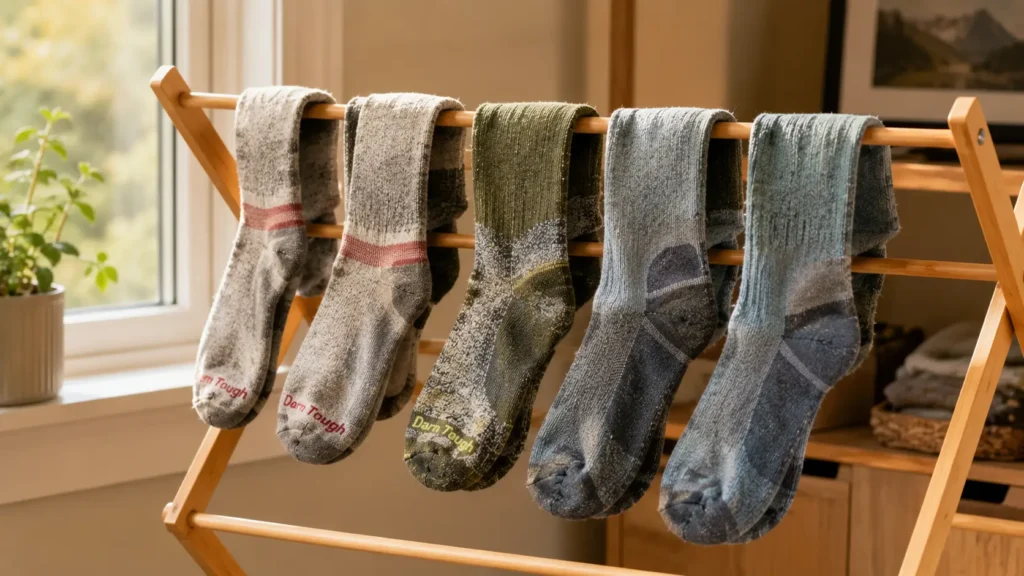
Good hiking socks last years with proper care — which mostly means not ruining them in the wash:
- Machine wash cold, gentle cycle — merino wool especially
- Turn inside out before washing — removes sweat and debris more effectively
- Air dry or tumble dry low — never high heat, which shrinks merino and degrades elastic
- Never dry near a campfire or radiator — damages the fibers
- Replace when cushioning feels flat or you can see through the knit at high-wear spots
Final thoughts
The best hiking socks for women aren’t necessarily the most expensive pair on the shelf. They’re the ones made from moisture-wicking fibers (not cotton), with the right cushion weight for your hike, and the right height for your footwear.
For most beginner women, that means a midweight merino-nylon crew sock. The Darn Tough Hiker Micro Crew is the honest top recommendation — the lifetime guarantee alone makes it worth the price over time. If budget is tight, the REI Co-op merino crew is genuinely good value.
Your boots get all the attention. Your socks do just as much work. Get both right. For a complete look at what to wear hiking from head to toe, the women’s hiking outfit guide covers every layer.
FAQs
The best hiking socks for women beginners are made from merino wool or a merino-nylon blend, with midweight cushioning and crew height. The Darn Tough Hiker Micro Crew Women’s is the most consistently recommended option — it’s comfortable, durable, and backed by a lifetime guarantee. The REI Co-op Merino Wool Hiking Crew is an excellent budget alternative.
Yes — specifically, you need socks that are not cotton. Cotton holds moisture against your skin, which causes blisters. Any sock made from merino wool, synthetic fibers or a blend will manage moisture far better than a regular cotton athletic sock. Even a basic synthetic hiking sock is a meaningful upgrade.
For most women, yes. Merino wool regulates temperature, resists odor naturally, and feels comfortable against skin for hours. The tradeoff is price — a good merino hiking sock costs $20–30. For beginner day hikes, the REI Co-op merino crew at $15–18 hits the sweet spot between performance and value.
Midweight is the right starting point for most beginner women doing day hikes on maintained trails. It provides enough cushioning for comfort on uneven terrain without adding so much bulk that your boots feel tight. If you’re hiking in hot weather or trail runners, lightweight is a better choice.
The most important steps: never wear cotton socks, make sure your socks fit snugly without bunching, and ensure your boots have enough toe room so the sock isn’t compressed. Moisture is the main cause of blisters — a merino or synthetic hiking sock that wicks moisture away from skin dramatically reduces blister risk compared to cotton.

Intermediate hiker sharing real trail experience — honest gear picks, beginner-friendly guides, no filler.