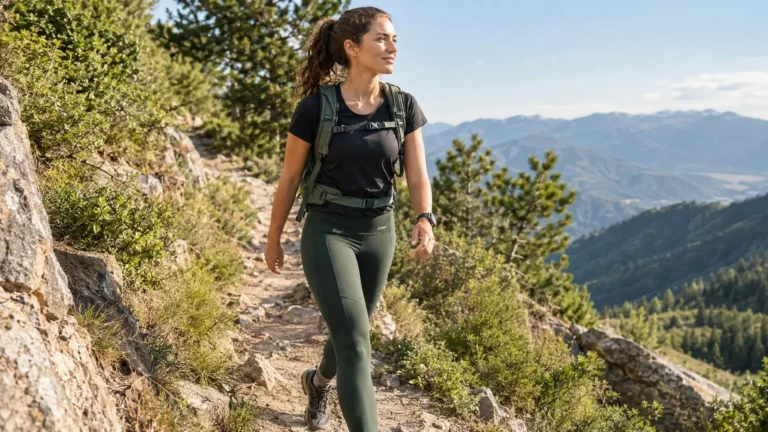
Summer hiking sounds simple — it’s warm, you pack less, you don’t need to worry about wet weather layers. Then you do your first hot-weather hike in a cotton t-shirt and discover that sweat-soaked cotton sticks to your skin, takes forever to dry, and makes a three-hour trail feel twice as miserable as it needs to.
What you wear on a summer hike matters more than most beginners expect — not because you need expensive technical gear, but because the difference between the right fabric and the wrong one is the difference between comfortable and genuinely unpleasant once the temperature climbs and the effort goes up.
This guide covers exactly what to wear hiking in summer as a woman — from the base layer question to the sun hat debate — with complete outfit ideas by temperature range and honest answers to the questions most sites avoid.
The single most important rule: no cotton
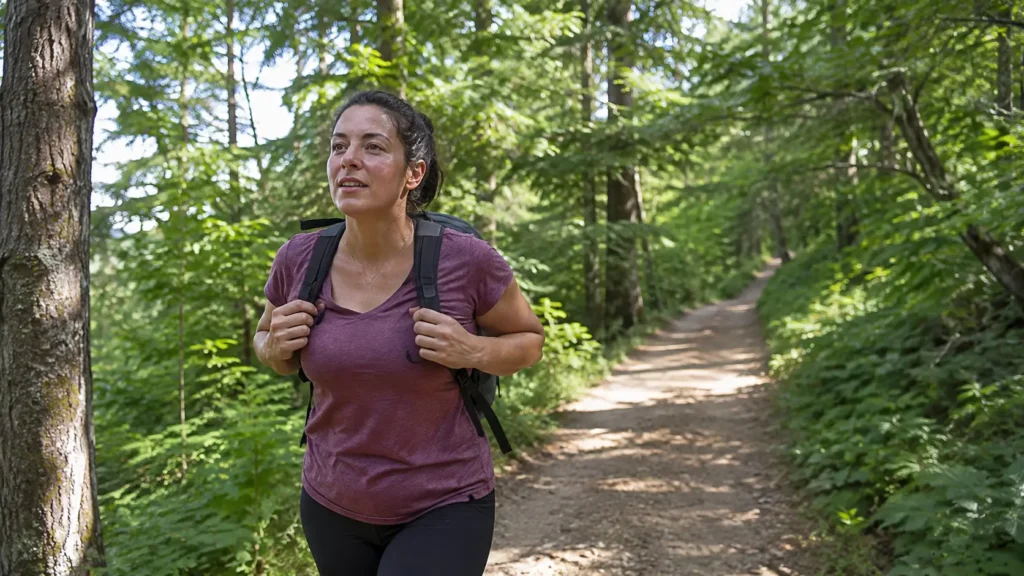
Cotton is comfortable in daily life because it’s soft and breathable. On a hike, those properties become problems. Cotton absorbs moisture and holds it against your skin — so as you sweat, your t-shirt becomes heavy, cold when you stop moving, and takes a very long time to dry. In summer heat this creates a particularly unpleasant cycle: you’re hot when moving and cold and clammy when you stop.
The alternative is moisture-wicking fabric — polyester, nylon or merino wool blends that pull moisture away from your skin and dry quickly. You’ll see terms like ‘Dri-FIT’, ‘quick-dry’ or ‘moisture-wicking’ in product descriptions. These fabrics don’t feel dramatically different in a shop but make an enormous difference after the first hour of hiking in heat.
This rule applies to everything against your skin: tops, leggings or shorts, and socks. A technical top and cotton shorts is still half a cotton problem. Commit to moisture-wicking across the board and your summer hikes will feel significantly better.
Should you wear shorts or pants hiking in summer?
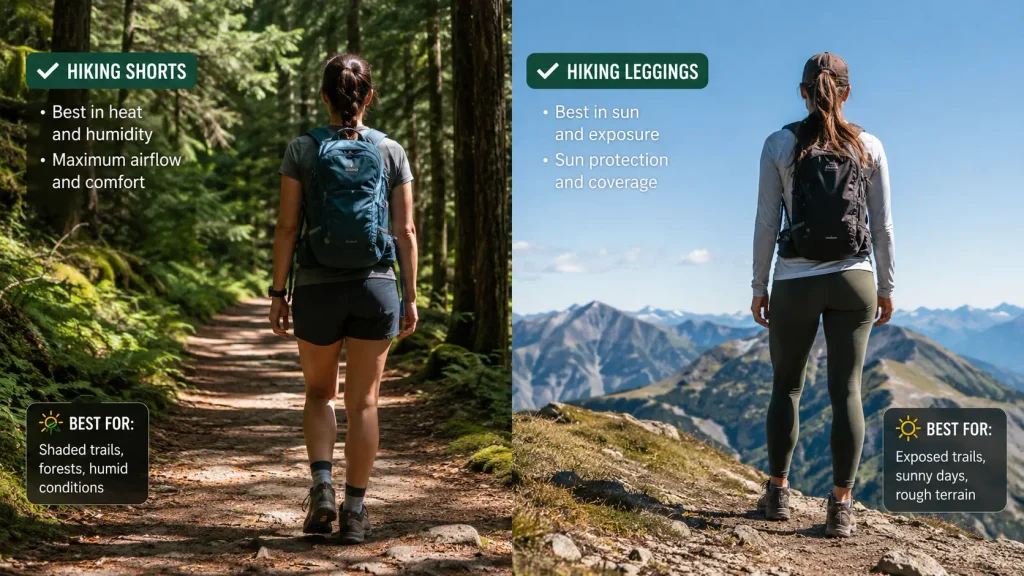
This is the question most beginner women overthink. The honest answer: both work, and the right choice depends on the specific trail rather than a universal rule.
When shorts make sense
- Well-maintained trails with no dense vegetation or rough undergrowth
- Hot conditions above 25°C where every bit of airflow helps
- Shorter hikes where sun exposure time is limited
- Trails you know well with predictable terrain
For shorts, look for hiking-specific designs with a longer inseam (5-7 inches sits better on trail than short fashion shorts), a secure waistband, and at least one secure pocket for a phone. Avoid very short or tight fashion shorts — they ride up on climbs and can chafe on longer hikes.
When lightweight pants or leggings make sense
- Trails with rough vegetation, nettles, brambles or long grass
- Exposed terrain where sun protection on your legs matters
- Longer hikes where chafing from shorts becomes a real concern
- Trails with stream crossings where you want leg protection
Lightweight hiking leggings with UPF 50+ are often more comfortable than shorts on longer summer hikes — they protect against sun and vegetation, wick moisture effectively, and don’t ride up. For very hot conditions, lightweight convertible pants (zip-off to shorts) give you flexibility to adjust as conditions change. For the complete guide to choosing hiking leggings for women, see the best hiking leggings for women.
What to wear on top for summer hiking
Base layer — the most important item
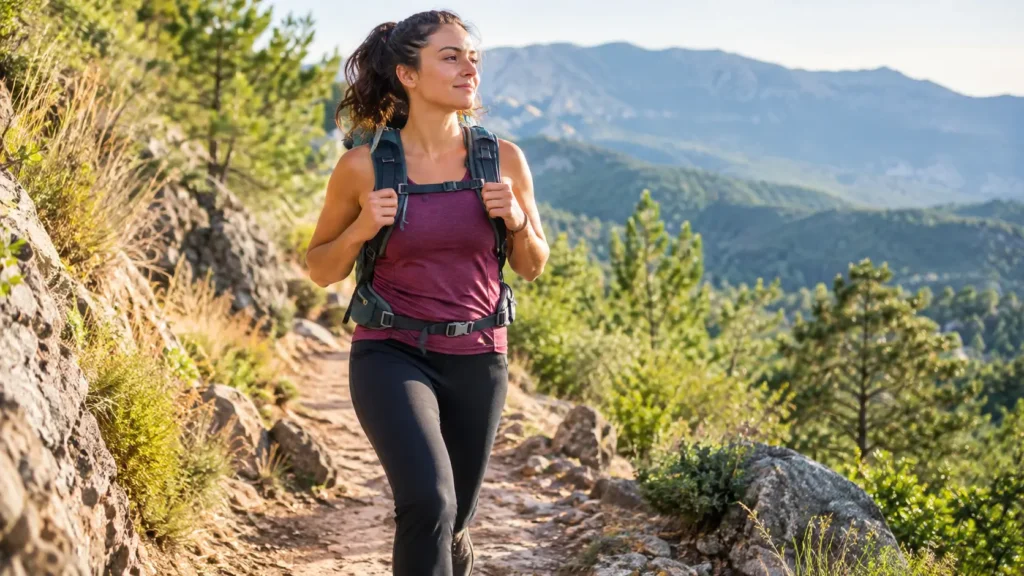
Your top is the item you’ll feel most during a hot hike. Choose a lightweight moisture-wicking t-shirt or long-sleeve in technical fabric. The choice between short and long sleeve depends on sun exposure:
- Short sleeve: easier for mild temperatures and shaded trails, requires sun cream on arms for exposed terrain
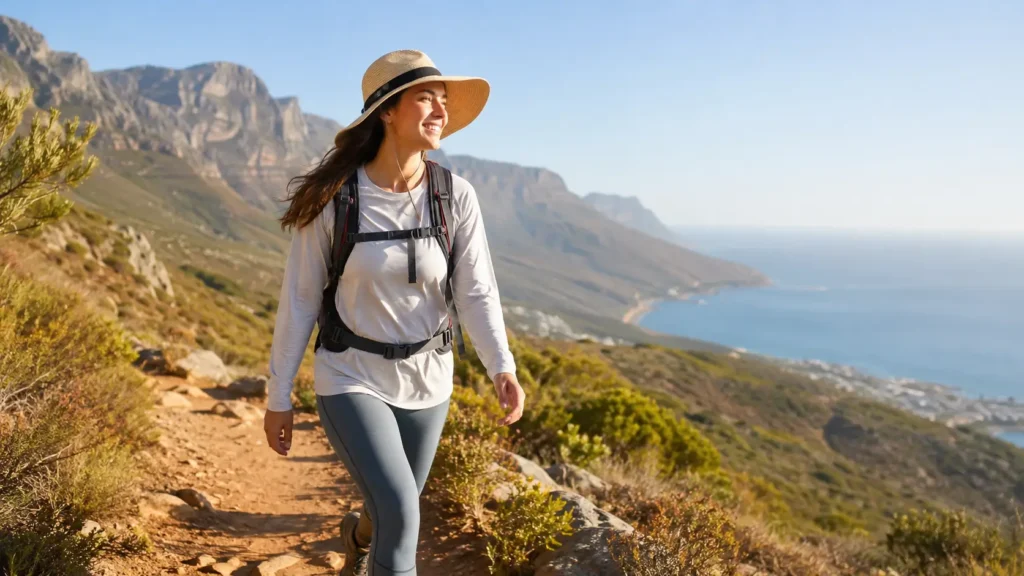
- Long sleeve lightweight technical shirt: better sun protection on exposed ridges and longer hikes, often more comfortable in heat than short sleeve because it keeps direct sun off your skin — counterintuitive but true
Sophie’s preference for exposed summer trails: a lightweight long-sleeve technical shirt in a light colour (pale blue, white, sage green — light colours reflect heat rather than absorbing it). It sounds hotter than short sleeves but in direct sun on an exposed ridge, covered skin is often cooler and always better protected.
Colour matters more than most people realise
Dark colours absorb more solar radiation and heat up more in direct sun. Light colours reflect it. On a summer hike in full sun, wearing a white or pale technical shirt is measurably cooler than the same shirt in black or navy. Not dramatically different in shade — significant in direct sun for hours.
Mid layer — pack it, don’t wear it
Even in summer, pack a lightweight fleece or softshell in your daypack. Temperature drops quickly on elevation, at summits and in late afternoon shade — you won’t need it for most of the hike but you’ll be very glad to have it for the descent or if the weather turns. A packable layer weighs almost nothing and takes up minimal pack space.
Sun protection — the summer hiking essential most beginners underpack
On a summer hike you can be in direct sun for 3-6 hours at a time — significantly more exposure than most daily life. Sun protection needs to be deliberate, not an afterthought:
Sun hat — non-negotiable on exposed trails
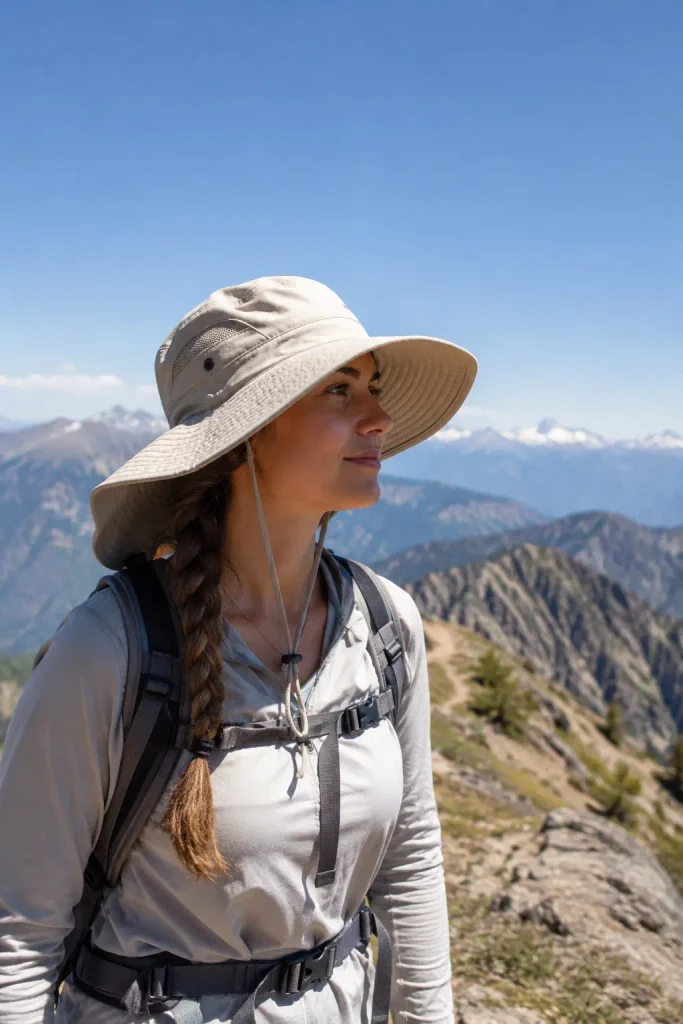
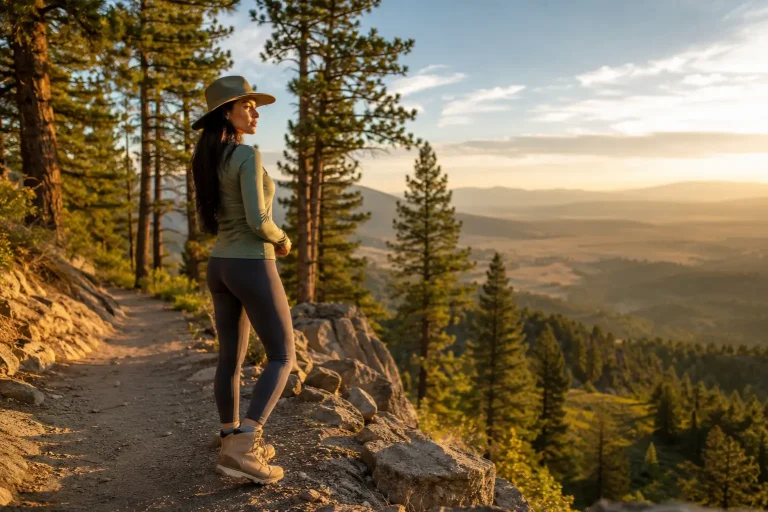
A sun hat is the single most effective piece of sun protection on a summer hike. A wide-brimmed hat (10cm brim or more) shades your face, neck and shoulders — the areas that burn first and fastest. Look for hats with a UPF rating and ideally a chin strap for windy exposed sections.
Baseball caps protect the face but leave the neck and ears exposed — fine for shaded forest trails, not adequate for exposed ridge walking. A proper wide-brimmed sun hat is the right tool for serious summer hiking.
UPF clothing
UPF (Ultraviolet Protection Factor) in clothing works like SPF in sunscreen but for fabric. UPF 50+ blocks 98% of UV radiation. Most quality hiking leggings and technical tops carry a UPF rating — look for it in the product specifications. For exposed summer hiking, UPF-rated clothing provides consistent protection without reapplication, unlike sun cream which wears off with sweat.
Sunscreen — still necessary
Even with UPF clothing and a sun hat, exposed skin needs sunscreen: face, hands, back of neck, any areas not covered by clothing. Use SPF 30 minimum, apply before you leave, and reapply every 2 hours — sweat significantly reduces effectiveness. Keep a small tube in your pack for reapplication on longer hikes.
Sunglasses
UV-protective sunglasses are important on any exposed summer trail — UV radiation at altitude and in open terrain is significantly higher than in daily life. Polarised lenses reduce glare from water and light-coloured rock. Look for CE or UV400 marking to confirm UV protection.
Footwear for summer hiking
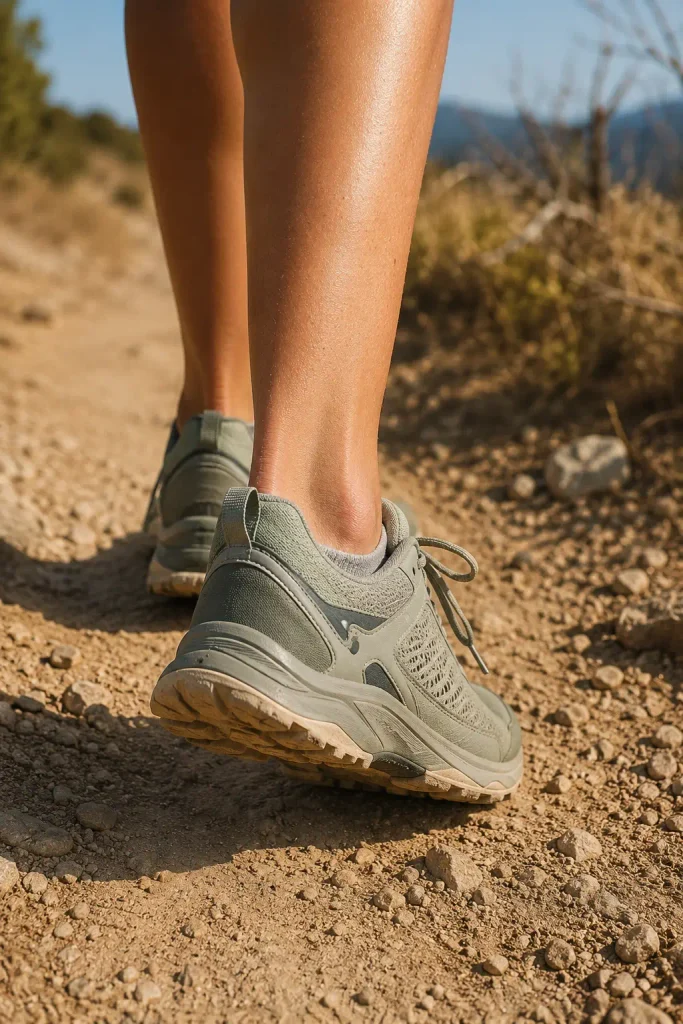
Trail shoes vs hiking boots in summer
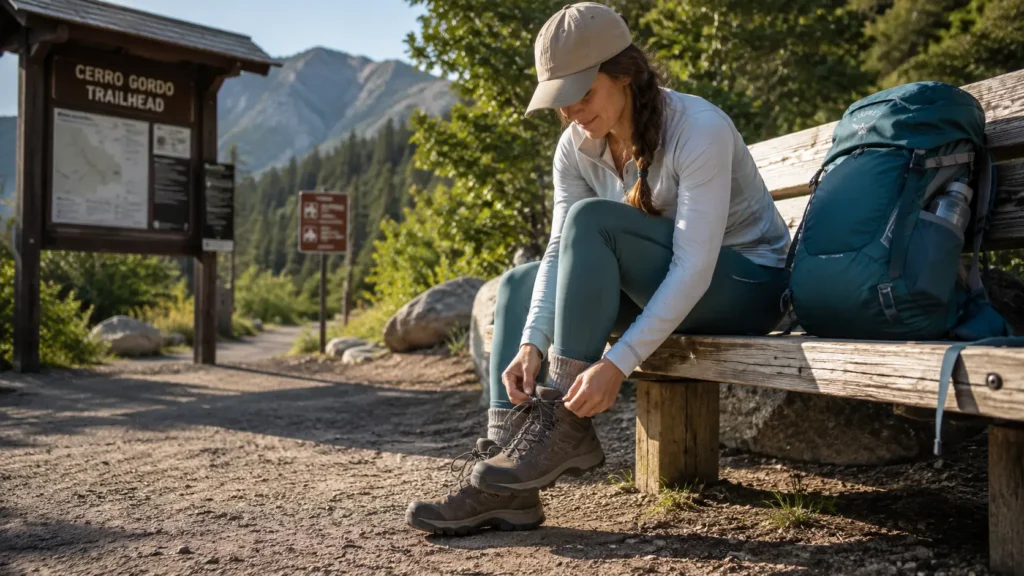
Summer is the season where trail shoes shine over hiking boots. In dry conditions, trail shoes offer better breathability, lighter weight and more freedom of movement. They’re the right choice for most dry summer day hikes on established trails.
Hiking boots make more sense in summer when: the trail has technical terrain where ankle support helps, you’re crossing streams regularly, or the trail is wet or muddy despite the season. For typical dry summer day hikes, trail shoes are often the more comfortable option.
Socks — merino for summer
In summer heat, merino wool hiking socks outperform synthetic — they manage moisture better, resist odour more effectively, and feel more comfortable against skin in high temperatures. A thin merino hiking sock keeps feet cooler than a thick synthetic one while still protecting against blisters.
Complete summer hiking outfits by temperature
Quick reference outfit guide
| Temperature | Top | Bottom | Key extras |
| 18–22°C Mild summer | Moisture-wicking t-shirt or light long-sleeve | Hiking leggings or shorts | Light packable layer in pack, sun hat |
| 22–27°C Warm summer | Lightweight long-sleeve technical shirt (light colour) | Hiking shorts or lightweight leggings | Wide-brim sun hat, UPF 50+ if exposed, sunscreen |
| 27–32°C Hot summer | Lightweight long-sleeve UPF shirt (light colour) | Shorts or ultralight leggings | Wide-brim hat essential, sunscreen every 2hrs, extra water |
| 32°C+ Very hot | Lightweight UPF long-sleeve or loose linen-style technical top | Loose hiking shorts or ultralight pants | Hat non-negotiable, early start essential, hydration priority |
What Sophie actually wears for summer hiking
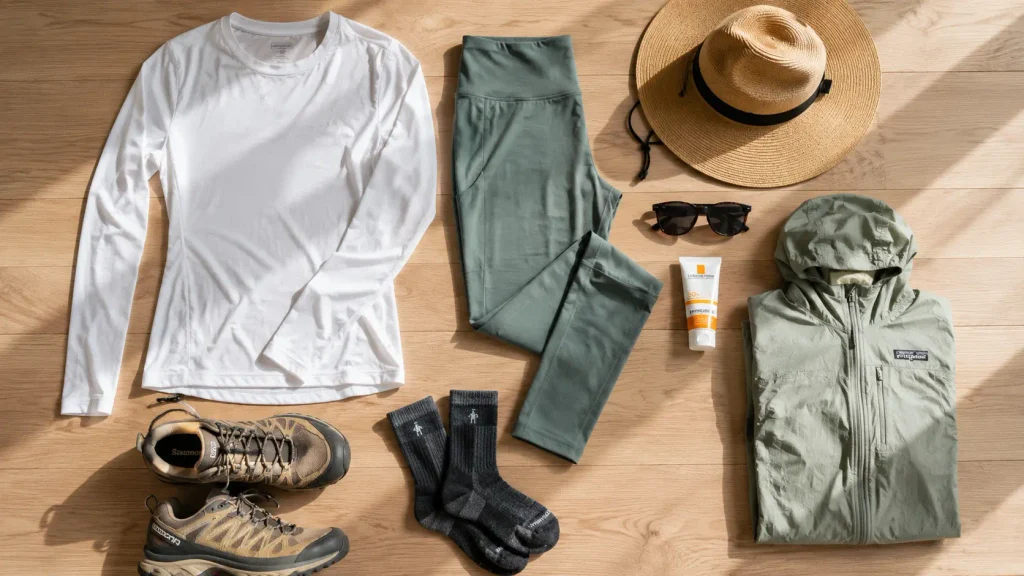
For a typical summer day hike in 22-26°C:
- Patagonia Capilene Cool Daily long-sleeve shirt in white — lightweight, moisture-wicking, UPF 50+, dries fast. Better than short sleeve in direct sun despite feeling counterintuitive.
- Montane Tucana hiking leggings — UPF 50+, stays up on climbs, proper phone pocket. Or Columbia Silver Ridge shorts for shadier trails.
- Thin merino hiking socks (Darn Tough or Icebreaker)
- Trail shoes — Salomon Speedcross or Altra Lone Peak depending on terrain
- Wide-brimmed Outdoor Research sun hat with chin strap
- Polarised sunglasses
- SPF 50 sunscreen applied before leaving, small tube in pack for reapplication
- Packable Patagonia Houdini windshell in the pack — weighs 100g, packs to nothing
What to avoid wearing on a summer hike
- Cotton anything — t-shirts, shorts, socks. Holds sweat against skin and takes forever to dry.
- Dark colours on exposed terrain — absorb solar radiation and heat up more in direct sun.
- Very short fashion shorts — ride up on climbs, can cause inner thigh chafing on longer hikes.
- Sandals or flip flops — no ankle support, no protection from rocks and roots, blister risk on longer hikes.
- Heavy hiking boots in dry summer conditions — trap heat unnecessarily when trail shoes would be cooler and lighter.
- Going without a hat on exposed trails — sun exposure to face and neck over hours is significant damage.
Final thoughts
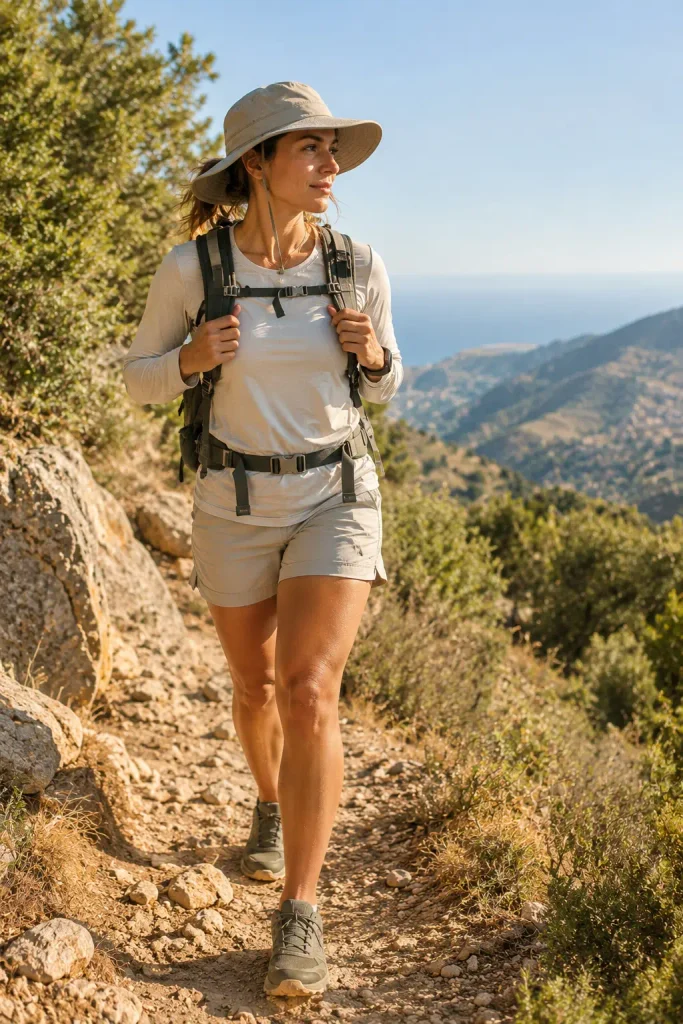
The best summer hiking outfit isn’t necessarily the most stylish or the most expensive — it’s the one that keeps you cool, protects you from the sun, and manages sweat effectively across the length of your hike. Technical moisture-wicking fabric across everything, a wide-brimmed hat on exposed trails, and consistent sun protection are the foundations.
The cotton t-shirt is the most common summer hiking mistake. Everything else is secondary to getting that one thing right. Swap it for a £25 technical top and your summer hikes will feel immediately better.
The trail is better in the right kit. Dress for the conditions, not just the car park. For the complete guide to what to wear hiking from head to toe across all seasons, see the women’s hiking outfit guide.
FAQs
The essentials for a summer hiking outfit: a moisture-wicking technical top (never cotton), hiking leggings or shorts in quick-dry fabric, thin merino or synthetic hiking socks, trail shoes or hiking boots, a wide-brimmed sun hat on exposed trails, and sunscreen. Light colours are cooler than dark ones in direct sun. A lightweight packable layer in your pack handles temperature changes at elevation or in late afternoon shade.
Both work — the right choice depends on the trail. Shorts suit well-maintained trails in high heat with limited vegetation. Lightweight hiking leggings or pants make more sense on trails with rough vegetation, for longer hikes where chafing is a concern, or on exposed terrain where leg sun protection matters. Many experienced women hikers prefer lightweight leggings with UPF 50+ over shorts for longer summer hikes — the sun protection and chafe prevention outweigh any heat disadvantage.
Cotton absorbs moisture and holds it against your skin — so as you sweat during a hike, your clothing becomes heavy, takes a long time to dry, and feels cold and clammy when you stop moving. In summer heat this is particularly uncomfortable. Moisture-wicking technical fabrics (polyester, nylon, merino blends) pull moisture away from your skin and dry quickly, keeping you more comfortable throughout the hike regardless of temperature.
UPF stands for Ultraviolet Protection Factor — the fabric equivalent of SPF for sunscreen. UPF 50+ blocks 98% of UV radiation. On summer day hikes where you’re in direct sun for 3-6 hours, UPF-rated clothing provides consistent protection without the reapplication that sunscreen needs. Most quality hiking leggings and technical tops carry a UPF 30 or 50+ rating. For exposed summer hiking — ridgelines, alpine terrain, long days in full sun — UPF clothing is worth prioritising.
Light colours — white, pale blue, sage green, cream — reflect solar radiation and stay cooler in direct sun than dark colours, which absorb heat. The difference is most significant during sustained exposure in direct sun over several hours. On shaded forest trails the colour difference is minimal. For exposed summer hiking in full sun, a light-coloured technical shirt is measurably cooler than the same shirt in black or navy. Bright colours like orange or yellow are also useful for visibility in remote terrain.

Intermediate hiker sharing real trail experience — honest gear picks, beginner-friendly guides, no filler.