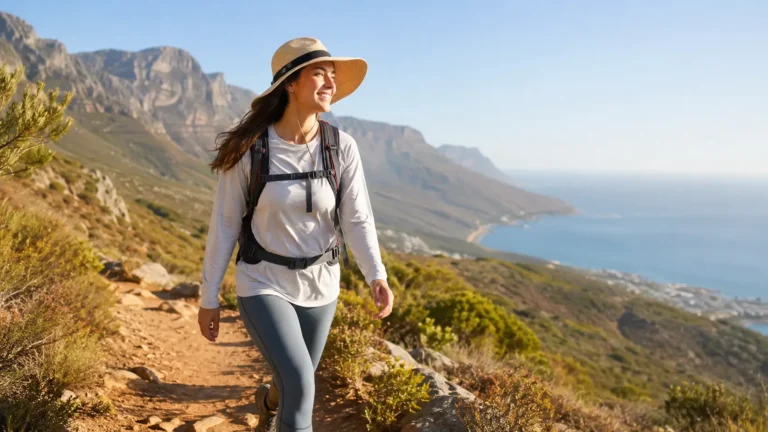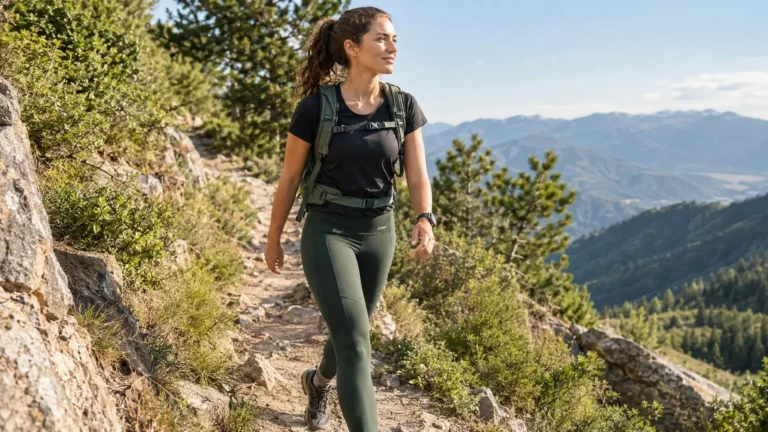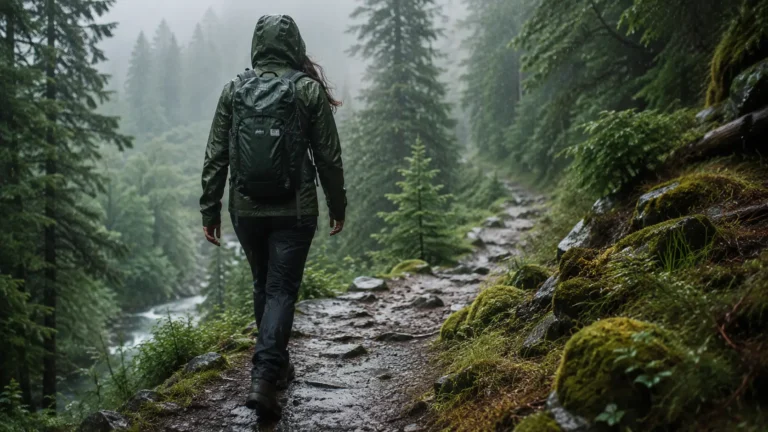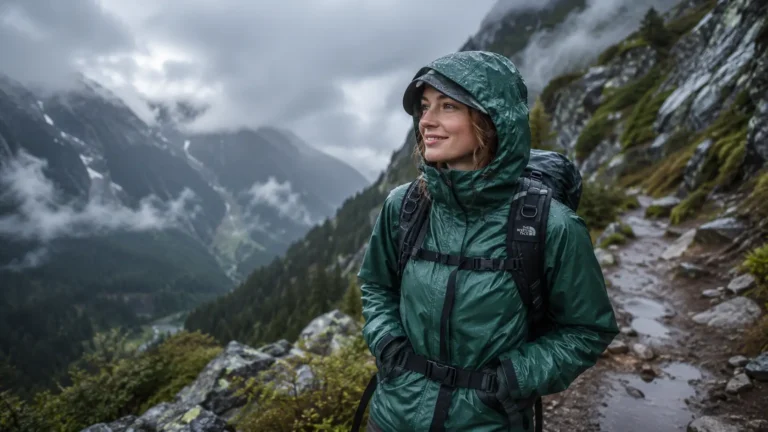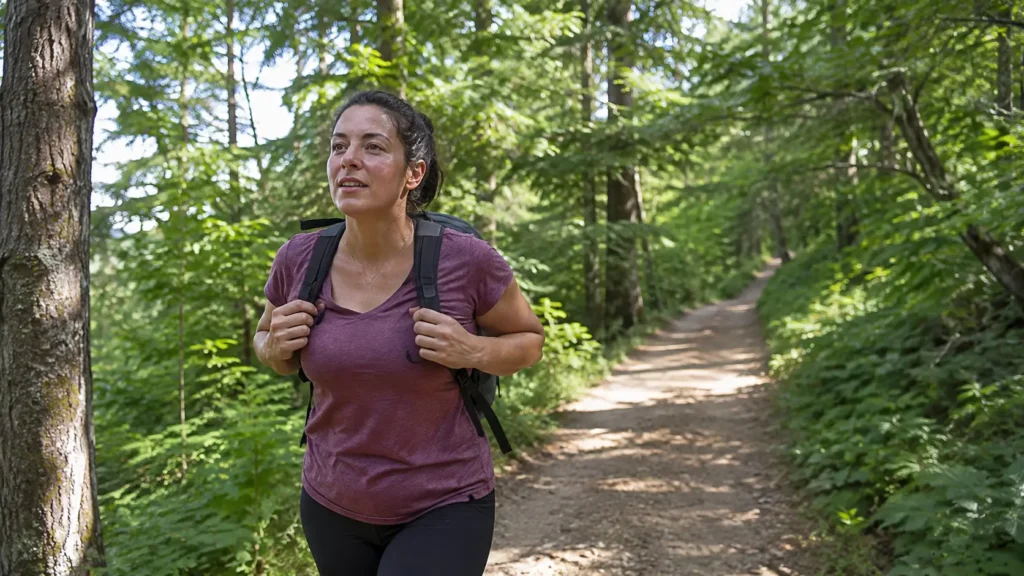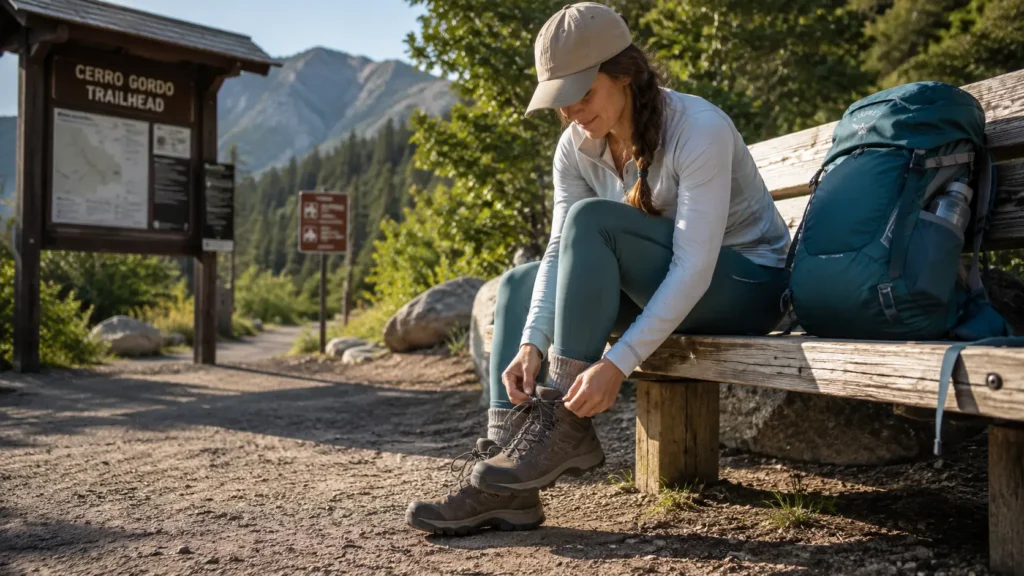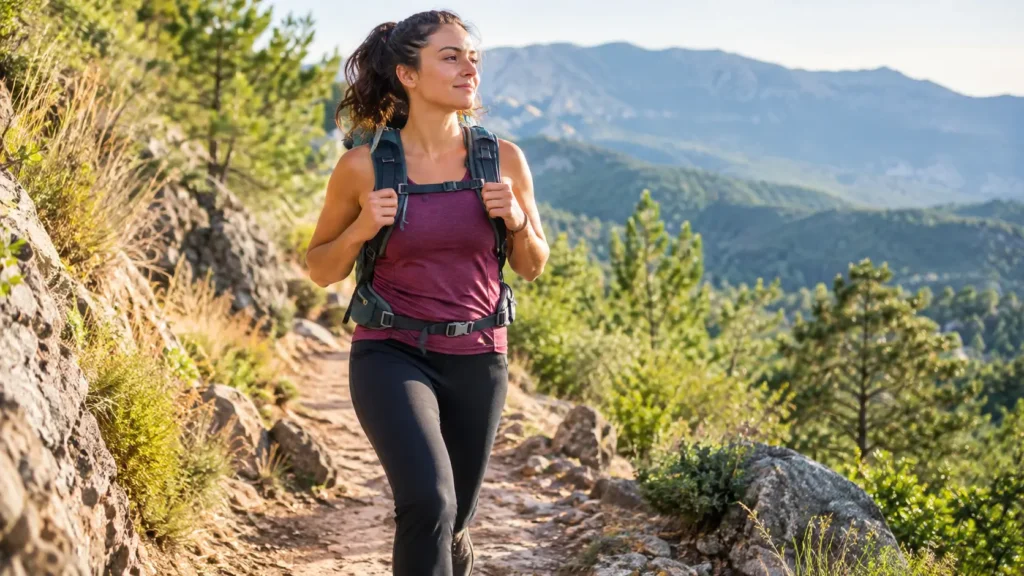
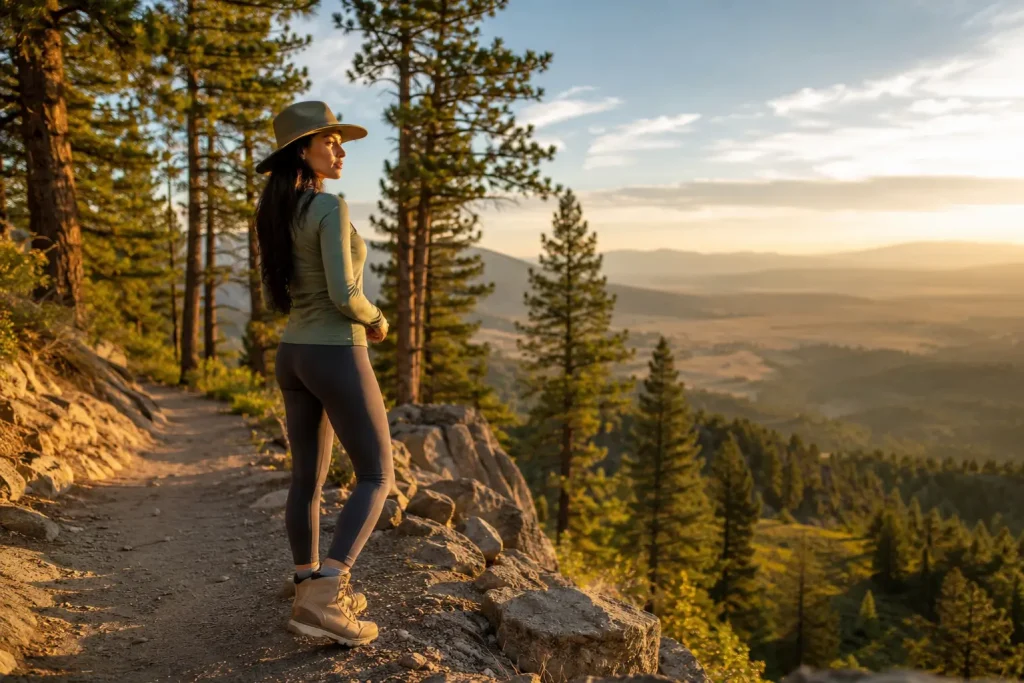
The first time I showed up to a trailhead in jeans and regular trainers, I didn’t make it two miles before I was uncomfortable, overheating, and regretting every clothing choice I’d made that morning. Nobody told me that fabric matters on the trail. Nobody told me that denim turns into a damp, chafing nightmare the moment you start sweating.
That’s why this guide exists. Whether you’re heading out for your first easy trail or building out a full hiking wardrobe, this is everything you need to know about what women should wear hiking — from your base layer all the way down to your boots, and for every season on the calendar.
And if you’re still figuring out what to pack beyond your outfit, our day hiking essentials guide for beginners covers everything else in your pack
No fluff, no gear lists that cost a fortune. Just practical, honest advice from someone who has made all the mistakes so you don’t have to.
What Makes a Good Hiking Outfit for Women
Before we get into specific pieces, it helps to understand why hiking clothes are different from regular workout clothes. The trail throws a lot at you — changing temperatures, moisture from sweat or rain, UV exposure, uneven terrain. Your outfit needs to handle all of that without slowing you down.
The three things that matter most are fabric, fit, and layering.
Fabric is the biggest factor most beginners get wrong. Avoid cotton entirely — it absorbs moisture and holds it against your skin, which makes you cold, uncomfortable, and prone to chafing. Look instead for synthetic fabrics like polyester or nylon, or natural merino wool.
Fit matters more on the trail than it does at the gym. Too tight and you’ll restrict your movement on steep sections. Too loose and you risk snagging on branches or tripping on your own hems.
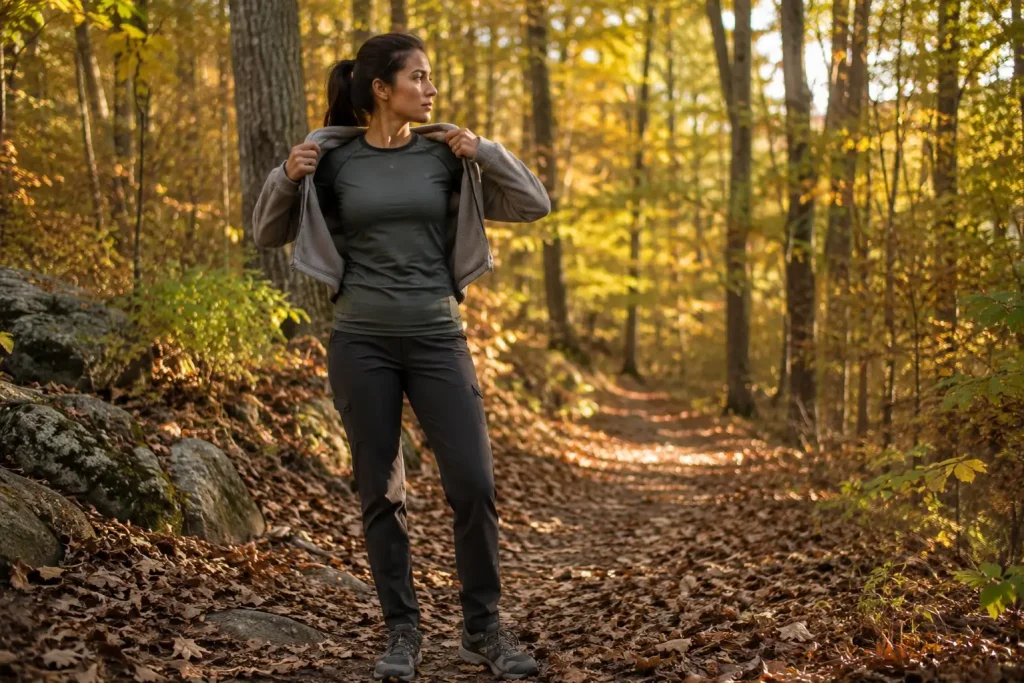
Layering is what experienced hikers swear by. Instead of one heavy piece, you wear multiple lighter layers that you can add or remove as conditions change.
The Layering System Explained
Base Layer
This is the layer that sits against your skin. Its only job is to pull moisture away from your body and keep you dry. A good base layer is lightweight, close-fitting, and made from either synthetic fabric or merino wool. Merino is worth it if you can stretch the budget — it’s naturally odour-resistant, which matters on longer hikes.
Mid Layer
This is your warmth layer. Fleece jackets, lightweight down vests, and softshell jackets all work here. You’ll pull this on when you stop for a rest and the sweat starts to cool, and shove it in your pack when you’re moving hard.
Outer Shell
This is your weather protection — a waterproof or water-resistant jacket that blocks wind and rain. You don’t always need it, but on changeable days or in the mountains, it’s the layer you’ll be very glad you packed.
For warm summer hikes on easy trails, you might skip the mid layer entirely. For a complete breakdown of all the hiking gear a beginner woman needs beyond clothing, see our women’s hiking gear guide. For anything in autumn, spring, or at elevation, all three layers are worth having.
Best Hiking Tops for Women
Your top is your base layer, and as mentioned above — not cotton. Here’s what to look for:
Short sleeve moisture-wicking tops are the workhorses of summer hiking. Brands like Patagonia, Columbia, and REI Co-op all make reliable options. Look for UPF 30+ or UPF 50+ if you’re hiking in exposed terrain.
Long sleeve sun shirts are brilliant for sunny hikes. They protect your arms from UV without making you overheat, especially in lightweight nylon or polyester.
Merino wool t-shirts are a slightly pricier option that rewards you with comfort on multi-day or warm-weather hikes. Icebreaker and Smartwool are the two names most commonly recommended.
What to avoid: regular cotton t-shirts, thick gym tops with poor ventilation, anything with a loose hem that might catch on gear.
Hiking Leggings vs. Hiking Pants: Which Is Better?
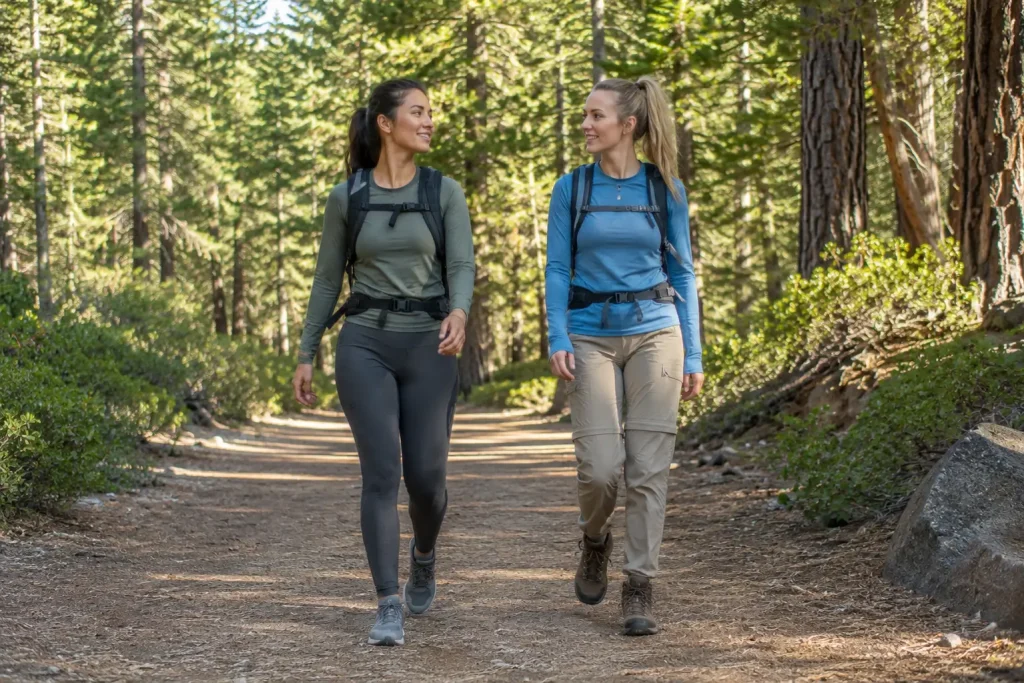
This is one of the most common questions beginner hikers ask, and the honest answer is — both work. It depends on the trail and the conditions.
Hiking Leggings
Leggings are comfortable, flexible, and great for warm weather or easier trails. The key is choosing the right ones. Regular gym leggings in thin cotton or low-grade polyester won’t cut it. You want hiking-specific leggings or high-quality athletic tights in a durable, quick-dry fabric.
Look for leggings with a gusset (a diamond-shaped panel at the crotch) for better range of motion, a high waistband that stays put on climbs, and four-way stretch fabric.
Good options: Athleta Trekkie tights, Columbia Titan Pass leggings, REI Co-op Activator tights.
Hiking Pants
Pants are better for cold weather, longer trails, brushy terrain, or anywhere ticks and insects are a concern. Convertible hiking pants (the ones that zip off into shorts) are endlessly practical for day hikes with changing conditions.
Good options: Prana Halle pants, Arc’teryx Gamma pants, Fjällräven Keb Trousers.
Bottom line: Leggings for warm, easy to moderate trails. Pants for cold weather, long days, or rougher terrain.
Best Hiking Socks for Women
Socks are genuinely underrated. The wrong pair will give you blisters on a trail that should have been easy.
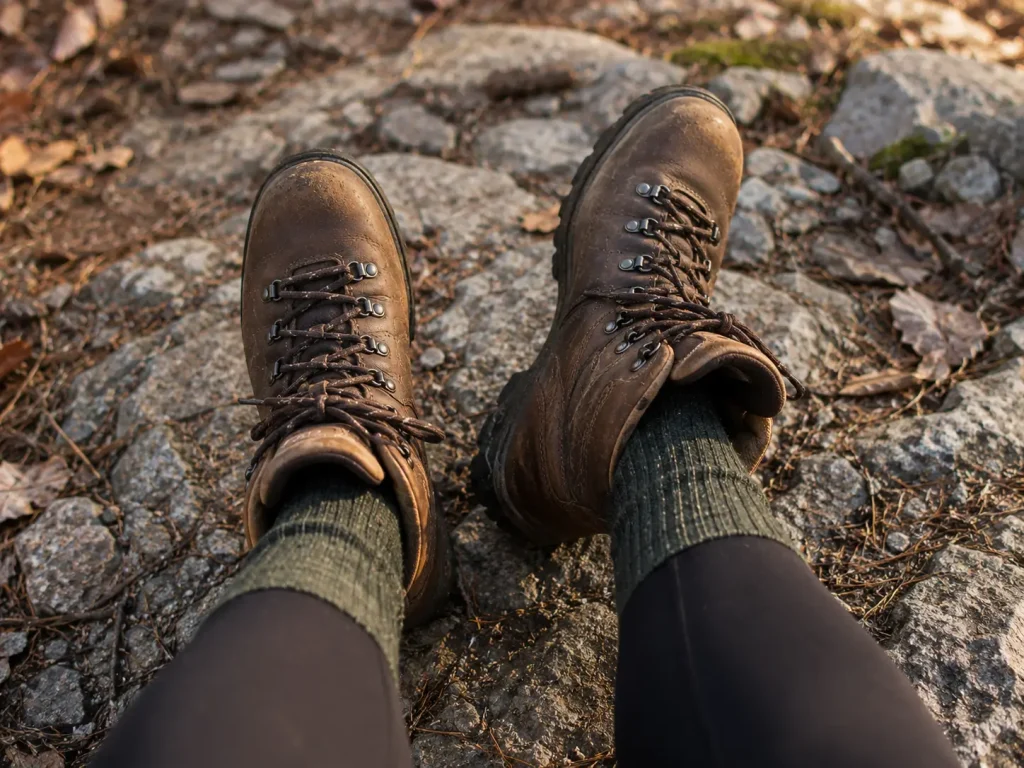
Merino wool hiking socks are the gold standard. They regulate temperature, wick moisture, resist odour, and cushion your feet beautifully. Darn Tough and Smartwool are the two brands most consistently recommended.
Cushioning level: Light cushion for warm weather. Medium or heavy cushion for long days and heavier boots.
Height: Ankle socks for trail runners. Crew height for hiking boots to protect your ankle from rubbing.
Best Hiking Boots and Shoes for Women
Trail Runners
Lightweight, breathable, and comfortable from the first wear. Trail runners are increasingly popular even among experienced hikers for day hikes on well-maintained trails.
Good options: Salomon Speedcross, Hoka Speedgoat, Brooks Cascadia.
Hiking Boots (Low to Mid Cut)
Better ankle support, more protection on rough terrain, and generally more waterproofing than trail runners.
Good options: Merrell Moab 3, Keen Targhee III, Salomon X Ultra.
What NOT to Wear on the Trail
- Regular trainers or sneakers on real trails
- Flip flops or sandals
- New boots with no break-in (recipe for blisters)
- Worn-out soles with no grip
Seasonal Hiking Outfit Recommendations
Summer Hiking Outfit
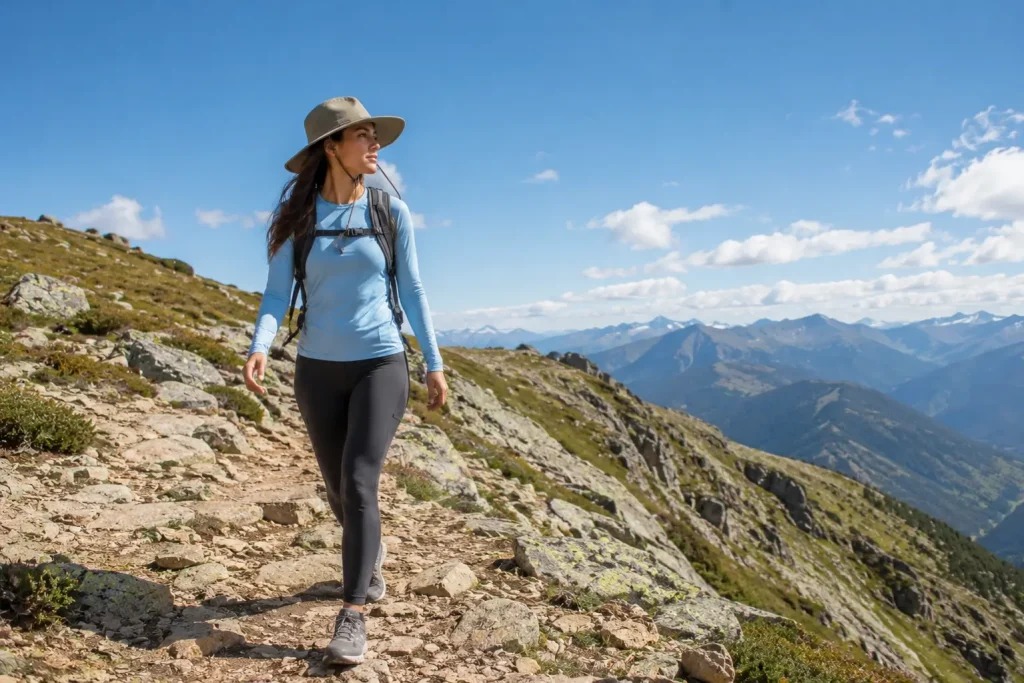
- Moisture-wicking short sleeve top or long sleeve sun shirt (UPF 50+)
- Lightweight hiking leggings or convertible pants
- Trail runners or low-cut hiking shoes
- Merino wool or synthetic ankle/crew socks
- Sun hat with a brim
- Lightweight sunglasses
Spring Hiking Outfit
- Moisture-wicking base layer top
- Lightweight fleece or softshell mid layer
- Waterproof jacket in your pack
- Hiking pants (mud is more of a factor than in summer)
- Waterproof or water-resistant hiking boots
- Medium-weight merino socks
Autumn / Fall Hiking Outfit
- Merino wool long sleeve base layer
- Fleece mid layer
- Waterproof shell jacket
- Hiking pants or thermal-lined leggings
- Mid-cut hiking boots
- Warm beanie and gloves in your pack
Cold Weather Hiking Outfit
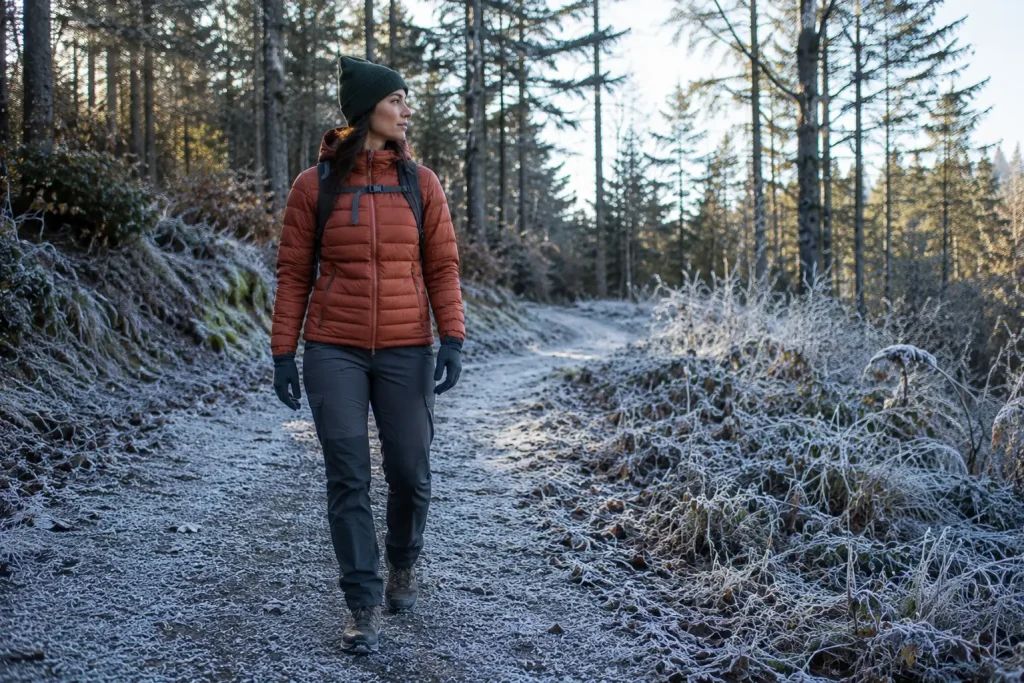
- Merino wool or synthetic thermal base layer (top and bottom)
- Insulated mid layer (down or synthetic puffer)
- Waterproof, windproof outer shell
- Insulated hiking pants or softshell pants over thermal base
- Waterproof hiking boots rated for cold temperatures
- Fleece-lined hat, gloves, neck gaiter
Rainy Weather Hiking Outfit
- Moisture-wicking base layer (merino holds up better when wet)
- Mid layer if temperatures are cool
- Waterproof jacket with sealed seams and a proper hood
- Waterproof hiking pants or rain pants over leggings
- Waterproof or Gore-Tex lined hiking boots
- Gaiters if the trail is likely to be muddy
What NOT to Wear Hiking (Common Beginner Mistakes)
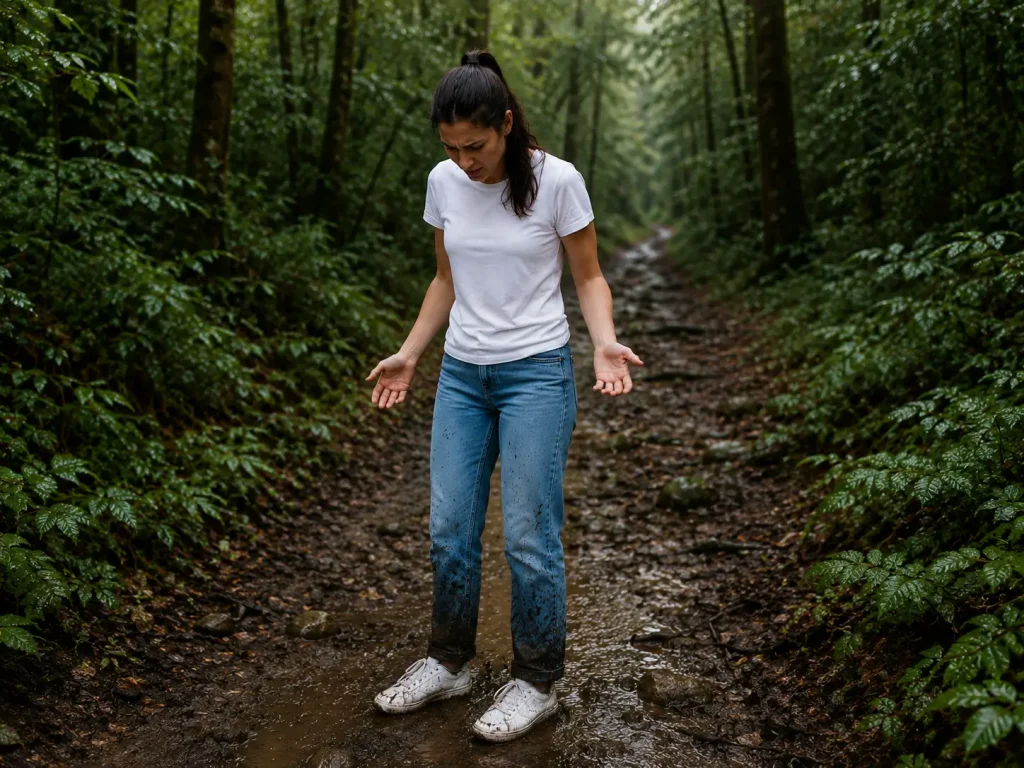
Jeans. Denim is heavy, has no stretch, holds moisture like a sponge, and chafes aggressively when wet. One rainy mile in jeans and you’ll understand immediately why this is the number one hiking clothing mistake.
Cotton t-shirts. Once cotton gets wet from sweat or rain, it stays wet. In warm weather this is uncomfortable. In cold weather it can become a safety issue.
Regular gym leggings. The thin polyester ones designed for yoga or spin class are not built for trail use. They snag, they’re often see-through when stretched, and they offer no wind or abrasion resistance.
Fashion trainers or flat-soled shoes. Regular sneakers have almost no grip on wet roots or loose gravel, no ankle support, and minimal cushioning for rocky terrain.
A heavy puffer as your only layer. If you sweat into a puffer with no moisture-wicking base layer, you’ll end up cold and damp inside a coat designed to keep you warm.
No hat, no sun protection. You’re exposed to the sky on most trails. UV at elevation is stronger than at sea level. A brimmed hat and UPF top aren’t optional on long summer hikes.
Beginner Hiking Outfit Checklist
- Moisture-wicking top (no cotton)
- Hiking leggings or hiking pants
- Merino wool or synthetic hiking socks
- Hiking boots or trail runners (broken in)
- Lightweight layer for your pack (fleece or softshell)
- Waterproof jacket (pack it even on sunny days)
- Sun hat
- Sunglasses
FAQs
Yes — but choose the right ones. Hiking-specific or high-quality athletic leggings in a moisture-wicking, quick-dry fabric work well on warm weather and moderate trails. Avoid thin cotton leggings or yoga tights not designed for outdoor use.
Trail runners are a great starting point — they’re comfortable from day one and work well on most maintained trails. If you’re tackling rougher terrain, rocky paths, or carrying a heavy pack, a low to mid-cut hiking boot with good ankle support is a better choice.
No. Cotton absorbs and holds moisture from sweat or rain, leaving you wet and uncomfortable. In cold or wet conditions, wet cotton can cause your body temperature to drop dangerously. Always choose moisture-wicking synthetics or merino wool instead.
A lightweight moisture-wicking top (short or long sleeve with UPF protection), hiking leggings or convertible pants, trail runners or low-cut boots, and a sun hat. Carry an ultralight windshell in your pack for exposed ridges or afternoon weather changes.
Yes, and it makes a bigger difference than most beginners expect. Merino wool hiking socks (Darn Tough and Smartwool are the two best-known brands) prevent blisters, manage moisture, and cushion your feet over miles of uneven ground. Regular cotton socks bunch and hold moisture.
Layer up: a merino or synthetic thermal base layer, an insulated mid layer (down or synthetic puffer), and a waterproof windproof shell. Add insulated hiking pants or thermal leggings, waterproof boots, warm socks, gloves, and a warm hat.
Final Thoughts
Getting your hiking outfit right isn’t about spending a fortune or wearing the latest gear brand. It’s about understanding a few simple principles — avoid cotton, dress in layers, protect yourself from the weather — and building from there.
Start with the basics: a good moisture-wicking top, the right leggings or pants, decent socks, and footwear that fits your trail. Everything else can be added over time as you hike more and figure out what matters to you. The trail is genuinely one of the best places you can spend a day. Get the outfit right and you’ll spend the whole time enjoying it rather than thinking about your feet. Once your outfit is sorted, our women’s hiking packing list covers every other item you need to bring — with a free printable checklist included. Ready to put it all together? Our beginner hiking tips for women covers every practical step from trail selection to what to do when you get there. And once the outfit is sorted, check our complete day hiking essentials guide to make sure the rest of your pack is ready too.

Intermediate hiker sharing real trail experience — honest gear picks, beginner-friendly guides, no filler.