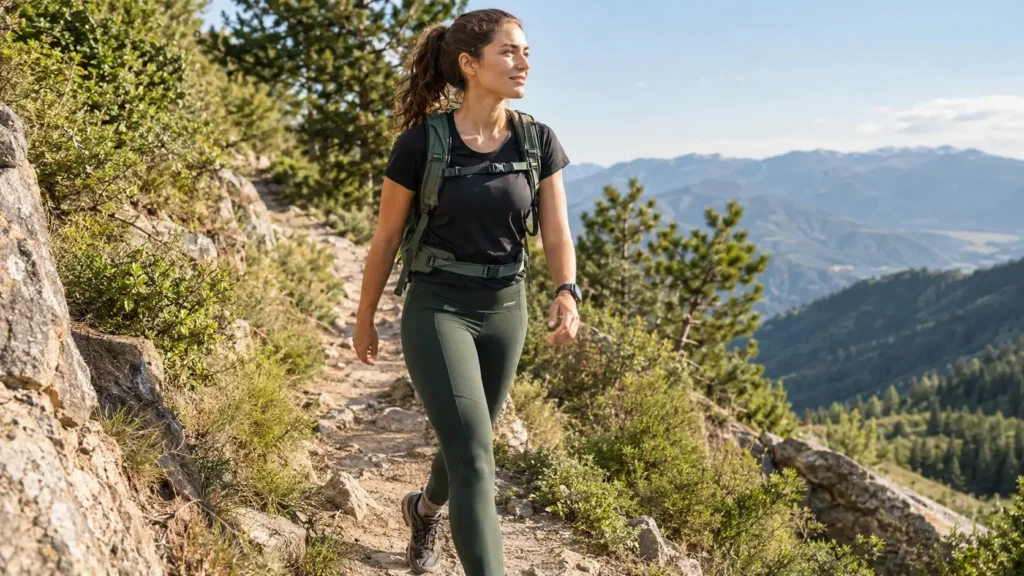
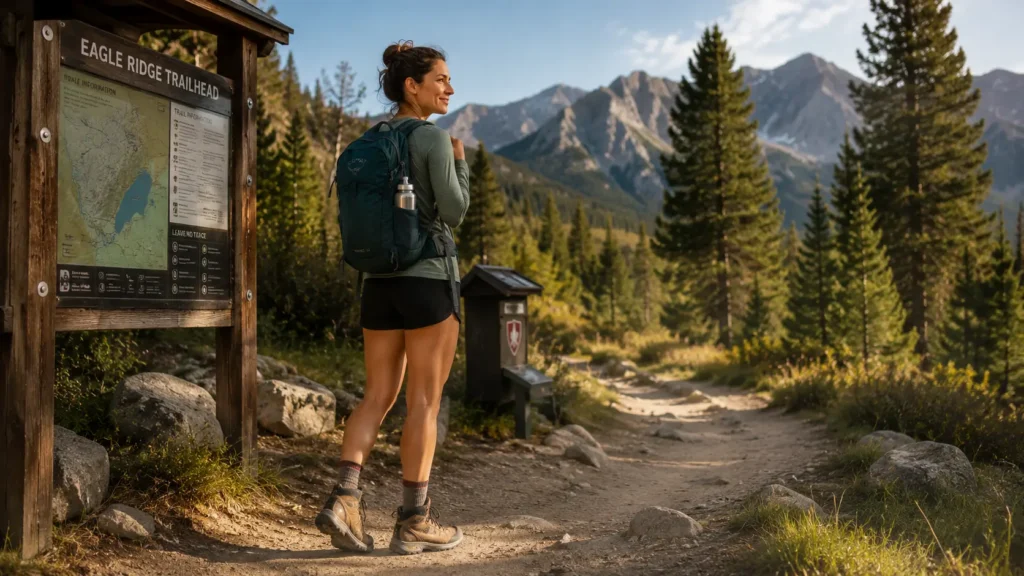
I made most of these mistakes myself. A few of them I learned from watching other beginners on trail. All of them are completely avoidable once you know what to look for.
The thing about beginner hiking mistakes is that they’re never dramatic. Nobody trips off a cliff on their first hike. What happens instead is a slow accumulation of small bad decisions — the wrong socks, an underestimated trail, a skipped snack — that turns what should be an enjoyable experience into something miserable. Then the person decides hiking isn’t for them, when really, they just needed better information.
This is that information.
Mistake 1: Wearing cotton socks
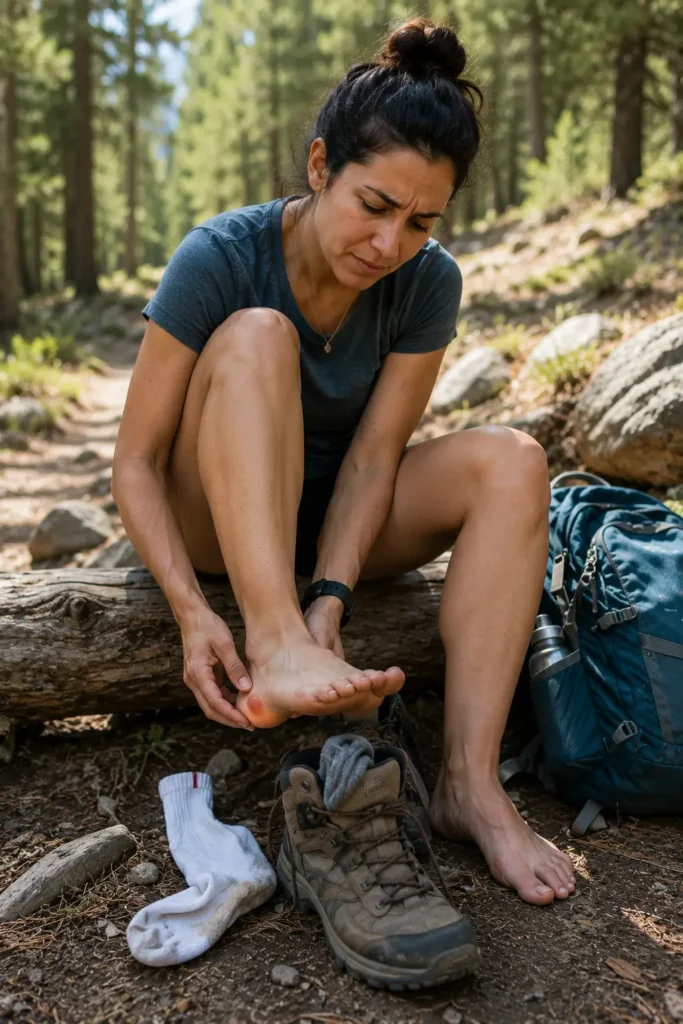
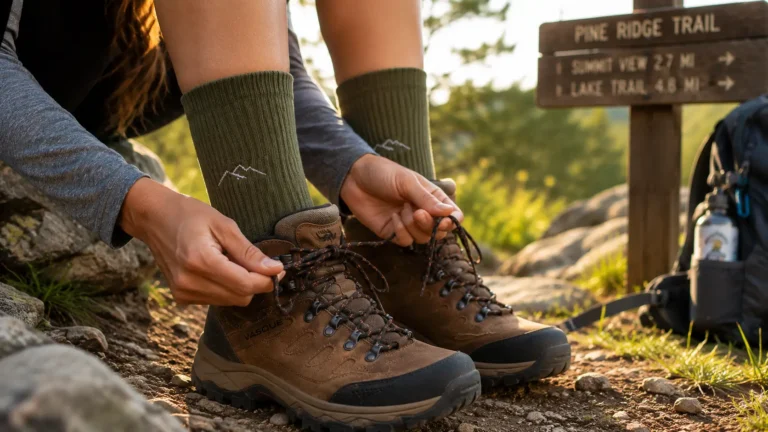
The single most common cause of hiking blisters. Cotton holds moisture against your skin, softens it, and creates friction — the exact conditions that produce blisters within the first two hours of a hike.
Most beginner women grab whatever athletic socks they own without thinking about it. Those socks are usually mostly cotton. That’s the mistake.
The fix: Switch to merino wool or synthetic hiking socks before your next hike. For honest picks at every budget, the guide to the best hiking socks for women covers exactly what to look for. The Darn Tough Hiker Micro Crew or REI Co-op merino crew are both excellent. This single change prevents more first-hike misery than almost anything else.
Mistake 2: Wearing brand new boots on a long hike
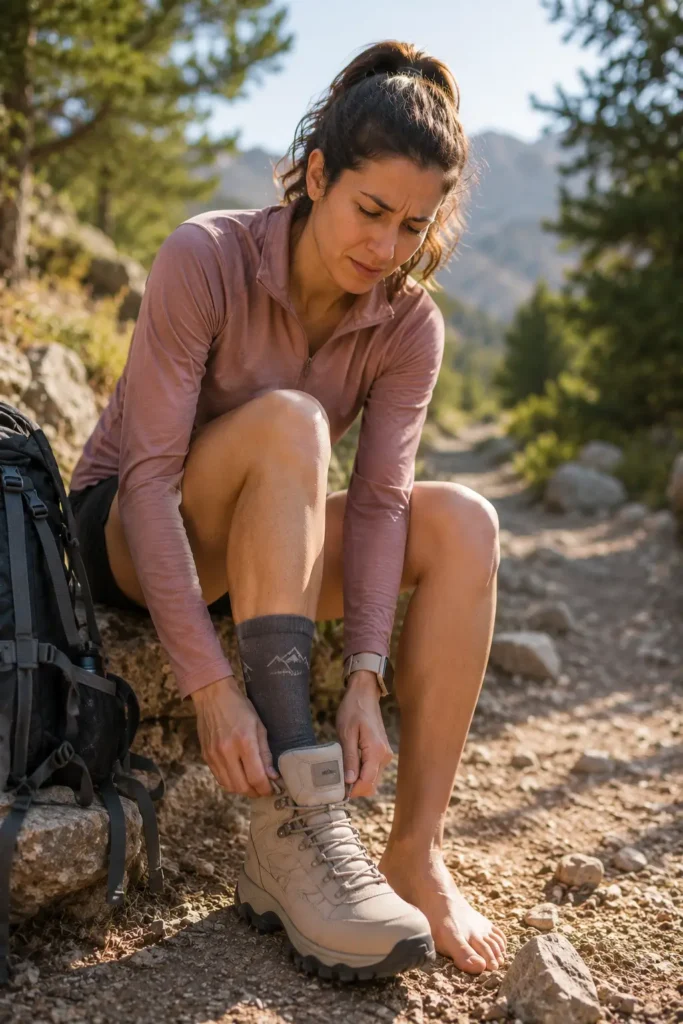
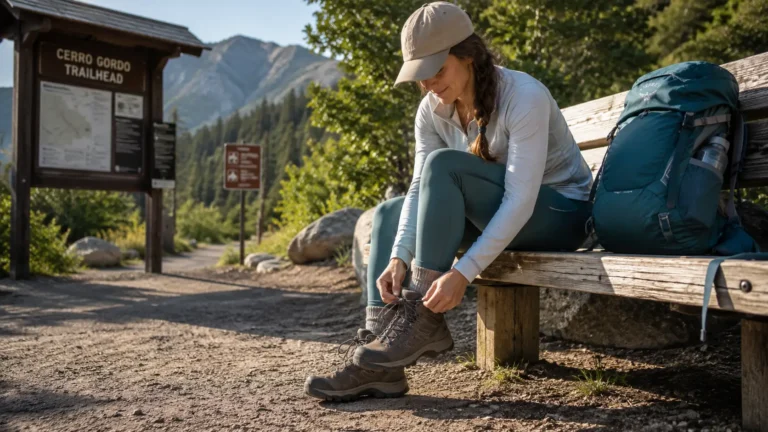
New boots haven’t moulded to the shape of your foot yet. The upper is stiff, the heel cup hasn’t softened, and any pressure points or friction spots haven’t been identified yet. Taking brand new boots on a 3-hour hike is a guaranteed way to come home with blisters you didn’t need.
This happens constantly — someone buys hiking boots specifically for a trip and wears them for the first time on that trip. The logic makes sense until your heel is shredded by mile two.
The fix: Break in new boots over 3–4 weeks before any significant hike. Around the house, short walks, then a 1-2 hour trial hike. Only then are they ready for a full day on trail. For a full guide to choosing and breaking in hiking boots, the best hiking boots for women beginners covers every step.
Mistake 3: Underestimating how long the hike will take
Trail distances are deceptive. A 10km hike sounds manageable — until you realise it has 400m of elevation gain, the trail is rocky and technical, and you stop to look at views. The listed time on AllTrails assumes a steady moderate pace with minimal stops.
Most beginner women hike slower than AllTrails estimates, take more breaks, and spend time at viewpoints. That’s completely fine — but it means the 3-hour hike in the app description often takes 4-5 hours in practice. Starting a hike at 11am assuming you’ll be done by 2pm and finding yourself still on trail at 5pm with fading light is genuinely dangerous.
The fix: Take the AllTrails estimated time and add 50% for your first few hikes. Start early. Tell someone your planned return time. Turn around at the halfway point in time, not distance.
Mistake 4: Not bringing enough water
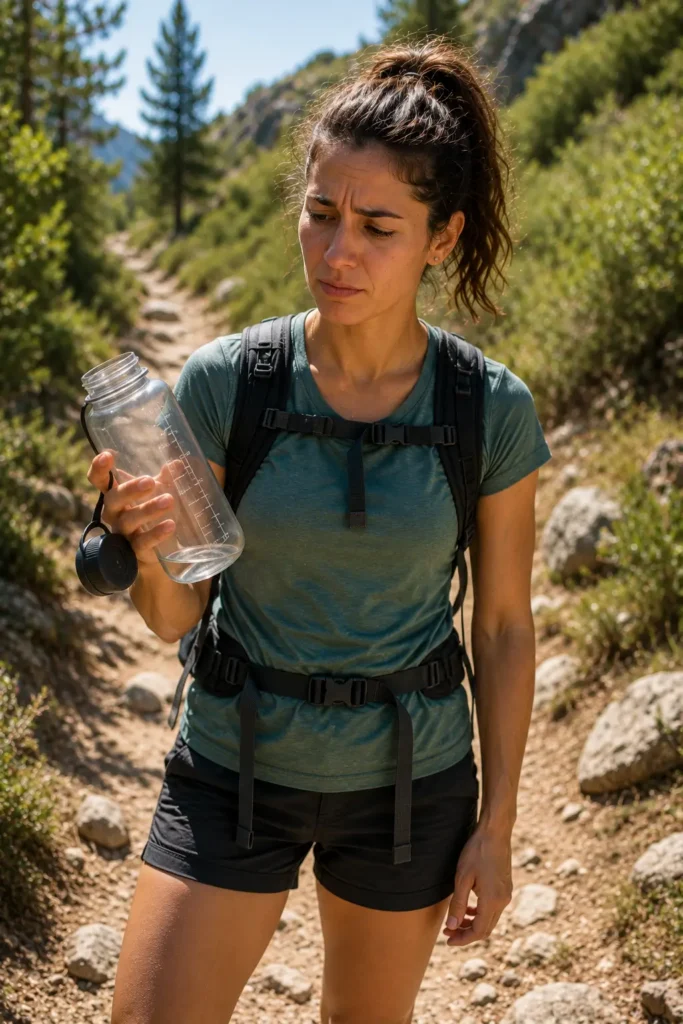
Beginners consistently underpack water. The standard advice of 500ml per hour sounds like a lot until you’re two hours into a hot summer hike and your bottle is empty.
Dehydration on trail is insidious — it starts as a mild headache or fatigue that’s easy to attribute to the effort of hiking, then gets worse quickly. By the time you feel thirsty, you’re already dehydrated.
The fix: Carry at least 500ml per hour of planned hiking, minimum 1.5 litres for any hike. In hot weather or on steep terrain, carry 2 litres. A hydration reservoir in your daypack makes drinking regularly much easier than unscrewing a bottle cap.
Mistake 5: Ignoring a hot spot until it becomes a blister
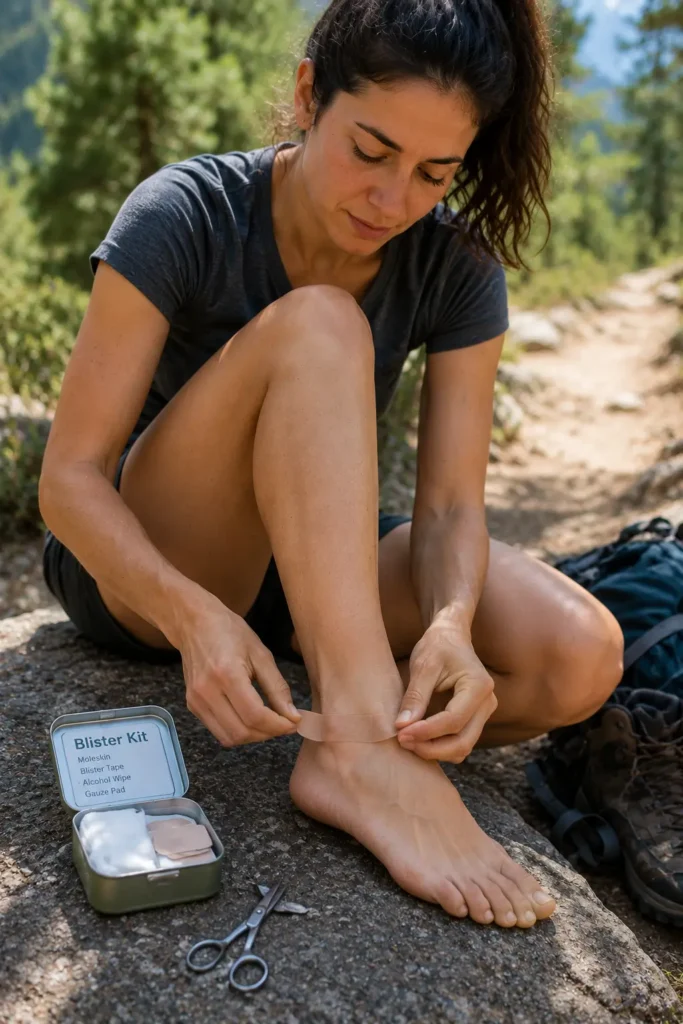
This is the most easily preventable injury in hiking and the one most beginners make. A hot spot is a warm, red, slightly sore patch of skin telling you that friction is building. It takes five minutes to deal with and saves hours of pain.
What most beginner women do instead: notice the discomfort, think ‘it’s probably fine’, and keep walking. Thirty minutes later it’s a blister. Two hours later it’s making every step miserable.
The fix: Stop the moment you feel a hot spot. Boot off, sock off, dry the area, apply Leukotape or a blister plaster. Check the sock for wrinkles. Five minutes now saves everything.
Mistake 6: Choosing a trail that’s too hard for the first hike
Enthusiasm is good. Overestimating your current fitness level on your first hike is not. Most beginners pick a trail based on how impressive the destination sounds rather than how realistic the effort is for their current fitness.
A 15km trail with 600m of elevation gain is not a beginner trail — regardless of how stunning the viewpoint photos look. Starting too ambitious means a miserable experience that puts people off hiking entirely.
The fix: For your first 3-4 hikes, choose trails under 8km with minimal elevation gain. Get your trail legs, understand your pace, and build up gradually. The impressive trails will still be there when you’re ready.
Mistake 7: Not telling anyone where you’re going
This is the solo hiking safety mistake that most beginner women make without realising it. If you get injured, twist an ankle, or simply get lost on a remote trail, the first question emergency services ask is: who knew you were out there?
Most beginners don’t think about this because they’re not planning anything dramatic. But minor incidents — a twisted ankle, a broken phone, a wrong turn on a poorly marked trail — can become serious if nobody knows to look for you.
The fix: Before every hike, tell someone: where you’re going (trail name and location), when you expect to be back, and what to do if you haven’t checked in by a specific time. Takes two minutes and could matter enormously.
Mistake 8: Skipping breakfast or not eating enough on trail
Bonking — the sudden, complete energy crash when blood sugar drops and glycogen runs out — is entirely preventable and happens to beginner women constantly. It feels like hitting a wall: heavy legs, foggy brain, inability to continue.
The two causes: skipping breakfast because it was an early start, and not eating mid-trail because you were focused on hiking and forgot. By the time you feel the crash coming, it’s already happening.
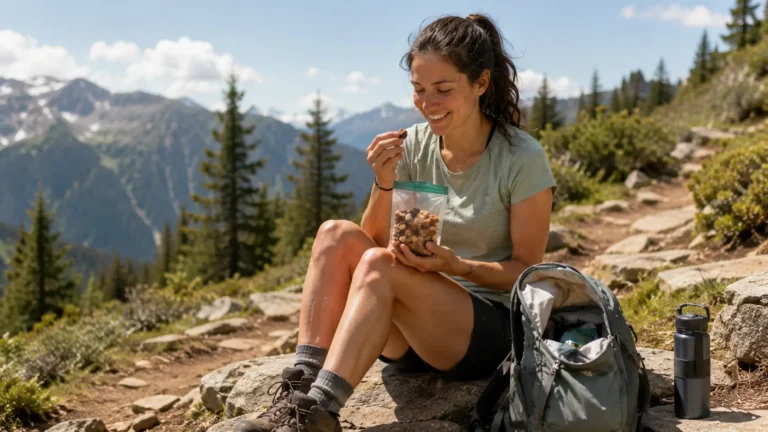
The fix: Eat a proper breakfast 1–2 hours before your hike. On hikes over 2 hours, eat a snack every 60–90 minutes whether you feel hungry or not. Trail mix, an energy bar, a banana — something real and calorie-dense.
Mistake 9: Wearing the wrong clothing layers
Two versions of this mistake. The first: overdressing — wearing too many layers at the start of a hike, overheating on the first climb, having nowhere to put the layers because there’s no daypack. The second: underdressing — setting off in warm sunshine without a rain jacket, getting caught in a summer storm.
Mountain and trail weather changes faster than most beginners expect. A warm morning can become a cold wet afternoon. The opposite is also true — a cool start that has you in multiple layers often means sweating heavily within 20 minutes of hiking.
The fix: Start slightly cooler than comfortable — you’ll warm up quickly. Always carry a lightweight rain jacket regardless of the forecast. Layer in a system you can add or remove easily: base layer, mid layer, waterproof shell.
Mistake 10: Looking at your phone instead of the trail
This sounds minor until someone twists an ankle on a root they didn’t see because they were checking their GPS. Uneven terrain — rocks, roots, loose stones, wet leaves — requires attention. The moment your eyes go to your phone, you stop seeing the ground in front of you.
Beyond safety, there’s also the experience. Many beginner women spend a significant portion of their first hikes with their head down in their phone, missing the actual point of being out there.
The fix: Stop before you check your phone. Find a flat stable spot, come to a complete stop, then look at the map or take the photo. Keep your eyes on the trail while moving. The view will still be there when you pause to look at it.
One bonus mistake: comparing your pace to other hikers
Not a safety issue but worth mentioning. Beginner women often feel self-conscious about how slowly they hike, particularly when faster hikers pass them on trail. This leads to pushing harder than is comfortable, which leads to exhaustion or injury.
Your pace is your pace. Hiking is not a race. The trail goes the same distance regardless of how fast you walk it. The people passing you are either fitter, more experienced, carrying less, or simply in a hurry. None of those things reflect on you.
The fix: Hike at the pace where you can hold a conversation without gasping. That’s the sustainable pace. Let faster hikers pass, step aside politely, and enjoy your hike at the speed that works for your body.
Final thoughts
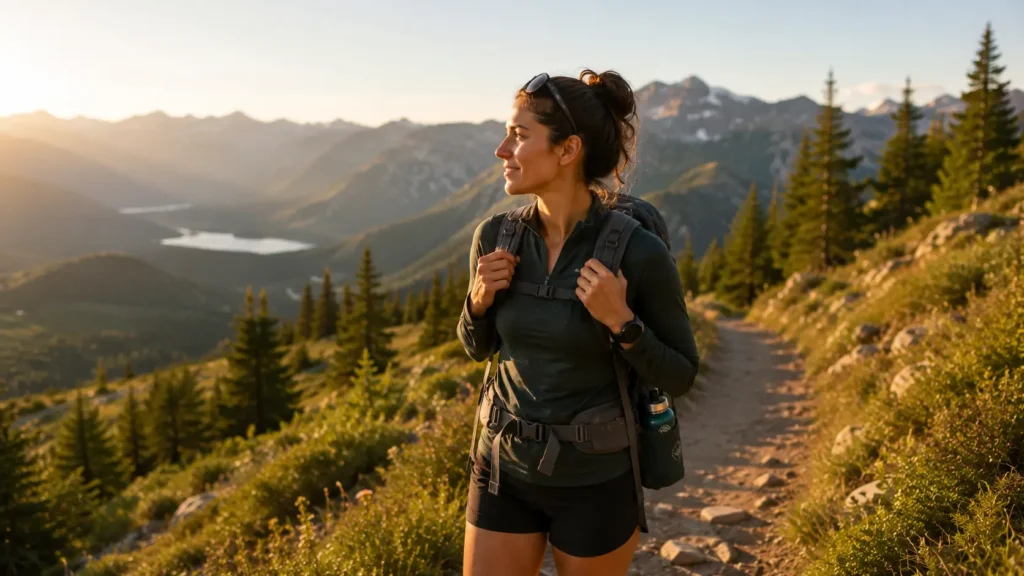
Every hiker made these mistakes. Sophie made most of them. The difference between a beginner who sticks with hiking and one who gives up after a miserable first experience is usually just information — knowing what the common pitfalls are before you walk into them.
The good news is that all ten of these mistakes are completely avoidable once you know about them. A pair of merino socks, a broken-in boot, an early start and a snack every hour covers most of the list.
Start with the right gear, choose a trail that matches your current fitness, tell someone where you’re going, and stop the moment you feel a hot spot. Everything else you’ll figure out on the trail.
FAQs
The most common beginner hiking mistakes are wearing cotton socks (causes blisters), wearing new boots without breaking them in, underestimating how long a trail takes, not bringing enough water, and ignoring hot spots until they become blisters. Getting these five right makes a bigger difference than any other preparation.
Tell someone where you’re going and when to expect you back. Wear merino or synthetic socks — never cotton. Break in your boots before the hike. Start with a shorter easier trail than you think you need. Bring more water than you think you need. Eat something before you go and snack every hour on trail.
For your first few hikes, choose trails under 8km with minimal elevation gain — under 200m if possible. Check AllTrails reviews specifically from other beginners, not just the overall rating. Add 50% to the estimated time for your first hikes. Start early so you have daylight buffer if the trail takes longer than expected.
The three most important steps: switch from cotton to merino or synthetic hiking socks, break in your boots properly before any long hike, and stop immediately when you feel a hot spot to tape it before it becomes a blister. Applying vaseline to known problem areas before the hike adds another layer of prevention.
Solo hiking can be done safely by beginner women with proper preparation. The most important steps: tell someone your route and expected return time, download the trail map offline before you go, stick to well-marked popular trails for your first solo hikes, carry a charged phone and basic first aid kit, and trust your instincts — if something feels wrong, turn around.

Intermediate hiker sharing real trail experience — honest gear picks, beginner-friendly guides, no filler.