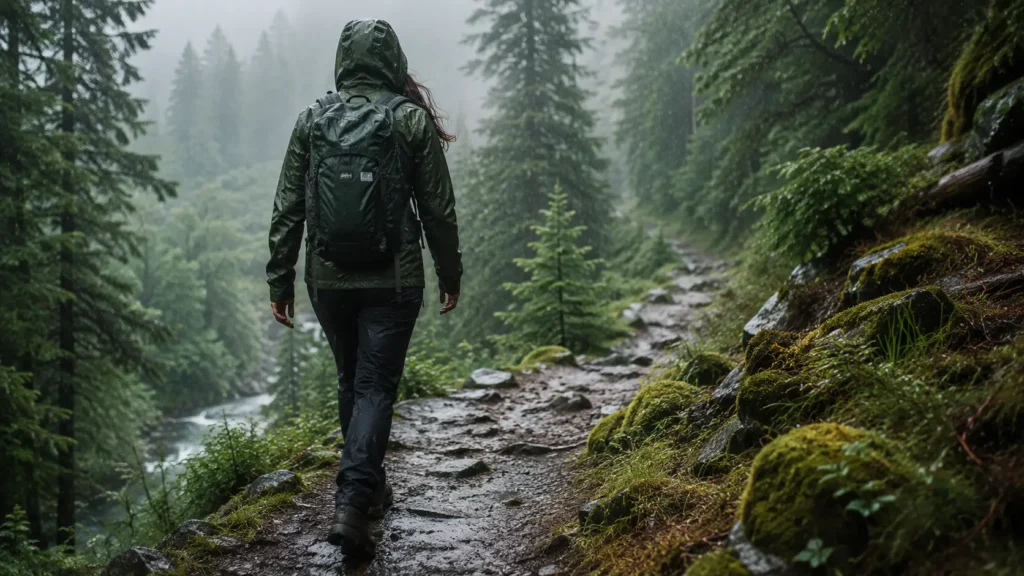
I used to think hiking in the rain sounded miserable — and then I did it wrong twice and decided it actually was. The first time, I wore a cotton hoodie under a cheap supermarket rain mac and was soaked through to my skin within forty minutes. The second time I overcorrected: I wore so many layers that I overheated climbing the first hill and had to strip half of them off in the rain, which rather defeated the point.
Here’s the thing nobody tells beginners about hiking in the rain: staying dry isn’t just about wearing something waterproof on the outside. It’s about managing moisture from two directions at once — rain coming in from above, and sweat building up from the inside. Get one layer wrong and you’re wet either way. Get both right and a rainy trail day can actually be one of the best hikes you’ll have — quieter trails, cooler temperatures, the whole forest smelling incredible.
This guide covers everything you need to know about what to wear hiking in the rain as a woman — the full layering system from base to outer shell, whether leggings or hiking pants are better in wet weather, what to do about your feet, your hands and your head, and the things I’d tell my beginner self before walking out the door into a downpour.
The Golden Rule of Rain Hiking: Think in Layers, Not Just Jackets
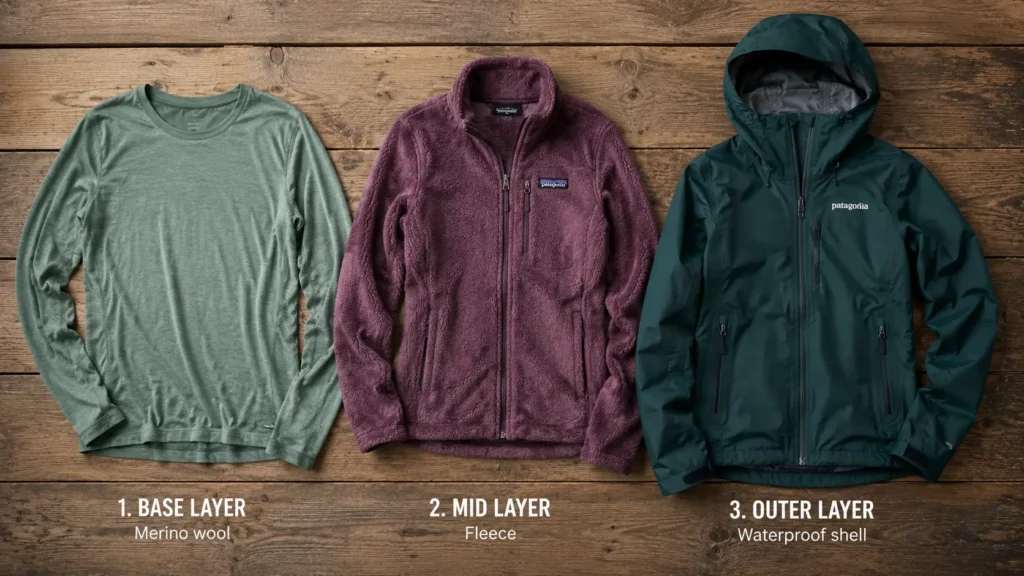
Most beginners hear “hiking in the rain” and immediately think about the jacket. The jacket matters — but it’s only one part of a three-layer system that either works together or fails together. Think of it this way: your base layer manages sweat, your mid layer manages warmth, and your outer layer manages the weather. All three have to work together, or the whole system breaks down.
The classic mistake is pulling a waterproof jacket on over a cotton t-shirt. The jacket keeps rain out, but cotton absorbs your sweat and holds it against your skin. You end up cold and clammy before you’ve even got properly wet from the outside. The fix isn’t a better jacket — it’s a different base layer.
On shorter hikes in mild rain, you can often get away with just a base layer and a waterproof jacket — no mid layer needed, especially in summer. In colder or heavier rain, all three layers matter. The key is understanding what each one does so you can mix and match depending on the day.
Base Layer: The Most Important Layer You’re Probably Ignoring
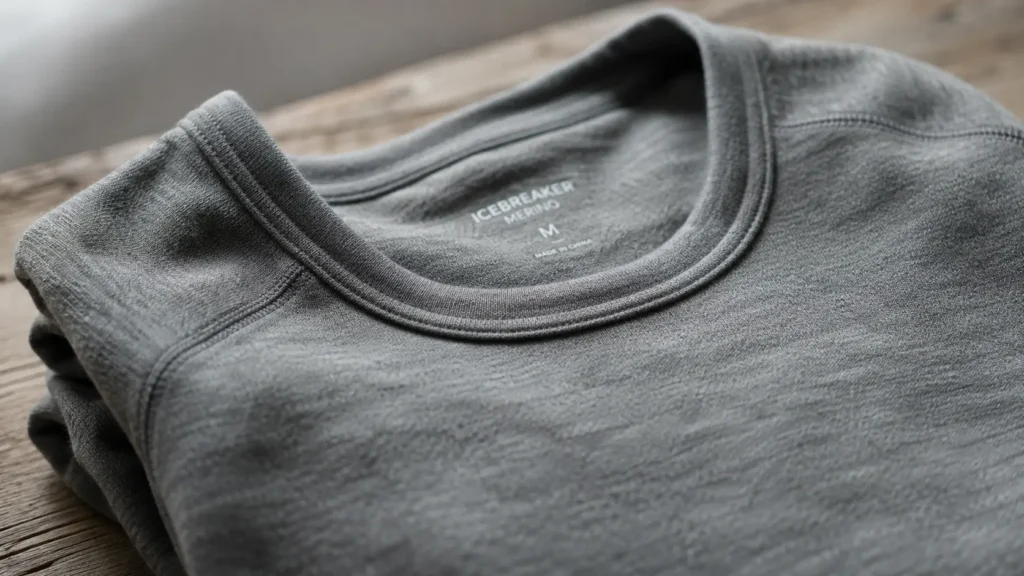
Your base layer — the top sitting directly against your skin — is the most important piece of your rain hiking outfit, and it’s the one most beginners get wrong. Its job is to move sweat away from your skin (wicking) so you don’t end up cold and wet from the inside while your jacket is keeping rain out from the outside.
One fabric to avoid completely: cotton. Cotton absorbs moisture and holds it, which means a cotton t-shirt turns into a cold wet compress the moment you start sweating or get caught in light rain that sneaks past your jacket. It takes forever to dry and in cold weather it becomes a genuine safety concern.
What to look for instead:
Merino wool — the best all-rounder. It wicks well, regulates temperature, resists odour, and feels soft against your skin. A lightweight merino base layer (around 150–180gsm) works in cool rain without overheating you. The downside: it’s more expensive than synthetics, typically £50–90 for a quality top.
Synthetic (polyester, nylon) — dries faster than merino and is usually cheaper. A good moisture-wicking synthetic top does the job perfectly well, especially for shorter hikes. Look for ones labelled “moisture-wicking” or “quick-dry.”
For summer rain hikes, a lightweight merino or synthetic short-sleeve is usually enough under your jacket. For autumn or winter rain, go long-sleeve and consider a slightly heavier weight — 200gsm merino or a thermal synthetic layer.
Mid Layer: Do You Even Need One?
In summer, honestly — often no. If it’s warm and you’re moving consistently uphill, you’ll generate enough body heat that a mid layer just becomes something you stuff in your pack after ten minutes. But in cooler temperatures, or on hikes with long exposed sections where you’ll be standing still, a mid layer makes a real difference.
The best mid layer for rainy hiking is a lightweight fleece. Fleece insulates even when damp — unlike down, which collapses when wet and loses almost all its warmth. A thin fleece zip-up in the 100–200 weight range is compact enough to pack easily and warm enough to matter on a cold wet day.
Avoid down jackets or gilets as a mid layer in the rain. They’re brilliant in dry cold but useless the moment they get wet. If you love your down gilet, save it for dry-weather hikes and keep a fleece in your rain-day pack.
Outer Layer: Your Rain Jacket (And What Makes a Good One)
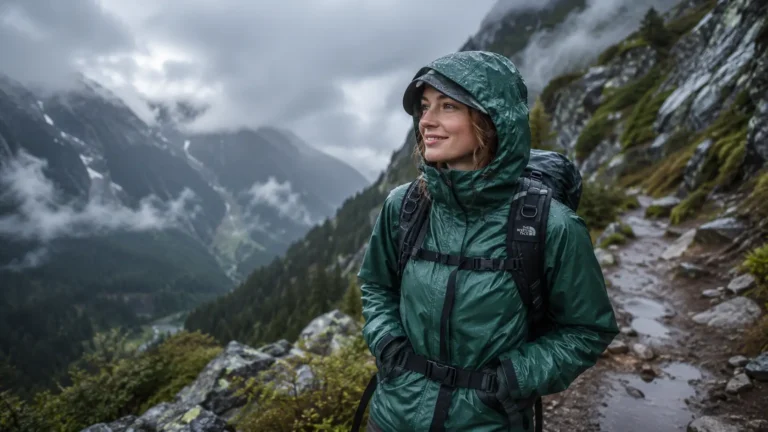
Your waterproof jacket is what stands between you and the weather. For day hikes in typical rain, look for a jacket rated 10,000mm or above — below that and you’ll get wet in sustained real rain. You also want some breathability so you’re not cooking in your own sweat underneath.
For beginners, a 2.5-layer or 3-layer waterproof jacket in the £70–£150 range does everything you need. You don’t need GORE-TEX for day hikes in normal rain. A reliable mid-range shell that’s genuinely waterproof and packs down small is the practical first choice.
One thing worth knowing about: DWR (Durable Water Repellency) coating. This is the treatment on the outer fabric that makes water bead off. Over time it washes out — and when it does, your jacket will feel heavy and wet even if the membrane is still keeping water out. Restore it with a wash-in DWR treatment. For a full breakdown of what makes a good beginner rain jacket, check out the Best Hiking Rain Jacket for Women guide.
Leggings or Hiking Pants in the Rain? (The Question Everyone Asks)
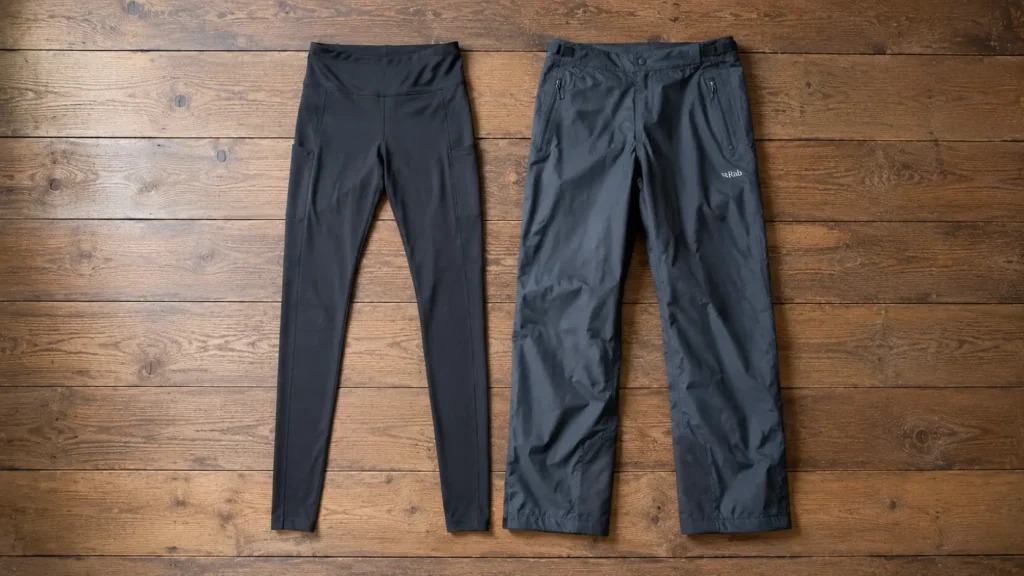
Short answer: hiking pants in cold or heavy rain, leggings are fine in mild or warm rain — if they’re synthetic.
Standard hiking leggings made from polyester/nylon blends handle light rain reasonably well because they dry fast and don’t absorb much moisture. They won’t keep you dry in a proper downpour, but in a warm summer drizzle they’re comfortable and far easier to move in than stiff waterproof trousers.
In cold rain, the calculus changes. Wet legs in cold wind get cold quickly. This is where softshell hiking pants or waterproof over-trousers earn their place. Softshell pants offer some weather resistance and far more warmth than leggings. Waterproof over-trousers keep you properly dry in sustained rain but can feel clammy if you’re working hard.
One thing to never wear: cotton jeans or cotton joggers. They absorb rain immediately, stay wet for hours, and in cold or windy conditions can be genuinely dangerous. Hypothermia from wet cotton is a real thing that happens to hikers who underestimate the conditions.
| Option | Best for | Not suitable for | Sophie’s take |
| Synthetic hiking leggings | Warm, light rain | Cold or heavy downpours | Fine choice in summer rain |
| Softshell hiking pants | Cool, drizzly days | Sustained heavy rain | Best all-rounder for autumn hiking |
| Waterproof over-trousers | Heavy rain, winter | High-output hikes | Add over leggings when conditions worsen |
| Cotton jeans/joggers | Never | All conditions | Do not wear these on trail |
What to Do About Your Feet
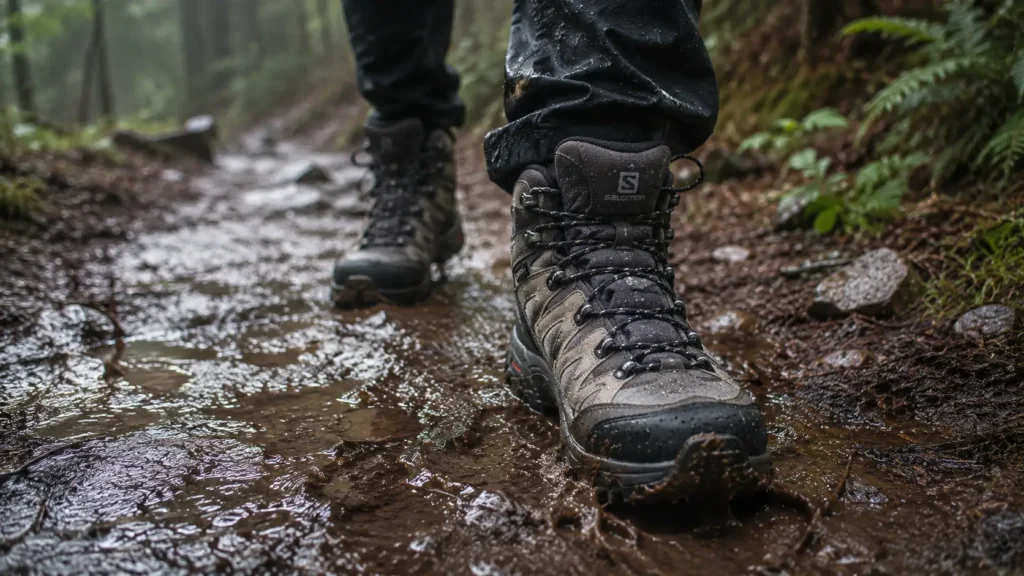
Wet feet are miserable — and one of the fastest routes to blisters on a rainy hike. The friction between wet skin and wet sock against a shoe is brutal. Keeping your feet dry makes the difference between a hike you’ll want to repeat and one you’ll never do again in the rain.
Waterproof hiking boots or trail shoes with a GORE-TEX lining are the obvious solution — they keep feet dry in light to moderate rain and muddy conditions. The limitation: once water gets in over the top (deep puddles, proper stream crossings, sustained heavy rain), they hold the water in just as effectively as they kept it out. For those conditions, gaiters help by sealing the gap between boot and trouser leg.
For socks, merino wool is the answer for wet weather specifically because it retains warmth even when wet — unlike synthetic socks, which feel cold and slippery when soaked. A good midweight merino hiking sock paired with waterproof footwear is the most reliable combination for rainy trail days. For more detail on sock choice, the Best Hiking Socks for Women guide covers everything.
Head, Hands, and the Bits People Forget
Your jacket hood is your best friend in rain, but in sideways rain or strong wind it has limits. A lightweight waterproof hat with a brim — a packable cap or rain hat — stops rain running down your face and keeps your hood from blocking peripheral vision on technical terrain. They fold flat and weigh almost nothing.
Hands: in summer rain, you probably don’t need gloves unless you run very cold. In autumn or winter rain, lightweight waterproof gloves or a thin liner glove under a shell glove make a real difference to comfort and grip. Cold hands affect your ability to manage a map, open a snack, or hold trekking poles safely.
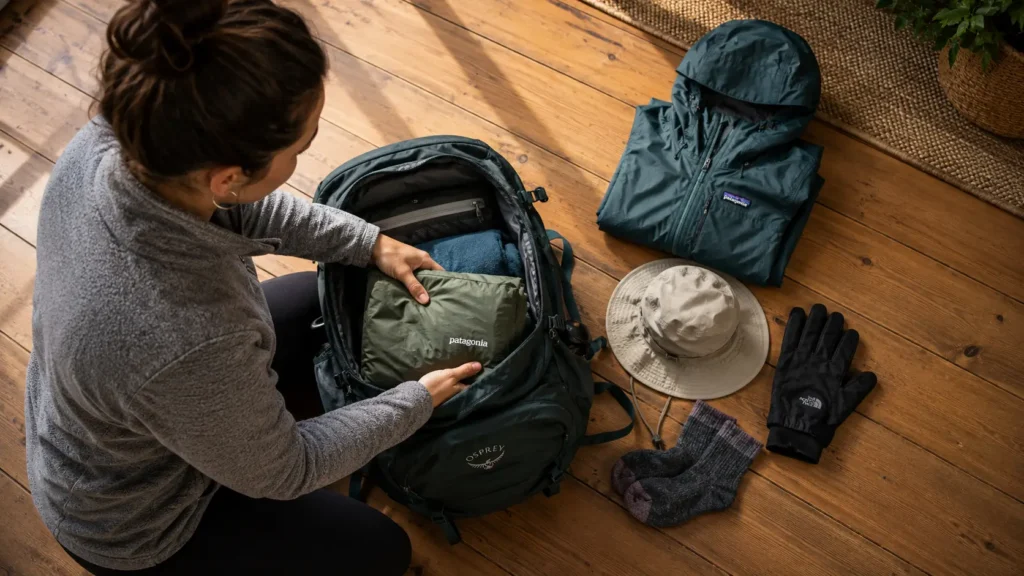
Pack cover: easy to forget, important to have. Your jacket keeps you dry — it doesn’t keep your bag dry. A pack rain cover (most trail daypacks have one tucked in the base) or a dry bag liner for your valuables means you’re not unpacking a wet mess at the summit.
Rain Hiking Gear Picks for Beginner Women
Here are the pieces Sophie would recommend for building a solid rain-day kit from scratch, at prices that make sense for beginners.
Best Base Layer: Icebreaker Merino 150 Tech Lite Short Sleeve
Material: 100% merino wool | Weight: 150gsm lightweight | Price: ~£70–85
Best for: Women who want one base layer that works across seasons and doesn’t smell after a long sweaty hike
Sophie’s note: Pricey but worth it. I’ve had mine three years and it’s outlasted two cheaper alternatives. If the budget doesn’t stretch, the Decathlon Forclaz Merino 150 is a solid option at roughly a third of the price.
Best Mid Layer: Decathlon MH120 Fleece
Material: Recycled polyester fleece | Weight: Light | Price: ~£20–25
Best for: Beginners who want an affordable mid layer that works in cool rain days without a big investment
Sophie’s note: It’s not glamorous but it earns its place. Buy this first, upgrade to the Patagonia Better Sweater when you’ve done enough hikes to know you want a better version.
Best Rain Trousers: Decathlon Forclaz MT500 Waterproof Over-Trousers
Material: 20,000mm waterproof / 20,000g breathability | Weight: 290g | Price: ~£40–50
Best for: Anyone doing proper rainy day hikes in autumn/winter, or hiking in consistently wet climates like Scotland or the Lake District
Sophie’s note: Decathlon’s hiking gear consistently punches above its price point. These pack into their own stuff sack, fit over most hiking trousers, and breathe enough that you’re not overheating on the climb.
Rain Hiking Outfit Checklist
Run through this before every wet weather hike:
- ☐ Moisture-wicking base layer (merino or synthetic — NO cotton)
- ☐ Mid layer fleece if temperature is below 15°C or trail is exposed
- ☐ Waterproof jacket with hood (10,000mm+ rating)
- ☐ Hiking pants, softshell, or waterproof over-trousers (not jeans)
- ☐ Waterproof or quick-dry hiking socks (merino preferred)
- ☐ Waterproof boots or trail shoes (add gaiters for muddy trails)
- ☐ Brimmed rain hat or waterproof cap
- ☐ Lightweight gloves (autumn/winter hikes)
- ☐ Pack rain cover or dry bag for valuables
- ☐ Spare dry base layer packed in a zip-lock bag
Final Thoughts
Hiking in the rain gets a bad reputation because most people’s first experience of it involves the wrong gear. One soggy, miserable hike in a cotton hoodie and a cheapo mac is enough to put you off forever — but that’s a gear problem, not a weather problem. The right layering system genuinely transforms the experience.
You don’t need to buy everything at once. If you’re just starting out, prioritise a good moisture-wicking base layer and a decent waterproof jacket — those two changes alone will make a bigger difference than any amount of expensive outer gear on top of the wrong foundation. Add the rest over time as you figure out your hiking style and how your body handles different conditions.
Rainy days on trail are genuinely worth it. Fewer people, richer colours, cooler temperatures — and a level of satisfaction at the end that a sunny walk just doesn’t match. Get the layers right, and wet weather becomes something to look forward to rather than something to check the forecast and dread.
For dry weather hiking outfits — when it’s warm and the forecast looks clear — the full guide to what to wear hiking as a woman covers everything from trail shoes to hat choices.
FAQs
Yes, for the most part — with some conditions attached. Light to moderate rain on a well-marked trail you know is generally fine. The main risks are hypothermia from getting cold and wet without the right layers, slippery surfaces on rocky or rooted terrain, and reduced visibility in heavy rain or mist. Check the forecast before you go, tell someone your plans and expected return time, and turn back if conditions go beyond what you’re equipped for. Rain hiking is a skill you build gradually — start with familiar, lower trails before tackling bigger days in bad weather.
It depends on the temperature and how heavy the rain is. In warm weather with light rain, synthetic hiking leggings are fine — they dry quickly and don’t hold moisture the way cotton does. In cold rain or sustained downpours, leggings alone won’t keep you warm enough and you’ll want hiking pants, softshell trousers, or a lightweight waterproof over-trouser on top. The rule of thumb: if you’d be cold standing still at the trailhead, leggings probably won’t cut it.
Water-resistant means a fabric can handle light rain or brief splashing but will eventually wet through in sustained rain. Waterproof means the fabric has a membrane or coating that stops water getting through even in heavy or prolonged rain — measured in millimetres (the higher the number, the more waterproof). For hiking, you want waterproof rather than water-resistant if you’re planning to be out in real rain. “Shower resistant” jackets from the high street typically handle a light drizzle — they won’t keep up with a trail downpour.
For most beginner rain hikes, yes — waterproof boots or trail shoes with a GORE-TEX lining will keep your feet dry in light to moderate rain and muddy conditions. They’re not magic: deep puddles or stream crossings that go over the ankle will still get water in. For very wet conditions, pair waterproof footwear with ankle gaiters to seal the gap at the top of the boot. If you’re not ready to invest in waterproof footwear yet, synthetic trail shoes that dry fast are better than leather shoes in the rain.
This is one of those small but genuinely annoying rain hiking problems. A few things that help: pull the hood back slightly so it’s not sitting too close to your face, look for jackets with a visored or structured brim (keeps rain off your lenses while giving air more room to circulate), and carry a small anti-fog lens cloth or spray. A brimmed waterproof hat worn under a looser hood also gives glasses-wearers much better visibility than having the hood pulled right down.

Intermediate hiker sharing real trail experience — honest gear picks, beginner-friendly guides, no filler.