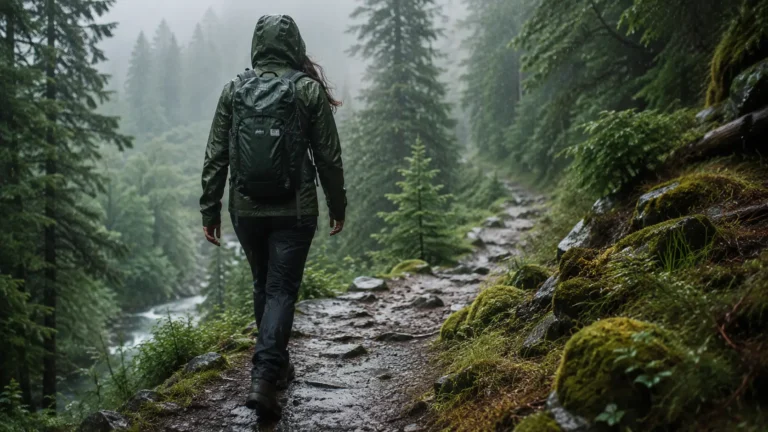
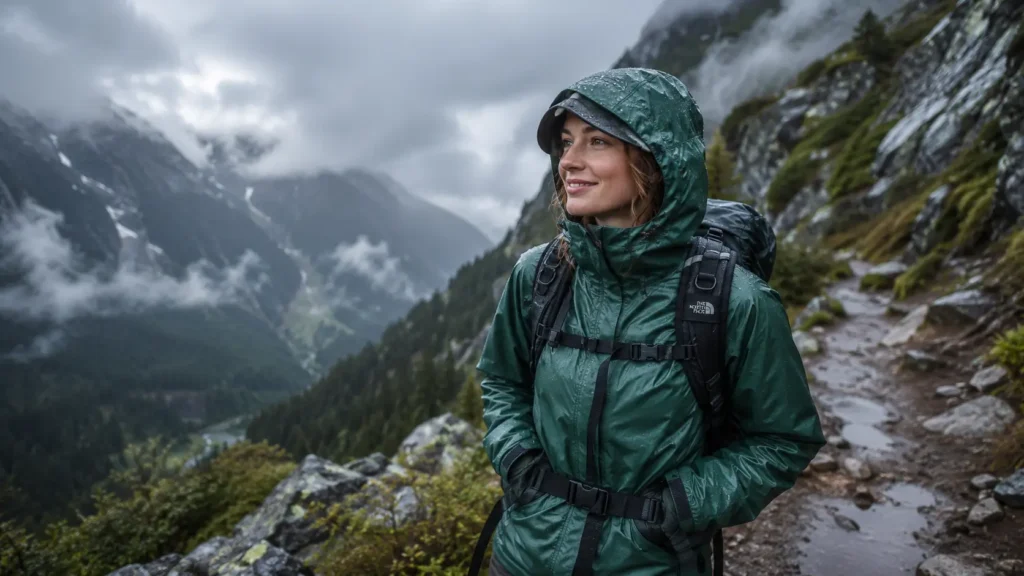
I used to think any waterproof jacket would do for hiking. I owned a £30 supermarket rain mac that worked fine in the car park and completely failed me on a three-hour ridge walk in a Scottish drizzle — wet through in 90 minutes, freezing, and still three miles from the car.
The problem wasn’t that it wasn’t waterproof. It was. The problem was that it wasn’t breathable — so all the heat and sweat from hiking had nowhere to go, and I was soaked from the inside before the rain got to me from the outside.
This guide explains what actually matters in a hiking rain jacket, what the technical terms mean in plain language, and which jackets Sophie would buy at three different price points.
Do you actually need a hiking-specific rain jacket?
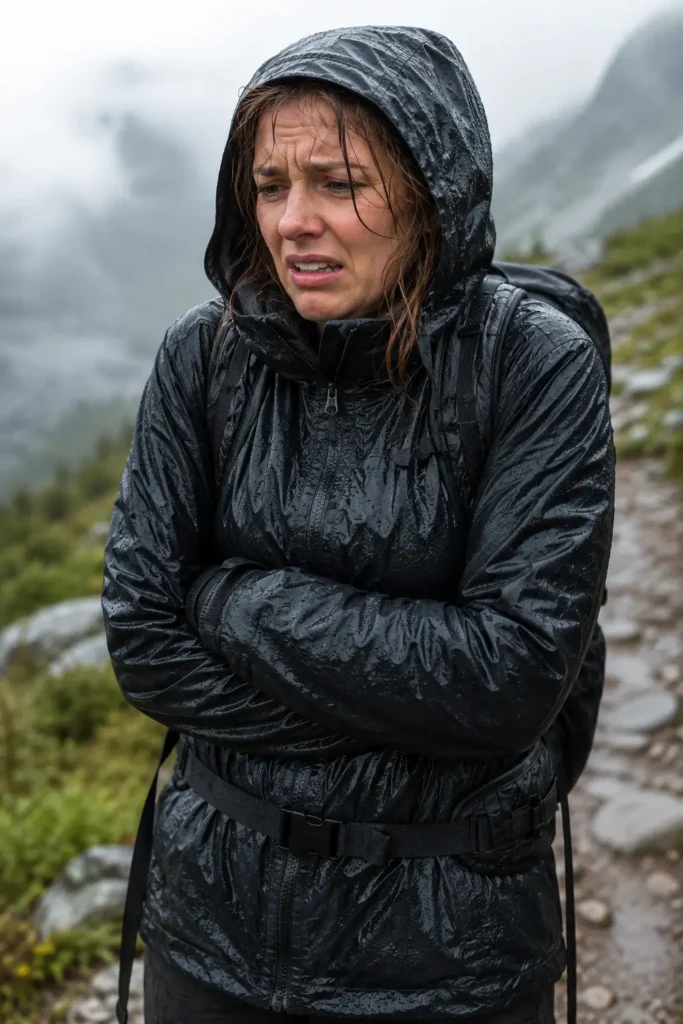
For mild conditions and short hikes close to the car — probably not. Any waterproof layer will do.
For anything over an hour in exposed terrain, or in genuinely changeable mountain weather — yes. The difference between a hiking rain jacket and a regular waterproof is primarily breathability. A hiking jacket lets sweat vapour escape while keeping rain out. A regular waterproof doesn’t, which means you get wet from the inside while staying dry from the outside — which is often worse.
If you’re serious about hiking regularly in anything other than guaranteed dry weather, a proper hiking rain jacket is one of the most important gear investments you’ll make.
What the technical terms actually mean
Waterproofing ratings — hydrostatic head
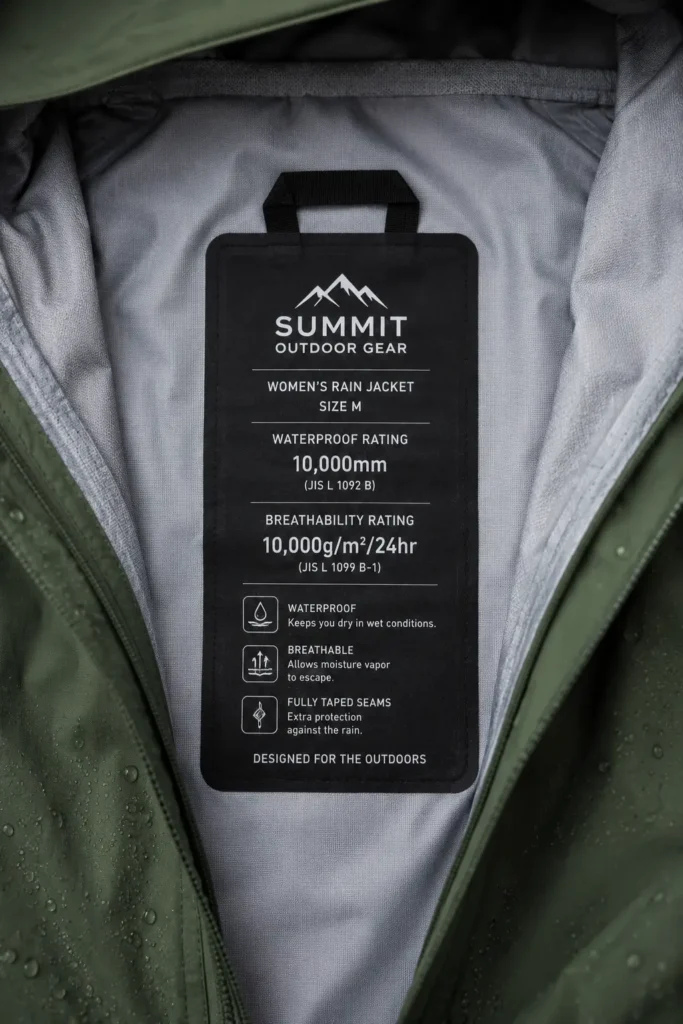
Waterproofing is measured in millimetres of hydrostatic head (HH) — essentially, how much water pressure the fabric can withstand before it leaks. Here’s what the numbers actually mean:
| Rating | What it means | Good for | Not enough for |
| 1,500–5,000mm | Water resistant | Light drizzle, short exposure | Real rain, extended hiking |
| 5,000–10,000mm | Waterproof | Moderate rain, day hikes | Heavy sustained rain |
| 10,000–20,000mm | Very waterproof | Heavy rain, most hiking | Extreme weather |
| 20,000mm+ | Highly waterproof | All conditions | — |
For beginner women doing day hikes in typical UK, European or North American conditions, a jacket rated 10,000mm or above is the right starting point. Below that and you’ll find yourself wet in proper rain.
Breathability ratings
Breathability is measured in grams of moisture vapour that can pass through one square metre of fabric in 24 hours (g/m²/24h). Higher numbers mean more breathable:
- Under 5,000 g/m²: low breathability — fine for standing around, uncomfortable for hiking
- 5,000–10,000 g/m²: moderate breathability — adequate for easy hikes
- 10,000–20,000 g/m²: good breathability — suitable for most hiking
- 20,000+ g/m²: excellent breathability — for high output hiking and technical terrain
For beginner day hikes, anything above 10,000 g/m² will serve you well. The more you push your pace or carry heavier loads, the more breathability matters.
GORE-TEX vs proprietary membranes
GORE-TEX is the most well-known waterproof-breathable membrane — licensed to brands like Patagonia, Arc’teryx and The North Face. It performs exceptionally but adds significant cost.
Proprietary alternatives — Patagonia’s H2No, Columbia’s OutDry, Marmot’s NanoPro — perform comparably for most hiking conditions at lower price points. For beginner day hikes, you do not need to spend on GORE-TEX. A quality proprietary membrane will keep you dry.
2.5-layer vs 3-layer construction
A 3-layer jacket bonds the outer fabric, membrane and inner lining together into one piece — durable, packable, performs well. Most quality hiking jackets are 3-layer.
A 2.5-layer jacket has an outer fabric and membrane with a printed inner coating instead of a full lining — lighter and cheaper, but less durable over time. Fine for beginner use.
DWR coating — what it is and why it matters
DWR stands for Durable Water Repellent — a chemical coating on the outer fabric that makes water bead up and roll off rather than saturating the fabric. When DWR fails, the outer fabric ‘wets out’ and gets heavy, reducing breathability even if the membrane is still keeping water out.
DWR wears off with use and washing. Restore it periodically by tumble drying on low heat, or with a DWR spray like Nikwax TX.Direct. This maintenance extends your jacket’s performance significantly.
What to look for when choosing a hiking rain jacket
Fit — move freely, not like a bin bag
A hiking rain jacket needs to fit over a base layer and possibly a mid layer. Try it on over a fleece or hoodie — it should allow full arm movement without pulling at the shoulders or back. Look for:
- Articulated sleeves — pre-curved to reduce binding when reaching forward
- Hem that covers your hips — short jackets ride up on the trail
- Adjustable hood that fits over a helmet if you’re planning more technical hikes
- Women’s-specific cut — shorter torso, adjusted shoulder and hip proportions
Hood — non-negotiable for hiking
A jacket without a hood is not a hiking rain jacket. Full stop. In sideways rain on a ridge, a hood isn’t optional.
Look for: a helmet-compatible hood (useful even if you don’t wear a helmet — more volume means better coverage), a wired or structured brim to keep rain out of your eyes, and adjustable volume so you can snug it down in wind.
Packability
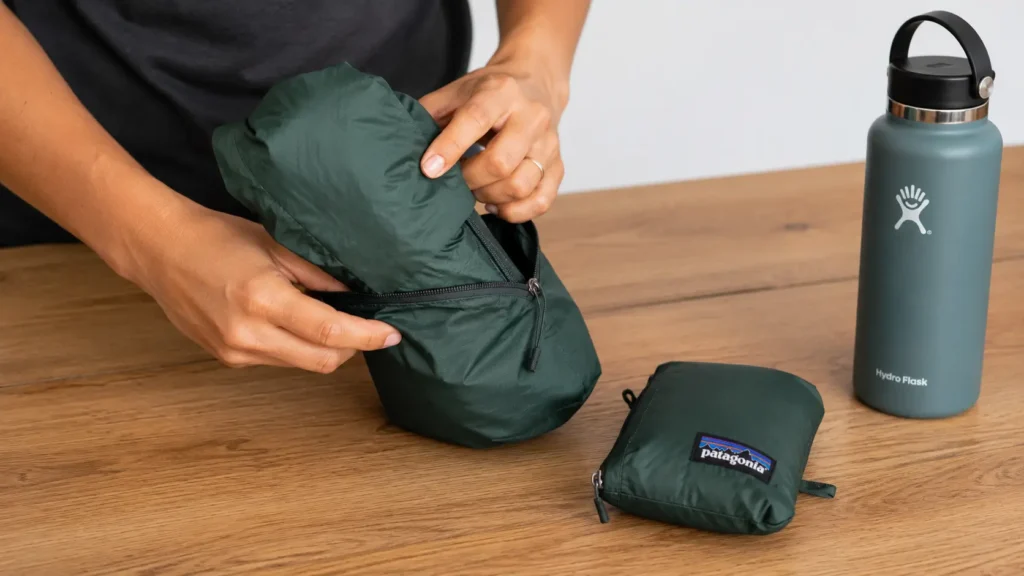
A hiking rain jacket that lives in your daypack needs to pack down small. For a complete list of everything to pack for a day hike, the day hiking packing list for women covers every item including layers. Most quality hiking jackets pack into their own chest pocket or a stuff sack. If a jacket can’t compress to roughly the size of a water bottle, it’s taking up too much pack space.
Pockets
At minimum: two hand pockets and one chest/Napoleon pocket. Underarm zip vents (pit zips) are useful for temperature regulation on hard climbs — not essential for beginners but a nice feature on warmer jackets.
Weight
For a daypack jacket, aim for under 500g. Most quality hiking rain jackets sit between 300–500g. Ultralight jackets (under 250g) trade durability for weight — fine for occasional use, less so for regular hiking.
My honest picks at every budget
Best overall: Patagonia Torrentshell 3L (Women’s)
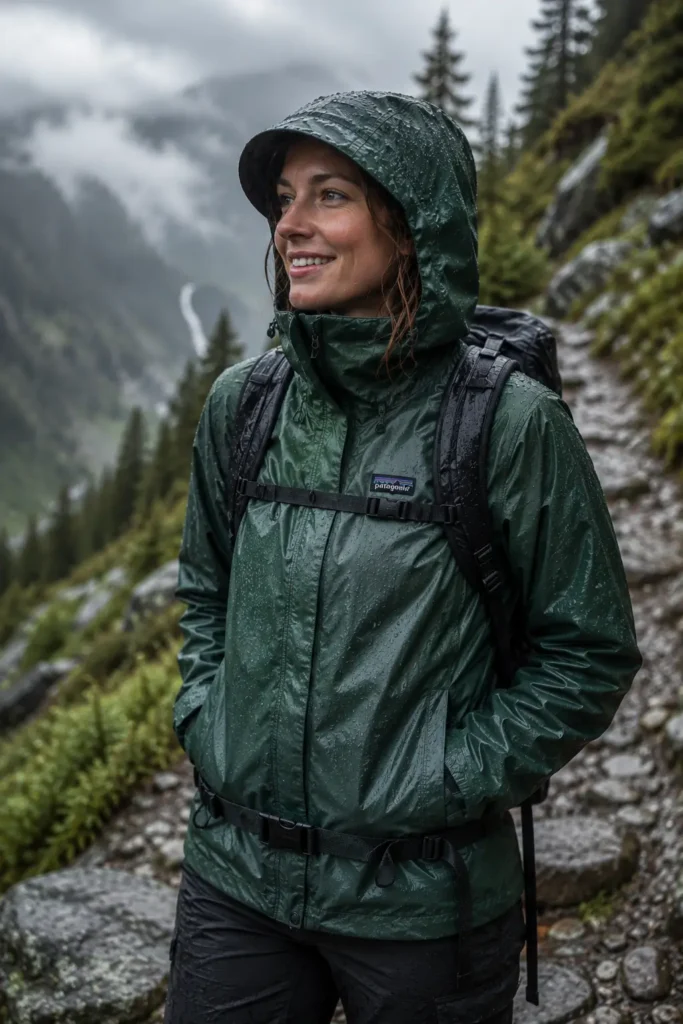
The Torrentshell 3L is the hiking rain jacket Sophie would recommend to most beginner women. It’s 3-layer construction using Patagonia’s H2No membrane, fully seam-sealed, packs into its chest pocket, and has a reliable adjustable hood. The fit is generous enough to layer under but not so voluminous it flaps in the wind. It’s been a consistent recommendation for years because it genuinely performs.
Waterproofing: H2No (comparable to 20,000mm) | Breathability: Good | Weight: ~468g | Price: ~£170–200
Best for: Most beginner women wanting a reliable everyday hiking rain jacket that will last years
Sophie’s note: This is the one. If budget allows, buy it once and stop thinking about it.
Best budget: Columbia Watertight II (Women’s)
Under £80 and genuinely waterproof — the Columbia Watertight II is the honest budget recommendation. Omni-Tech waterproofing (around 10,000mm equivalent), fully seam-sealed, packable hood, adjustable cuffs. It’s not as breathable as the Patagonia and won’t last as long, but for a beginner doing occasional day hikes it does the job without the investment.
Waterproofing: Omni-Tech (~10,000mm) | Breathability: Moderate | Weight: ~360g | Price: ~£60–80
Best for: Beginner women who want reliable wet-weather protection before committing to a higher investment
Sophie’s note: Perfect starter jacket. When you’ve done 30 hikes and know you love it, upgrade.
Best lightweight: Arc’teryx Norvan SL (Women’s)
If you want something exceptionally light that disappears in your pack, the Arc’teryx Norvan SL is in a different league for packability and weight. GORE-TEX Shakedry membrane, under 200g, packs to almost nothing. The trade-off: it’s delicate (no face fabric — the membrane is exposed), expensive, and not suitable for scrambling or bushwacking. For trail running and fast-moving day hikers, it’s outstanding.
Waterproofing: GORE-TEX Shakedry | Breathability: Exceptional | Weight: ~190g | Price: ~£280–320
Best for: Women who prioritize weight and packability and move fast on trail
Sophie’s note: Not the right first hiking rain jacket — but remarkable if that’s your priority.
Best mid-range: Montane Phase XT (Women’s)
The Montane Phase XT sits between the Columbia and the Patagonia in both price and performance. Pertex Shield waterproofing, 3-layer construction, excellent hood, good packability. Strong performing in sustained rain and a genuinely good fit for women’s torso proportions. Worth considering if the Patagonia is slightly out of reach.
Waterproofing: Pertex Shield (15,000mm+) | Breathability: Good | Weight: ~320g | Price: ~£130–160
Best for: Women wanting better performance than the budget option without the full Patagonia price
How to care for your hiking rain jacket
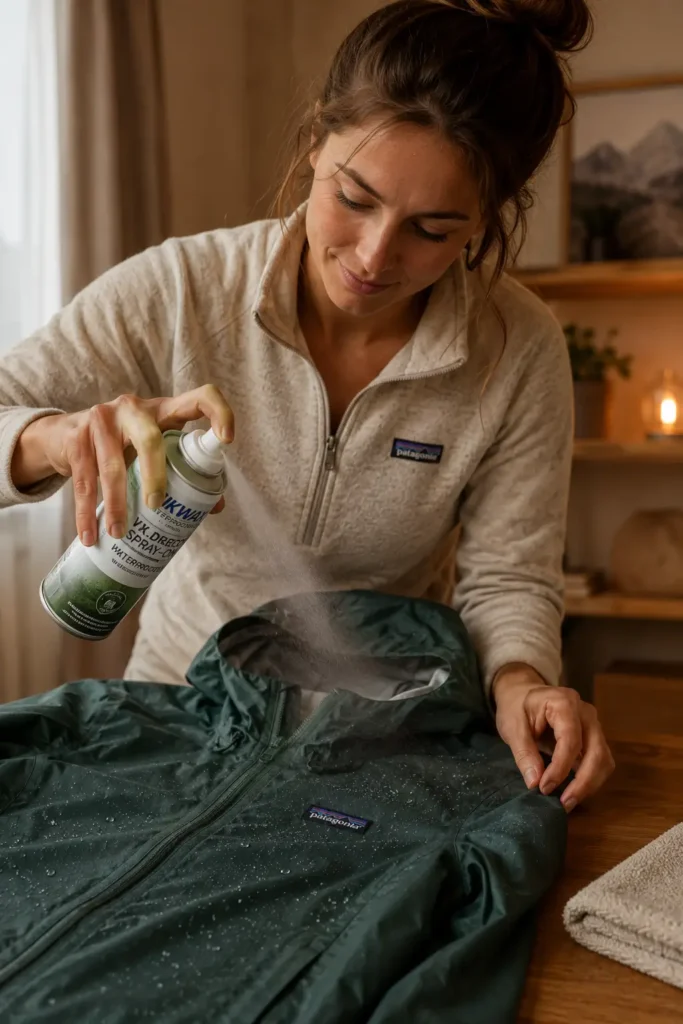
- Wash regularly — dirt and body oils clog the DWR coating and reduce breathability. Use a technical outerwear cleaner like Nikwax Tech Wash
- Tumble dry on low heat after washing — heat reactivates the DWR coating
- Reapply DWR when water stops beading on the outer fabric — use Nikwax TX.Direct spray or wash-in
- Never use fabric softener — it destroys DWR and breathability
- Store loosely — don’t compress in stuff sack for long periods
- Repair small tears immediately with seam sealer — a 2mm hole becomes a 20mm hole quickly on the trail
Final thoughts
The best hiking rain jacket for a beginner woman is one that keeps you genuinely dry in real rain while letting sweat escape — not a cheap waterproof that does one but not the other.
For most beginners, that means a jacket rated 10,000mm or above with at least moderate breathability, a proper adjustable hood, and a packable design. The Patagonia Torrentshell 3L is the honest top recommendation. The Columbia Watertight II is the honest budget option.
Don’t hike in a fashion waterproof and wonder why you’re cold and wet. For a complete guide to what to wear hiking as a woman from base layer to outer shell, the women’s hiking outfit guide covers every layer. A proper hiking rain jacket is one of the few gear items where the right choice is immediately obvious on the first rainy day you need it.
FAQs
The Patagonia Torrentshell 3L Women’s is the most consistently recommended hiking rain jacket for beginner women — genuinely waterproof, good breathability, reliable hood, and durable enough to last years. For a budget option, the Columbia Watertight II performs well at under £80 and is a solid starter jacket.
For day hikes in typical conditions, look for a jacket rated 10,000mm or above. Below that and you’ll get wet in sustained real rain. Above 20,000mm offers extra protection for more exposed conditions. The rating appears in the product specifications — check before buying.
For beginner day hikers, GORE-TEX is not necessary. Quality proprietary membranes — Patagonia’s H2No, Columbia’s Omni-Tech, Montane’s Pertex Shield — perform comparably for most hiking conditions at significantly lower price points. GORE-TEX becomes worth the premium for technical mountaineering or extended bad weather exposure.
DWR stands for Durable Water Repellent — a coating on the outer fabric that makes rain bead up and roll off. When DWR wears off, the outer fabric gets saturated and heavy, reducing breathability even if the waterproof membrane is still working. Restore it by tumble drying on low heat or applying a DWR spray like Nikwax TX.Direct.
A hiking rain jacket should fit over a base layer and mid layer with full freedom of arm movement — no pulling at the shoulders or back when reaching forward. The hem should cover your hips, the hood should fit close to your head without obscuring vision, and adjustable cuffs should seal around your wrists. Try it on over a fleece before buying.

Intermediate hiker sharing real trail experience — honest gear picks, beginner-friendly guides, no filler.