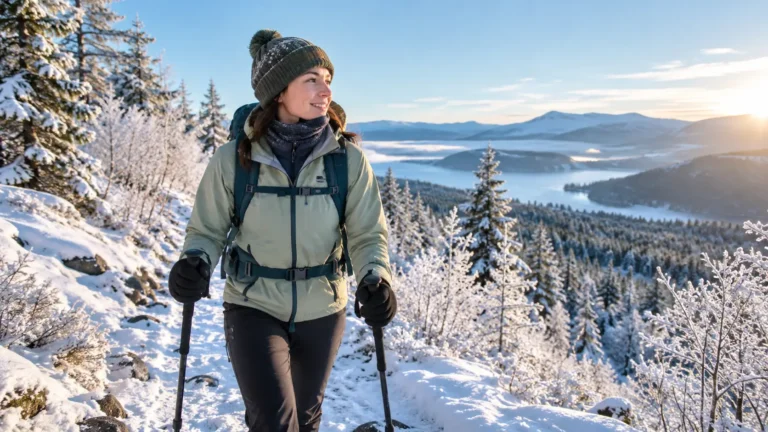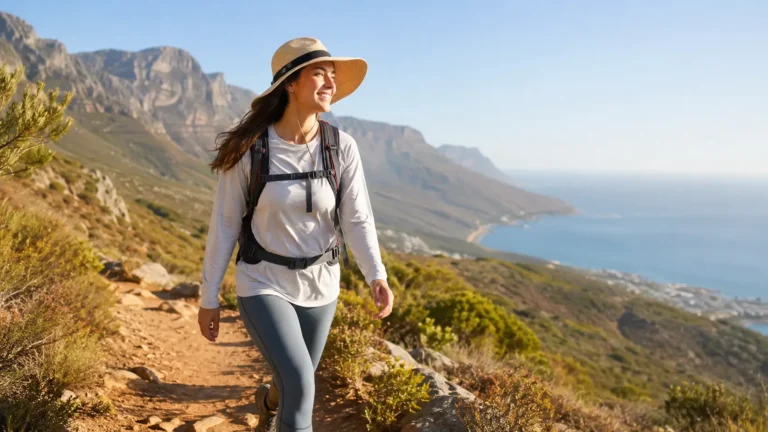
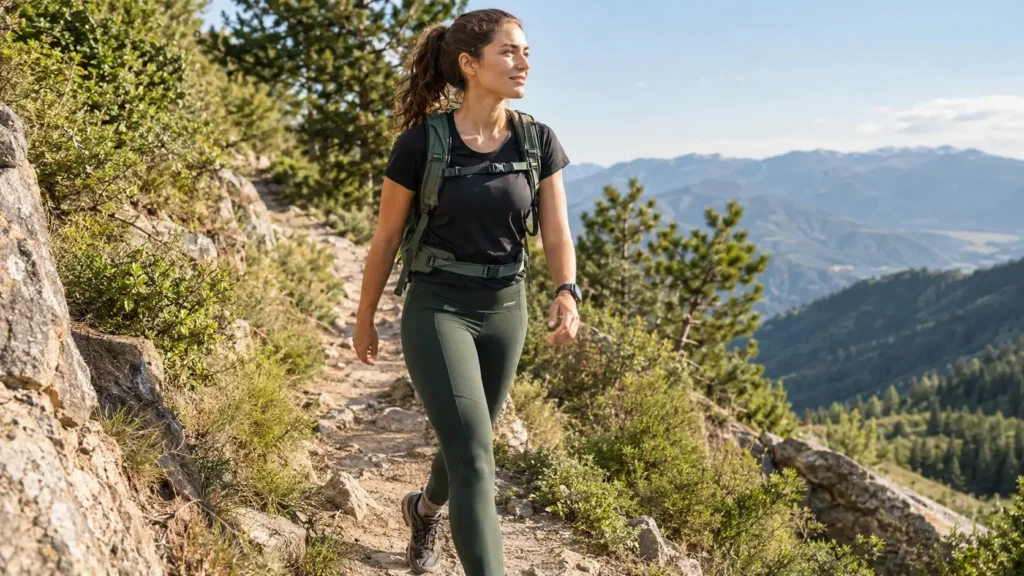
My first hiking leggings were a pair of yoga leggings I already owned. They worked fine on my first few easy trails — comfortable, stretchy, nothing to complain about. Then I did a 12km hike with 400m of elevation in them on a warm day and discovered exactly what yoga leggings can’t do: they held sweat against my skin, the waistband rolled down every time I scrambled up a rocky section, and they had nowhere to put my phone. I spent the descent holding my phone in one hand and pulling my waistband up with the other.
The difference between yoga leggings and proper hiking leggings isn’t dramatic on an easy flat trail. On anything more demanding, it’s the difference between comfortable and annoying. This guide covers what actually matters in hiking leggings and which pairs Sophie would buy at three different price points.
Are leggings OK for hiking?
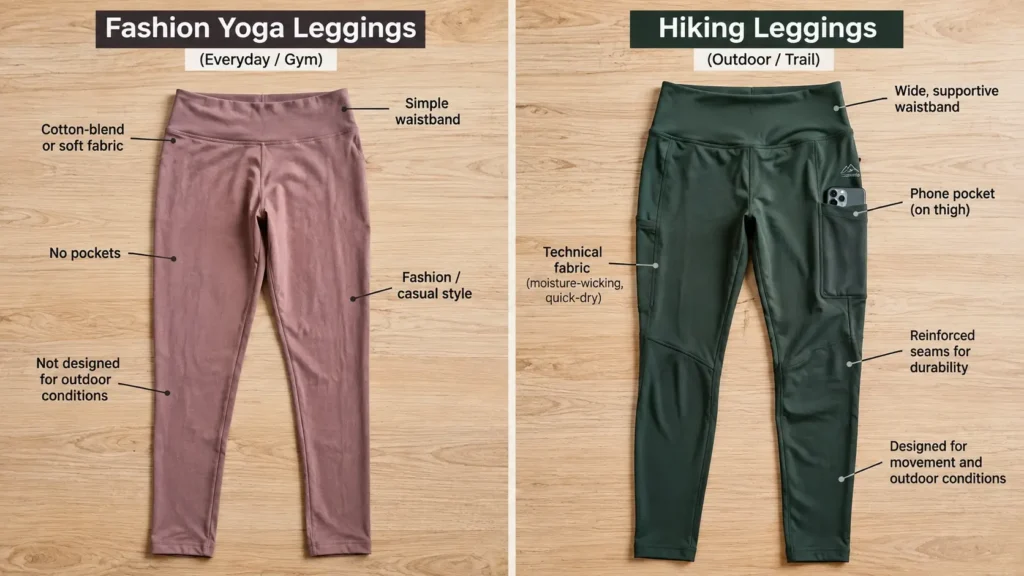
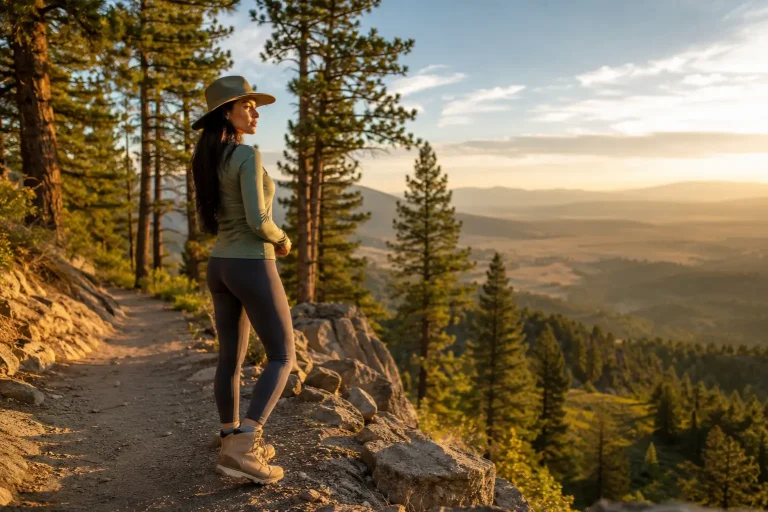
Yes — leggings are one of the most popular choices for hiking, especially for women who prefer the freedom of movement they offer over hiking pants. They’re not appropriate for every condition (cold wet weather demands more coverage and warmth) but for three-season day hiking in mild to warm conditions, a proper pair of hiking leggings performs excellently.
The key word is proper. Not all leggings are hiking leggings, and the difference matters more than most beginner women realise before they experience it firsthand.
What actually matters in hiking leggings
Fabric — moisture-wicking is the baseline
The most important thing a hiking legging must do is wick moisture away from your skin. On a hike of any real length, you sweat. Fabric that holds that moisture against your skin gets heavy, cold when you stop moving, causes chafing on longer hikes, and dries slowly in cool conditions.
Yoga leggings are often made from cotton-lycra blends or polyester that’s optimised for studio comfort rather than moisture management. Hiking leggings use technical fabrics — typically nylon-elastane or polyester-elastane blends — specifically engineered to move moisture outward. Look for terms like ‘moisture-wicking’, ‘quick-dry’ or ‘Dri-FIT’ in the product description. If it’s not there, assume the legging isn’t designed for trail use.
Merino wool leggings are a premium option that offer natural odour resistance and temperature regulation — genuinely useful for all-day hikes or multi-day trips where you’re wearing the same pair for multiple days. They’re significantly more expensive but worth knowing about.
UPF rating — sun protection on exposed trails
UPF stands for Ultraviolet Protection Factor — the fabric equivalent of SPF for sunscreen. A UPF 50+ rating means the fabric blocks 98% of UV radiation. On exposed ridgelines, mountain trails or summer hikes where you’re in direct sun for hours, this matters more than most beginners realise.
Most quality hiking leggings carry a UPF 30 or 50+ rating. This is a sign the fabric is technical rather than fashion-oriented. It won’t appear on yoga leggings unless they specifically market it as a feature. For any hiking where you’re in sustained sun exposure, UPF-rated leggings are worth the investment.
Waistband — this makes or breaks a hike
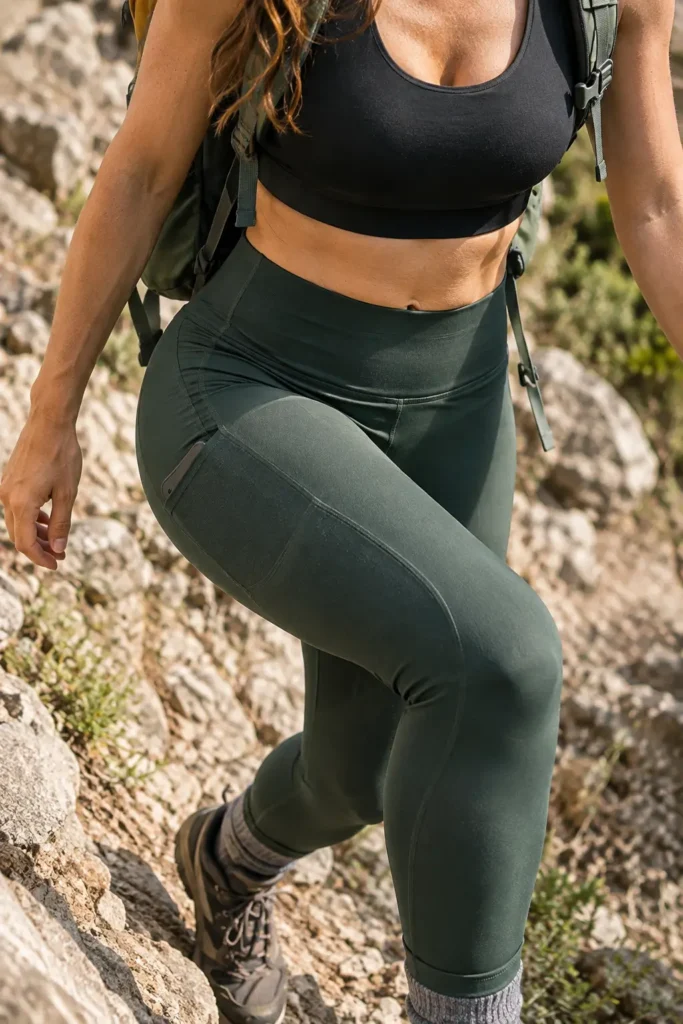
A waistband that rolls down is genuinely one of the most irritating hiking problems. It happens when the waistband isn’t built to handle the movement demands of climbing — squatting, stepping up, leaning forward — over several hours.
Look for: a wide waistband (at least 3-4cm) with flat-lock stitching, a drawstring or internal grip tape to prevent rolling, and a high-waist cut that sits above the hip rather than on it. High-waist hiking leggings stay up on climbs in a way mid-rise leggings consistently don’t. This is probably the feature most worth paying more for.
Pockets — not optional for hiking
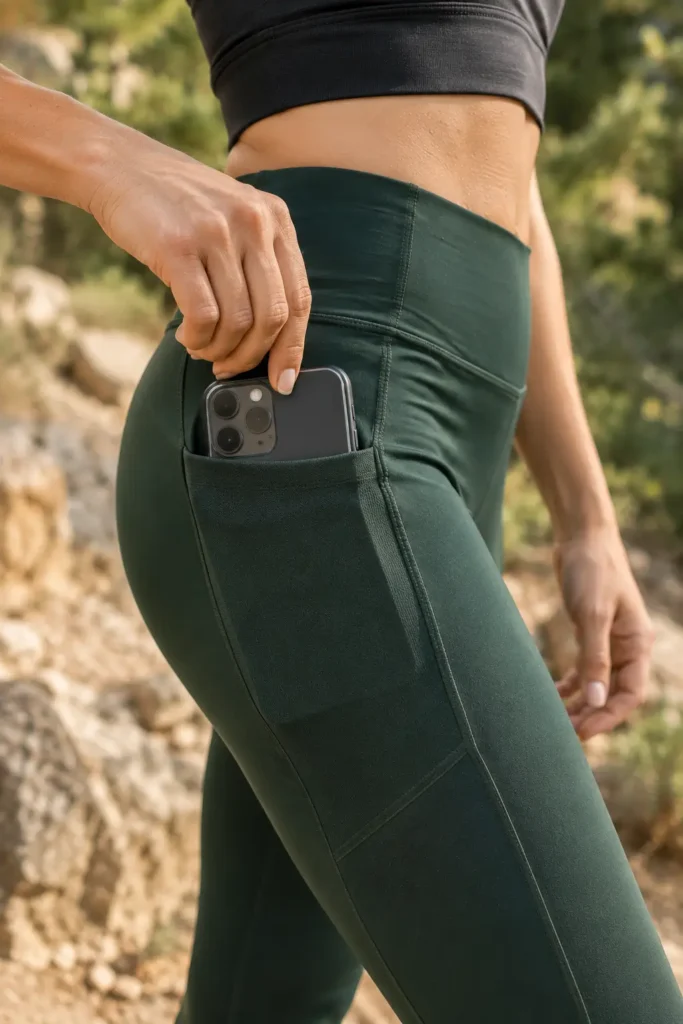
Hiking requires access to your phone for navigation, your snacks at rest stops, your keys and small items throughout the day. Leggings with no pockets — or with pockets so small a phone falls out the moment you bend over — are a genuine frustration on trail.
What to look for: at least two side pockets deep enough to hold a phone without it bouncing out on descents, and ideally a secure zip pocket at the waistband or thigh for valuables. Phone pockets with a slight stretch grip that holds the phone in place on movement are significantly better than simple open pockets. This feature alone separates most hiking leggings from yoga leggings.
Durability — trail vs studio
Hiking involves contact with rocks, rough surfaces, vegetation and pack straps that yoga leggings aren’t designed for. Fabric that pills, snags or develops holes quickly on rough terrain isn’t a hiking legging regardless of what the label says. Nylon-based fabrics are generally more abrasion-resistant than polyester for trail use. Check reviews specifically from hikers rather than gym users for durability feedback.
Fit — move freely, don’t restrict
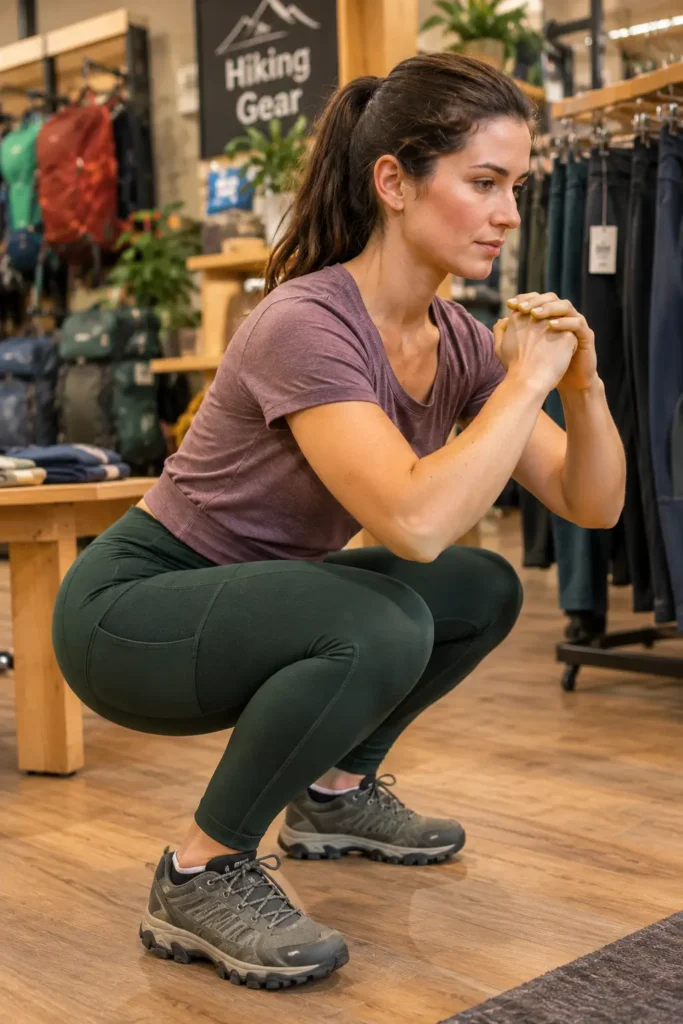
Hiking leggings should fit snugly without restricting movement at the knee or hip. Try the following before buying: a deep squat (simulating stepping up onto a rock), a high knee lift (simulating a steep trail step), and bending forward from the hips. If anything binds, gaps, or feels restrictive in those positions, the fit isn’t right for trail use regardless of how good they look standing still.
Leggings vs hiking pants — when to choose what
Both are valid for hiking — the choice depends on conditions and personal preference:
- Leggings: warm weather, high-output hikes where breathability matters, easier freedom of movement, lower weight, better under rain trousers
- Hiking pants: cold or wet conditions where you need more insulation and wind resistance, rough terrain with heavy vegetation, longer multi-day trips
- Zip-off hiking pants: the compromise — convert to shorts when warm, stay full-length in cooler sections. Less stylish but genuinely practical
For most beginner women doing spring and summer day hikes, leggings are the more comfortable and practical choice. For a complete guide to what to wear hiking from head to toe, see the women’s hiking outfit guide. As you move into autumn and winter hiking or more technical terrain, adding a pair of proper hiking pants to your kit makes sense.
My honest picks at every budget
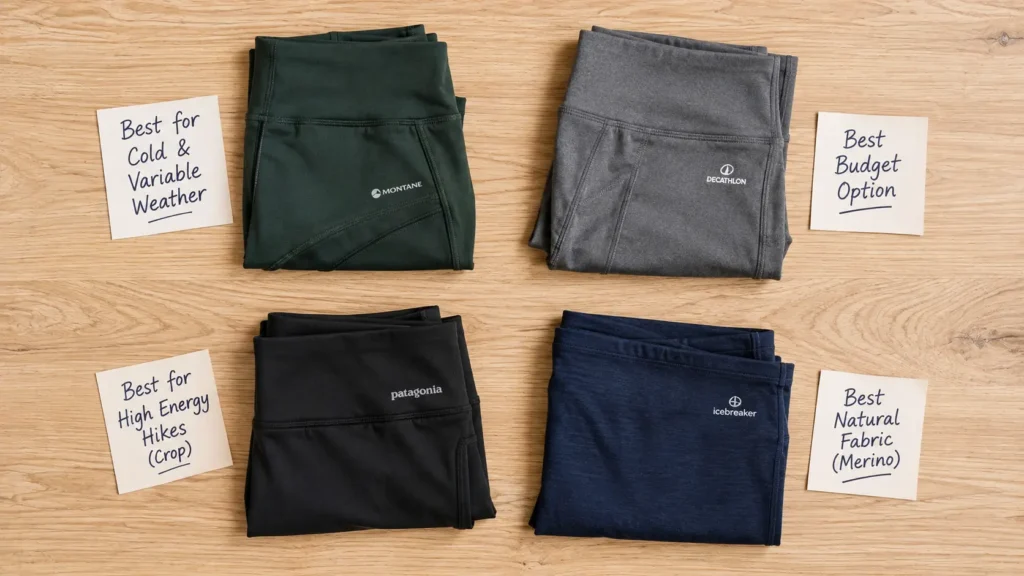
Best overall: Montane Tucana Legging (Women’s)
The Montane Tucana is the hiking legging Sophie would recommend to most beginner women who want one pair that handles everything. Polartec Power Stretch Pro fabric — extremely durable, excellent moisture management, UPF 50+. The high waistband stays up on the steepest climbs without exception. Deep side pockets that actually hold a phone securely. Flatlock seams throughout mean zero chafing on long days. They’re not cheap but they perform consistently across three seasons and last years.
Material: Polartec Power Stretch Pro (nylon/elastane) | UPF: 50+ | Weight: ~185g | Price: ~£85–100
Best for: Beginner women wanting one pair of hiking leggings that handles warm-weather day hikes to cool autumn trails
Sophie’s note: These are the pair I reach for first. The waistband has never moved and the phone pocket is the best I’ve used.
Best budget: Decathlon Forclaz MT500 (Women’s)
Under £30 and genuinely fit for trail use — the Decathlon Forclaz MT500 hiking legging is the honest budget recommendation. Moisture-wicking technical fabric, good waistband, two side pockets and a small zip pocket at the waist. The fabric isn’t as premium as the Montane and durability over multiple seasons is average rather than excellent, but for a beginner testing whether hiking leggings make a difference, these deliver the core features at a price that doesn’t hurt.
Material: Polyester/elastane blend | UPF: 40 | Weight: ~200g | Price: ~£25–30
Best for: Beginner women who want to try proper hiking leggings without spending £80+
Sophie’s note: Perfect starter pair. When you’ve done 20 hikes and know you love it, upgrade.
Best lightweight: Patagonia Centered Crop Tight (Women’s)
If you hike in warm weather and want something lighter and more packable, Patagonia’s Centered Crop Tight uses recycled fabric with excellent breathability and UPF 50+ protection. The cropped length (hits mid-calf) is cooler in summer heat. Not as durable as the Montane for rugged terrain but outstanding for trail running, fast-paced day hikes and warm weather use. The Patagonia build quality means they hold up better than their weight suggests.
Material: Recycled polyester/spandex | UPF: 50+ | Weight: ~155g | Price: ~£65–75
Best for: Women who prioritise breathability and lightweight for warm weather hikes and trail running
Sophie’s note: Not the right first hiking legging unless you’re specifically a warm-weather hiker. Excellent in that context.
Best merino: Icebreaker Merino 200 Oasis Legging (Women’s)
If you’re hiking in cooler conditions or doing multi-day trips where you’re wearing the same pair multiple days running, merino wool leggings are worth knowing about. Icebreaker’s Merino 200 Oasis legging uses 100% merino wool — naturally odour-resistant, temperature-regulating, and remarkably comfortable next to skin over long periods. The 200 weight is the right midweight for three-season use. More expensive and requires more careful washing than synthetic, but genuinely different in performance for all-day multi-day wear.
Material: 100% merino wool | UPF: 50+ | Weight: ~245g | Price: ~£85–100
Best for: Women doing cooler three-season hiking or multi-day trips where odour management matters
Sophie’s note: Not the right beginner choice unless you’re specifically planning autumn/winter hiking. Brilliant if that’s you.
What to avoid
- Cotton or cotton-blend leggings — holds moisture, takes forever to dry, chafes on longer hikes
- Very thin ‘second-skin’ leggings — they feel great in a shop and snag on the first bramble
- Leggings with no pockets or phone pockets that don’t hold a phone securely
- Mid-rise waistbands for hikes with significant elevation gain — they roll
- Compression leggings designed for running — fine for short easy trails, uncomfortably tight for long hiking days
How to care for hiking leggings
- Machine wash cold, gentle cycle — technical fabrics degrade faster in hot washes
- Turn inside out — removes sweat and debris more effectively
- Air dry or tumble dry low — high heat damages elastane and reduces stretch over time
- Never use fabric softener — it clogs the moisture-wicking channels in technical fabric
- Wash after every hike — sweat left in technical fabric causes it to hold odour permanently over time
Final thoughts
The best hiking leggings for beginner women aren’t necessarily the most expensive pair — they’re the ones with technical moisture-wicking fabric, a waistband that actually stays up on climbs, and pockets deep enough to hold a phone without thinking about it.
For most beginners, the Decathlon Forclaz MT500 at under £30 is the honest starting point — it delivers the core hiking legging features without the investment. Once you know you love hiking and want a legging that will last years, the Montane Tucana is worth every penny.
Leave the yoga leggings for yoga. For more on the clothing and gear mistakes beginner women make on trail, see 10 beginner hiking mistakes women make. Your hiking days will be significantly more comfortable for it.
FAQs
The Montane Tucana is the most consistently performing hiking legging for women — excellent moisture management, a waistband that never rolls, and deep phone pockets. For beginners who don’t want to spend £85 before knowing they love hiking, the Decathlon Forclaz MT500 at under £30 delivers the core features reliably. Both are significantly better than yoga leggings for trail use, which is the most important upgrade most beginner women can make to their hiking clothing.
For short easy trails in mild weather — yes, yoga leggings will work. For anything longer, more demanding, or in warmer conditions where you’re sweating significantly, yoga leggings fall short in three ways: they don’t wick moisture as effectively as technical hiking leggings, waistbands often roll on steep climbs, and they rarely have pockets adequate for trail use. The difference is most noticeable on hikes over 2 hours or in warm weather — which is exactly when you most need the legging to perform.
Look for nylon-elastane or polyester-elastane blends with moisture-wicking properties — these are the most common technical fabrics in hiking leggings and offer the best combination of durability, stretch and moisture management. Nylon-based fabrics are generally more abrasion-resistant than polyester for rough terrain. Merino wool is an excellent premium alternative for cooler conditions and multi-day trips. Avoid cotton or cotton-blend leggings — they hold moisture and take a long time to dry, which is uncomfortable and potentially risky in cool weather.
For hiking on exposed trails in direct sun — ridgelines, alpine terrain, summer hikes — UPF 50+ rated leggings provide meaningful sun protection to your legs over the hours you’re out. Most quality hiking leggings carry a UPF 30 or 50+ rating as standard. It’s not the most critical feature for shaded forest trails, but on exposed terrain it’s genuinely useful protection you don’t have to think about. If a legging doesn’t mention UPF, it likely isn’t technically rated and may not offer consistent protection.
Hiking leggings should fit snugly — close to the skin without restricting movement at the knee or hip. They should stay in place on a full squat and a high knee lift without pulling or gapping. Too tight and they restrict movement on steep terrain and are uncomfortable over long days; too loose and they bunch at the knee on climbs. Test the fit with those specific movements rather than just standing — hiking demands a different range of motion than walking or yoga, and the fit test should reflect that.

Intermediate hiker sharing real trail experience — honest gear picks, beginner-friendly guides, no filler.