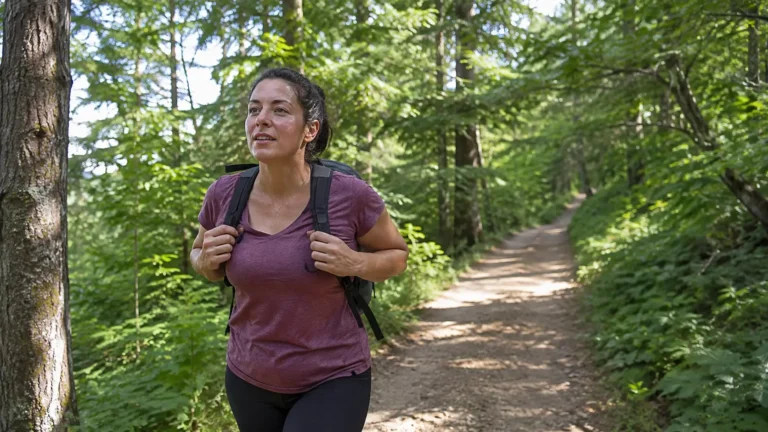
Everyone who hikes regularly started exactly where you are — standing at the beginning, not sure what they need, whether they’re fit enough, or how to find a trail that won’t destroy them. The difference between people who try hiking once and hate it and people who fall completely in love with it is almost never fitness or gear. It’s having a plan that makes the first few weeks feel achievable rather than overwhelming.
This guide is that plan. It covers everything a complete beginner woman needs to know to start hiking — how to find your first trail, what to actually bring, what to expect on that first walk, and how to progress over your first month so that hiking becomes something you do regularly rather than something you tried once and gave up on.
At the bottom you’ll also find a free printable 30-day beginner hiking plan — a simple week-by-week guide you can download, print and stick on your wall. Because a plan you can see is a plan you actually follow.
What actually makes a hike a beginner hike?
The word ‘beginner’ gets used loosely on trail apps and hiking websites, which leads a lot of first-time hikers to underestimate what they’ve signed up for. Understanding what actually makes a hike appropriate for beginners saves you from the most common first-timer mistake: choosing a trail that’s too hard.
A genuine beginner hike has three characteristics: short distance (under 8km), low elevation gain (under 200m of climbing), and a well-marked trail on a maintained path. All three matter. A 5km trail with 400m of climbing is not a beginner hike — it’s a strenuous hike that happens to be short. A 10km trail with no elevation gain on a clear path is borderline for a first hike depending on your walking fitness.
For your very first hike, aim for 4–6km, under 150m of elevation, and a trail with good reviews from other beginners on AllTrails. That’s the sweet spot — challenging enough to feel like an accomplishment, manageable enough that you enjoy it rather than survive it.
Before your first hike: the non-negotiables
You don’t need much to start hiking. The gear requirements for a first beginner hike are genuinely minimal, and most of what you already own will work fine. Here’s what actually matters:
Footwear — get this right first
You don’t need hiking boots for your first easy trail hike. A pair of supportive trainers with some grip will do fine on a dry, maintained path. What you cannot wear: flat fashion trainers, sandals, or anything without ankle support and grip. Your feet carry everything — if they’re uncomfortable at mile one, the whole hike is miserable.
If you’re planning to hike regularly, investing in a proper pair of trail shoes or hiking boots is worth doing early. They make every hike more comfortable and significantly reduce blister risk. But for your very first hike? Wear the most supportive, grippy thing you own and see how you get on.
Socks — never cotton
This is the detail most first-time hikers miss completely. Cotton socks hold moisture against your skin, which creates the exact conditions for blisters. Before your first hike, pick up a pair of merino wool or synthetic hiking socks. They cost £10–20 and prevent the most common first-hike injury. If you’ve tried hiking before and ended up with blisters, there’s a good chance your socks were the problem.
Water — more than you think
Carry at least 1.5 litres for a 2–3 hour hike. More in hot weather. Most beginners underpack water because they’re used to drinking much less on a normal day — but hiking is sustained physical activity and your body needs significantly more fluid than usual. Buy a reusable 1L water bottle before your first hike if you don’t have one.
Snacks — bring them even for short hikes
For hikes under 2 hours you probably won’t need to eat mid-trail, but having a snack gives you energy if the hike takes longer than expected and makes a rest stop feel rewarding. A banana, some trail mix or an energy bar is all you need.
A charged phone with AllTrails downloaded
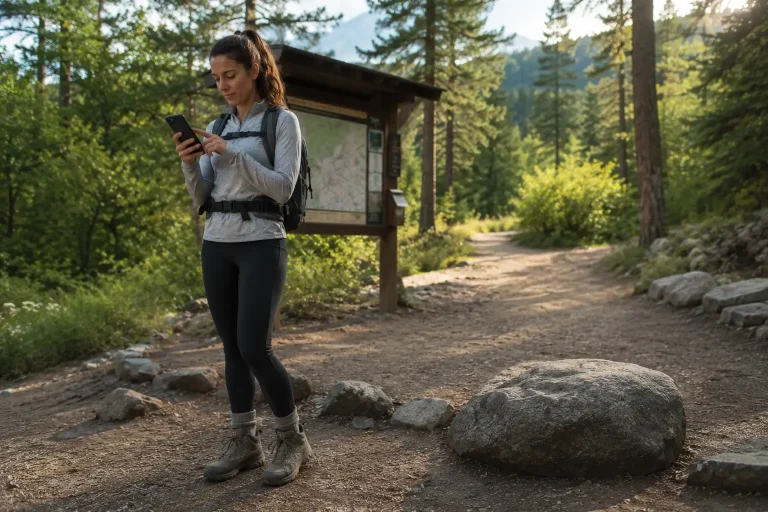
Download AllTrails before you leave home, search for your trail, and download it offline. Your GPS position will show on the map even without signal. This is your navigation backup and your safety net. Check that your phone is fully charged before every hike.
Your first month on trail: the 30-day plan
The biggest mistake beginner hikers make is going too hard too fast — one ambitious hike, aching for a week, then never going again. For the full list of mistakes to avoid, see 10 beginner hiking mistakes women make. The second biggest mistake is doing the same easy flat trail over and over until hiking feels boring rather than building to something.
This plan builds you gradually from first hike to confident regular hiker over 30 days. It assumes you’re starting with basic walking fitness — you can walk 30 minutes comfortably — and no hiking experience whatsoever.
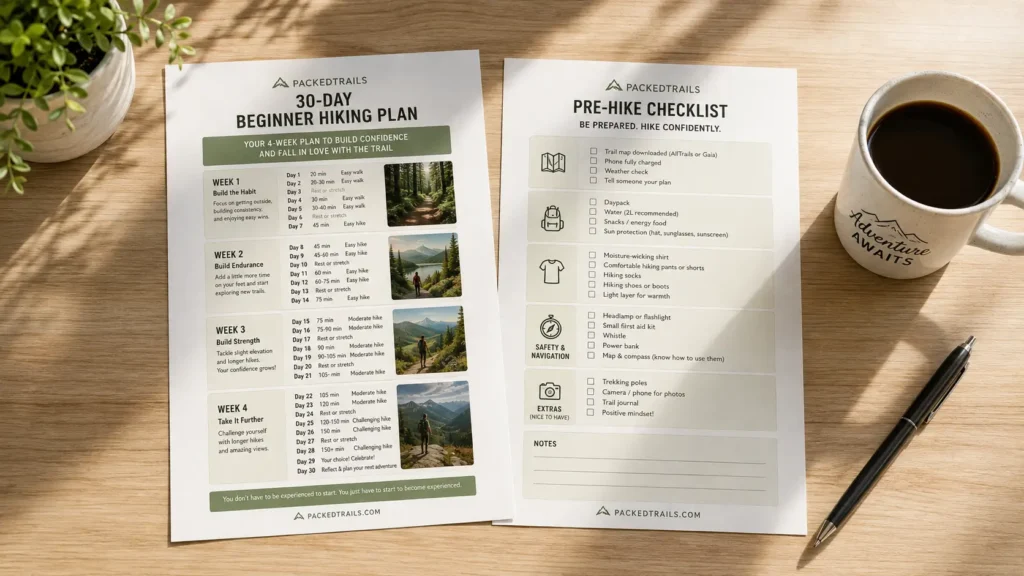
| Week | Plan |
| Week 1 Hike 1 | Choose a trail rated Easy on AllTrails, 4–6km, under 150m elevation. Flat or very gentle terrain. Walk at a comfortable conversational pace — if you’re gasping, slow down. This is not a workout, it’s an introduction. Focus on enjoying it, not finishing fast. Note what you wish you’d brought and what felt uncomfortable. |
| Week 1 Hike 2 | Same difficulty, slightly different trail if possible. Try a different location — forest, coast, country park. Getting two hikes in the first week builds momentum before the novelty wears off. |
| Week 2 Hike 3 | Slightly longer — 6–8km, still Easy rating but you can now look for trails with a gentle hill. Your legs know what hiking feels like. Notice how much more comfortable this feels than Hike 1. |
| Week 2 Hike 4 | Repeat a trail from Week 1 but walk it faster than before. Seeing the same trail at different paces shows you your own progression — which is motivating in a way a new trail doesn’t always give you. |
| Week 3 Hike 5 | Step up to a Moderate-rated trail, 7–9km, 200–300m elevation gain. This is your first proper climb. Take your time on ascents — short steps, steady pace, don’t race it. The view from the top will feel genuinely earned. |
| Week 3 Hike 6 | Second moderate trail this week. You’re now doing real hiking. Pack properly, bring a proper lunch, take a proper break at the top. |
| Week 4 Hike 7 | Your first solo hike if you’re ready — or your first hike with a longer approach. Download the map, tell someone your plans, turn around at the halfway time point. The goal is confidence, not distance. |
| Week 4 Hike 8 | Choose the hike you want to do — not what you think a beginner should do. You’ve been hiking for a month. You know your pace, your kit, what you enjoy. Pick a trail that excites you. |
Download the free printable version of this plan at the bottom of the article — it includes the weekly schedule, a pre-hike checklist, and Sophie’s top 5 beginner tips on one page.
What to expect on your first hike

Nobody tells you these things before a first hike, so here’s the honest version:
- The first 15 minutes feel awkward. Your body is adjusting to the movement, your pack feels strange, you’re not sure you’re going the right way. This passes quickly — by the 30-minute mark you’ll have found your rhythm.
- You will be slower than you expect. Trail distances take significantly longer than the same distance on a pavement. A 5km trail might take 90 minutes rather than the 60 you calculated. Build in extra time.
- Your legs may ache the next day — specifically your quads after any downhill section, and your calves from the sustained effort. This is completely normal and fades after 2-3 hikes as your body adapts.
- You’ll want to go again. This is the thing most beginner hikers don’t expect — that they’ll finish feeling good rather than destroyed, and want to do it again soon. Plan your second hike before you do your first one.
How to find good beginner trails near you
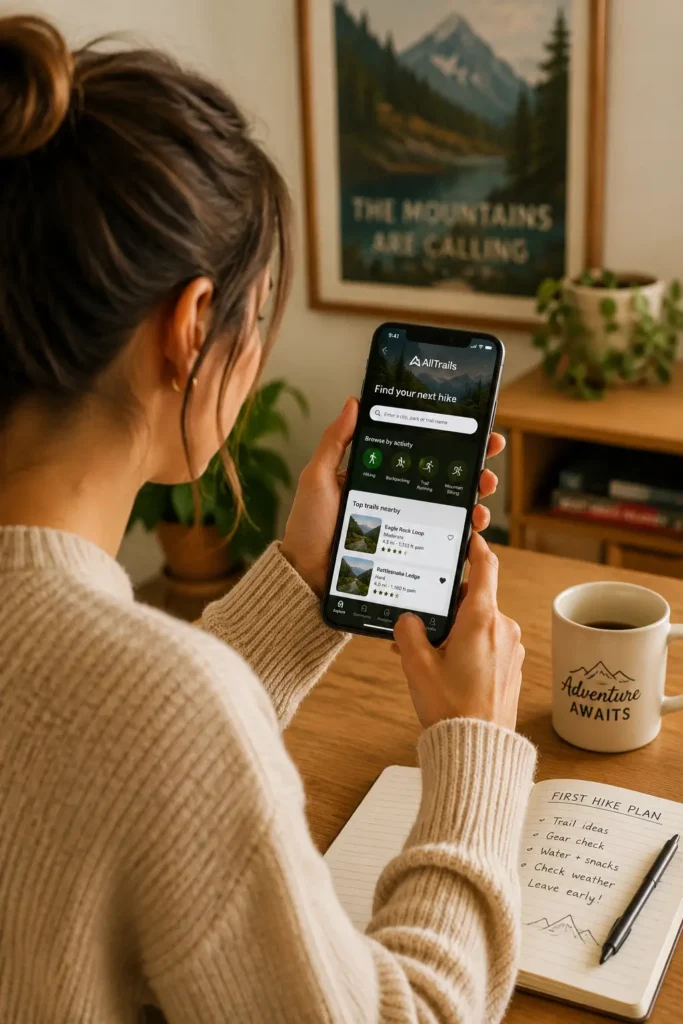
AllTrails is the most useful tool for finding beginner trails — it has filters for difficulty, length, elevation gain and reviews from real hikers. Here’s how to use it effectively:
- Filter by ‘Easy’ difficulty, under 8km, and sort by ‘Most Popular’ — popular trails are well-marked and well-maintained
- Read the recent reviews, not just the star rating. Look for reviews from people who mention their fitness level or describe their experience — they’ll tell you things the official description won’t
- Check the elevation gain chart on the trail detail page, not just the total elevation figure. A trail with 200m of gain spread over 8km is very different from 200m in the first 2km
- Look for trails described as ‘good for families’ or ‘wheelchair accessible’ sections — these are almost always genuinely flat and well-maintained for the sections they cover
Building hiking into your regular life
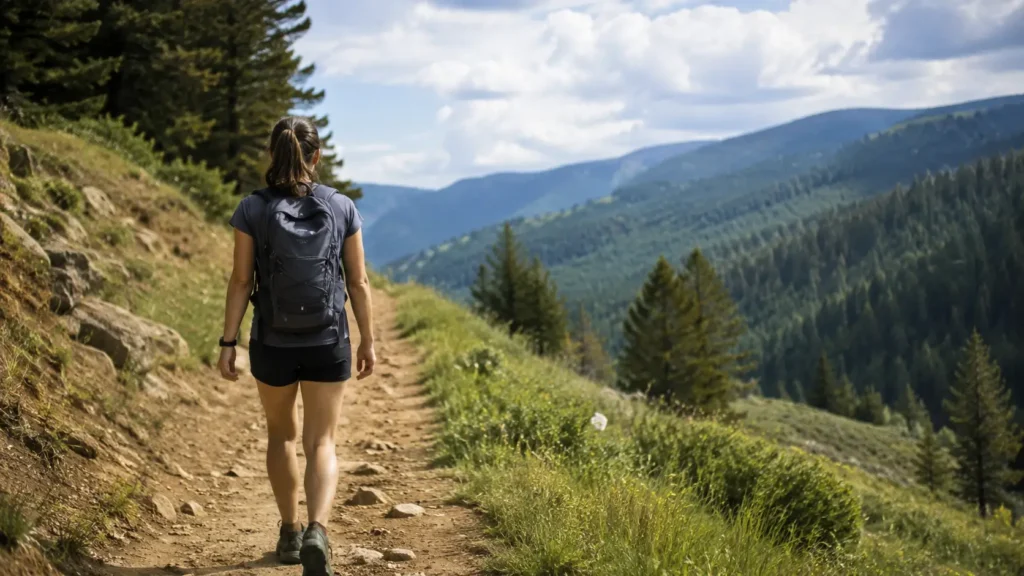
The hikers who stick with it long-term are the ones who make it a habit rather than a special occasion event. Here’s what that looks like practically:
- One hike every week or every two weeks is enough to keep building fitness and confidence without it feeling like pressure
- Having a go-to local trail — somewhere 30–45 minutes from home — makes it easy to get out without planning. Save one trail as your default, something you can do on a whim
- Hiking with a friend or joining a local walking group makes it social, which helps on the weeks when motivation is lower
- Keeping a simple note on your phone of trails you’ve done and trails you want to do gives you a running list to work through — a small thing that keeps momentum going
The mindset that makes the difference
The beginner women who build hiking into their lives consistently are almost never the most athletic or the most geared-up. They’re the ones who go when conditions aren’t perfect, who do an easy trail when a hard one feels like too much, and who define success as getting outside rather than hitting a specific distance or pace.
Your first hike doesn’t have to be impressive. It has to happen. Your fifth hike doesn’t have to be hard. It has to be enjoyable enough that you want a sixth. The mountain you want to climb will still be there when you’re ready for it — and you’ll be surprised how quickly ‘ready’ arrives when you build up consistently.
Download the 30-day plan, pick a trail for this weekend, and go.
FAQs
For a first hike, look for a trail rated Easy on AllTrails, between 4–6km long, with under 150m of elevation gain. Well-marked trails in country parks, forests or coastal paths are ideal — they’re maintained, well-used and easy to follow. Avoid anything described as ‘strenuous’ or with significant scrambling regardless of the distance. The goal of your first hike is to enjoy it, not to challenge yourself — there’s plenty of time for harder trails once you know you love hiking. For a more detailed guide to picking the right trail for your fitness level, see how to choose a hiking trail as a beginner woman.
For your very first hike, you need three things: supportive footwear with grip (proper hiking boots or trail shoes are ideal but any sturdy trainer works for easy trails), merino or synthetic socks (never cotton), and enough water (at least 1.5 litres for a 2-3 hour hike). Everything else — hiking poles, technical layers, specialist gear — can wait until you know you enjoy hiking and want to invest further. Don’t let gear shopping delay your first hike.
If you can walk for 30 minutes comfortably without stopping, you’re fit enough to start hiking on easy beginner trails. Hiking fitness builds quickly on the trail itself — each hike makes the next one easier. The 30-day plan in this article is designed specifically for people starting from a low fitness base, with gradual progression built in. Don’t wait until you feel fit enough. Start now and let hiking build your fitness.
The 20% rule is a guideline sometimes used for backpacking — your pack weight shouldn’t exceed 20% of your bodyweight. For day hiking with a small daypack, this isn’t a practical concern since a loaded day hike pack typically weighs 3–6kg regardless of your bodyweight. A more useful beginner rule: if your pack feels heavy before you’ve left the car park, take something out. A lighter pack always makes a hike more enjoyable.
Most beginner women feel noticeably more comfortable after 3–4 hikes — usually within the first two weeks of starting. By the end of the first month of consistent hiking (6-8 hikes following a gradual progression), most beginners can comfortably complete moderate trails with elevation gain and feel confident rather than anxious on trail. The progression happens faster than most people expect, especially when you hike consistently rather than leaving long gaps between outings.

Intermediate hiker sharing real trail experience — honest gear picks, beginner-friendly guides, no filler.