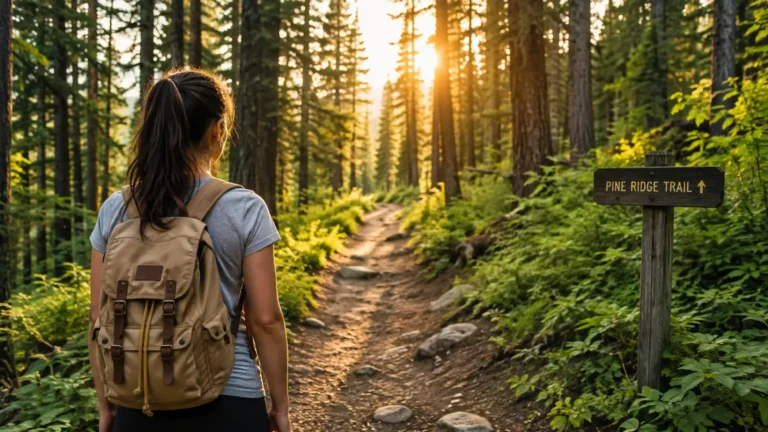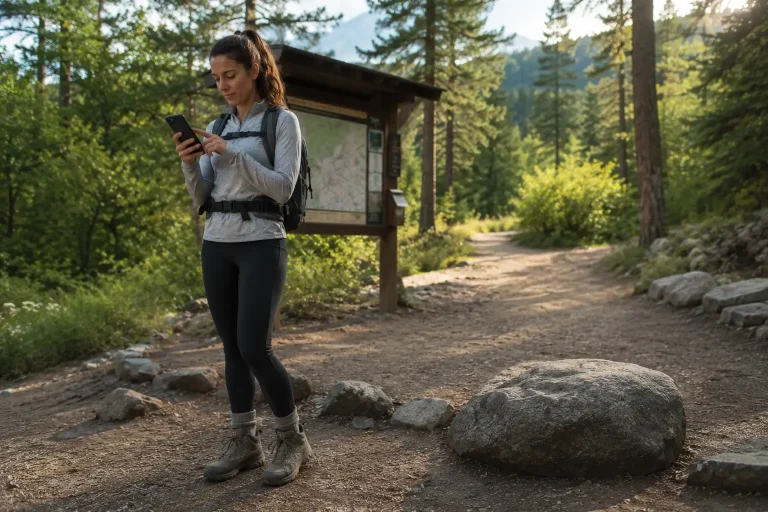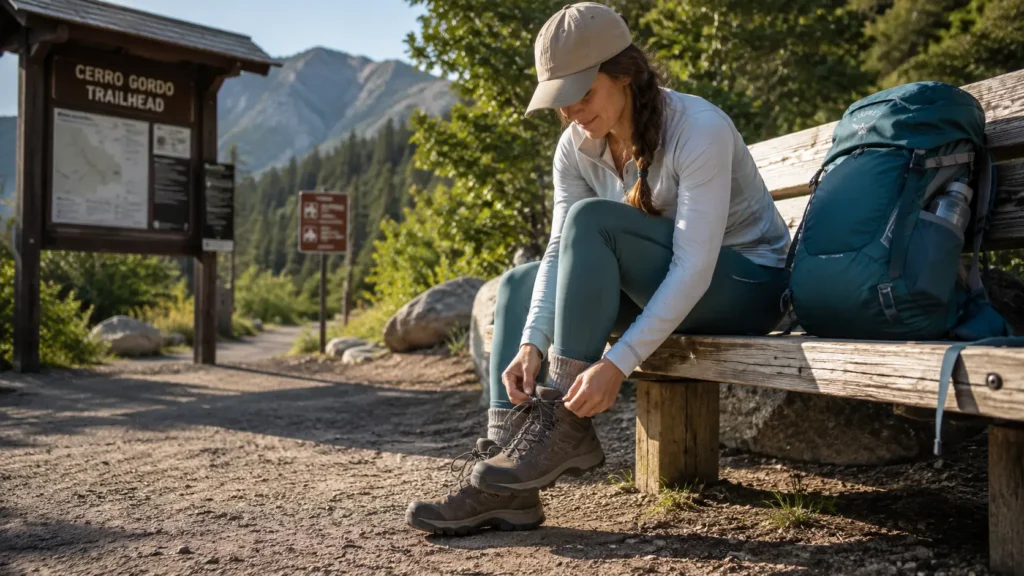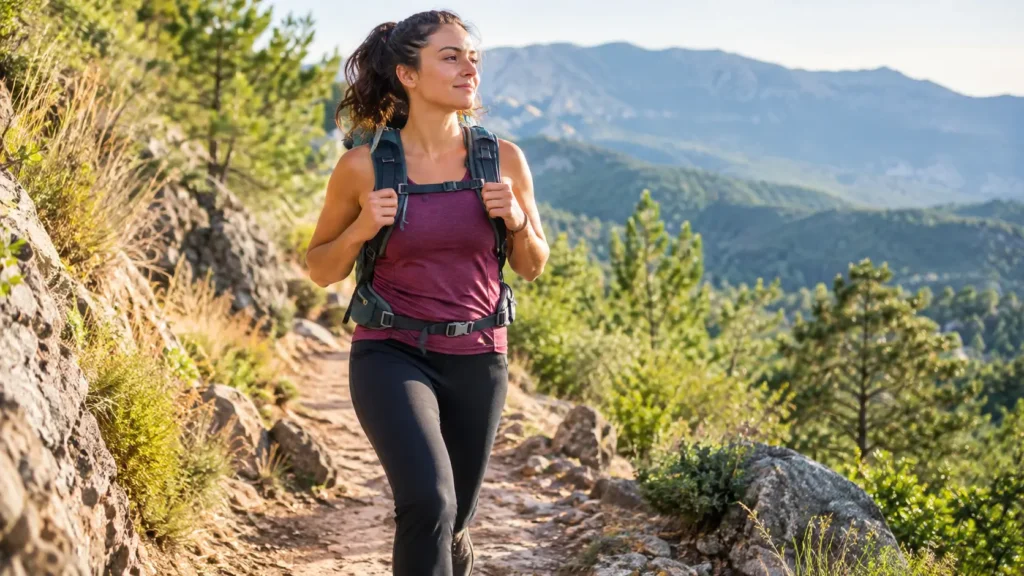
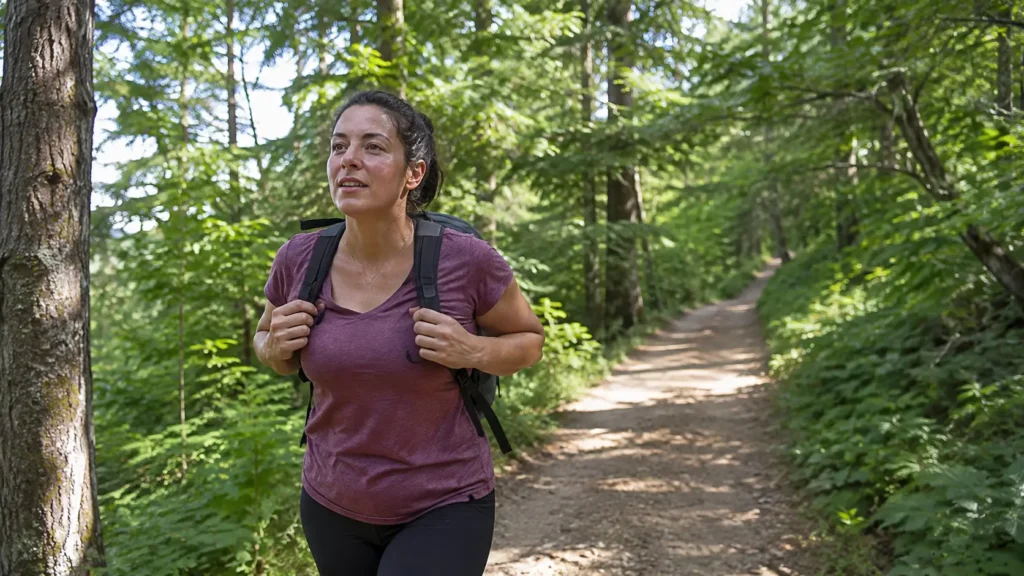
My first real hike nearly broke me. Not because the trail was particularly hard — it was a 7km loop with gentle hills, rated Easy on AllTrails, chosen specifically because I thought it would be manageable. I was wrong. I stopped four times in the first kilometre. My legs were burning by the second. I made it back to the car two hours later feeling like I’d climbed Everest, and sat there wondering if hiking was genuinely something my body was capable of.
That was three years ago. I now hike regularly, including trails that would have seemed impossible that day. The thing that changed wasn’t my fitness — at least not at first. It was understanding that hiking from a low fitness base is completely possible with the right approach, and that everything I’d done wrong that first day was fixable.
This guide is for any woman who wants to hike but feels like her body isn’t ready yet. You’re more ready than you think. Here’s what you actually need to know.
Is it possible to hike when you’re out of shape?
Yes — with one important clarification. Not all hikes are created equal, and choosing the wrong trail when you’re starting from low fitness is the fastest way to have a miserable experience and decide hiking isn’t for you.
The good news is that the spectrum of hiking difficulty is enormous. At one end are flat, well-maintained 3km loops through country parks that anyone who can walk for 30 minutes can complete. At the other end are 20km ridge walks with 1,500m of elevation gain that challenge experienced hikers. The question is never whether you can hike — it’s which hike is right for where you are right now.
Most beginner women who try hiking and hate it chose a trail that was too hard for their current fitness. It’s not a fitness failure — it’s a planning failure. The right trail for your current fitness level exists, and once you find it, hiking becomes something your body can do and genuinely enjoy.
What to expect physically on your first hikes
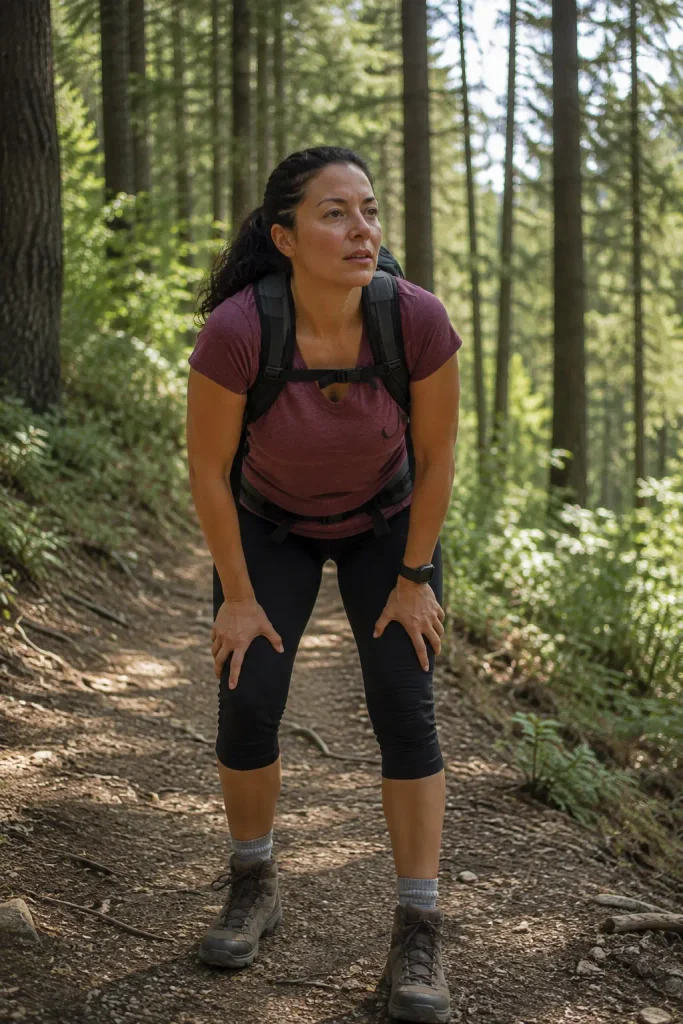
Being honest about this upfront prevents the discouragement that stops most beginners from going back after a hard first hike:
- Your legs will burn on any incline, even gentle ones, for your first several hikes. This is completely normal — hiking uses specific muscles (quads on ascents, glutes for power, calves throughout) that most daily life doesn’t train. The burning eases after 3-4 hikes as those muscles adapt.
- You will be slower than the trail estimates and slower than other hikers you see. AllTrails times assume a moderate fitness level. Add 50% to any estimate for your first hikes.
- Your heart rate will feel high. Sustained uphill effort at any fitness level elevates heart rate — the difference with fitness is recovery speed, not the effort itself.
- The day after your first few hikes, your quads and calves will ache. This is normal delayed onset muscle soreness and fades after the first 3-4 hikes as your body adapts.
- You will likely feel significantly better than expected on the way back. The first half of any hike is always harder than the second half once your body has warmed up.
None of these things mean your body is failing. They mean your body is doing exactly what a body does when it meets a new physical challenge — responding, adapting, and becoming capable.
How to choose the right trail when you’re out of shape
This is the single most important decision for your first hikes. Get this right and the experience is achievable and enjoyable. Get it wrong and you spend the whole day struggling.
Distance — shorter than you think
For your very first hike from a low fitness base, start with 3-5km. For a complete guide to finding the right trail for your fitness and experience, see how to choose a hiking trail as a beginner woman. Not 8km, not 10km — 3 to 5. This sounds almost embarrassingly short but it gives you the full hiking experience (trail, views, the satisfaction of finishing) without the physical demand that turns a first experience into an ordeal. Once you’ve done 3-4 hikes at this distance and they feel manageable, move up.
Elevation — flat or near-flat
Elevation gain is the real test of hiking fitness, not distance. A 5km trail with 300m of climbing is dramatically harder than a 10km flat trail for someone starting from low fitness. For your first hikes, look for trails with under 100m of elevation gain. Flat forest paths, coastal walks and valley trails are your friends. Hills come later.
Surface — good path, well-marked
Technical terrain — loose rocks, scrambling, unclear paths — requires concentration and physical confidence that takes time to build. For early hikes, choose well-maintained marked paths where you can focus on the effort of walking rather than picking your way through difficult terrain. AllTrails reviews from other beginners will tell you what the surface is actually like.
Location — near the car
For your first few hikes, choose loops or out-and-back routes that keep you close to the car. Knowing you can turn around at any point without a long walk back removes the pressure that makes difficult moments feel like emergencies. As your confidence builds, longer routes further from the car feel less daunting.
The pacing secret nobody tells beginners
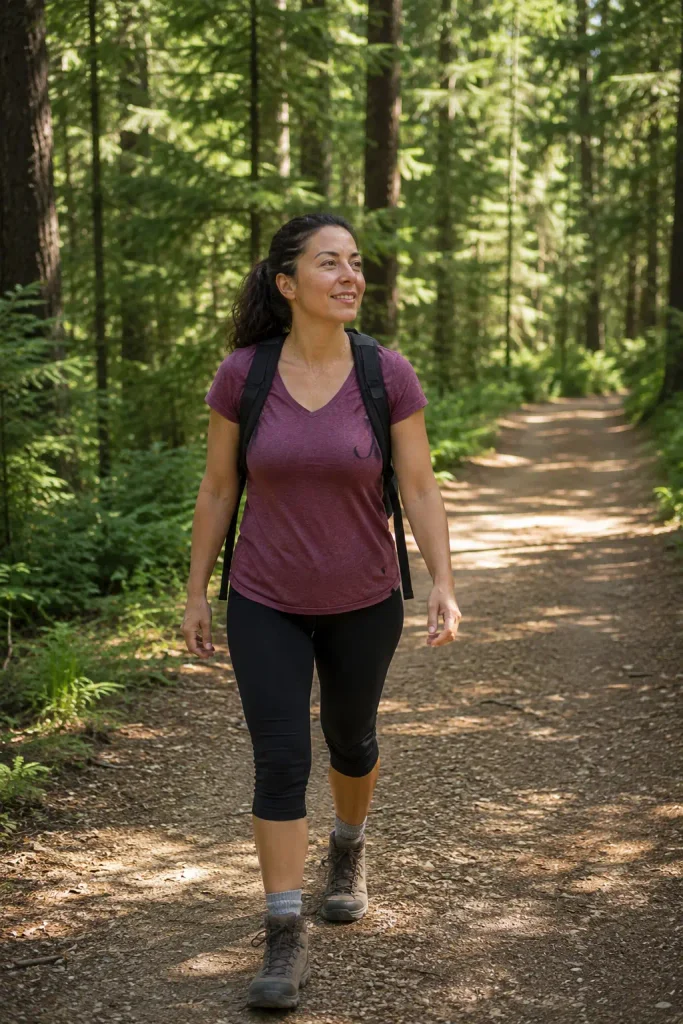
The most common mistake out-of-shape hikers make — and the one that causes most suffering on trail — is starting too fast. The first kilometre of a hike feels easy because your body is fresh and the novelty is exciting. Pushing hard in that first kilometre means burning out on the climbs that come later.
The right pace for hiking when you’re out of shape is slower than feels comfortable at the start. Here’s the test that never lies: can you hold a full conversation while hiking? If you can talk in complete sentences without gasping, you’re at the right pace. If you’re too breathless to speak, slow down.
This pace will feel almost embarrassingly slow to begin with. You might feel self-conscious when other hikers pass you. This doesn’t matter. Your goal is to finish the trail feeling challenged but not destroyed — and a slow sustainable pace achieves that in a way a fast unsustainable one never will.
The rest stop rule
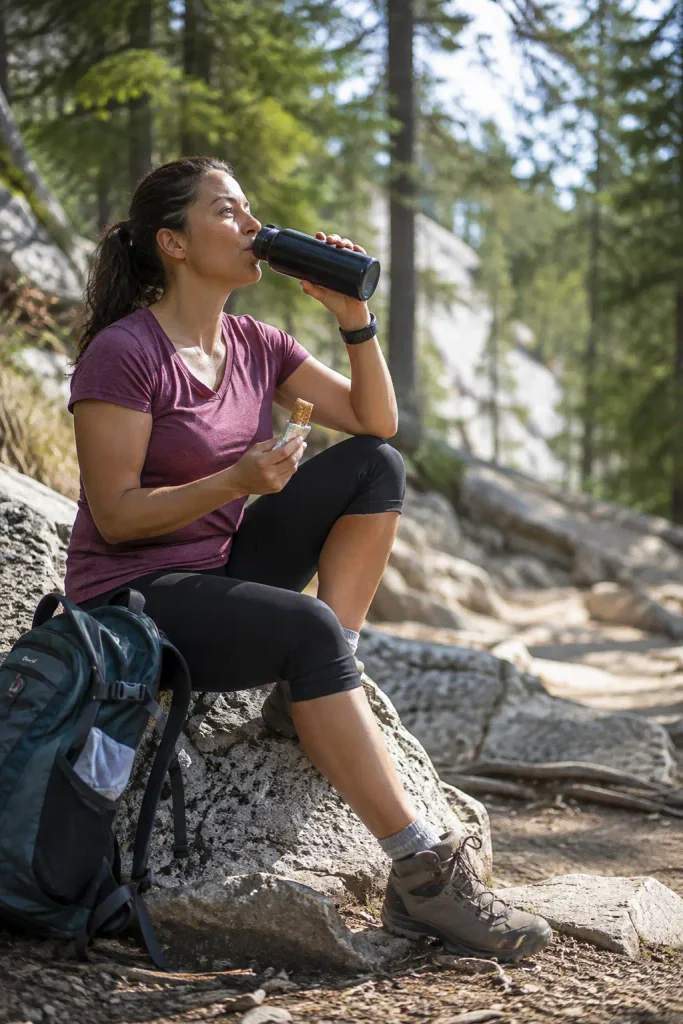
Taking rest stops is not a sign of failure — it’s smart hiking. On your first few trails, plan a rest stop every 20-30 minutes: sit down, drink water, eat a small snack, let your heart rate come down. Short planned stops mean you arrive at the end with energy rather than collapsing into the car.
As your fitness improves, rest stops become shorter and less frequent naturally — you won’t need to plan them because your body won’t demand them as urgently. But in the early weeks, they’re not optional.
What to bring that actually makes a difference
When you’re hiking from low fitness, a few specific items make a significant difference to how the experience feels:
- Trekking poles — optional for most hikers, but genuinely useful when fitness is low. They transfer some of the climbing load to your upper body, reduce knee strain on descents, and give you physical confidence on uneven terrain. Borrow or buy a cheap pair for your first hikes.
- More water than you think — your body works harder at lower fitness and produces more sweat. Carry at least 1.5 litres for a 2-3 hour hike, more in warm weather.
- More snacks than you think — your blood sugar drops faster during sustained effort when you’re not yet conditioned to it. Eat every 45-60 minutes even if you don’t feel hungry.
- Supportive footwear — the single most impactful item. Not necessarily hiking boots, but anything with grip and support. Flat fashion trainers will make every step harder and increase blister risk.
- Layers — you will warm up significantly once moving. Start slightly cooler than comfortable and remove a layer on the first climb rather than overheating and having nowhere to put it.
How long does it take to get fit for hiking?
Most women who start hiking from low fitness notice a significant improvement in how trail days feel after 4-6 hikes — usually within the first month if you’re going once or twice a week. The specific muscles hiking uses (quads, glutes, calves) adapt relatively quickly to the specific demands of trail walking.
The first two hikes are the hardest. The third hike is noticeably easier. By the sixth hike, trails that felt gruelling at the start feel like a completely different experience. This isn’t fitness in the broad sense — it’s your body becoming specifically adapted to the movement patterns, sustained effort and terrain of hiking.
The fastest way to get fit for hiking is to hike. For a structured approach to building hiking-specific fitness, see how to train for hiking as a beginner woman. Not to train in a gym first, not to walk on a treadmill for weeks beforehand — to go hiking, at the right difficulty level, consistently. The trail itself is the training.
The mindset that makes the biggest difference
The women who start hiking from low fitness and stick with it share one thing: they stop comparing their experience to what they think hiking should look like and start accepting what it actually looks like right now.
Right now it looks like stopping more often than you’d like. Moving slower than other hikers. Feeling your body working hard on gradients that look gentle on a map. Arriving at the end tired in a way that surprises you. All of this is completely normal, temporary, and exactly what progress looks like from the beginning.
The woman who gives up after one hard hike and decides she’s not a hiker is making a decision based on one data point — the hardest one, the first one. The woman who goes back for a second hike, and a third, discovers that each one is genuinely easier than the last. The difference between them isn’t fitness. It’s the understanding that difficult first experiences are the price of entry to something that gets better every time.
A simple first month plan

- Week 1: one hike, 3-4km, flat or near-flat, easy surface. Focus on finishing, not pace or time.
- Week 2: two hikes if possible — repeat the first trail faster, or try a new similar one.
- Week 3: try a trail with gentle hills (under 100m elevation). Notice how much easier the flat sections feel compared to week 1.
- Week 4: your choice — pick a trail that feels like a stretch from where you started. You’ve earned it.
By the end of four weeks of hiking once or twice a week, most women are surprised by how far they’ve come from that first day. The trail does the work — you just have to show up.
Final thoughts
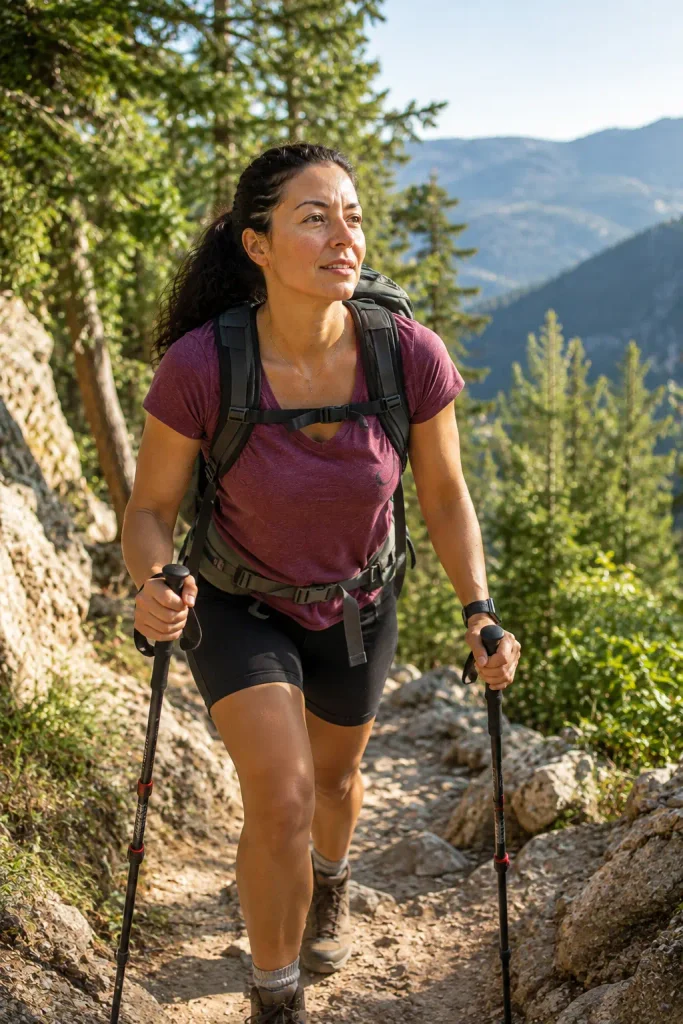
You don’t need to get fit before you start hiking. You get fit by hiking. The barrier most women put in their own way — I’ll start when I’m fitter, when I’ve lost some weight, when I feel more ready — is the thing that keeps the trail permanently in the future rather than under their feet.
Start with a 3km flat trail this weekend. Bring more water and snacks than you think you need. Walk at the pace where you can talk. Take rest stops. Let yourself be slow. Let other hikers pass.
Go back next week. And the week after. The trail that nearly breaks you on day one becomes the trail you do for a warm-up by month three. That’s not an exaggeration — it’s what happens when you show up consistently. The only requirement is that you start.
FAQs
Yes, absolutely. The key is choosing the right trail for your current fitness level — not the trail you want to do eventually, but the trail that matches where you are right now. For most women starting from low fitness, that means short (3-5km), flat (under 100m elevation) and well-marked trails. The right trail makes hiking completely accessible at any fitness level. The wrong trail makes it miserable regardless of how determined you are.
The honest answer: just go. The specific fitness hiking requires builds fastest by hiking — not by training in a gym or walking on a treadmill first. Choose a short flat trail, bring plenty of water and snacks, walk at a pace where you can hold a conversation, plan rest stops every 20-30 minutes, and finish the trail. That first hike is your preparation for the second one, which will be easier. The trail does the training.
Most women notice a significant improvement in how hiking feels after 4-6 hikes — usually within the first month of hiking once or twice a week. The specific muscles hiking uses adapt quickly to trail demands. The first two hikes are the hardest. By the sixth, trails that felt gruelling feel like a completely different experience. Hiking consistently is the fastest way to get fit for hiking — faster than any gym preparation.
Use the conversation test: if you can speak in complete sentences without gasping while hiking, you’re at the right pace. If you’re too breathless to talk, slow down. This pace will feel almost embarrassingly slow at the start — that’s correct. It’s the pace that lets you finish the trail rather than burning out halfway through. Take planned rest stops every 20-30 minutes on early hikes, and let your pace increase naturally as your fitness improves over weeks.
No. Hiking is one of the most accessible forms of exercise at any body size — it’s low-impact, self-paced, and entirely adjustable to your current fitness level. Waiting until you’ve lost weight before starting hiking just delays the experience and the fitness benefits that hiking itself provides. Start now, at the weight you are, on a trail that matches your current fitness. The hiking will do far more for your health and fitness than waiting ever will.

Intermediate hiker sharing real trail experience — honest gear picks, beginner-friendly guides, no filler.