There’s a question most women think about and almost no hiking guide bothers to answer properly: what do you actually do about your period on a hike?
The short answer is yes, you can absolutely hike on your period — and most of the time it’s no big deal with a bit of preparation. The longer answer involves some practical decisions about products, waste disposal, cramp management and packing that most hiking content glosses over completely.
This guide covers all of it honestly, without making it into more of a big deal than it needs to be. By the end you’ll know exactly what to pack, how to handle it on trail, and when it’s genuinely OK to reschedule.
The short answer: yes, you can hike on your period
Hiking on your period is completely normal and safe. Millions of women do it regularly without incident. Your period doesn’t affect your ability to hike, your fitness, your safety on trail, or your enjoyment — unless you’re dealing with symptoms severe enough that they’d affect you off trail too.
The main considerations are practical rather than medical: what products to use, how to dispose of waste, how to manage any cramps or discomfort, and how to stay comfortable for the duration of the hike. None of these are complicated once you have a system.
What products work best on trail
Menstrual cup or disc
The best option for hiking by a significant margin. A menstrual cup or disc can be worn for up to 12 hours, produces zero waste to pack out, and doesn’t require changing on trail for most day hikes. You insert it before you leave home, hike your entire day, and deal with it when you get back.
The learning curve is real — if you’ve never used a cup before, a long hike is not the time to try it for the first time. Practice at home first, ideally for a full cycle, before relying on it on trail. Once you’re comfortable with it, it’s genuinely the most trail-friendly option available.
Period discs work the same way and some women find them more comfortable for high-activity days. Both are reusable, sustainable and produce no trail waste.
Menstrual underwear
Period underwear has become genuinely good in the last few years and works well for hiking in several scenarios: light days, as backup to a cup or tampon, or for women who prefer not to use internal products. The downside on trail is that used period underwear needs to go back in your pack — not a problem, just something to account for (a small zip-lock bag handles this fine).
For longer hikes, the capacity of most period underwear means it won’t be enough as a standalone option on heavier days. Pair it with another product for full-day hikes on heavy flow days.
Tampons
Tampons work fine on hiking trails — the main consideration is waste. Used tampons cannot be buried or left on trail — they must be packed out, the same as any other hygiene waste. Carry small zip-lock bags or a dedicated waste bag for used products. This is standard leave-no-trace practice and genuinely important for trail hygiene and wildlife safety.
For longer hikes, you’ll need to change on trail. Find a spot well off the trail (at least 60m), use hand sanitiser before and after, and pack out everything including the wrapper and applicator if applicable.
Pads
Pads are the least practical option for hiking — they shift with movement, can cause chafing on longer days, and create more waste to pack out. Many women use them as backup or for overnight use but they’re not the first choice for active trail days. If pads are what you’re most comfortable with, they’ll work — just pack extra and plan your waste management accordingly.
What to pack — the period hiking kit
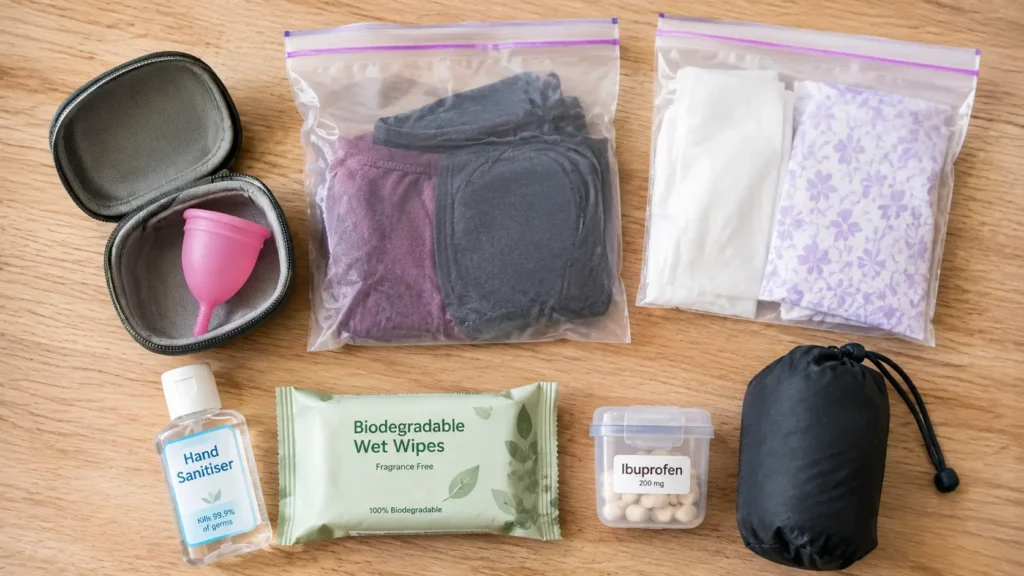
Add these to your standard day hiking pack:
- Your preferred period product — enough for the day plus one spare
- Small zip-lock bags for used product waste — two is enough for a day hike
- Hand sanitiser — essential for changing on trail
- Biodegradable wet wipes — useful for freshening up at breaks
- Spare underwear in a zip-lock bag — reassuring to have on heavier days
- Pain relief — ibuprofen is most effective for period cramps specifically (it works on the prostaglandins that cause cramping)
- A small dark-coloured stuff sack for discreet waste storage in your pack
For the complete list of what to pack for a day hike, the day hiking packing list for women covers every essential item.
None of this takes up much space. A small zip-lock pouch holds everything and sits neatly in a side pocket or the top of your daypack.
Managing cramps and symptoms on trail
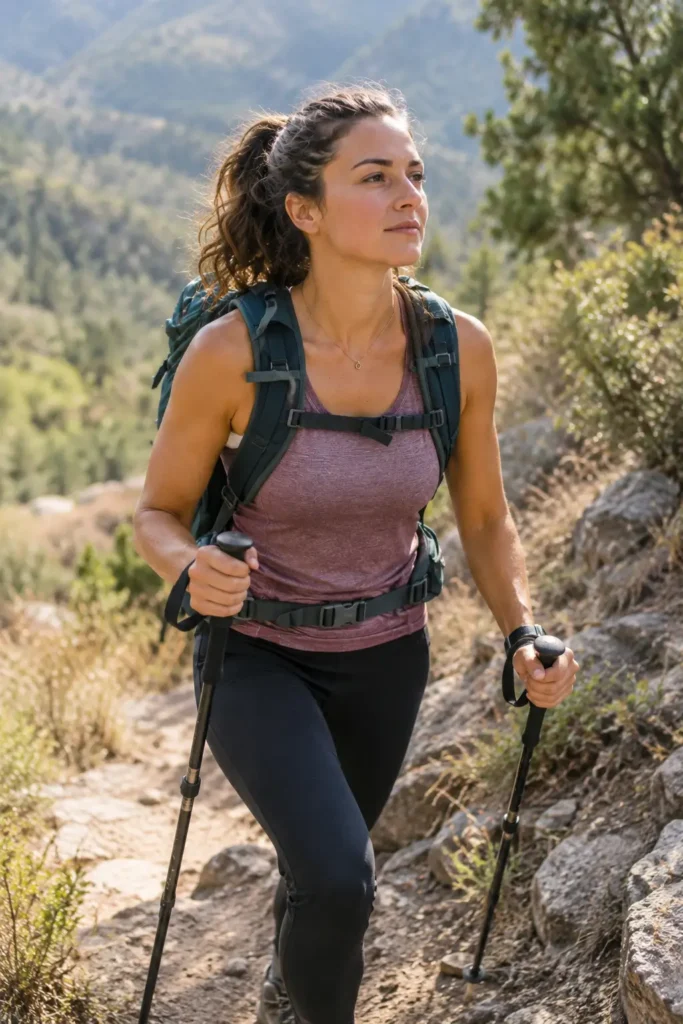
Period cramps on a hike are genuinely manageable for most women — and interestingly, moderate exercise often reduces cramp severity rather than making it worse. The movement, increased circulation and endorphin release from hiking can actively help with period discomfort.
That said, some women experience symptoms that genuinely affect their ability to function — severe cramping, nausea, dizziness, heavy bleeding or fatigue that goes beyond normal period tiredness. If your symptoms regularly impact your daily functioning off trail, a long hike on those days is a reasonable thing to reschedule.
What helps with cramps on trail
- Ibuprofen taken before cramping starts (preventative) works better than taking it after cramps have established — take it before you set off if you know today will be difficult
- A hot water bottle or heat pad in your pack for rest stops — small and surprisingly effective
- Keeping well hydrated — dehydration makes cramps significantly worse
- Keeping moving at a moderate pace — stopping completely often lets cramps settle in more
- Eating regularly — low blood sugar compounds period fatigue
- Warm layers — being cold makes cramps worse for many women
When it’s OK to reschedule
If your period comes with symptoms severe enough that you wouldn’t normally function well at work or in daily life — reschedule without guilt. Hiking is not worth pushing through genuinely debilitating symptoms, and knowing your own cycle well enough to plan around it is a useful skill.
If your symptoms are manageable but uncomfortable, most women find the hike genuinely helps — the distraction, movement and fresh air often improve how period days feel rather than making them worse. Sophie has hiked on period days that started difficult and finished feeling significantly better than expected.
Changing on trail — how to do it practically
For day hikes using a cup or disc, you probably won’t need to change on trail at all. For tampons or pads, or on longer hikes, here’s the practical approach:
- Move well off the trail — at least 60 metres from the path, water sources and any campsite
- Use hand sanitiser before and after
- Keep everything in your zip-lock waste bag — tampon, applicator, wrapper — nothing left behind
- Used menstrual cups can be rinsed with water from your bottle and reinserted — you don’t need to fully clean it on trail
- Used period underwear goes into a zip-lock bag in your pack
The process is quick once you’ve done it once. The main thing is having the supplies ready — rummaging through your pack mid-hike isn’t the moment to discover you don’t have a waste bag.
The wildlife question — does your period attract bears?
This question comes up constantly and deserves an honest answer: the scientific evidence does not support the idea that menstruating women are at significantly higher risk from bears or other wildlife.
A 1991 study by Lynn Rogers and colleagues found no evidence that black bears were attracted to menstrual odours. The US National Park Service states that current evidence does not support that menstruation increases the risk of bear encounters. A 1985 study found grizzly bears were attracted to some odours but that menstrual blood was not among the most attracting.
The practical advice is the same for all hikers regardless of period status: store food and scented items properly, don’t sleep in clothes you cooked in, be aware of your surroundings, and know what to do if you encounter wildlife. Period products should be stored with food and other scented items if camping overnight.
For day hiking — which is the focus of this guide — the bear concern is largely a non-issue. Hike normally.
Leave No Trace — period waste on trail
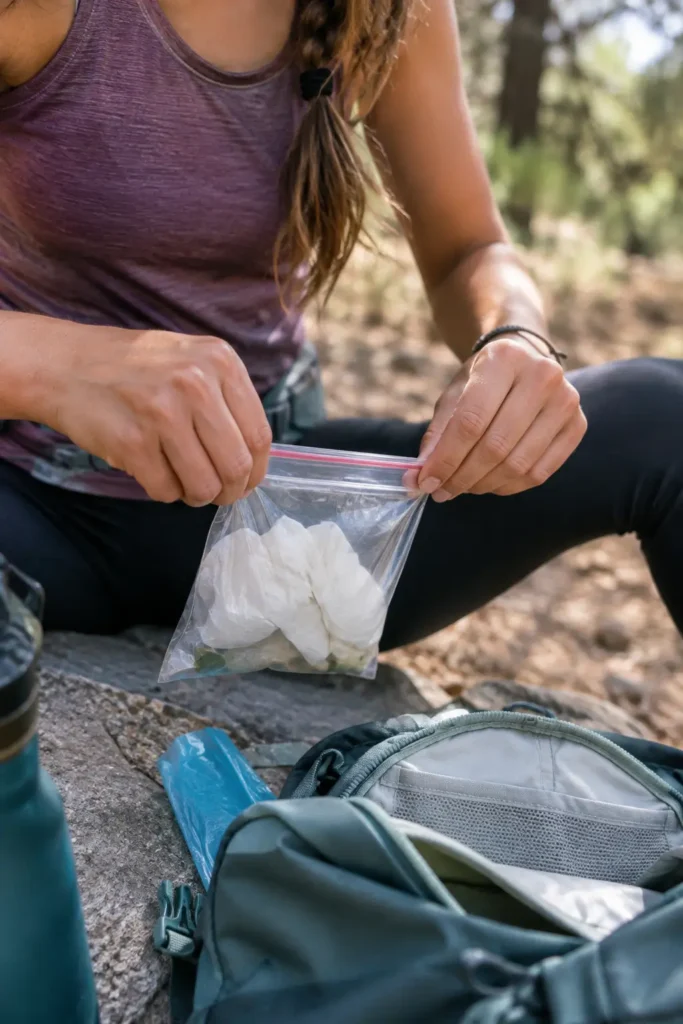
The Leave No Trace principle for period waste is straightforward: pack it out. Unlike human waste which can in some situations be buried in a cat hole, period products — tampons, pads, applicators, wrappers — should not be buried and must be carried out in a sealed bag.
This is important for several reasons: period products don’t biodegrade quickly, buried products can be dug up by wildlife, and leaving any hygiene waste on trail is inconsiderate to other hikers and damaging to the environment.
A small dedicated zip-lock waste bag weighs nothing and makes the whole process clean and contained. If you’re camping overnight, store used products with your food in a bear canister or hung food bag.
Practical tips for specific trail situations
Short easy day hikes (under 3 hours)
Minimal planning required. Use whatever product you’re most comfortable with, carry a spare and a waste bag, take ibuprofen if needed. A menstrual cup makes the whole thing completely invisible — insert before you leave, forget about it, deal with it when you’re home.
Long day hikes (4+ hours)
Plan for at least one change on trail if using tampons or pads. Carry the full period kit described above. Pre-take ibuprofen if your period days are typically uncomfortable. A cup or disc eliminates the on-trail changing entirely.
Solo hiking on your period
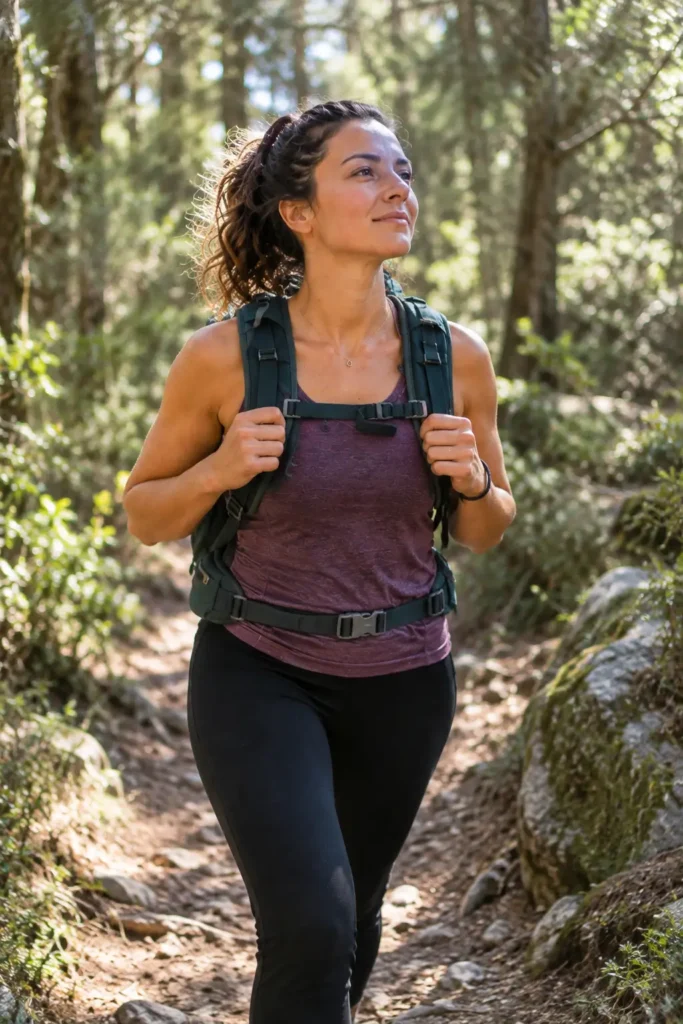
No different from hiking with company except that you’re managing everything yourself — which is fine. Tell someone your plans as you would on any solo hike. For a complete guide to solo hiking safety for women, see is it safe to hike alone as a woman. Carry your full kit. Trust your body and turn around if symptoms become genuinely difficult.
Final thoughts
Hiking on your period is normal. Most women who hike regularly simply plan around it the same way they plan around any other aspect of trail preparation — with a bit of thought beforehand and the right kit in their pack.
The women who have the smoothest experience on their period on trail are almost always the ones who use a menstrual cup (no waste, no on-trail changes, no worries) and take ibuprofen preventatively if they need it. Everything else is details.
Don’t let your period be the reason you miss a hike you want to do. With the right preparation it genuinely doesn’t have to be.
FAQs
Yes, absolutely. Hiking on your period is safe and completely normal. Your period doesn’t affect your hiking ability, fitness or safety on trail. The main considerations are practical — what products to use, how to handle waste, and how to manage any cramps or discomfort. Most women find that moderate exercise like hiking actually helps with period symptoms rather than making them worse, thanks to increased circulation and endorphin release.
A menstrual cup or disc is the most practical choice for hiking — it can be worn for up to 12 hours, produces no trail waste, and doesn’t require changing on trail for most day hikes. Tampons work well too but require waste management and potentially a trail change on longer hikes. Menstrual underwear is good as a backup or for lighter days. Pads are the least trail-friendly due to movement and chafing on active days.
Pack everything out — tampons, pads, applicators and wrappers should not be buried and must be carried out in a sealed zip-lock bag. Period products don’t biodegrade quickly and can be dug up by wildlife if buried. A small dedicated waste bag weighs nothing and keeps everything contained. If camping overnight, store used products with food in a bear canister or hung food bag.
The scientific evidence does not support the idea that menstruating women are at significantly higher risk from bears. The US National Park Service states that current evidence does not show that menstruation increases bear encounter risk. The practical advice is the same for all hikers regardless of period status: store food and scented items properly, be aware of your surroundings, and know what to do if you encounter wildlife. For day hiking, this is largely a non-issue.
Only if your symptoms are severe enough that they would normally prevent you from functioning well in daily life — debilitating cramps, nausea or heavy bleeding that genuinely impacts your ability to do normal activities. For manageable discomfort, most women find hiking actually helps — the movement, distraction and endorphins often improve how period days feel. Take ibuprofen before symptoms establish, stay hydrated, eat regularly, and go. You may be surprised how much better you feel on trail than you expected.

Intermediate hiker sharing real trail experience — honest gear picks, beginner-friendly guides, no filler.