Summer hiking is some of the best hiking there is — early morning light, wildflowers, dry trails, long days. It’s also the time of year when beginner women make the most avoidable mistakes, usually because nobody told them how different hot weather hiking actually is from hiking in mild conditions.
This guide covers what to wear, when to start, how to hydrate properly, what to watch for, and — most importantly — the signs your body is giving you that mean stop immediately. Get these things right and summer hiking becomes one of the most enjoyable things you do. Get them wrong and it’s genuinely dangerous.
The number one rule: start early
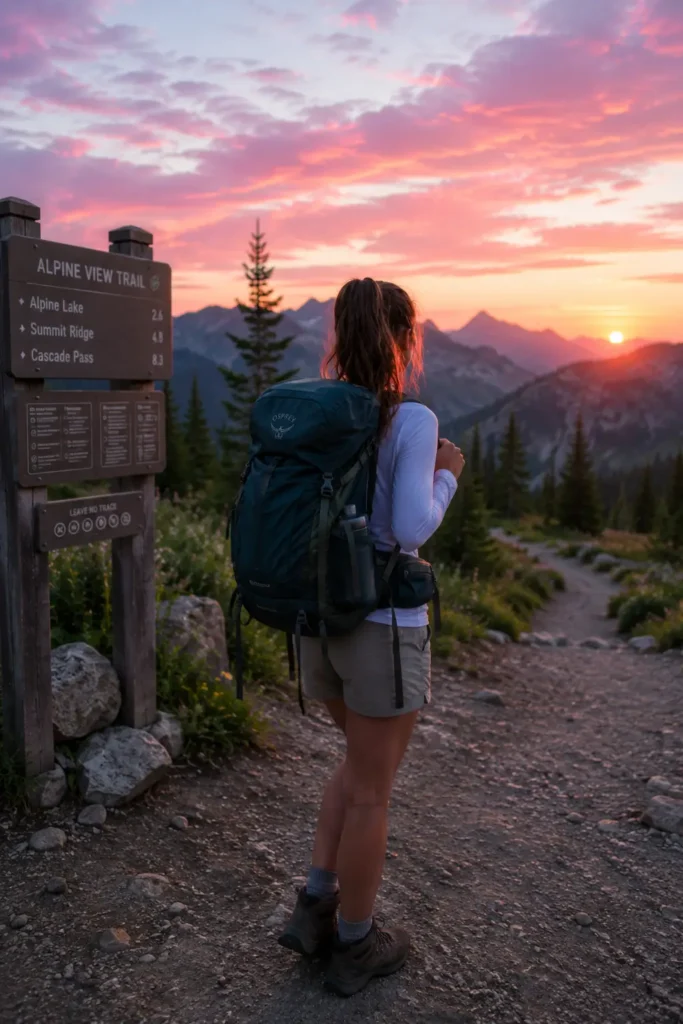
Everything else in this guide matters less than this. On hot summer days, the difference between a 7am hike and a 10am hike is enormous. Temperatures can rise 10–15°C between early morning and midday, trail exposure increases as the sun climbs, and the shade that made the first hour pleasant disappears.
For most summer day hikes, the goal is to be at the trailhead at or before sunrise and off exposed terrain before noon. This isn’t just about comfort — it’s about safety. The hottest part of a summer day is typically between 11am and 3pm, and that’s when heat-related illness risk peaks dramatically.
If your hike starts late due to a long drive or logistics, consider a shorter trail with more shade cover for hot weather starts.
What to wear hiking in hot weather
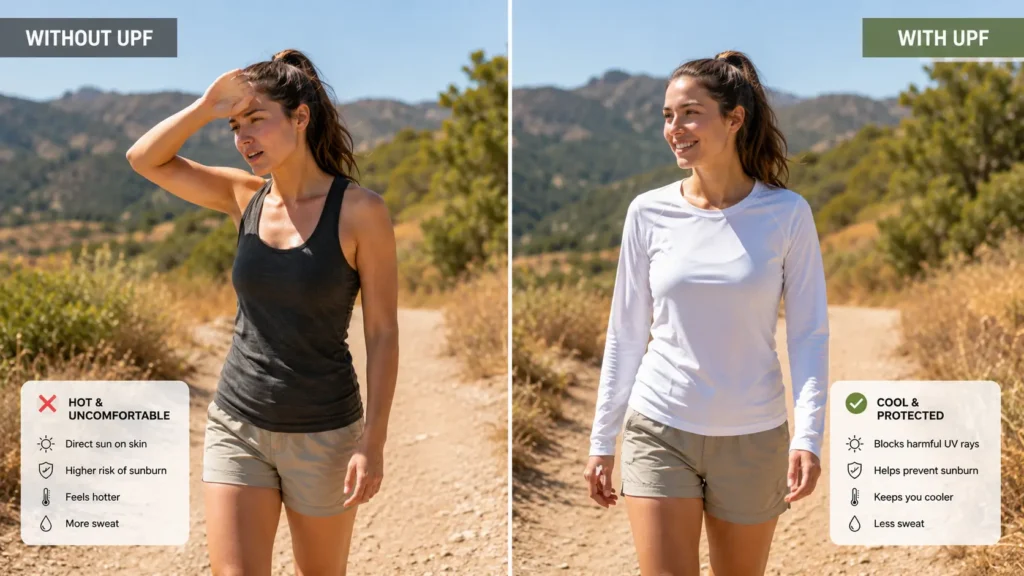
The instinct for most beginner women is to wear as little as possible in the heat. This is the wrong approach and one of the most common hot weather hiking mistakes.
Wear light colours, not dark
Dark clothing absorbs heat. Light colours — white, light grey, pale blue, khaki — reflect it. On a sunny exposed trail, the difference in how hot you feel is significant. This alone makes a real difference on summer hikes.
Wear lightweight long sleeves, not a vest top
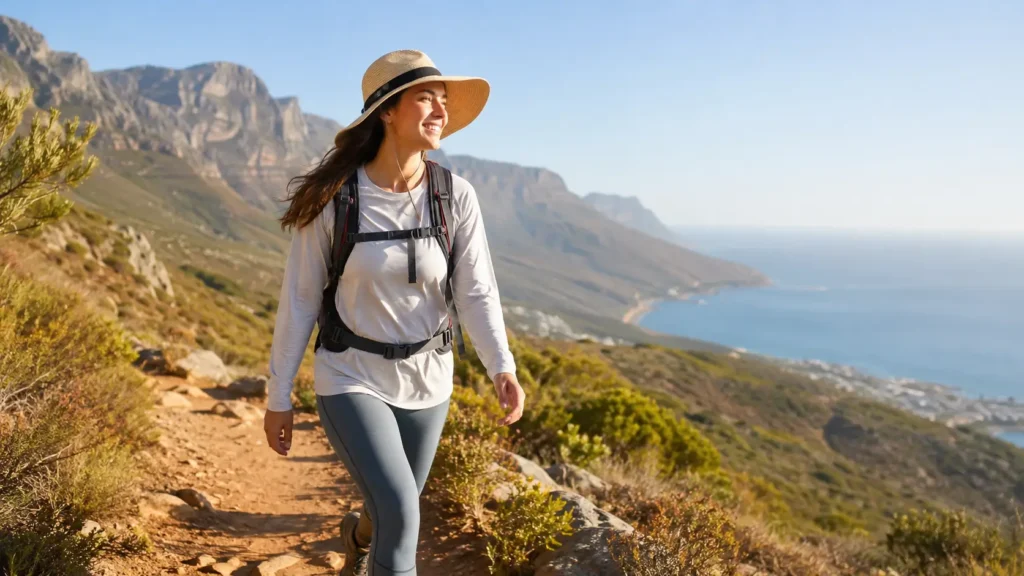
This is the counterintuitive one. A lightweight, moisture-wicking long-sleeve shirt protects your arms from direct sun and actually keeps you cooler than a vest top in strong sunlight. Your skin in direct sun on a hot day absorbs heat and burns — both of which make you hotter. A breathable long-sleeve creates a barrier between your skin and the sun while still allowing sweat to evaporate.
Look for shirts with a UPF (Ultraviolet Protection Factor) rating of 30 or higher. Merino wool and technical synthetic fabrics both work well for this.
Choose moisture-wicking fabrics only
Cotton is always the wrong answer for hiking — but in summer it’s even worse. Wet cotton clings to your skin, creates chafing, and provides zero cooling. Moisture-wicking synthetics or merino wool move sweat away from your skin and allow it to evaporate, which is how your body actually cools itself. Every layer you wear on a summer hike should be moisture-wicking.
Protect your head
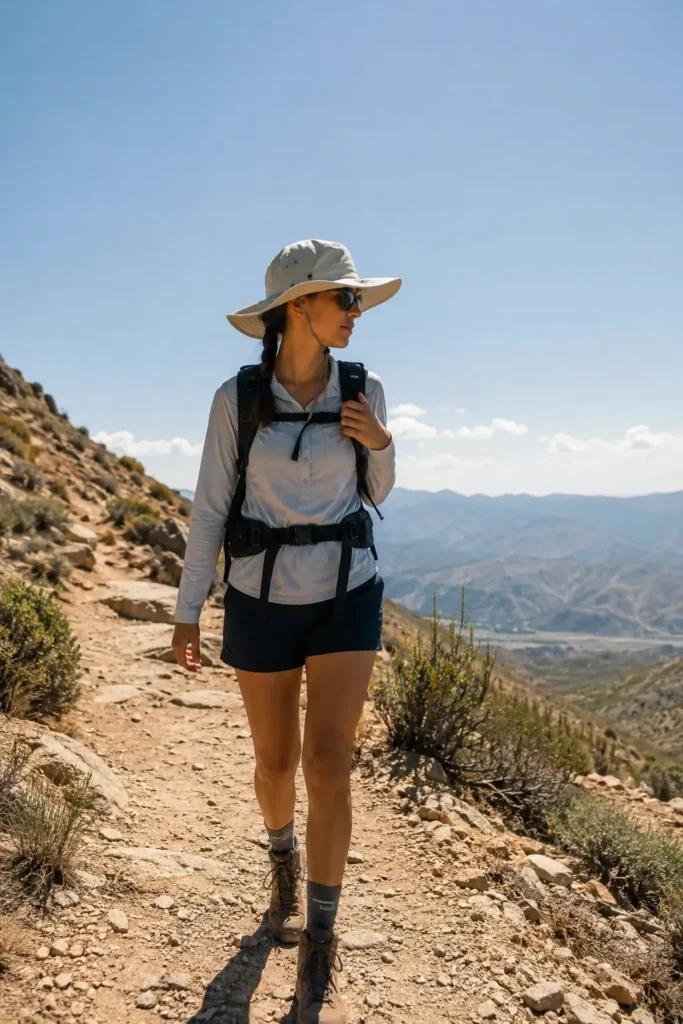
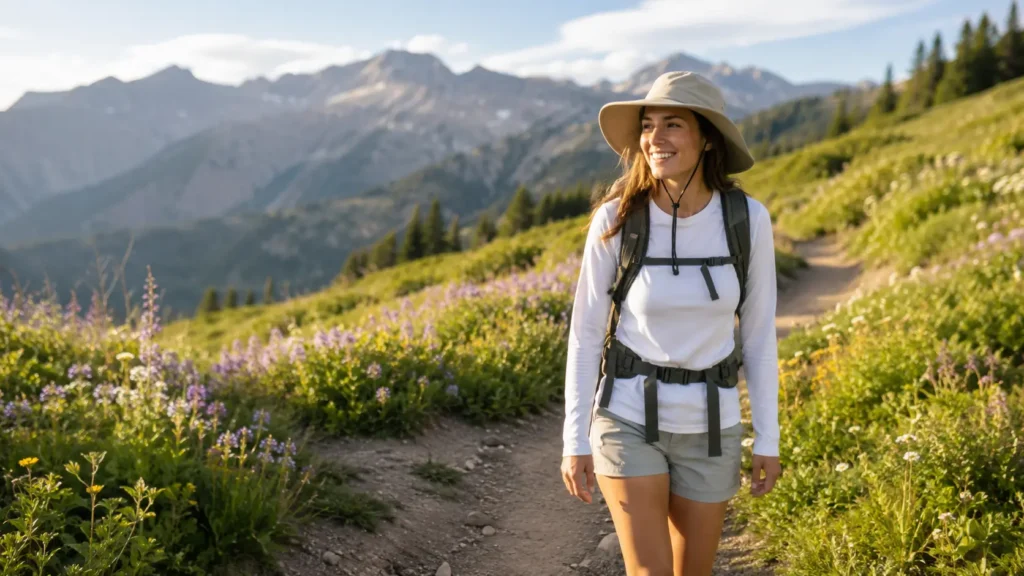
A wide-brim hat is non-negotiable on exposed summer trails. The sun hits the top of your head, face and neck relentlessly on ridgelines and open terrain, and a baseball cap does not protect you adequately — it only shades your face. A wide-brim hat (at least 3 inches all around) shades your face, neck and shoulders simultaneously.
On particularly exposed hikes, a lightweight sun hoody — a thin shirt with an attached hood — protects the back of your neck and scalp without a hat.
Don’t forget sunglasses
Squinting in bright summer light for several hours causes headaches and eye fatigue. UV-protective sunglasses are as important as sunscreen on exposed summer hikes. Wraparound styles offer the best protection on trails where you’re looking at bright reflected surfaces — water, pale rock, open sky.
What to wear on your feet
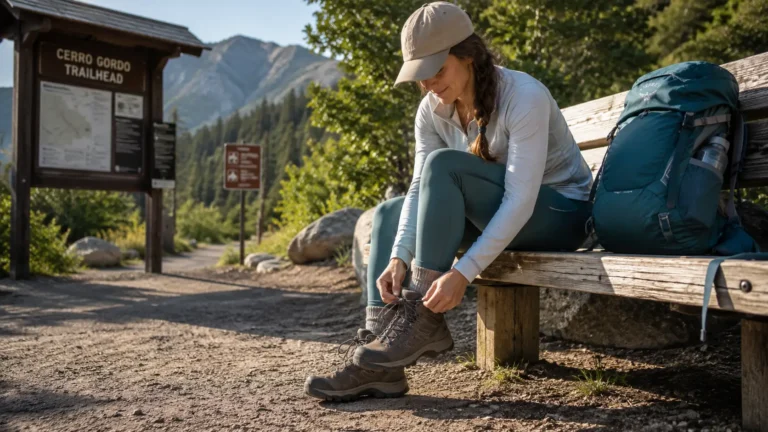
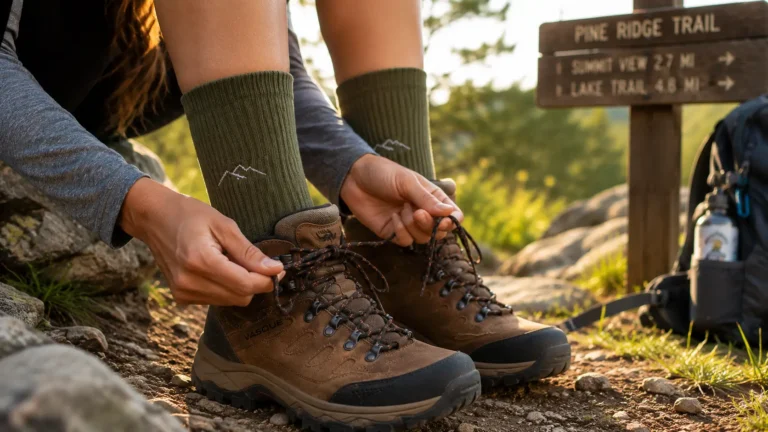
Feet swell more in heat than in cold — sometimes half a size. If you’re hiking in hot weather in boots you normally use in cool conditions, lace them slightly looser and check for pressure points. Trail runners are often better for hot weather hiking — lighter, more breathable, faster drying.
Moisture-wicking hiking socks are more important in summer than any other season. For honest picks at every budget, the guide to the best hiking socks for women covers exactly what to look for. Wet feet from sweat in hot weather blister faster than in any other conditions.
Sunscreen — the thing most hikers underdo
Most beginner women apply sunscreen before leaving the car and don’t reapply. On a 4-hour summer hike, that initial application has worn off well before the hike ends — especially with sweat.
- Apply SPF 30 or higher (SPF 50 recommended) 20–30 minutes before sun exposure
- Reapply every 2 hours, or more frequently if sweating heavily
- Don’t forget: ears, back of neck, back of hands, scalp parting, lips
- Water-resistant formulas hold up better under sweat than standard formulas
On long exposed summer hikes, bring a small tube of sunscreen in your daypack. The difference between one application and two on a 5-hour exposed ridge walk is significant.
Hydration in hot weather — more than you think
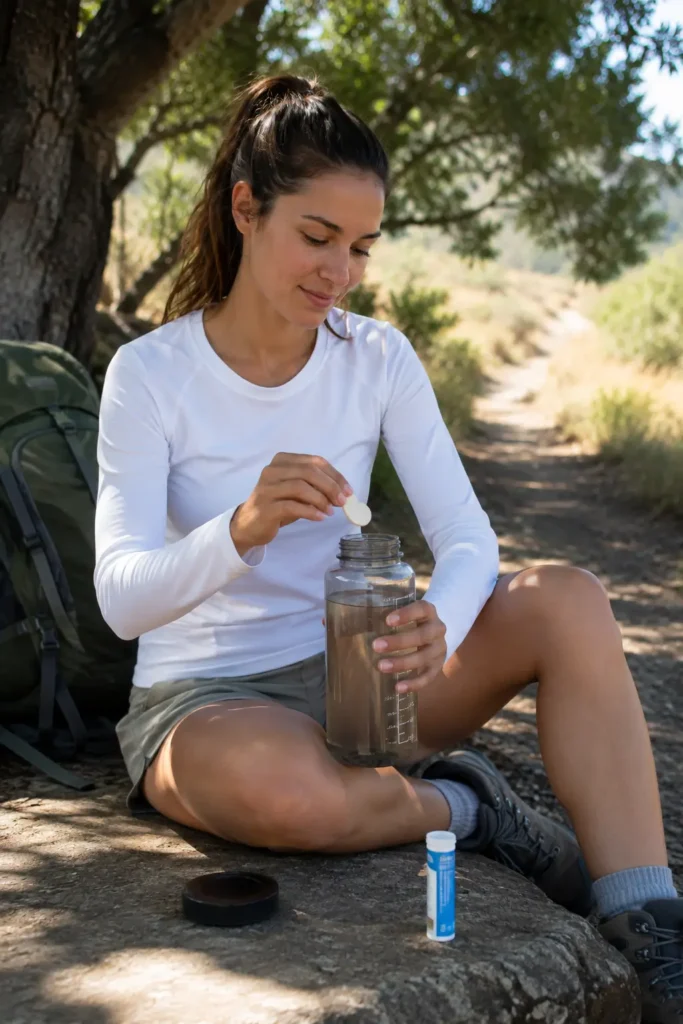
The standard recommendation of 500ml per hour of hiking applies in mild conditions. In hot weather — above 25°C — that increases significantly. As a starting point for hot weather hiking:
- Aim for 750ml–1 litre per hour in temperatures above 25°C
- More on exposed terrain, at altitude, or on steep climbs
- Start drinking before you feel thirsty — thirst is a delayed signal
- Drink small amounts consistently rather than large amounts infrequently
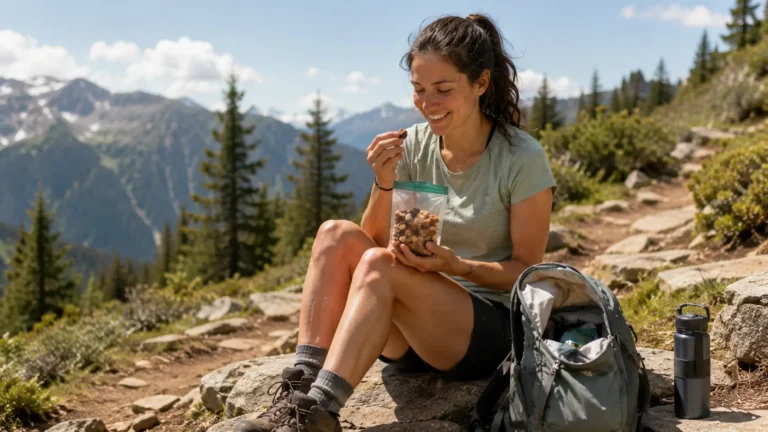
Water alone isn’t enough on long hot hikes. When you sweat heavily you also lose electrolytes — sodium, potassium, magnesium — that regulate how your muscles and nervous system function. On hikes over 2 hours in the heat, add an electrolyte tablet or powder to your water, or eat salty snacks (crackers, jerky, salted nuts) regularly.
Signs you’re dehydrated on a summer hike
- Headache — often the first sign
- Dark yellow or orange urine at breaks
- Dizziness or light-headedness
- Dry mouth and no longer sweating despite heat
- Muscle cramps
If you notice you’ve stopped sweating in hot conditions — this is a serious warning sign. Sweat is your body’s cooling mechanism. If it stops, your core temperature will rise rapidly. Stop immediately, find shade, drink water and electrolytes, and do not continue until you’re sweating normally again.
Know the signs of heat exhaustion — and what to do
Heat exhaustion is a medical condition that can progress to heat stroke if ignored. Every woman hiking in summer needs to know what it looks like.
Heat exhaustion signs
- Heavy sweating
- Cold, pale, clammy skin despite the heat
- Weak but rapid pulse
- Nausea or vomiting
- Muscle cramps
- Tiredness and weakness beyond what the hike should produce
- Dizziness, fainting
- Headache
What to do if you or someone you’re with shows these signs
- Stop hiking immediately — do not try to push through
- Move to shade or the coolest available spot
- Lie down and elevate legs if possible
- Remove excess clothing and layers
- Drink cool water slowly — small sips
- Apply cool water to skin, especially neck, wrists, armpits
- If symptoms don’t improve within 15–20 minutes or worsen — this is an emergency, call for help
Heat stroke — the emergency version
Heat stroke is when the body’s temperature regulation fails completely. It’s a medical emergency. Signs: high body temperature (above 40°C), hot and dry skin (no longer sweating), confusion, slurred speech, loss of consciousness. Call emergency services immediately.
Plan your route for summer
Not all trails are equal in hot weather. A trail that’s pleasant in May can be brutal in July if it’s exposed or south-facing.
- Choose north-facing trails where possible — they get less direct sun
- Look for trails with tree cover — forests and river valleys stay significantly cooler
- Avoid south-facing ridgelines and open plateaus on the hottest days
- Check if the trail has water sources — knowing where you can refill means you can carry less
- Consider altitude — higher elevation means cooler temperatures, often by 5–10°C compared to the valley
What to bring for hot weather hiking
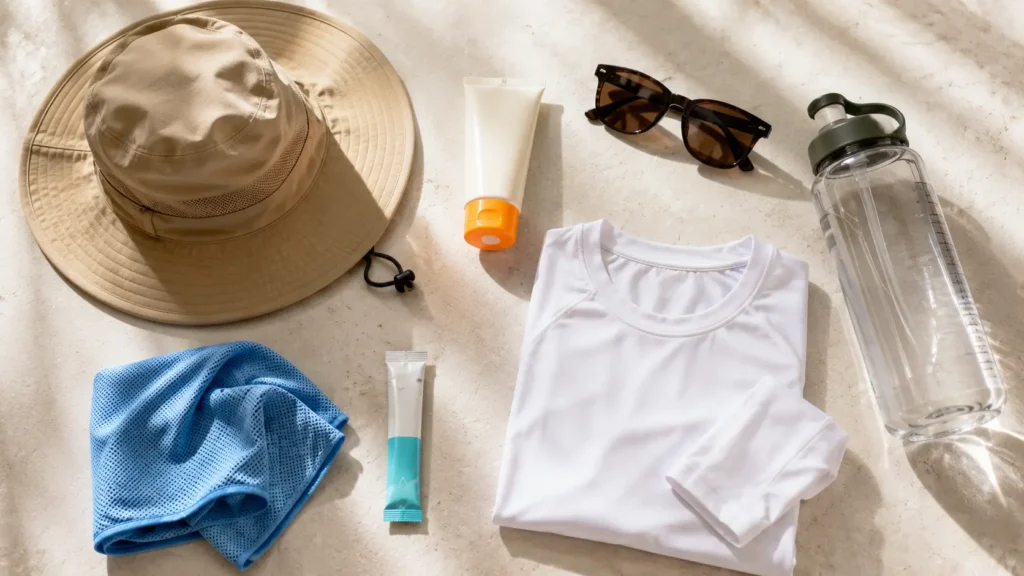
- More water than you think — at least 2 litres, ideally more
- Electrolyte tablets or powder
- SPF 50 sunscreen + lip balm with SPF
- Wide-brim hat
- Sunglasses with UV protection
- Lightweight long-sleeve shirt
- Light-coloured moisture-wicking clothing throughout
- A small cooling towel — wetting it and placing on neck/wrists helps
- Salty snacks alongside your regular trail food
- A fully charged phone and downloaded offline map
The honest truth about hiking in extreme heat
Some days are simply too hot to hike safely. When temperatures are forecast above 38°C (100°F), especially with high humidity, the risk of heat illness rises dramatically even with perfect preparation.
Knowing when not to hike is as important as knowing how to hike. There’s no shame in changing plans when the weather makes a trail dangerous. The trail will be there on a cooler day. For more on staying safe on the trail as a beginner woman, the solo hiking safety guide covers the key preparation steps.
On borderline days — hot but manageable — aim to be completely finished by 10am. Start before sunrise, move efficiently, and get off exposed terrain before the heat peaks. Short hikes in the early morning are dramatically safer and more enjoyable than ambitious hikes that extend into the midday heat.
Final thoughts
Summer hiking rewards early risers. The light is extraordinary, the trails are often quieter before 8am, and the sense of having the mountain to yourself before the heat arrives is genuinely special.
Get the clothing right, start early, drink more than you think you need, and know the difference between feeling hot and being in real trouble. Summer hiking at its best is some of the most beautiful hiking there is — just approach it with more preparation than you’d bring to a mild spring day.
FAQs
Wear lightweight moisture-wicking fabrics in light colours — white, pale grey or khaki. A lightweight long-sleeve shirt protects better than a vest top by shading skin from direct sun. Add a wide-brim hat, UV-protective sunglasses, and apply SPF 50 sunscreen with reapplication every 2 hours. Avoid cotton in any layer.
In temperatures above 25°C, aim for 750ml to 1 litre per hour of hiking — significantly more than the standard 500ml recommendation for mild conditions. Add electrolytes on hikes over 2 hours. Drink consistently before you feel thirsty — thirst is a delayed signal that you’re already slightly dehydrated.
Heavy sweating, cold and clammy skin, weak rapid pulse, nausea, muscle cramps, dizziness, and tiredness beyond what the hike should produce. Stop immediately, move to shade, drink cool water slowly, and cool the skin. If symptoms don’t improve in 15–20 minutes or worsen, seek emergency help.
At or before sunrise for hot summer days. The goal is to be off exposed terrain before noon when temperatures and sun intensity peak. On very hot days, aim to be completely finished by 10am. Starting late on a hot day significantly increases heat illness risk and makes the hike far more unpleasant.
30°C (86°F) is manageable with proper preparation — early start, adequate water (1 litre per hour), electrolytes, sun protection, light-coloured moisture-wicking clothing, and shade cover on the trail. Avoid exposed south-facing ridgelines in direct midday sun. Above 38°C (100°F) with high humidity, consider rescheduling to a cooler day.

Intermediate hiker sharing real trail experience — honest gear picks, beginner-friendly guides, no filler.