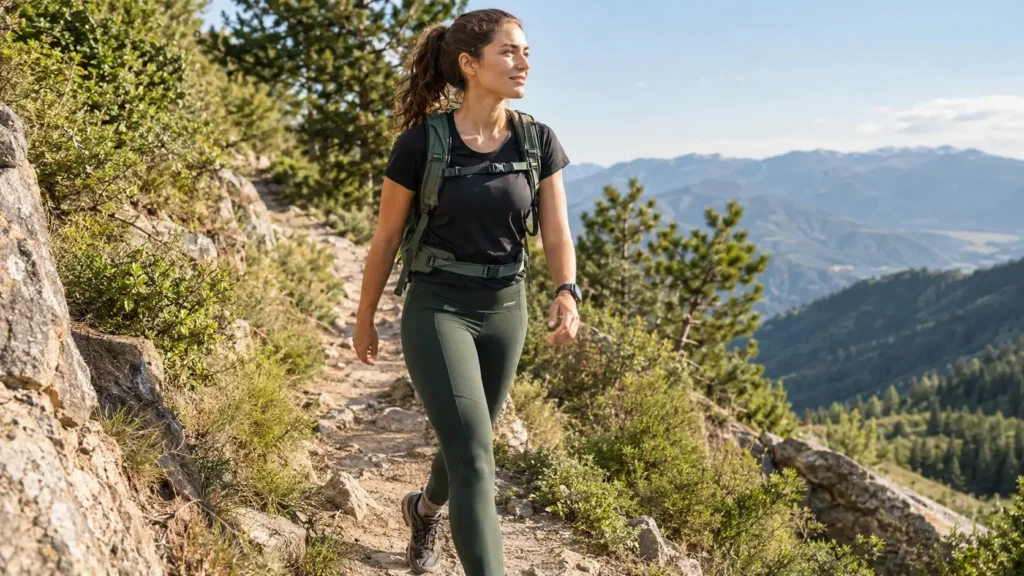
Most hiking guides tell you to eat complex carbohydrates and lean protein. That’s true but not particularly useful if you’re standing in your kitchen at 7am trying to figure out what to have before a trail that starts at 8.
This guide is the practical version — specific foods, real timing, and honest answers to the questions beginner women actually have: what if you’re not hungry before a hike, what do you actually snack on mid-trail, does it matter what you eat after, and what happens if you don’t eat enough.
Why what you eat matters more than you think
Hiking burns significantly more calories than most people expect — a moderate three-hour hike can burn 900–1,200 calories depending on your weight and the terrain. For the full breakdown of how many calories hiking burns by weight and trail type, see the guide to calories burned hiking. Your body needs fuel to do that efficiently.
The main thing beginner hikers fear is ‘bonking’ — the sudden, complete energy crash that happens when your blood sugar drops and your glycogen stores run out. It feels like hitting a wall: heavy legs, foggy brain, sudden exhaustion that makes the trail feel twice as long. The good news is bonking is almost entirely preventable with basic nutrition planning.
What to eat before a hike
The evening before a long hike
If you’re doing a hike over 2 hours, what you eat the night before makes a real difference. Eat a normal dinner with a good portion of carbohydrates — pasta, rice, potatoes, bread — plus protein. This fills your glycogen stores so you start the hike with a full tank.
Don’t eat anything unusual or heavy the night before. The trail is not the place to find out your stomach doesn’t like something new.
The morning of: 1–3 hours before
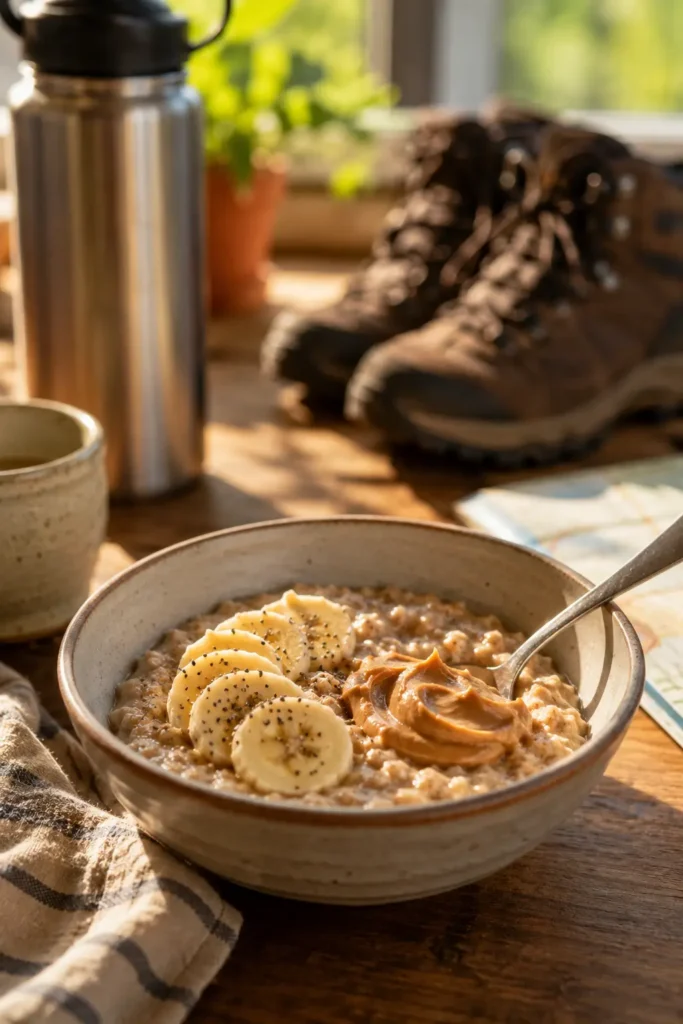
Eat a proper breakfast 1–3 hours before your hike starts. The timing matters — eating too close to the hike can leave you feeling heavy and uncomfortable on the first climb.
What to eat:
- Oatmeal with a banana and peanut butter — the classic pre-hike breakfast for good reason. Slow-release carbs, potassium for muscle function, healthy fat for sustained energy
- Whole grain toast with eggs — protein and complex carbs, light and easy to digest
- Greek yogurt with granola and berries — quick, high in protein, works well for early starts
- Porridge with nuts and honey — warming option for cold morning hikes
What to avoid:
- High-sugar cereals — gives you a quick spike followed by a crash on the first climb
- Very heavy or greasy food — hard to digest when your body is working hard
- Anything your stomach doesn’t know well — not the morning to experiment
What if you’re not hungry before a hike?
Common for early morning starts. Don’t force a big meal — instead eat something small: a banana, a handful of nuts, a piece of toast. Something is better than nothing. You can make up the calories with snacks on trail, but starting on a completely empty stomach on a long hike is asking for trouble.
What to eat during a hike
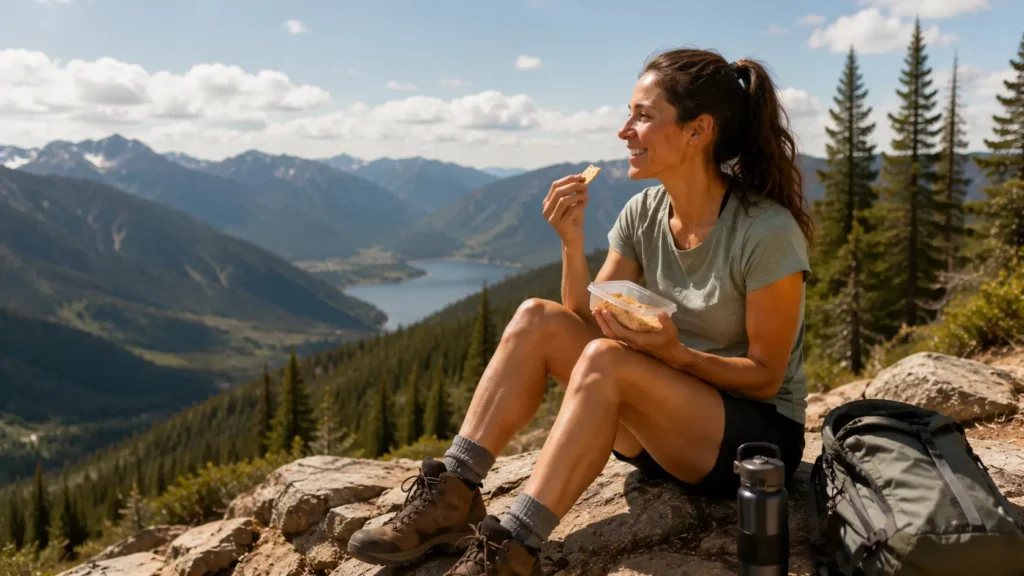
On hikes under 2 hours on easy terrain, you probably don’t need to eat mid-trail. Water is enough.
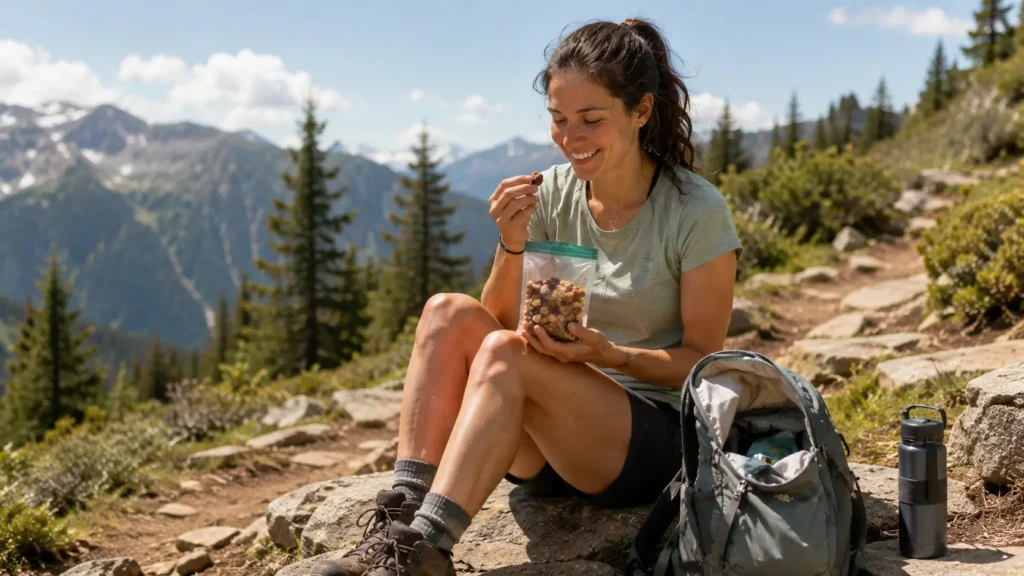
On hikes over 2 hours, you do need to eat — and the key is eating little and often rather than waiting until you’re hungry. By the time you feel hungry on a hike, your energy is already dropping. Aim for a snack every 60–90 minutes.
The best trail snacks
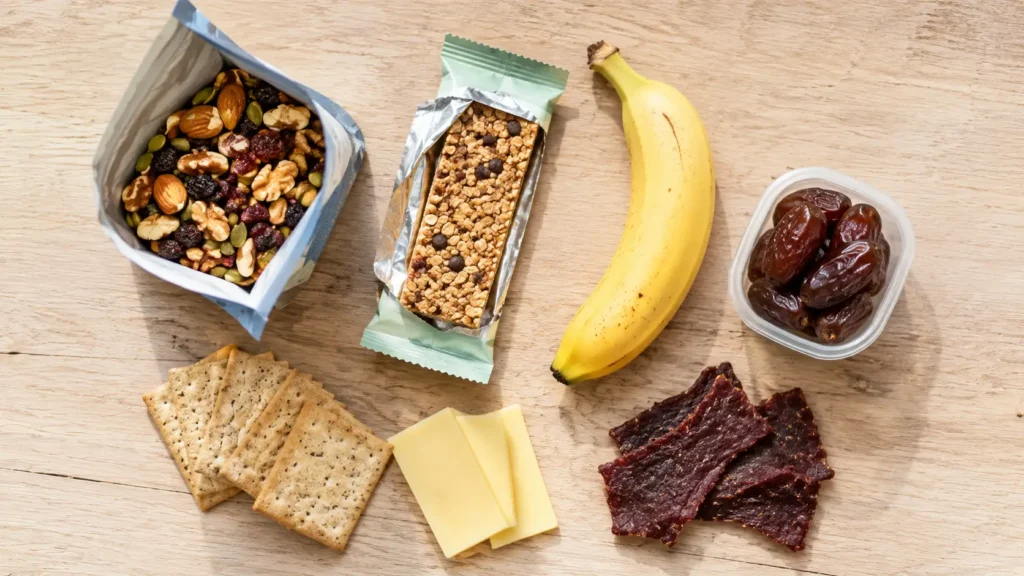
Good trail snacks share two qualities: they don’t need refrigeration and they hold up in a daypack. Here’s what actually works:
| Snack | Why it works | Watch out for |
| Trail mix (nuts + dried fruit) | Sustained energy, portable, no prep | Goes stale fast in heat — reseal well |
| Energy bars (Larabar, Clif, Kind) | Convenient, calorie-dense, many flavours | Some too sugary — check the label |
| Peanut butter crackers | Protein + carbs combination, very satisfying | Can crumble — pack in a small container |
| Banana or apple | Natural sugars, water content helps hydration | Bananas bruise easily — pack carefully |
| Cheese and crackers | Protein and fat for sustained energy | Skip in very hot weather |
| Dates or dried mango | Quick energy boost, light to carry | High sugar — don’t overdo it |
| Homemade energy balls | Customisable, whole food ingredients | Make ahead — needs prep time |
| Jerky or biltong | High protein, very light, long-lasting | High sodium — drink extra water |
What not to eat on trail
- Anything that melts — chocolate, certain bars, cheese in hot weather
- Heavy food mid-hike — sandwiches are fine but a full meal slows you down
- Alcohol — dehydrating and dangerous on trail
- Food that requires utensils unless you’re stopping for a proper lunch break
Hydration — the thing most beginners underdo
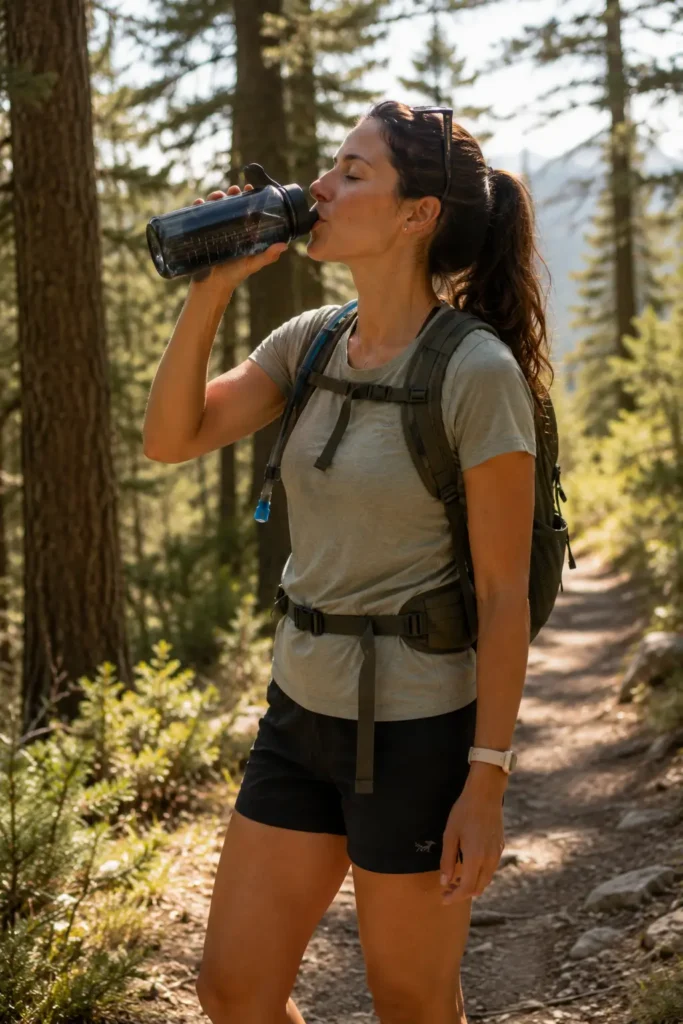
Dehydration is a bigger performance issue than food on most day hikes. By the time you feel thirsty, you’re already slightly dehydrated.
A practical rule: 500ml (about half a litre) of water per hour of moderate hiking. More in hot weather or on steep terrain. For a 3-hour hike, that means at least 1.5 litres carried — ideally 2 litres.
Signs you’re not drinking enough: headache, fatigue, dark urine, difficulty concentrating. These often get mistaken for hunger — drink water first and see if the feeling passes.
Electrolytes matter on longer or hotter hikes. A small packet of electrolyte powder or a salty snack (crackers, jerky) helps replace what you lose through sweat.
What to eat after a hike
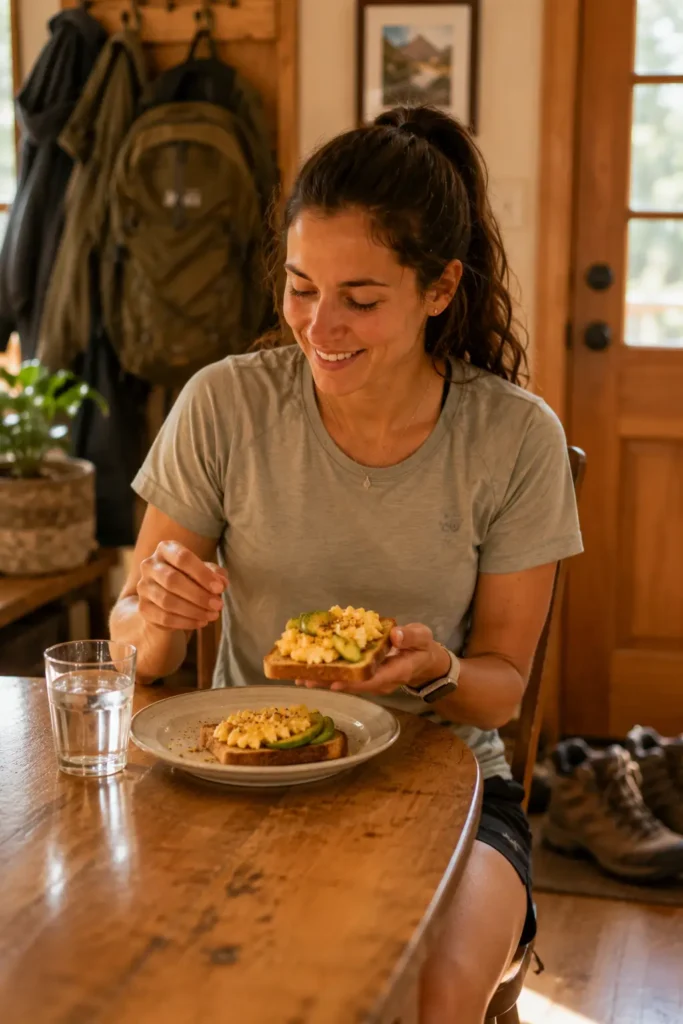
Post-hike nutrition is the part most beginner women either overthink or completely ignore. The honest version: eat a proper meal within about an hour of finishing your hike, and make sure it includes protein and carbohydrates.
Why the post-hike window matters
Your muscles are most receptive to repair and recovery in the hour after exercise. Eating protein and carbs in this window speeds up recovery — meaning less soreness the next day and faster adaptation to hiking fitness.
What to eat after a hike
- Eggs on toast — protein and carbs, quick to make when you get home
- Smoothie with protein, fruit and milk or yogurt — good if you’re not hungry for a full meal immediately
- Rice or pasta with chicken or beans — a proper recovery meal for longer hikes
- Greek yogurt with granola and fruit — lighter option if the hike wasn’t too long
The post-hike hunger is real — a long hike makes most people ravenous. This is completely normal. Don’t be surprised if you’re hungrier than expected, and don’t feel guilty about it. You burned significantly more calories than a normal day.
Rehydrate before you eat
Drink 500ml–1 litre of water when you finish a hike before you focus on food. Your body will have lost more fluid than you realise, and rehydrating first helps with the hunger response.
What about supplements and gels?
Short answer: you don’t need them for day hikes.
Energy gels, electrolyte drinks and sports supplements are designed for endurance athletes doing multi-hour high-intensity exercise. For a beginner woman doing 2–4 hour day hikes, real food works better and costs less. A banana, some trail mix and adequate water handles everything most day hikes demand.
The one exception: if you’re hiking in very hot weather for 4+ hours, an electrolyte tablet in your water is genuinely useful. That’s it.
A simple hiking food plan by hike length
| Hike Length | Before | During | After |
| Under 2 hours | Light breakfast or nothing if early | Water only is fine | Normal meal when home |
| 2–3 hours | Proper breakfast 1–2 hours before | 1 snack at halfway point | Protein + carbs within 1 hour |
| 3–5 hours | Good breakfast 2 hours before | Snack every 60–90 minutes | Proper recovery meal |
| 5+ hours | Large breakfast, carb-heavy dinner night before | 200–300 cal per hour of hiking | Large protein + carb meal, rehydrate first |
Final thoughts
Hiking nutrition doesn’t need to be complicated. Eat a proper breakfast, bring enough snacks to eat every hour or so on longer trails, drink more water than you think you need, and have a decent meal with protein after.
The biggest mistakes beginner women make: skipping breakfast, not bringing enough snacks, and not drinking enough water. Get those three things right and your hike will feel dramatically better than if you don’t.
Real food, eaten consistently, is all you need. For a complete list of everything to pack for a day hike including food and snacks, the day hiking packing list for women covers every item. Leave the gels and supplements for the ultramarathoners.
FAQs
Eat 1–3 hours before your hike starts. Good options: oatmeal with banana and peanut butter, whole grain toast with eggs, or Greek yogurt with granola. Aim for a combination of complex carbohydrates and protein. Avoid high-sugar foods, very heavy meals, or anything your stomach doesn’t know well.
Trail mix (nuts and dried fruit), energy bars, peanut butter crackers, banana, cheese and crackers, dates and jerky are all excellent trail snacks. The best snacks are calorie-dense, portable, don’t need refrigeration and don’t require preparation. Eat a small snack every 60–90 minutes on hikes over 2 hours.
For hikes under 2 hours on easy terrain, water is usually enough. Eat a light breakfast beforehand and you’ll be fine. For hikes over 2 hours, bring snacks and eat before you feel hungry — waiting until you’re hungry means your energy is already dropping.
Eat a meal with protein and carbohydrates within an hour of finishing your hike. Eggs on toast, rice with chicken, or a protein smoothie all work well. Rehydrate first — drink 500ml–1 litre of water before you eat. Post-hike hunger is normal and expected after a long hike.
For short easy hikes, a completely empty stomach is manageable. For hikes over 2 hours, hiking on an empty stomach significantly increases your risk of bonking — the energy crash that happens when blood sugar drops and glycogen stores run out. Always eat something before a longer hike, even if it’s just a banana and some nuts.

Intermediate hiker sharing real trail experience — honest gear picks, beginner-friendly guides, no filler.