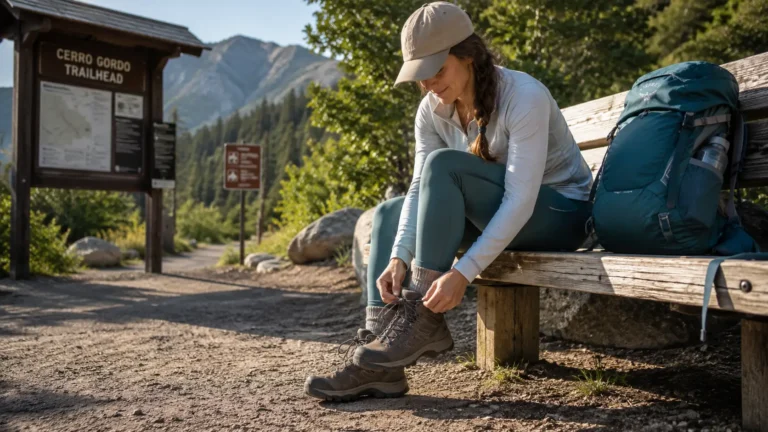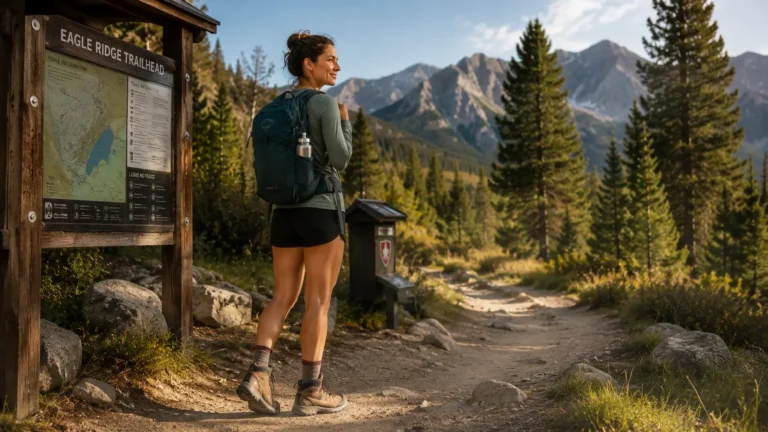
The most common question beginner women ask before their first real hike isn’t about gear or routes — it’s “am I fit enough for this?”
The honest answer is: you probably don’t need to be as fit as you think. Most established day hike trails are accessible to people who walk regularly and aren’t in the worst shape of their lives. But there’s a difference between surviving a hike and actually enjoying it — and that difference comes down to a few weeks of simple preparation.
This guide is for the woman who wants to hike further and feel stronger on trail, without signing up for a gym membership or overhauling her entire lifestyle. No complicated training plans. No equipment required. Just the specific things that actually help beginners feel better on trail.
Do you actually need to train before hiking?
For a short, easy hike on a flat trail — probably not. If you walk regularly and can manage 30–45 minutes without stopping, you’re ready for most beginner trails right now.
But if you want to do longer hikes (3+ hours), hikes with significant elevation gain, or build enough fitness that hiking feels enjoyable rather than survival — some targeted preparation makes a real difference.
The good news: you don’t need months of training. A consistent 4–6 week routine of simple exercises done 3–4 times per week is enough to transform how a hike feels. For a better understanding of what hiking actually does to your body, the guide to calories burned hiking explains exactly what muscles work and how hard. The goal isn’t to get fit in the general sense — it’s to prepare the specific muscles and cardiovascular system that hiking actually uses.
What hiking actually demands from your body
Before training for something, it helps to understand what it actually asks of you. Hiking is not like running or gym work — it has its own specific demands:
- Sustained low-to-moderate cardio effort for 2–6 hours — your cardiovascular system needs to work steadily, not in short intense bursts
- Quad strength for uphill climbs — the front of your thighs take the brunt of ascents
- Glute and hamstring strength for power and endurance — essential for sustained climbing
- Calf strength and ankle stability for uneven terrain — tired calves make the last hour of a hike miserable
- Knee stability for descents — going downhill is harder on your knees than going up, especially when tired
- Core stability for carrying a daypack — a weak core means a sore lower back after a few hours with a pack on
Most beginner fitness plans focus on all of these in a complicated way. The simpler approach: pick exercises that directly mimic what hiking does, and add some cardio to build endurance. That’s essentially it.
The exercises that actually help beginner hikers
All of these can be done at home with no equipment. Start with bodyweight only and focus on form rather than reps.
Step-ups
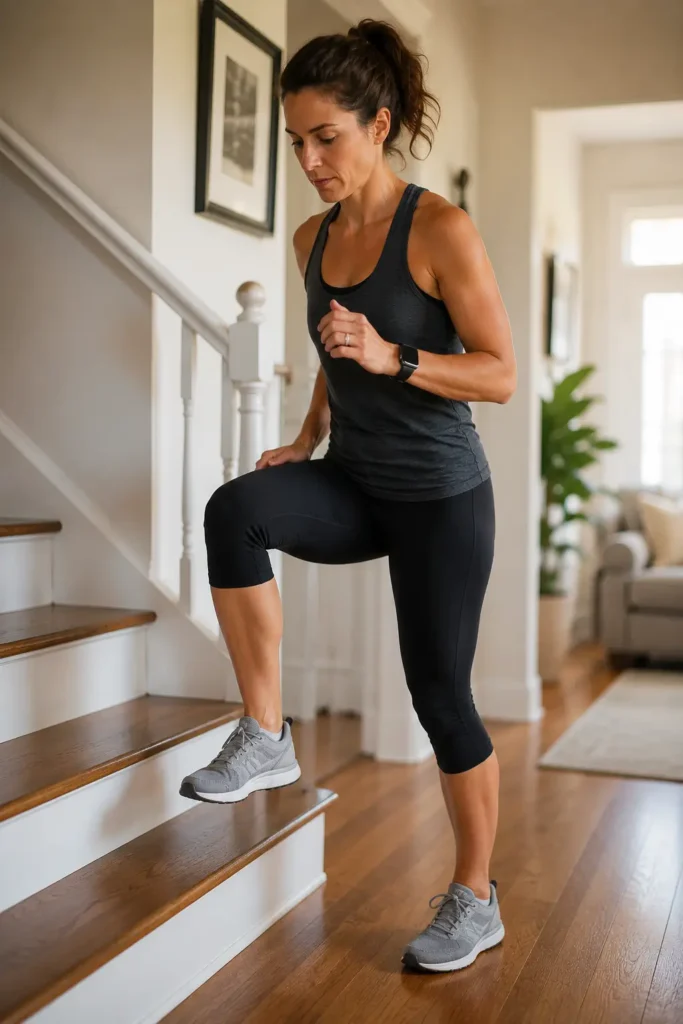
The single best exercise for hiking preparation. Step up onto a stair or sturdy box with one foot, drive through your heel, stand tall, then step down. This directly mimics the motion of hiking uphill and builds the quads, glutes and calves you need most.
Start with: 3 sets of 10 each leg. Add a loaded daypack once comfortable for more realistic simulation.
Squats
Builds the lower body strength for both climbing and descending. Stand with feet shoulder-width apart, lower as if sitting into a chair, keep your chest up and knees over your toes. Come back up through your heels.
Start with: 3 sets of 12–15 bodyweight squats. Add a pack or hold a heavy object when bodyweight becomes easy.
Lunges
Better than squats for single-leg balance and stability — essential for uneven terrain. Step forward, lower your back knee toward the ground, then push back up. The wobble you feel is your ankle stabilisers working — that’s exactly what you need.
Start with: 3 sets of 10 each leg. Add a small pack to increase difficulty.
Calf raises
Underrated and often skipped. Stand on the edge of a step, lower your heels below the step level, then rise up onto your toes. Strong calves make the last hour of a long hike dramatically more comfortable.
Start with: 3 sets of 15–20. Do them single-leg when two legs becomes easy.
Glute bridges
Lie on your back with knees bent, feet flat on the floor. Push your hips up until your body forms a straight line from shoulders to knees. Hold briefly then lower. Builds glute strength for climbing and protects the lower back under pack weight.
Start with: 3 sets of 15. Add weight across your hips when bodyweight becomes easy.
Plank
The most efficient core exercise for hikers. A strong core means better posture under pack weight and less lower back fatigue. Hold a forearm plank with your body in a straight line — no sagging hips, no raised backside.
Start with: 3 rounds of 20–30 seconds. Build toward 60 seconds.
Incline walking
If you have access to a treadmill with incline, 20–30 minutes at 8–12% grade is one of the most direct hiking simulations available. If not, find a hilly walk near home or walk up and down stairs repeatedly. This builds cardiovascular endurance and leg strength simultaneously.
The cardio piece — what actually builds hiking endurance

Hiking is fundamentally a cardio activity done at a steady moderate effort for hours. The best way to train for it is to do exactly that — sustained moderate-effort activity, not intense intervals.
Walking is the most underrated training tool for hiking. Long brisk walks — 45–90 minutes at a pace that makes conversation possible but not easy — build exactly the cardiovascular base you need. Add hills where you can find them.
Other options that work well: cycling, swimming, the elliptical. Running works but is higher impact than hiking requires — if you enjoy it, great, but it’s not necessary.
What doesn’t help much: short intense HIIT workouts. Hiking never requires a 30-second sprint. It requires 4 hours of steady effort — so train accordingly.
A simple 6-week training plan
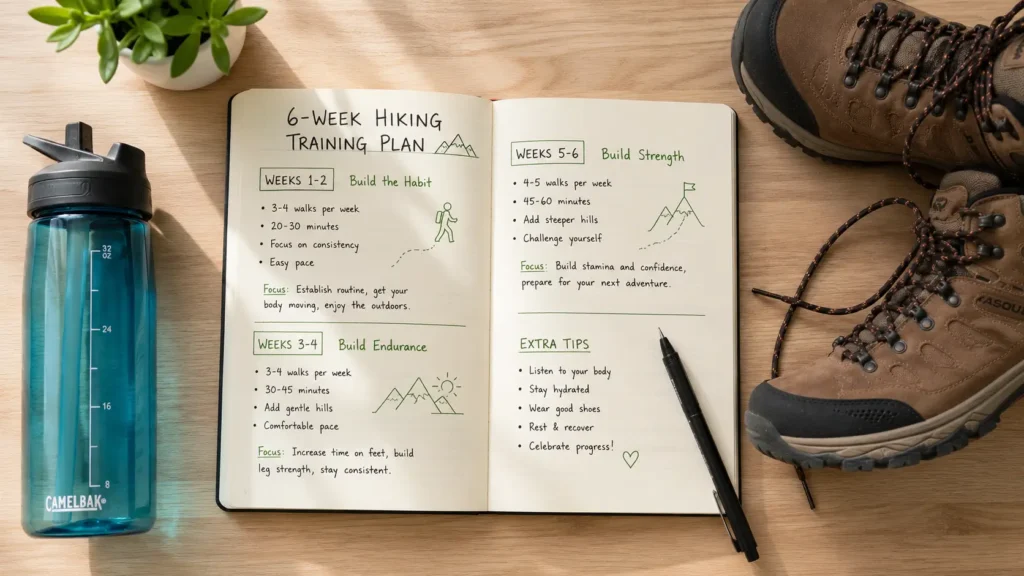
This plan assumes you’re starting from a low-moderate fitness base — you walk occasionally but don’t exercise regularly. Adjust based on how you feel. The goal is consistent effort, not perfection.
| Period | What to do |
| Weeks 1–2 | 3 days per week: 20 min brisk walk + step-ups (3×10), squats (3×12), plank (3×20 sec). 1 longer walk of 45–60 min on a separate day. |
| Weeks 3–4 | 3 days per week: 30 min brisk walk (add hills where possible) + step-ups (3×12), lunges (3×10 each), squats (3×15), calf raises (3×15), glute bridges (3×15), plank (3×30 sec). 1 longer walk of 60–75 min. |
| Weeks 5–6 | 3 days per week: 35–40 min incline walk or hilly walk + full circuit (step-ups, lunges, squats, calf raises, bridges, plank). 1 proper hike of 1.5–2 hours as your long day. This replaces the long walk — it IS the training. |
| Week 7+ | You’re ready. Hike regularly. The trail is better training than any routine. |
If 3 days feels like too much — 2 days is fine. Consistency over 6 weeks matters more than following the plan perfectly.
Signs you’re getting trail-ready
- Your usual brisk walk feels noticeably easier than it did 3 weeks ago
- You can do step-ups for 10 minutes without significant fatigue
- Your first proper hike in week 5 or 6 feels more comfortable than expected
- You recover faster the day after a walk or hike
These are the signals that matter — not how many reps you’re doing or whether you hit a specific number on a scale.
Training for longer and harder hikes
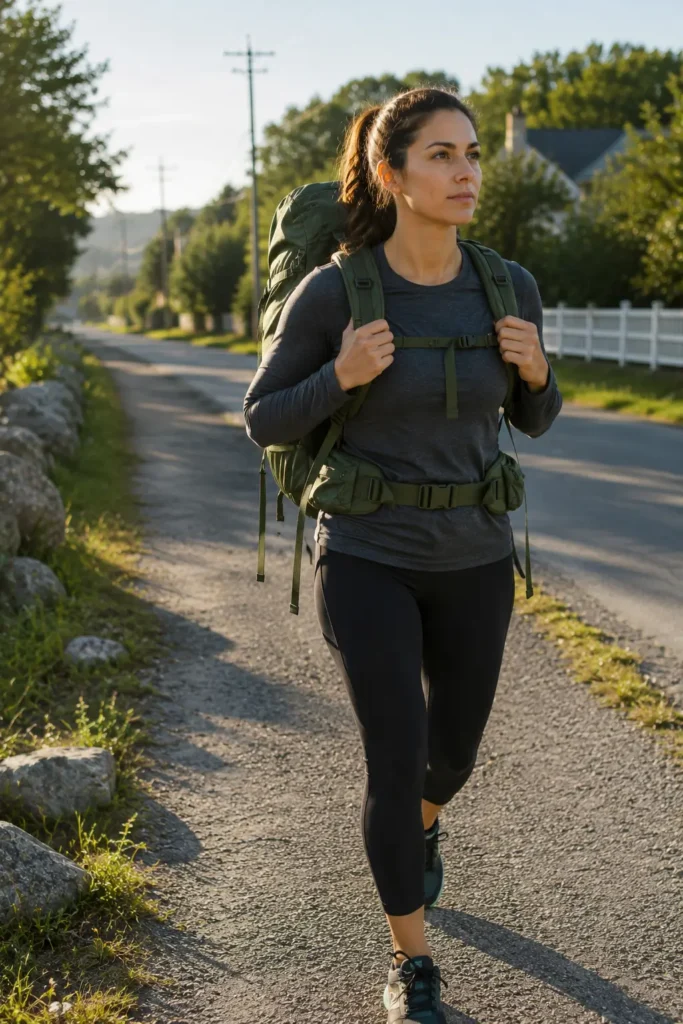
Once you can comfortably complete a 2-hour hike, building to longer ones is mostly a matter of gradual extension — not a completely different training approach.
- Add 20–30 minutes to your longest hike each week, not more
- Start hiking with a loaded daypack so your body adapts to the weight
- Include hikes with elevation gain — flat terrain doesn’t prepare you for hills
- The day after a long hike, do something easy — a gentle walk, stretching, or nothing. Recovery is part of the training.
What to do the week before your first big hike
Most guides say to taper — reduce training load in the week before a big hike to arrive with fresh legs. For beginner women doing day hikes, this is good advice:
- Reduce exercise volume by about half
- Do one short easy walk 2–3 days before the hike
- Prioritise sleep — your body repairs and strengthens during sleep more than during training
- Don’t do a long training session the day before — save your legs
The most important thing
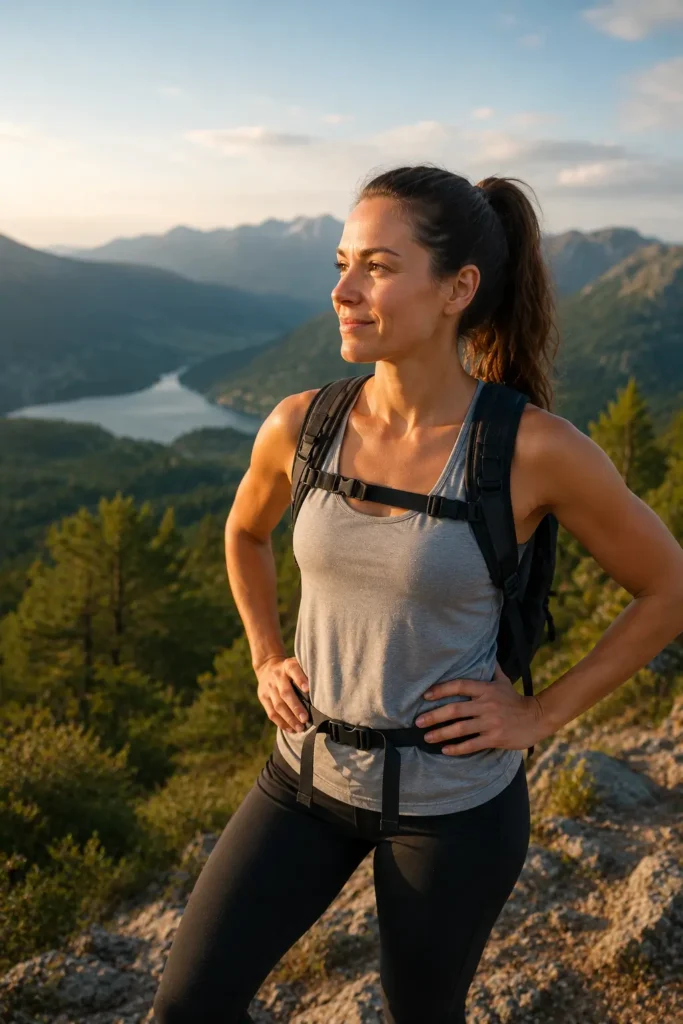
The best training for hiking is hiking. Every plan, every exercise, every gym session is just preparation for time on the actual trail. The fitness you build from regular hiking compounds faster than anything you can do in a living room.
Start with shorter trails and build up. The trail teaches you things a training plan can’t — how to manage your effort on ascents, how to pace yourself, how to read your own body’s signals. For more practical trail advice for beginner women, the beginner hiking tips guide covers everything from pacing to what to bring. That knowledge comes from experience, not exercise.
Don’t wait until you feel fit enough. Start hiking now, at whatever level you’re at. If you’re not sure which trail to start with, the guide to how to choose a hiking trail as a beginner woman helps you find the right level. Train alongside it, not instead of it.
FAQs
For most beginner women, 4–6 weeks of consistent training 3–4 times per week is enough to feel noticeably stronger and more comfortable on moderate day hikes. You don’t need to be perfectly fit before you start hiking — start now and train alongside it.
No. The most useful hiking exercises — step-ups, squats, lunges, calf raises, glute bridges and planks — can all be done at home with no equipment. Add long hilly walks for cardio and you have everything you need.
Gradually. Add 20–30 minutes to your longest hike each week rather than jumping dramatically in distance or elevation. Start hiking with a loaded daypack so your body adapts to the weight. Include hikes with some elevation gain — flat trails don’t prepare you for hills.
For easy short hikes, yes. For longer hikes with elevation gain, walking alone isn’t quite enough — you need some targeted leg and core strength work too. But a combination of regular brisk walks (especially hilly ones) and simple bodyweight exercises covers most of what beginner hikers need.
Step-ups are the most directly useful — they mimic uphill hiking exactly. After that: squats and lunges for lower body strength, calf raises for ankle endurance, glute bridges for climbing power, and planks for core stability. All doable at home with no equipment.

Intermediate hiker sharing real trail experience — honest gear picks, beginner-friendly guides, no filler.