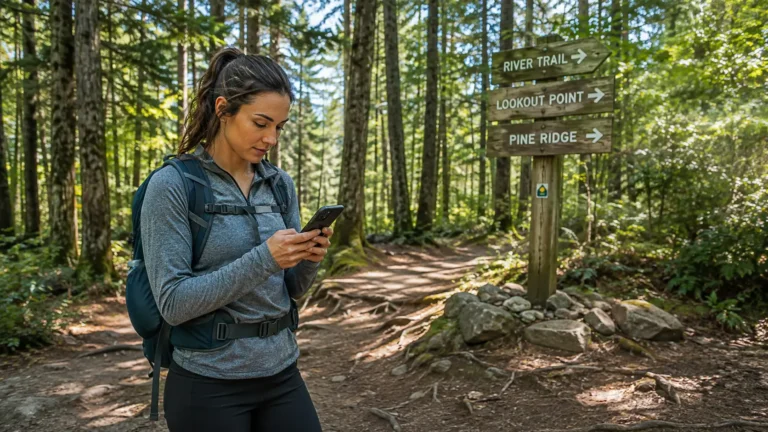
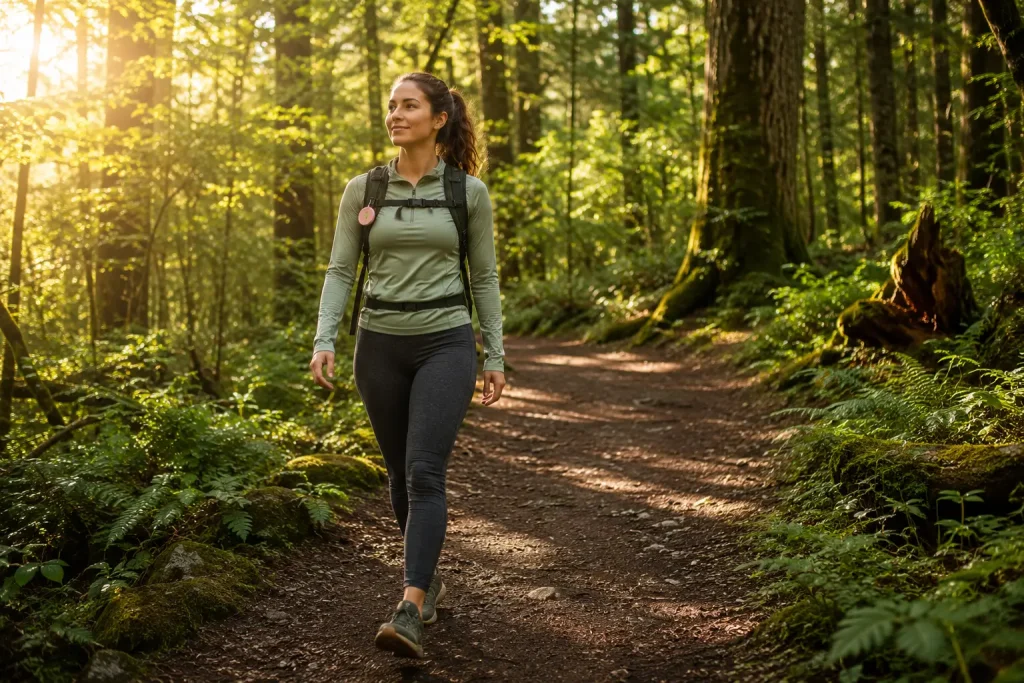
The first time I hiked alone, I told three people where I was going, downloaded the trail map twice, and checked the weather forecast so many times my phone started suggesting it without me opening the app. I was nervous. Not because I thought something would happen, but because I’d spent years being told that hiking alone as a woman was something to be careful about.
That was several years and dozens of solo hikes ago. I still tell people where I’m going. I still download the map. But the nervousness is gone — replaced by something I didn’t expect the first time out: the specific, quiet satisfaction of moving through a trail entirely on your own terms.
Solo hiking as a woman is safe. Not reckless-and-hope-for-the-best safe — genuinely safe, when you approach it the right way. This guide covers everything you actually need to know to get out there confidently and come back having had a great time.
Is Solo Hiking Safe for Women?
The honest answer is yes — with the same caveat that applies to almost everything: preparation matters.
Millions of women hike alone every week. On well-maintained day hiking trails, the risks are the same as any other outdoor activity — weather, uneven terrain, fatigue, getting turned around. These are manageable with basic preparation. They are not reasons to stay home.
The risks that get talked about most — encountering dangerous people on the trail — are statistically rare on popular, well-used trails during daylight hours. The much more common solo hiking risks are twisted ankles, dehydration, getting lost, and underestimating how long a trail takes. All of which are preventable.
That said, solo hiking does require a bit more preparation than hiking with a group. When you’re on your own, you are your own safety net. This guide is about building that net properly.
Choose the Right Trail for Solo Hiking
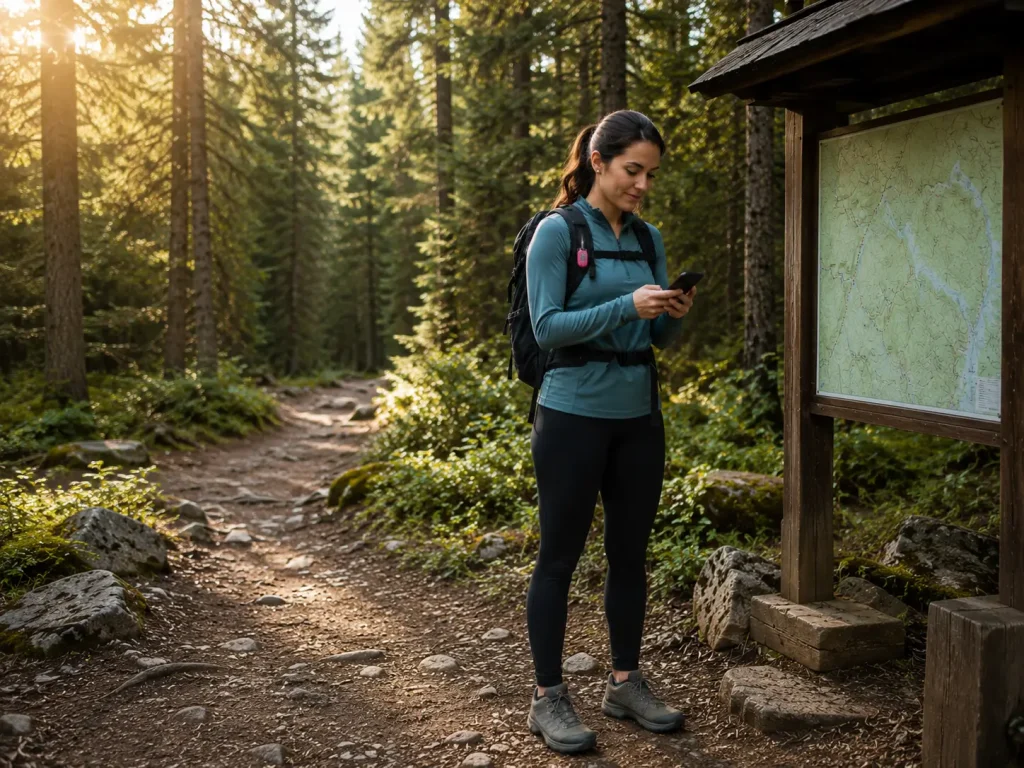
Trail selection is the single most important safety decision you make before a solo hike — especially in the beginning. If it’s your first time hiking altogether, start with our day hiking essentials for beginners before going solo — it covers everything you need to know about your first hike.
Start with Well-Used Trails
A well-used trail means other hikers around you, maintained path markings, and usually good mobile signal. For your first solo hikes, choose trails where you’re unlikely to be completely alone for extended periods. AllTrails reviews will tell you how busy a trail typically is — look for trails marked as popular or well-traveled.
This isn’t about being scared of solitude. It’s about building confidence in stages. Busy trail first, quieter trail next, remote trail once you know what you’re doing.
Check the Trail Before You Go
Look at the trail profile — elevation gain, distance, estimated time. Add 25% to whatever time estimate you find online. Trails always take longer than the estimate, especially on your first visit or if you stop to look at anything.
Read recent reviews on AllTrails for current conditions. A trail that looks straightforward in summer can be muddy, slippery or partially washed out in spring. Recent reviews from the past few weeks are far more useful than general star ratings.
Avoid Very Remote Trails Alone as a Beginner
There’s a difference between a quiet trail and a remote trail. Quiet means fewer people. Remote means if something goes wrong, help is genuinely far away. Save remote trails for when you have more experience and ideally a hiking partner.
Tell Someone Your Plan — Every Single Time
This is the non-negotiable rule of solo hiking and it costs nothing.
Before every solo hike, tell at least one person:
- The exact trail name and location
- What time you’re starting
- What time you expect to be back
- What to do if they haven’t heard from you by a specific time (finish time plus two hours)
This person doesn’t need to do anything except know. If something goes wrong — a sprained ankle, getting disoriented, phone dying — having someone who knows your plan and will act if they don’t hear from you is genuinely life-saving infrastructure.
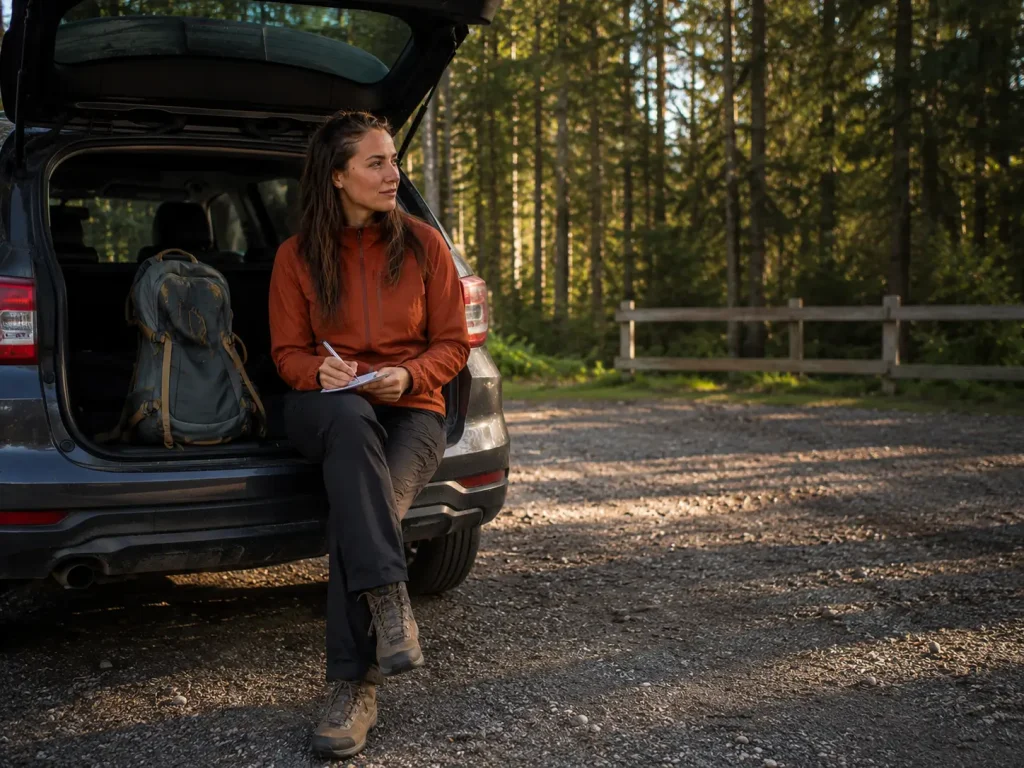
Leave a Note in Your Car
Write the trail name, your start time and your expected return time on a piece of paper and leave it visible on your dashboard. If anything happens, this gives emergency services immediate information about where you went and when.
What to Carry When Hiking Alone as a Woman
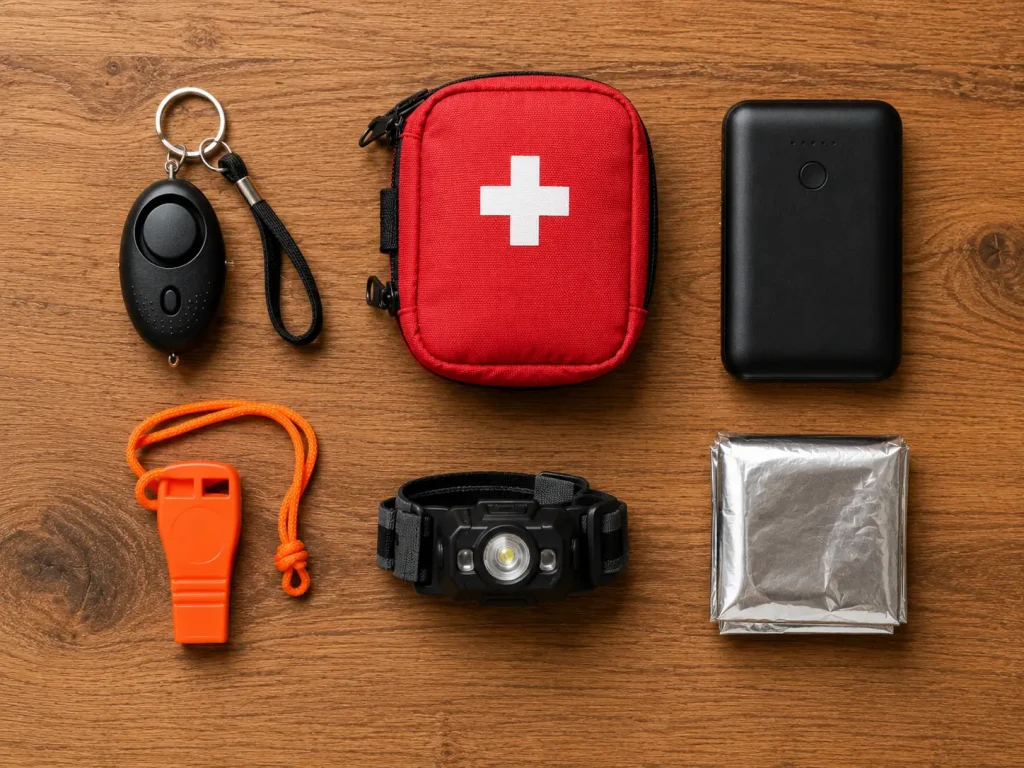
When you’re solo, every item in your pack serves double duty — it’s both gear and safety equipment. For a complete guide to every piece of hiking gear a beginner woman needs — from daypacks to headlamps — read our beginner women’s hiking gear guide. For a complete packing list beyond your safety items, our hiking essentials for women covers everything else you need to bring on a day hike.
Navigation — Downloaded and Backed Up
Download your trail map offline on AllTrails or Komoot before you leave — do not rely on mobile signal for navigation. Screenshot the trailhead directions and the trail map as a backup. Carry a portable power bank — phones drain faster in cold weather and with GPS active.
Personal Safety Devices
Not sure what to actually wear on the trail? Our women’s hiking outfit guide covers every layer, fabric and season so you arrive properly dressed.
A personal alarm is a small device that emits a loud siren when activated. They cost very little, weigh almost nothing, and can deter and alert in an emergency. Clip one to your pack where you can reach it without taking the pack off. An emergency whistle serves a similar function — three blasts is the international distress signal.
First Aid Kit
A compact hiking first aid kit matters more when you’re alone. Include blister plasters, adhesive bandages, antiseptic wipes, pain relief, a small bandage, and any personal medication.
Water — More Than You Think You Need
On solo hikes, bring 500ml more than you think you’ll need. If you’re hiking anywhere near a water source, a filter like the Sawyer Squeeze means you’re never stranded without water.
Headlamp
Always. Even on a planned morning hike. Hikes take longer than expected, and being on the trail after dark without a light is genuinely dangerous on rocky terrain.
Emergency Foil Blanket
Folds to the size of a credit card, weighs nothing, retains body heat in an emergency. Non-negotiable for solo hiking.
Solo Hiking Safety Habits That Actually Matter
Stay on the Marked Trail
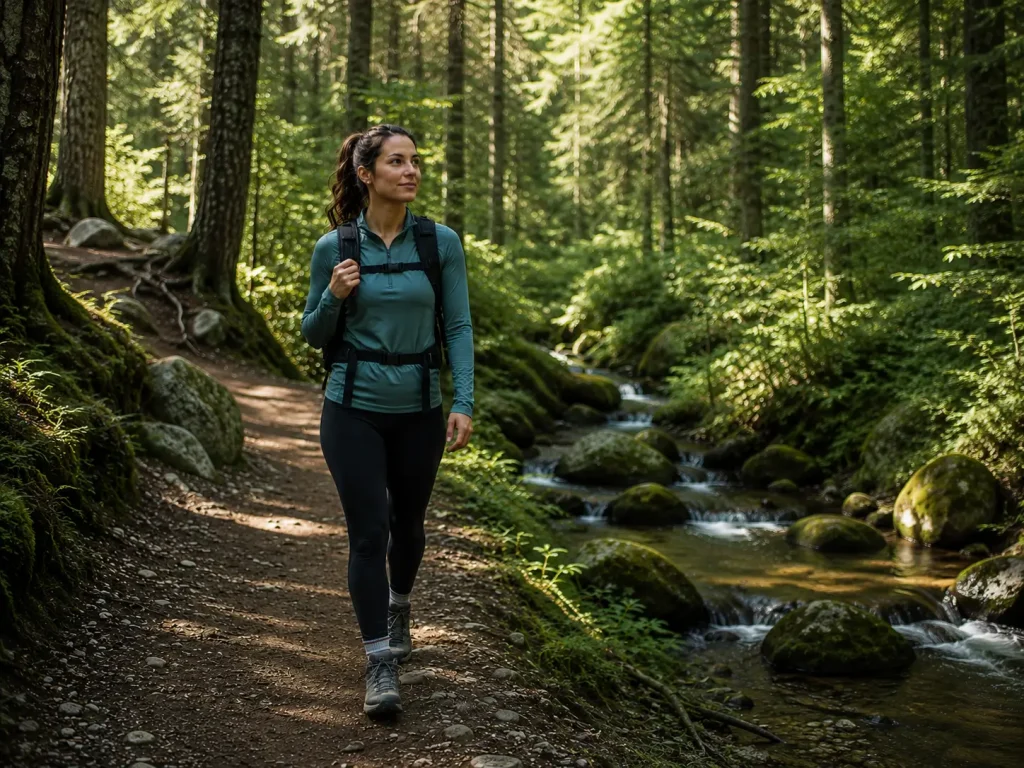
Trails exist because they’re the safest and most navigable route through the terrain. Going off-trail to shortcut or explore is how people get lost. If you’re unsure whether you’re on the trail, stop and check your downloaded map before continuing.
Check the Weather and Respect It
Check the forecast the morning of your hike, not the night before. Always carry a waterproof jacket regardless of the forecast. It takes up almost no space and turns a weather surprise from a problem into an inconvenience.
Trust Your Instincts
If something feels off — a situation, a person, a section of trail — trust that feeling and act on it. Solo hiking gives you complete freedom to act on your instincts without having to explain yourself to anyone.
Be Aware Without Being Anxious
Situational awareness means knowing who’s around you and what’s happening on the trail — not being constantly on edge. Acknowledge other hikers with a nod or brief hello. Taking your headphones out when you pass other hikers or approach blind corners is worth doing.
What NOT to Do When Hiking Alone as a Woman
Don’t tell strangers your exact plans. You don’t need to share your full route, where you parked, or when you’re going back.
Don’t hike with a dead phone and no map. Sort this before you leave the car, not on the trail.
Don’t skip the pre-hike check-in. Not telling anyone where you’re going is the most common solo hiking mistake across all genders.
Don’t underestimate the trail. For a first or second solo hike, start with trails listed as easy, do them well, and build up from there.
Solo Hiking Safety Checklist
Save this before your next solo hike:
- Trail name, location and estimated time told to at least one person
- Downloaded offline trail map (AllTrails or Komoot)
- Phone fully charged
- Portable power bank packed
- Water (minimum 1.5 litres for a 3-hour hike)
- Snacks and lunch if hiking over 3 hours
- First aid kit with blister plasters
- Headlamp with fresh batteries
- Emergency foil blanket
- Personal alarm clipped to pack
- Emergency whistle
- Waterproof jacket
- Extra warm layer
- Sun protection (hat, sunscreen, sunglasses)
- Note left in car with trail name and return time
Women-Specific Considerations
Solo Hiking and Periods
Altitude and physical exertion can trigger early periods. Carry supplies even if you’re not expecting your period. Period underwear, menstrual cups and discs all work well on the trail.
Using the Facilities on the Trail
Many trails have no toilets. Move at least 60 metres from the trail and from any water source. A small trowel for a cat hole (15–20cm deep) and sealed bags for waste are worth packing for longer or more remote hikes.
FAQs
Yes — with the right preparation. Choose a well-used, well-marked trail. Tell someone your plan and expected return time. Download your trail map offline. Carry basic safety items. Your first solo hike on an easy, popular trail is genuinely low-risk when you approach it with basic preparation.
A personal alarm clipped to your pack, an emergency whistle, a fully charged phone with offline maps downloaded, a portable power bank, and a compact first aid kit. These are lightweight, inexpensive, and cover the vast majority of solo hiking scenarios.
You can — but be selective. Take headphones out when you pass other hikers, approach blind corners, or reach sections with uneven terrain. Staying aware of your surroundings matters more than any single piece of gear.
Morning is generally best — trails are busier, you have maximum daylight, and you avoid afternoon weather. Start early enough that you’re back at the trailhead well before dark.
This is a personal decision that varies by location and local laws. Most experienced solo female hikers rely on a personal alarm, whistle, situational awareness and trail selection rather than weapons.
AllTrails for trail maps and offline navigation, what3words for sharing your exact location with emergency contacts, and your phone’s native location sharing for keeping a trusted person updated in real time.
Most hikers you’ll meet are completely harmless. A brief nod or hello is normal trail etiquette. You don’t need to stop and chat or share your plans. If an encounter feels uncomfortable for any reason, keep moving.
Final Thoughts
Solo hiking as a woman isn’t something you need to be talked into. It’s something to be prepared for — and once you are, it’s one of the most genuinely freeing things you can do.
Start with a short, well-used trail. Tell someone where you’re going. Download your map. Pack the basics. Go. For everything else you need to know before heading out for the first time, our beginner hiking tips for women covers all the practical steps. The nervousness before your first solo hike is completely normal. What happens after it — that quiet satisfaction of having done something entirely by yourself — is worth every bit of pre-hike preparation.

Intermediate hiker sharing real trail experience — honest gear picks, beginner-friendly guides, no filler.