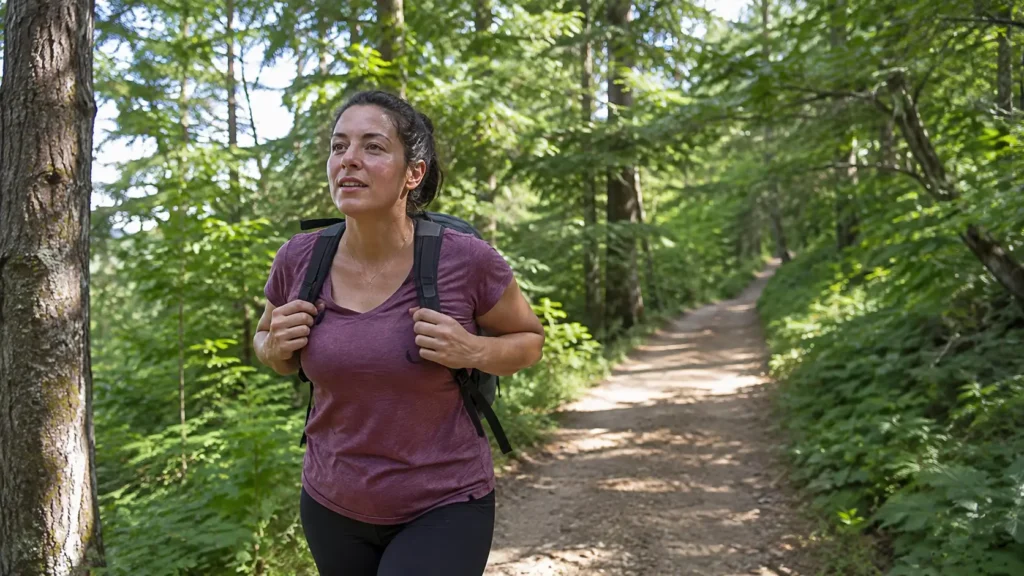
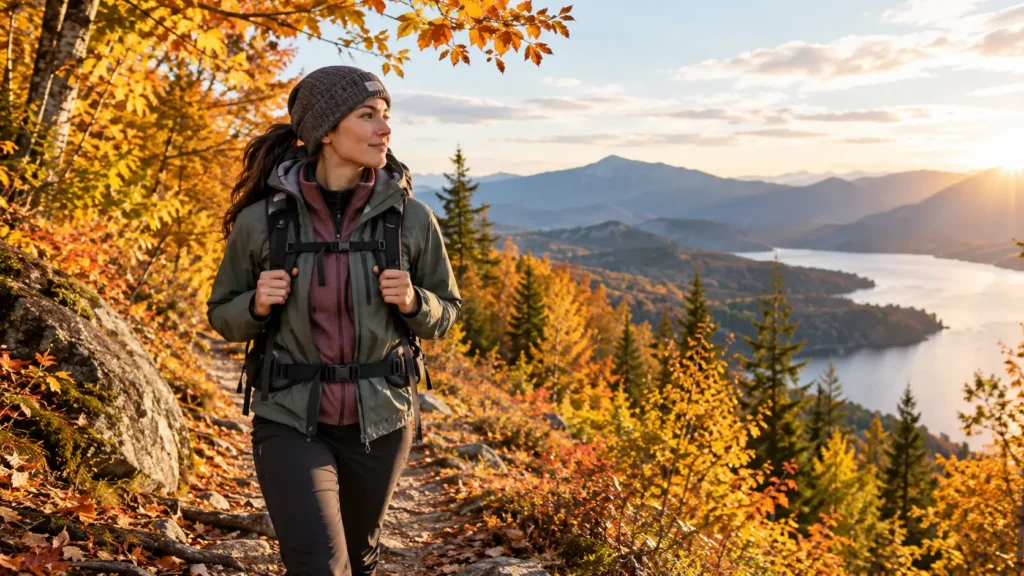
Autumn is my favourite hiking season. The light is different — softer, more golden, lower in the sky — and the trails are less crowded, the air is sharper, and the views through turning leaves are worth every extra layer you have to carry. But autumn is also the season that catches underprepared hikers off guard more than any other.
Summer hiking forgives light packing. A water bottle, some snacks, a light layer in your bag — and you’re usually fine. Autumn doesn’t extend that same forgiveness. Temperatures that feel pleasant at the trailhead can drop 10 degrees at elevation. Afternoon light disappears earlier than you expect. Rain arrives faster and stays longer. Trails that were dry in August are mud and wet leaves in October.
This packing list covers everything a beginner woman needs for a fall day hike — what stays the same from summer, what changes, and the four items that move from optional to essential the moment the season turns.
How fall hiking is different from summer hiking
Understanding what changes in autumn tells you exactly why the packing list changes:
- Temperature swings are larger — the difference between a warm autumn morning and a cold exposed ridge in the afternoon can be 10-15°C. You need to be able to add and remove layers throughout the day.
- Weather is less predictable — autumn fronts move faster than summer weather systems. A clear morning can become a wet, windy afternoon with relatively little warning.
- Daylight is shorter — sunset happens earlier and arrives faster once it starts. A hike that finishes in light in August can finish in the dark in October if you started at the same time.
- Trails are wetter — fallen leaves on wet terrain are genuinely slippery, more so than mud alone. Grip becomes more important.
- Crowds are thinner — one of autumn’s genuine gifts. Quieter trails, available parking, no queues at viewpoints.
The complete fall hiking packing list
Clothing — on your body
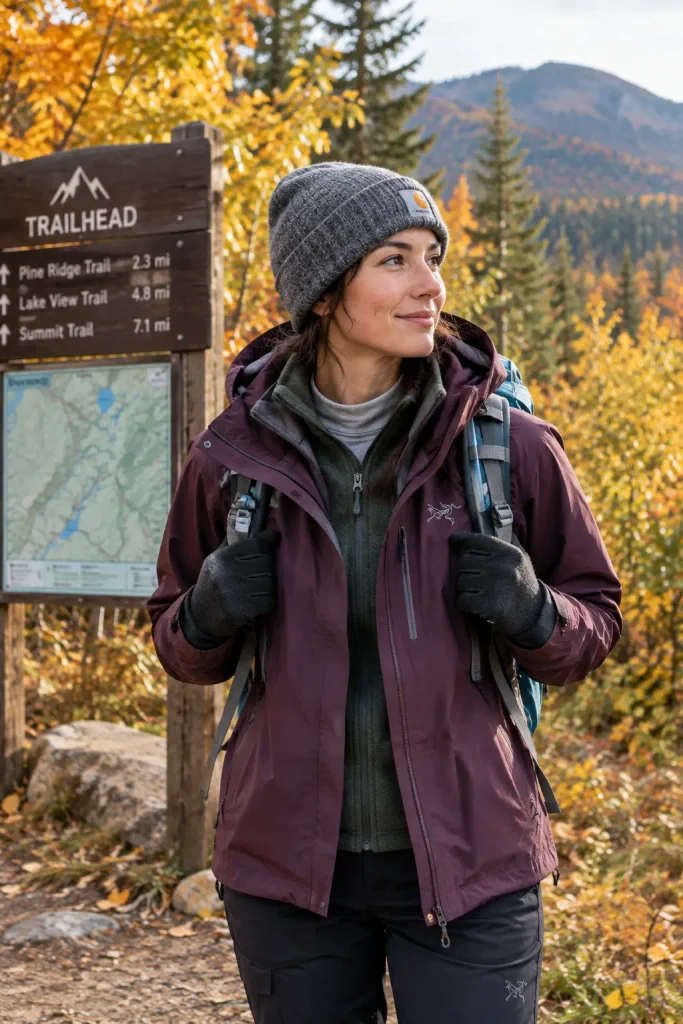
The layering system is the most important concept for autumn hiking. Three layers that can be added and removed as conditions change:
- Base layer: moisture-wicking long-sleeve top in merino wool or synthetic. Against your skin — never cotton. Merino is the better autumn choice because it manages temperature in both directions (warm when cold, not stifling when you heat up on a climb).
- Mid layer: fleece or lightweight insulated jacket. This is your warmth layer — something that traps heat when you stop moving or reach the summit. A packable fleece that compresses small is ideal.
- Outer layer: waterproof and windproof shell. Non-negotiable for autumn hiking. This doesn’t have to be expensive — a packable waterproof jacket with a hood and sealed seams is what you need.
- Bottom half: hiking leggings or lightweight hiking pants. Merino-blend leggings are excellent for autumn — warm enough for cool conditions, not too hot on the uphills.
- Socks: merino wool hiking socks, midweight for autumn. One spare pair in your pack — wet socks in cold conditions are miserable.
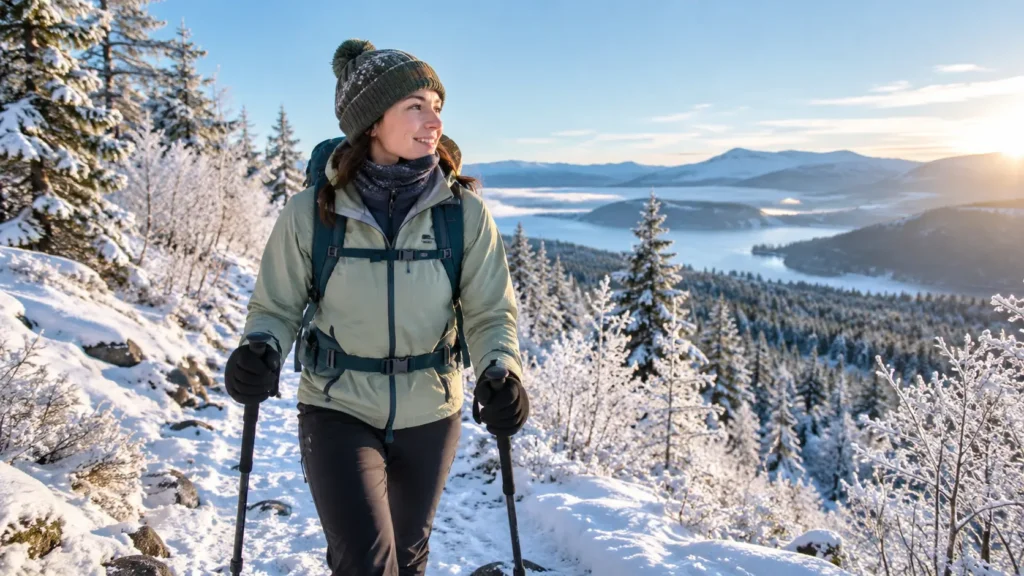
- Gloves: lightweight liner gloves. Hands get cold faster than you expect at elevation in autumn. A thin pair weighs almost nothing and makes the difference at a windy summit.
- Hat: a warm beanie or fleece hat. Combined with your jacket hood in rain — essential for summit comfort in October and November.
- Gaiters (optional but useful): low gaiters that cover the top of your boot keep mud and wet leaves out on messy autumn trails. Not essential for all conditions but worth knowing about.
Footwear
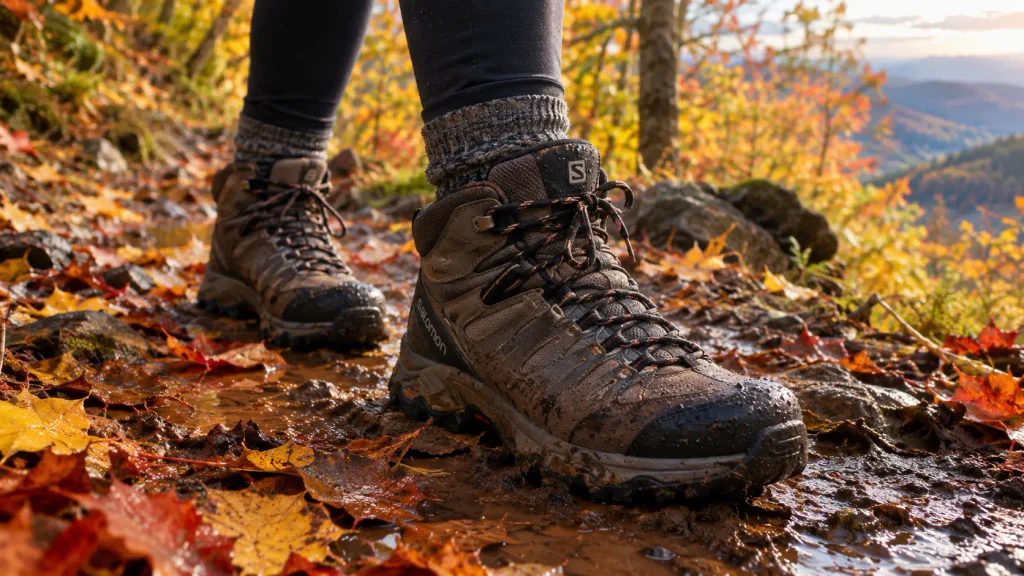
- Waterproof hiking boots or trail shoes: waterproofing moves from nice-to-have to essential in autumn. Gore-Tex or equivalent lining keeps feet dry in wet terrain, stream crossings and rain. Wet feet in cold temperatures are a serious comfort and safety issue.
- Microspikes (for later autumn): not necessary for most October hikes but essential if you’re hiking at elevation where early frost or ice is possible. Lightweight and pack flat — carry them when conditions are uncertain.
Navigation and safety — upgraded for autumn
- Headtorch with fresh batteries: this moves from optional to essential in autumn. Sunset is earlier than you think and darkness arrives quickly. Carry it regardless of your planned finish time — plans change. A headtorch is not an emergency item, it’s a core kit item from September onwards.
- Fully charged phone with offline trail map: even more important in autumn when trails are less busy and help is further away if things go wrong.
- Whistle: three blasts — universal distress signal. Weighs nothing.
- Emergency bivvy or foil blanket: in summer this is optional for day hikes. In autumn, carry it. If you’re delayed on trail as temperatures drop, it can be the difference between uncomfortable and genuinely dangerous.
- Paper map of the area as backup.
For the complete guide to what to do if you get caught out on a hiking trail, see what to do if you get lost hiking.
Water and food — more than summer
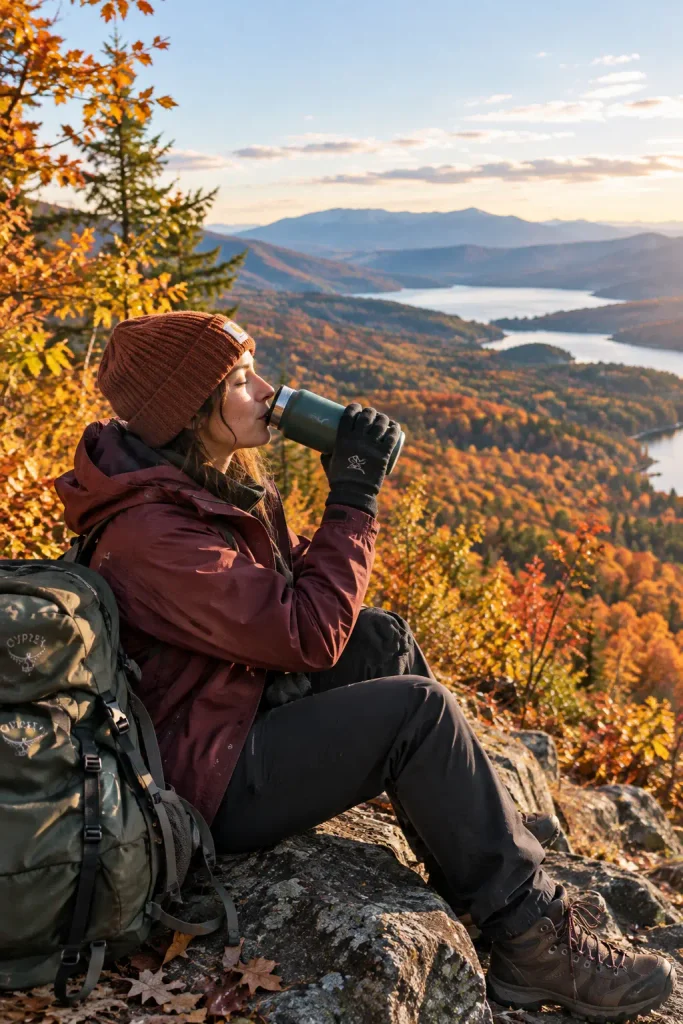
- Water: 1.5-2 litres. Cold air is deceptively dehydrating — you don’t notice thirst as readily but your body still needs fluid during sustained effort. Drink on a schedule rather than waiting until thirsty.
- Food: more than summer. Cold conditions increase your body’s energy demand. Pack a proper lunch and at least two snacks beyond what you think you’ll need. High-calorie, easy-to-eat items: trail mix, energy bars, a cheese sandwich, chocolate.
- Hot drink in a flask: optional but highly recommended. A thermos of tea or coffee at the summit in October is a genuinely wonderful thing that weighs very little.
Pack and extras
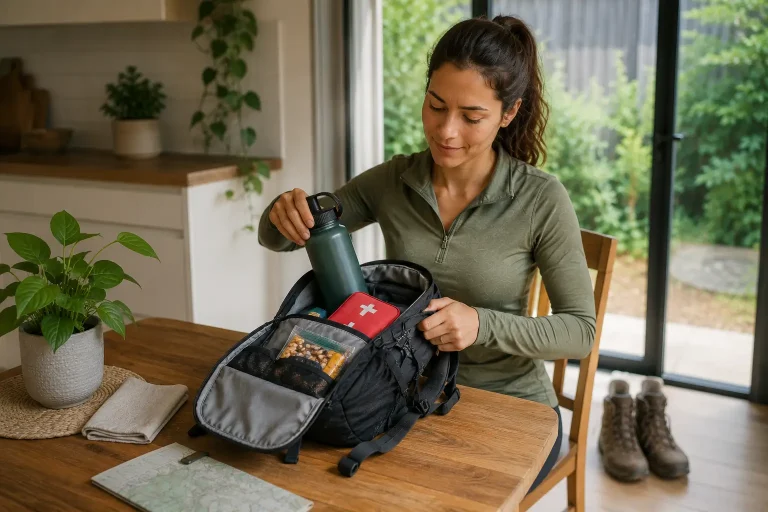
- Daypack 20-25L: slightly larger than summer to fit extra layers. All layers accessible without unpacking everything — put the waterproof jacket at the top.
- Dry bags or pack liner: keep your spare clothes and electronics dry if your pack isn’t waterproof. A bin bag inside your pack costs nothing and works fine.
- Trekking poles (recommended for autumn): more useful than in summer due to wet leaf terrain and muddier paths. Provide stability on slippery descents.
- First aid kit: blister kit, pain relief, small wound care.
- Phone charger (portable): days are shorter, you may need navigation longer.
- Sunscreen and sunglasses: autumn sun is lower in the sky and can be intense, particularly on snow or water reflections at elevation.
The complete fall packing list at a glance
| Category | Item | Autumn notes |
| Clothing | Moisture-wicking base layer (long sleeve) | Merino preferred over synthetic in autumn |
| Clothing | Mid layer fleece or insulated jacket | Packable, compresses small |
| Clothing | Waterproof shell jacket with hood | Non-negotiable from September |
| Clothing | Hiking leggings or pants | Merino blend for autumn warmth |
| Clothing | Midweight merino hiking socks x2 | Spare pair in pack |
| Clothing | Lightweight gloves | Hands cold at elevation — don’t skip |
| Clothing | Warm hat (beanie or fleece) | Essential for summits October+ |
| Footwear | Waterproof hiking boots or trail shoes | Gore-Tex lining essential |
| Footwear | Microspikes | For later autumn / elevation frost |
| Safety | Headtorch + spare batteries | Essential — not optional — from Sept |
| Safety | Phone charged + offline trail map | More critical in quieter autumn trails |
| Safety | Whistle | 3 blasts = universal distress signal |
| Safety | Emergency bivvy or foil blanket | Autumn essential, summer optional |
| Safety | Paper map backup | Carry alongside digital |
| Food & water | 1.5–2L water | Cold air is dehydrating too |
| Food & water | Lunch + 2 snacks minimum | Cold increases energy demand |
| Food & water | Hot drink in a flask | Optional but highly recommended |
| Pack | 20–25L daypack with layers accessible | Waterproof jacket at the top |
| Pack | Dry bags or pack liner | Bin bag works fine inside your pack |
| Pack | Trekking poles | More useful than summer for wet terrain |
| Pack | First aid kit + blister kit | Standard |
| Pack | Portable phone charger | Shorter days = longer navigation time |
The four items that change from optional to essential in autumn
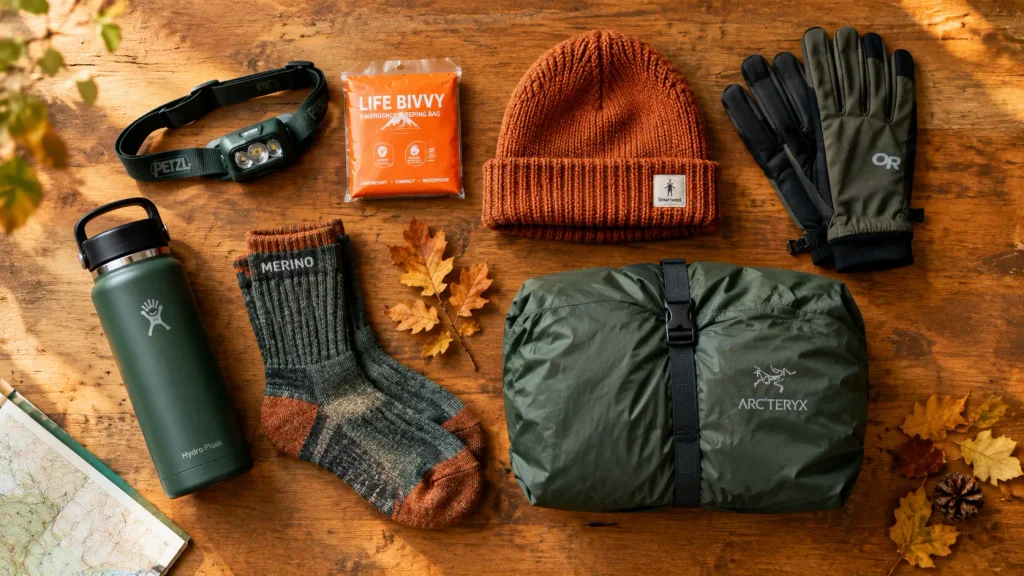
If you take nothing else from this list, take these four shifts seriously:
- Headtorch — not an emergency backup, a core kit item. Every autumn hike, regardless of planned finish time.
- Waterproof jacket — not a ‘just in case’ layer. In your pack at the trailhead, accessible at the top.
- Emergency bivvy — 90g and it packs to the size of a chocolate bar. In autumn, carry it every time.
- Spare socks — wet feet in cold temperatures on a long autumn day is a miserable experience that’s completely preventable.
What to check before an autumn hike
- Sunrise and sunset times: check the actual time for your specific date and location — not an assumption. Know when you need to be back at the car.
- Weather forecast including wind and temperature at elevation: summit temperature is often 5-10°C colder than valley temperature, and wind chill on an exposed ridge can feel significantly colder again.
- Trail conditions: recent rain, fallen leaves on steep sections, any known muddy sections. AllTrails reviews from the past week are the most reliable source.
- Your turnaround time: decide it before you start and stick to it. In autumn, running out of daylight has more serious consequences than in summer.
What you can leave at home compared to summer
- Heavy sun hat — a beanie serves multiple purposes and is more useful
- Very lightweight summer base layers — you need thermal merino, not cool-dry polyester
- Light packable sun shirt — replace with a proper mid layer
- Sandals or lightweight trail runners (for most conditions) — waterproof boots earn their place
Final thoughts
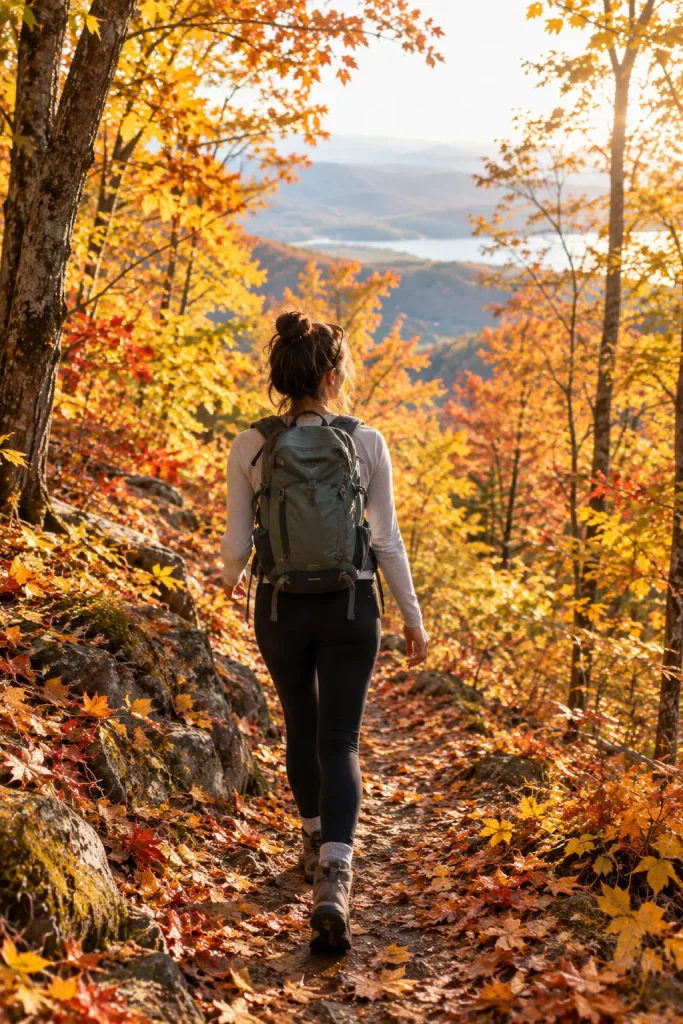
Autumn hiking rewards good preparation more than any other season — and punishes poor preparation more sharply too. The difference between a prepared autumn hiker and an underprepared one is almost entirely in the four items above: headtorch, waterproof jacket, emergency bivvy, spare socks.
Get those right and the rest follows naturally. The golden light through turning leaves, the silence of emptier trails, the satisfaction of a warm flask at a cold summit — autumn hiking is genuinely special. It just needs the right kit.
Pack properly, check the daylight, tell someone your plans, and enjoy the best season on trail.
For the complete day hiking packing list covering all the year-round essentials, see the day hiking packing list for women.
FAQs
The essentials that change from summer: a three-layer clothing system (moisture-wicking base, fleece mid layer, waterproof shell), waterproof hiking boots, midweight merino socks with a spare pair, lightweight gloves and a warm hat, a headtorch (non-negotiable from September), an emergency bivvy or foil blanket, and more food and water than summer. The full checklist in this article covers everything in detail.
Three layers that can be added and removed throughout the day: a moisture-wicking long-sleeve base layer (merino wool is the best choice for autumn — temperature-regulating in both directions), a packable fleece or insulated jacket as your mid layer for warmth, and a waterproof and windproof shell as your outer layer. In autumn, all three should be in or on you at the trailhead — don’t leave layers in the car.
Yes, for most autumn hiking. Waterproofing moves from optional to important once autumn rain, wet terrain and cold temperatures combine. Wet feet in cold conditions are uncomfortable and can become a safety issue on longer hikes. Gore-Tex lined hiking boots or trail shoes keep feet dry through rain, stream crossings and wet leaf terrain. If you only own non-waterproof trail shoes, wool socks and gaiters partially compensate but aren’t as reliable.
Sunset happens significantly earlier in autumn and darkness arrives quickly once it starts. A hike that comfortably finished before dark in August may run into darkness in October at the same start time. Delays happen — a twisted ankle, a longer section than expected, stopping longer at a viewpoint — and without a headtorch, getting back in autumn darkness is genuinely dangerous. Carry it on every autumn hike regardless of your planned finish time. It weighs almost nothing.
The key additions for autumn: waterproof jacket (essential not optional), headtorch (essential not optional), emergency bivvy (recommended not optional), warm hat and lightweight gloves, extra food for increased energy demand in cold, spare merino socks, and waterproof boots. The key removals: heavy sun hat, lightweight summer-only layers, and sandals or non-waterproof trail runners for most conditions. The complete comparison is in the table in this article.

Intermediate hiker sharing real trail experience — honest gear picks, beginner-friendly guides, no filler.